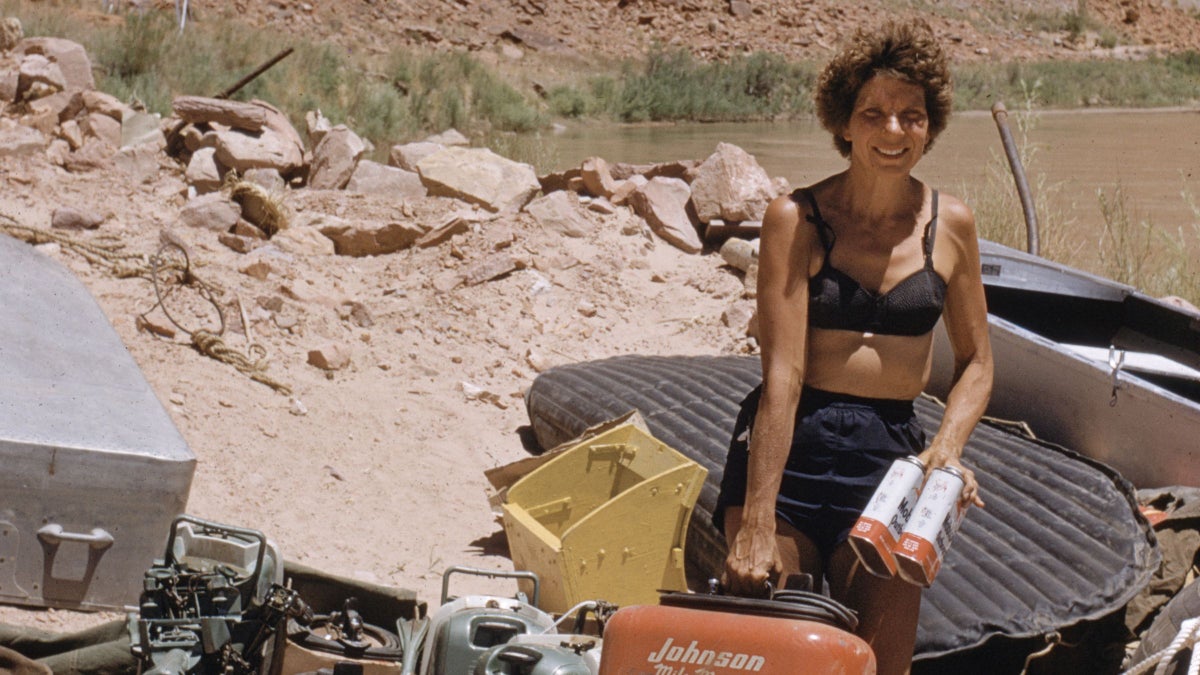
АНУ-ын Гранд Каньоны Колорадо мөрнөөр хийх адал явдалт аялал нь байгалийн хосгүй тогтоцтой танилцахын зэрэгцээ түүхэн үйл явдлыг мэдрэх онцгой боломж юм.
Гранд Каньоны аялал Lees Ferry-гээс эхэлдэг бөгөөд эндхийн агаарын температур 38 хэмээс давдаг бол Глен Каньон далангаас урсах усны температур ердөө 8 хэм орчим хүйтэн байдаг нь эрс тэс уур амьсгалыг бүрдүүлдэг. Аялагчид Навахо гүүрний доогуур өнгөрөхдөө ховордсон төрөл зүйл болох Кондор шувуудыг харах боломжтой. Маршрутын дагуух Badger Creek зэрэг хурдны урсгал, хүрхрээ мэт түрэмгий усны урсгал нь аялагчдаас биеийн хүч, тэсвэр тэвчээр шаарддаг.
Энэхүү адал явдлын анхдагч нь 1945 онд анх удаа Гранд Каньоныг сэлэлтээр туулж, улмаар 1952 оны долдугаар сарын 11-нд армийн хуучин резинэн завиар тус голыг гатлан анхны эмэгтэй хөтөч болсон Георги Уайт юм. Тэрээр Hance Rapid болон Lava Falls зэрэг хүндрэлтэй хэсгүүдийг туулахдаа аюулгүй байдлыг хангах, багаар ажиллах чухал туршлагыг хойч үедээ үлдээжээ. Өнөөдөр түүний мөрөөр аялагчид голын урсгалыг даган кемпинг байгуулж, байгалийн түүхэн хувьслыг нүдээр үзэх боломжтой.
Аялагчид өдрийн цагаар завины хүнд ачааг зөөх, майхан барих зэрэг ажилд оролцон хөтөч нартай хамт ажилладаг. Аялалын туршид нарны хэт ягаан туяа, усны хүчтэй урсгал, биеийн ачаалал зэрэг бэрхшээл тулгардаг тул зохих бэлтгэлтэй байх шаардлагатай. Энэхүү аялал нь байгалийн урт удаан хугацааны түүхийг мэдэрч, өөрийгөө сорих сонирхолтой хүмүүст нэн тохиромжтой.
Дэлгэрэнгүйг эх сурвалжаас харах
↓Эх сурвалжийг нээх ↓
This story is excerpted from Heather Hansman’s new book, Fierce Country: The Untold Story of Three Women Who Ignited America’s Love for the Wild, which follows three unsung heroes of recreation and conservation to investigate how we care for the wild places we love, why those places are important, and whose stories are elevated when we talk about being outside. You can find it here, or anywhere that books are sold.
On the boat ramp at Lees Ferry, the start of every Grand Canyon trip, the shuttle van thermometer reads 100 degrees. The mercury will stay there most of our trip except when the monsoons break over us, blowing out the side creeks with runoff, and pushing us back upstream with unrelenting headwinds. Here, before my body has adjusted, the heat feels dizzying.
By contrast, the river comes out of the bottom of the Glen Canyon Dam 15 miles upstream at a frigid 46 degrees. It’s clear, green, and devoid of most sediment, nutrients, and bugs.
I’ve heard that Georgie White used to stand chest-deep in the freezing water and slowly drink a beer without shivering. Then she would challenge the firefighters she hired as boatmen to do the same.
I haven’t hardened to that point, but I wade in to my shoulders to cool myself off as we do a final round of prep. We rig gear bags and fit life jackets and reapply sunscreen, and then we’re gone.
Georgie was the first female Grand Canyon guide. She was one of the first and only people running the river for years, and she was the only woman guiding for decades. She’s one of my heroes, although she’s complicated and it took me a while to find her. I’m down here to see if I can understand her better. And understand why I didn’t hear her story until I’d been embedded in the guiding world for years. Why it’s been so hard for me to find heroes in the outdoor world.
The entry into the canyon feels shockingly fast. For the first 4.5 miles you float past places you’ve seen before, tracing the road in, but once you pass under the parallel Navajo Bridge— the ninth-highest span in the country—you’re in new territory, and there’s no other road crossing until you hit the Hoover Dam, almost 350 miles downstream.
When we float under the bridges, Jeff, one of the guides, points up.
“Condors,” he says.
In the 1980s, the giant vultures were endangered; there were only 22 remaining in the world. They were reintroduced here in the canyon, and now their population is up to 500, but they still feel special and rare. “I can’t see them,” I yell back, but I keep looking, squinting up into the glare until I finally do, their 10-foot wingspans reduced to black dots.
As we float downstream, immediate and geologic time feel like they’re happening on the same scale. We move through the first 5 layers of rock in 16 miles, dropping through centuries as we do. That afternoon we hit the first significant rapid, Badger Creek, at mile 8. It’s rated a 5 on the Grand Canyon rapids scale of 1 to 10, and from above it seems straightforward, just a series of wave trains down the gut. But I am unprepared for its force. As we drop in, the deceptively big waves stop the boat’s momentum, and the powerful eddies at the foot of the rapid grab at the oars.
Everything is more here: deeper, redder, hotter, bigger. And we’re not even in the heart of it yet. The first night we camp on a beach and watch the canyon turn gold and pink. In the crusty soil around the campsite, sacred white datura flowers bloom on glossy green stalks. I’m starting to see why Georgie could never go anywhere else, how no other rivers could compare.
Over the next few days, we slip deeper into the history and the landscape. We pass Georgie Rapid at mile 24—named for her after she passed away—and then the white water starts to come fast.
Our days fall into a rhythm. I’m here as a swamper, basically an unpaid intern, the bottom of the guide hierarchy, so it is my job to carry heavy things. There are Dutch ovens and dishpans and hand-washing buckets, a shocking number of which need to be perpetually filled up from the river. I am constantly reminded of the weight of water. I haul gear and unload boats and perpetually put things in the wrong place. I try to give in to the repetitive Zen of rebuilding our home on a different slanted beach every night. I try to be entertaining and helpful and also never in the way. When the real guides let me row, I get worked by the eddies. I get worked by the weight of the oars in my hands. Brand-new muscles deep inside my elbows ache, and my arms feel like half-cooked spaghetti, wiggly and dull against the sheer force of the water.
Georgie said that by the time she stopped rafting, people weren’t as tough as they had been, and I believe it. I’m easily dehydrated, constantly smearing myself with sun block or body lotion, or draping myself in wet sarongs, perpetually chugging electrolytes and rubbing my sore shoulders.
I remember that water, paradoxically, makes you drier. My fingers and heels crack and split. I can feel a desiccated itch creeping across my back every time I get out of the river, dunking myself to relieve the heat. My hips cramp, and my shoulders knot from sitting for hours on the gear pile on the front of the baggage boat. But I also feel stretched, buzzy, springing. I sprint down the beach and wrestle the other guides. We swim in small rapids and explore side canyons.
I am, for the first time in a long time, actually paying attention. Soaking in the colorless predawn light. Noticing the hot midday blue, so high and clear, and the way the evening sky slips from golden blush to rouge to lilac before it goes indigo again. It changes so fast it’s impossible to capture, even though I try with paint and photos and words. At night I sleep on the hatch of a gently rocking raft.
We’re steeped in the whole wheel of known time, billions of years and countless generations. As one retired boatman told longtime guide Louise Teal, who wrote a book about women in the canyon, “When you stick your oars in the water, you’re feeling the whole story. There’s no words, but it’s the full language of the formation of the earth.”
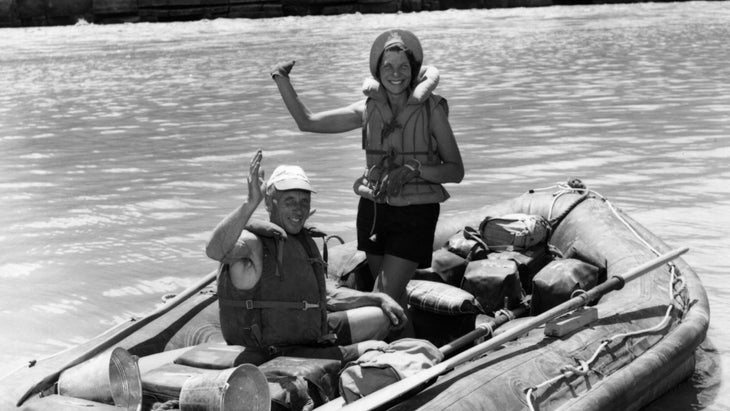
Georgie’s first trip through the canyon was a swim. In 1945 she floated down the river in just a lifejacket, and from then on she was obsessed. In early summer of 1952, Georgie set her sights on the Grand Canyon again. This time instead of swimming, she decided to take the raft down. She brought along her friend Elgin Pierce, who had been with her when she’d sustained a head injury while climbing. She knew he was reliable in an emergency.
Their boat was that ten-person army surplus raft Georgie had salvaged after WWII. Unlike today’s Hypalon or PVC boats, which are self-bailing, rockered, multichambered, and balanced, the army surplus rafts were bathtubs made of rubber that felt like eczemic elephant skin. In addition to rowing and navigating, you had to bail the water you took on, but by using a rubber raft instead of a wooden drift boat, Georgie was predicting how the river-running world would change.
I’m not sure how she convinced Elgin it was a good idea, but on July 11, they hauled the raft into the water at the mouth of the Paria River, just downstream from Lees Ferry.
“When you stick your oars in the water, you’re feeling the whole story.”
Georgie and Elgin packed three weeks of canned food and planned to take turns rowing. To navigate they had a map of the lower canyon that Georgie had gotten from Jim Rigg, who ran Mexican Hat Expeditions, a fledgling guide company. He was planning to bring a trip down that month, too.
Georgie and Elgin successfully negotiated the first significant rapids, but at mile 77, Hance Rapid, things changed. Depending on the water level, Hance is an 8 or 9 on the Grand Canyon scale of 10. As a rapid it’s both technically challenging and powerful. The river constricts due to a debris flow, and there are huge holes on the upper left and lower right. The middle is unrunnable thanks to a massive rock. The move is to start on the right, grab a pocket of slow water behind the big rock in the middle, and pivot left, fighting through massive lateral waves along the way. From the scout point, you can visualize the line, but when you’re in it, it moves so fast that it’s hard to know where you are.
Georgie and Elgin might have been disoriented by the flush, or they could have gotten cocky after a few successful days on the water. Rigg had told them to run the rapid on the left side, to avoid the massive recirculating waves on the right, but Georgie said they’d had good luck running down the middle up until then, so they decided to try that. Elgin was flung from the boat almost immediately, taking an oar with him. Then the boat flipped. Elgin swam for shore, but Georgie stayed with the boat, trying to get on top of it as it flushed downstream.
Georgie held on to the upside-down boat but was swept through the Sockdolager Rapid two miles downstream. Below that rapid she pushed the raft into an eddy, exhausted. She said she was starting to lose her grip, about to give up, when she heard someone yelling upstream and saw Elgin running her way. Together they got the boat into a bigger eddy and pulled out the food bag. They spent another cold, wet night on the shore and then were able to flip it over and keep moving downstream.
They stayed a night at Phantom Ranch, the lodge at the bottom of the Grand Canyon, 88 miles down, to dry out and rebuild their confidence and then set off downstream again. They tried to drag out the days, because they knew that the Mexican Hat Expeditions trip was behind them, and they didn’t want to navigate the biggest rapid on the river, Lava Falls, alone.
Lava, the rapid that gives guides stomachaches, is named for a 100,000-year-old intrusion of dark volcanic rock deep in the canyon. The rapid is deceivingly calm from above, but there’s a massive ledge hole in the middle, which is hard to see over the horizon line, and once you’re in the thick of the white water, there’s much more to avoid.
After a week, the Mexican Hat trip caught up and together they decided to line the boats around Lava, picking their way over the sharp black rocks. Below the rapid, Rigg led the trip through an initiation: a slug of brandy and a bucket of river water to the face to signify that they’d made it through the rapids and could call themselves Grand Canyon river runners. It would become one of Georgie’s signature moves. As they floated out through the remaining flat water into the head of Lake Mead, Elgin vowed he’d never do anything like the trip again; he’d had enough of the flipping and swimming and the harshness of the canyon, but Georgie was feeling reluctant to go home, already ready to get back into the canyon.
The post I Retraced the Footsteps of Georgie White, the First Woman to Guide the Grand Canyon appeared first on Outside Online.

