
Цаг уурын өөрчлөлтөөс үүдэлтэй байгалийн гамшиг болон эрчим хүчний тасалдал нэмэгдэж байгаатай холбогдуулан айл өрхүүд нөөц эрчим хүчний шийдлүүдийг сонгох шаардлагатай тулгарч байна.
Цаг агаарын эрс тэс нөхцөлд цахилгаан тасрах эрсдэл өндөр байгаа тул Хойд Каролины их сургуулийн профессор Ноа Киттнерийн зөвлөснөөр, нөхцөл байдал бүрт тохирсон нөөц эрчим хүчний эх үүсвэрийг сонгох нь чухал юм. Жижиг оврын зөөврийн батарейнууд нь гар утас, зөөврийн компьютер зэрэг төхөөрөмжүүдийг цэнэглэхэд тохиромжтой ч өндөр хүчин чадал шаардсан цахилгаан хэрэгсэлд хүрэлцэхгүй. Харин түлшээр ажилладаг уламжлалт генераторууд нь хөргөгч, агааржуулагч зэрэг том хэрэгслийг ажиллуулж чадах ч нүүрстөрөгчийн дутуу исэл ялгаруулдаг тул зөвхөн задгай агаарт ашиглах ёстой.
Урт хугацааны цахилгааны тасалдлын үед бүхэл байшингийн цахилгаан хангамжийг дэмжих системүүд илүү үр дүнтэй байдаг. Эдгээр системийг байгалийн хий эсвэл пропан түлшээр ажиллуулж, цахилгаан тасрах үед автоматаар шилжих горимоор тохируулдаг байна. Энэ төрлийн төхөөрөмжүүд нь 5,000-аас 20,000 ам.долларын өртөгтэй бөгөөд суурилуулалт нь тодорхой хугацаа шаарддаг.
Сүүлийн үед түлш ашигладаггүй, нарны эрчим хүч эсвэл сүлжээний тог хуримтлуулдаг технологиуд илүү түгээмэл болж байна. Jackery, EcoFlow, Anker зэрэг компанийн бүтээгдэхүүнүүд нь уламжлалт генераторуудтай өрсөлдөхүйц хүчин чадалтай болжээ. Түүнчлэн нарны хавтан болон том оврын батарейн системийг хослуулах нь урт хугацааны тасалдлын үед өөрөө өөрийгөө эрчим хүчээр хангах боломжийг олгодог байна.
Дэлгэрэнгүйг эх сурвалжаас харах
↓Эх сурвалжийг нээх ↓
As extreme weather intensifies, power outages are becoming more frequent and prolonged, necessitating diverse backup power choices, from portable banks to whole-house systems. Households require solutions to keep medical devices, cellphones, and other vital appliances operational.
“If you’re deciding between different backup power options for what you need, different conditions are going to require different elements, like a heat wave versus a hurricane,” said Noah Kittner, associate professor at the University of North Carolina’s Gillings School of Global Public Health.
Experts are now offering guidance to help homeowners select the right backup to maintain functionality during any electricity disruption.
When battery banks work
For those needing to power small devices on the go, portable battery banks offer a practical solution. Models capable of recharging a smartphone multiple times, often mirroring its size, typically retail for under $100 and feature integrated USB ports.
These convenient units can be replenished by simply plugging them into a wall outlet. Larger, more robust power banks, costing several hundred dollars, provide traditional sockets for simultaneously charging various items.
Experts note their extreme portability makes them ideal for essentials like phones, laptops, flashlights, and small lights, but they are unsuitable for high-power appliances such as dishwashers or air conditioning units.
What a traditional, portable generator offers
Traditional, portable generators are fueled by diesel, propane or gasoline. They’re about the size of a microwave oven or a mini fridge, and are typically on wheels so they can be moved around.
They must be used outdoors and away from your home because they emit carbon monoxide and other gases harmful to humans and the planet.
These options, depending on their wattage, can power larger items such as refrigerators and freezers, window air-conditioning units, fans and televisions, but they typically can’t power an entire house.
Conventional generators can run 6 to 12 hours at a time or longer, depending on what they’re powering and how much fuel is consumed.
Their prices can range from several hundred dollars to $1,000 or more, but keep in mind any maintenance and fluctuating fuel costs as well.
“The standard designs for fuel tank capacity are no longer sufficient to deal with multiday outages, which we’re increasingly seeing due to extreme weather,” said Mark Dyson, a managing director at energy nonprofit RMI. “That’s a really important consideration as folks think about the trade-offs between a traditional fuel-based backup, where increasingly you have to buy a lot of fuel storage to cover yourself for a really extended outage, which are becoming more common and more likely.”
When to consider a whole-house system
Whole-house systems may make sense in areas with frequent or long-lasting outages, or for people with life-saving medical devices that cannot experience a disruption. The systems are hard-wired to the home’s electrical system, often with a connection to natural gas or propane tanks.
When power goes out, these detect the outage and use an automatic transfer switch to shift the home from the grid to generator power.
These units can cost $5,000 to $20,000 or more, depending on the size of your home, the system and installation costs. If your home system is a medical necessity, check to see if it can qualify as tax-deductible, or if there are programs that can cover some of the expense. Installation typically requires days or weeks of lead time.
Integrated home battery systems that provide electricity on a similar scale by using rooftop solar or grid energy, instead of liquid fuel, could cost even more.
Solar power and other clean options to consider
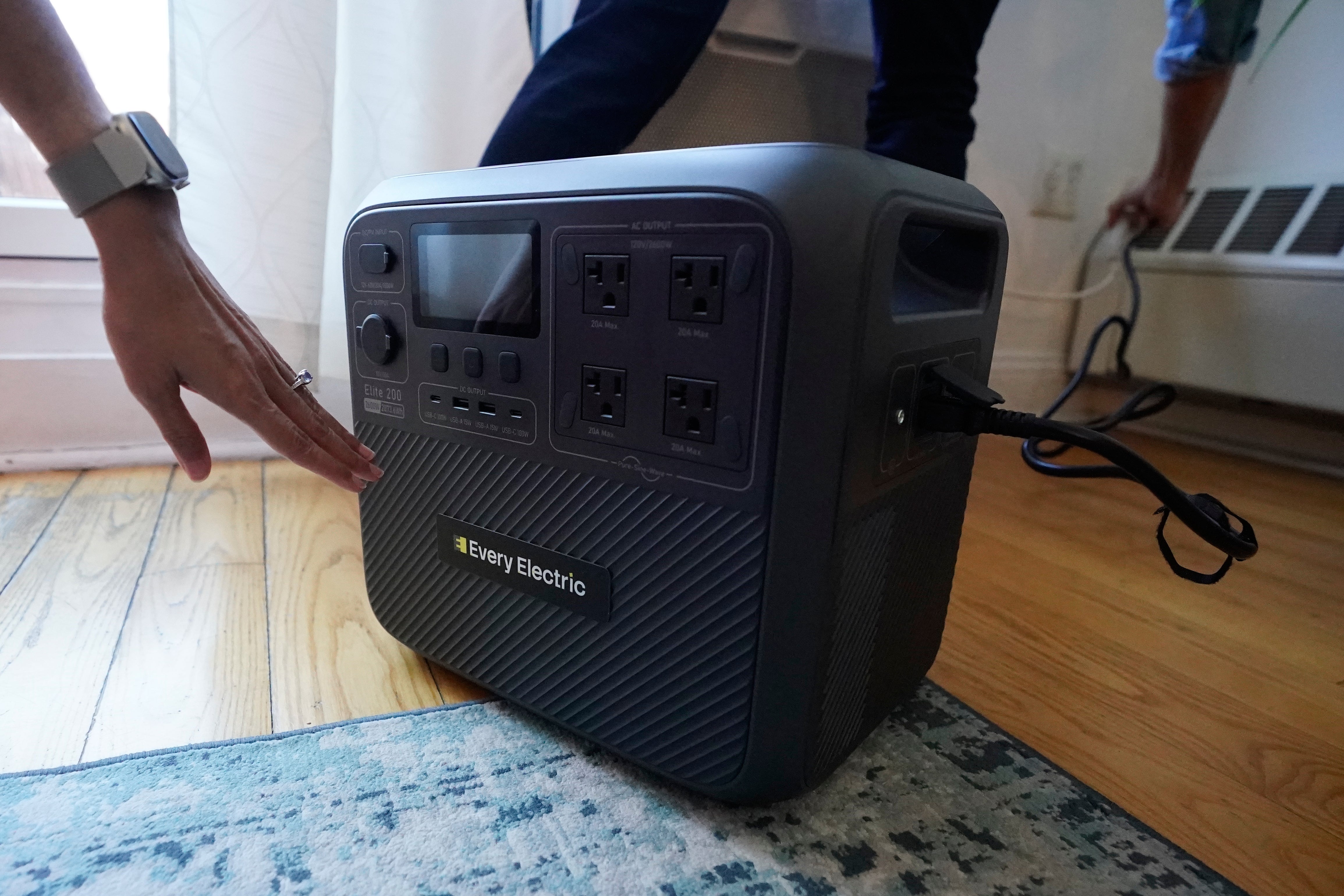
Portable power stations that operate without fossil fuels are becoming more popular. They use small solar panels or wall outlets to store energy for when it’s needed. Consumers can find smaller, less expensive options about the size of a lunchbox for a few hundred dollars, or heavy-duty options the size of a suitcase for $3,500 or more.
They can power computers, modems, televisions, fans, freezers and other medium-sized devices.
“Our solutions now rival that of traditional gas generators,” said Rachel Stotts, communications head at Jackery, which sells power stations. “Maybe a decade ago, it was a camping solution, it was portable power on the go that you stuck in your car and you could run all your basic equipment … But now you could run 99.9% of anything you want in your house — and need.”
Other power station manufacturers include EcoFlow and Anker.
The next step up: People who have rooftop solar can pair it with large battery systems that store power from the sun for later use.
“Having solar electricity that’s coupled with the battery system is quite unique, especially in an extended outage, because you have the capability to replenish your battery over time as the days go by,” Kittner said.
Installation of a solar-and-battery system could cost at least $20,000, but the added costs can be offset by other benefits in the long run, experts say.
“I would look beyond just the up-front cost of providing power during those outages,” Kittner added, “but also other benefits you might get year-round from having a battery even when electricity is in service.”
During outages, people with electric vehicles can also use the batteries in their cars for power, though the EV has to be equipped to do so. It works by essentially feeding the power stored in the EV battery to the home, during an outage or even during times of peak demand on the grid.



