Зураач Кевин Глисон Мексикээс Канад хүртэлх 2,650 миль үргэлжлэх Pacific Crest Trail маршрутаар аялахдаа өдөр бүр байгалийн үзэсгэлэнт төрхийг уран зурагт буулгаж байна.
Калифорни мужийн Санта Барбара хотын оршин суугч, 50 настай Кевин Глисон 106 хоногийн турш үргэлжлэх энэхүү явган аялалынхаа явцад өдөр бүр нэг бүтээл туурвидаг. Тэрээр аялалын явцад зөвхөн уулын даваа эсвэл нуурын эрэг гэлгүй, өөрийн сэтгэлд хүрсэн цэцэг, ургамал зэрэг жижиг хэсгүүдийг ч уран зурагтаа буулгаж, аялалын туршлагаа илүү гүнзгийрүүлж байна. Энэхүү төсөл нь аялагчдыг зорьсон газартаа хүрэх гэж яарах “хонгилын хараа”-наас ангижруулж, хүрээлэн буй орчны өнгө болон газрын гадаргын өөрчлөлтийг илүү тод мэдрэх боломжийг олгожээ.
Тэрээр өдөрт 20-25 миль алхахдаа зураг зурах зориулалттай дөрвөн фунт жинтэй хэрэгсэл, тухайлбал Gouache будаг, багс, дэвтэр зэргийг үүргэвчиндээ авч явдаг. Будгаа хурдан хатахаас сэргийлж явган аялалын таягтаа шүхэр бэхлэн сүүдрэвч хийж, нэг бүтээлийг дунджаар хоёр цаг зарцуулан туурвидаг байна. Бусад аялагчид түүний энэхүү өвөрмөц санаачилгыг дэмжин хүлээж авдаг бөгөөд хурдан хугацаанд зураг зурдаг чадвараас нь үүдэн түүнийг “Quickdraw” хэмээн нэрлэжээ.
Глисон аялалынхаа явцад байгалийн бүх зүйлийг зурагт багтаах боломжгүйг ойлгосон тул ландшафтын хамгийн гайхалтай хэсгийг сонгон авч, 9-хөн 12 инчийн хэмжээтэй цаасан дээр буулгадаг. Дууссан бүтээлүүдээ тэрээр эхнэртээ илгээхээр төлөвлөж байгаа бөгөөд энэхүү аялал нь түүний хувьд зөвхөн явган аялал төдийгүй урлагийн бүтээл туурвих онцгой үйл явц болж байна.
Дэлгэрэнгүйг эх сурвалжаас харах
↓Эх сурвалжийг нээх ↓
Kevin Gleason, a Santa Barbara, California-based painter and former high school art teacher, is hiking the Pacific Crest Trail this summer. Every day, Gleason, who is 50, finds a new spot along the iconic 2,650-mile trail to capture with his paintbrush. He told Outside about his process for painting the trail, and what he’s learned from the different sights along the way.
The other day was my wedding anniversary, and I started the day wondering about what picture my wife would most love to see. She’s my backpacking buddy but I’m doing this thru-hike solo. I saw two columbine flowers sitting next to each other and painted them. No, it wasn’t a spectacular mountain pass or a lake vista. But I knew it was what she’d like to see, and I put a little more intention into that painting the scene.
This task that I’ve taken on—painting one picture every day along the Pacific Crest Trail—has given me a truly singular experience during this Mexico-to-Canada hike. Sometimes when you are thru-hiking, you can get a little too focused on the destination. People on the Pacific Crest Trail want to get to Canada, so they know the must attain a daily goal of 25 miles over 106 days of walking. It can cause a hiker to get tunnel vision. I need to reach the next resupply. I need to get to the next town.
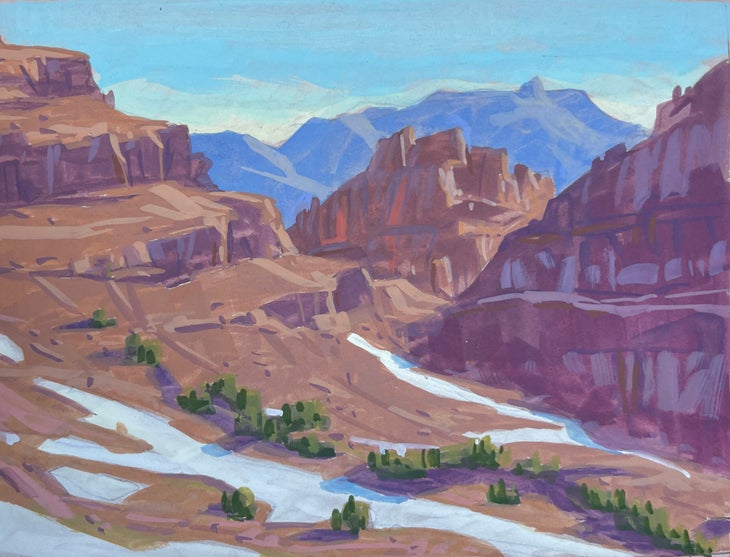
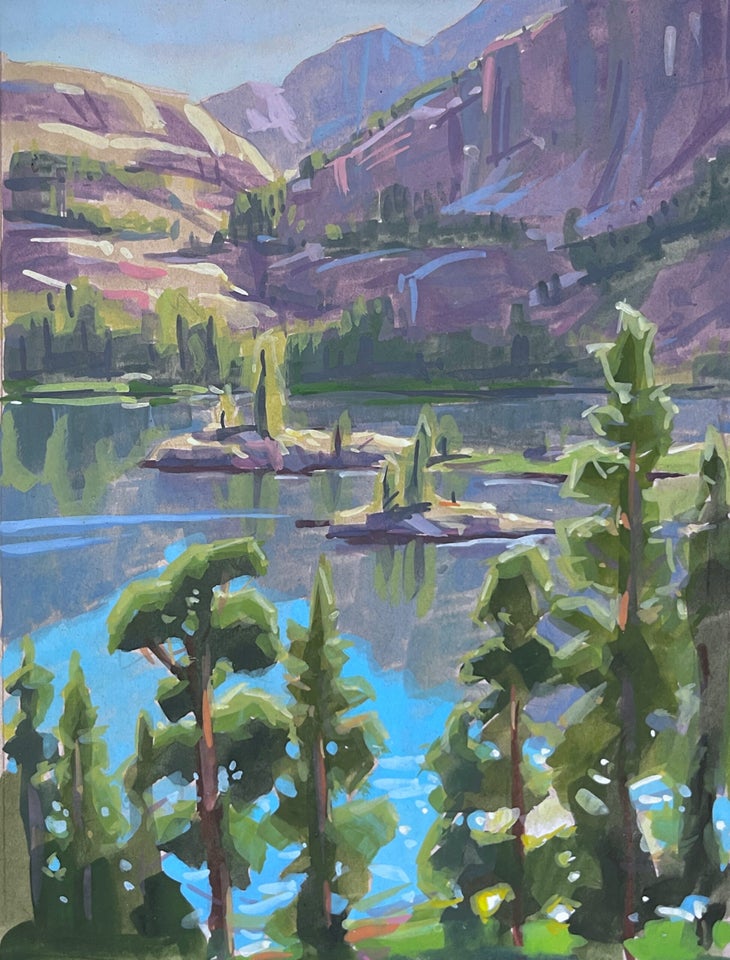
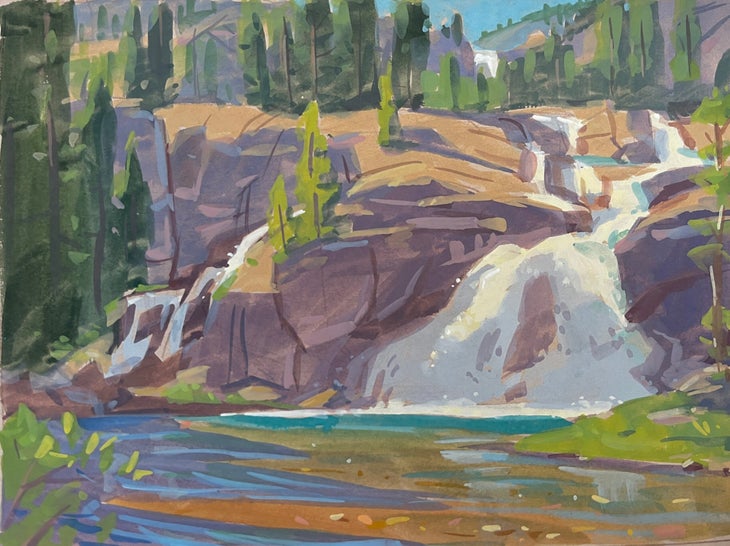
My project has shifted these goals. I spend my day thinking about where I’m going to stop and sit for a while and really take in the view. There’s something about sitting down for two hours to paint that gives you a completely different appreciation for a hike. You see how the topography and landscape changes, and how the colors change. A view can get burned into your memory.
Every day, I hike between 20 and 25 miles, and I try to capture one view along the way. The other night I was sleeping under the stars, and when I awoke I saw the sunrise, and painted it. Other days, what I paint is the last view I see before I go to bed. Most days, I choose a landscape that happens somewhere in between.
I’m intentionally trying to find different types of views. If I painted a forest yesterday, then today I might focus on a creek. I’ll do a mountain pass tomorrow. I want the paintings to look distinct, because the way the trail looks is constantly changing.
I sit down crosslegged and use a piece of corrugated plastic as a desktop. I clip my sketchbook to it, and then I take out my folding palette, paints, a few cups of water, and my five brushes.
If I wasn’t doing the art, my backpack would be much lighter. My painting stuff probably adds about four pounds. I have my paints, brushes, and a sketchbook with 54 pages.
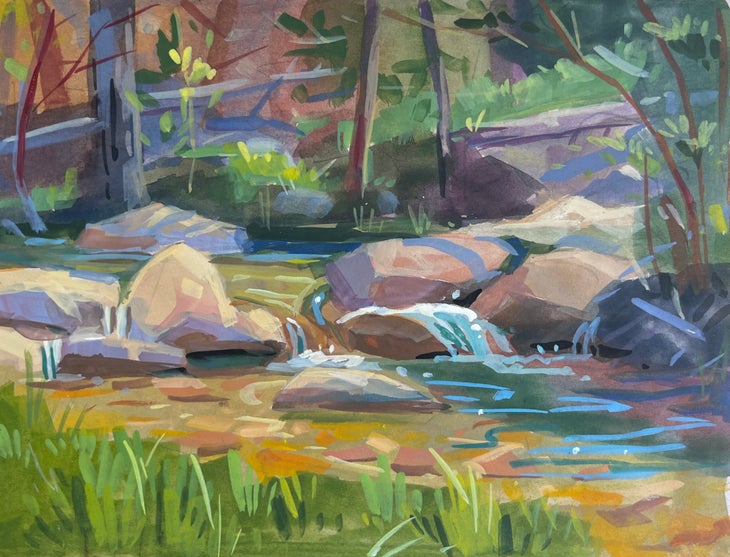
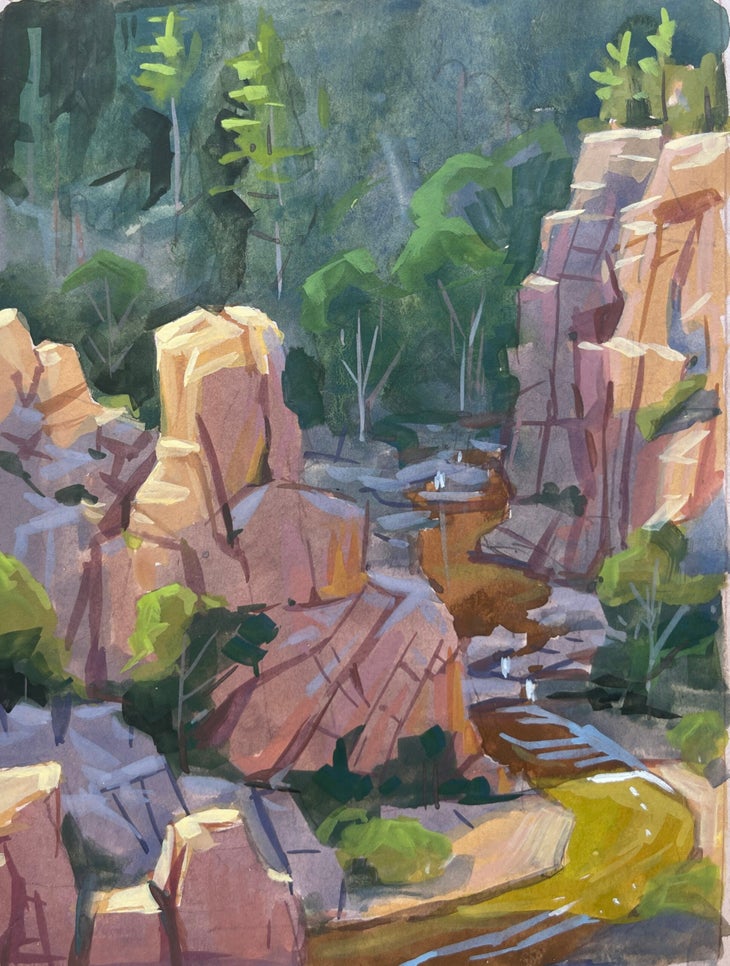
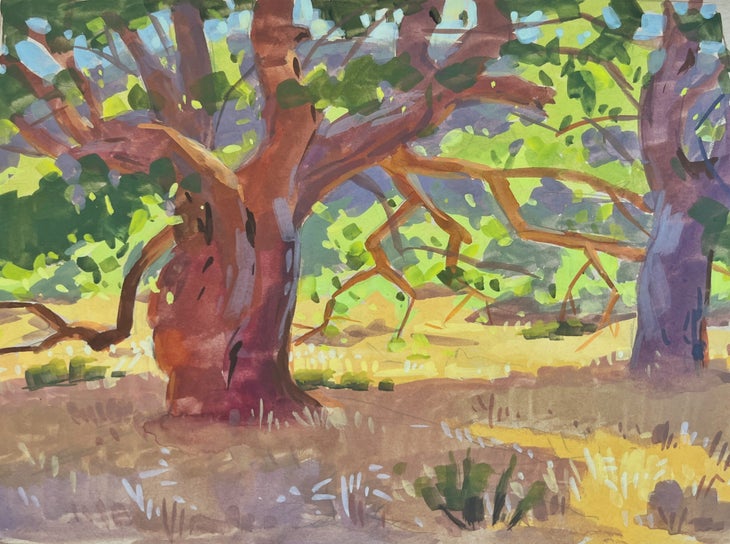
The painting affects my resupply. My wife shipped me food boxes the other day and I asked her to throw some more titanium white paint into the box. Since I’m painting with Gouache, a water-based paint made from natural pigments, I use white a lot because it makes the other colors lighter. I’ve also used a lot of ultramarine blue. The other colors have been steady since I left Mexico back int he spring.
I also carry an umbrella with me for shade, because the Gouache watercolors I use dry so fast. So I zip-tie my umbrella to one of my hiking poles and then stand it up like a beach parasol.
It usually takes me about two hours to paint each portrait, but to be honest, when I’m painting, I lose track of time. I become completely absorbed. A painting is nothing more than a bunch of shapes and color together on a page. I spend my time appreciating the colors and shapes in nature, and then attempting to recreate them on the page.
I’ve learned during this process hat I cannot capture everything in a view. I focus on the one thing about the landscape that is truly amazing, and I make that the focus of the painting.
Every painting is on a 9-by-12-inch paper and I draw out a 6-by-8-inchrectangle to frame them. I’m carrying the pictures with me in sketchbooks, and I plan to send each book home with my wife when they are filled.
Other hikers have been extremely supportive when they see me painting. They will come over to observe the picture, or stop me at the next campsite and ask if they can check out the finished landscape. One guy said “you must paint really fast out there.” That’s how I got my trail name.
They call me Quickdraw.
As told to Frederick Dreier.
The post This Artist Is Painting the Pacific Crest Trail, One Gorgeous View at a Time appeared first on Outside Online.