Ираны эсрэг АНУ-ын цэргийн ажиллагаа эрчимжиж, Ормузын хоолой дахь тээвэрлэлтийн хязгаарлалт нэмэгдсэнтэй холбоотойгоор дэлхийн зах зээл дээрх газрын тосны үнэ өсөлттэй байна.
АНУ-ын Зэвсэгт хүчин хоёр дахь шөнө дараалан Ираны пуужин болон нисгэгчгүй онгоцны байгууламжууд, тэнгисийн цэргийн хэрэгсэл болон эрэг орчмын хамгаалалтын системүүдэд цохилт өглөө. Үүний зэрэгцээ Вашингтон Ормузын хоолой орчмын Ираны боомтуудад тэнгисийн цэргийн бүслэлтээ сэргээсэн байна. АНУ-ын Төв командлалын тэргүүн, Адмирал Брэд Куперийн мэдэгдснээр, Иран улс Персийн булангийн орнууд руу олон тооны пуужин болон нисгэгчгүй онгоцоор довтолсон нь энэхүү сөргөлдөөнийг хурцатгажээ.
Ираны Хувьсгалт гварди бүс нутгийн бүх эрчим хүчний экспортыг зогсооно хэмээн сүрдүүлж, хэрэв бүслэлт үргэлжилбэл бүс нутгийн газрын тос, хийн экспорт хэнд ч хүртээмжгүй болно гэв. Өмнө нь АНУ-ын Ерөнхийлөгч Дональд Трамп Ормузын хоолойгоор дамжин өнгөрөх ачаа тээвэрт 20 хувийн татвар ногдуулахаар төлөвлөж байсан ч энэ шийдвэрээсээ татгалзсан байна.
Мөргөлдөөний улмаас Арабын Нэгдсэн Эмират улсын хоёр газрын тос тээвэрлэгч хөлөг онгоц Ираны далавчит пуужинд өртөж, нэг хүн амиа алдан, найман хүн шархаджээ. Түүнчлэн Иран улс Бахрейныг онилон довтолсон нь мөргөлдөөний цар хүрээ өргөжиж байгааг харуулж байна. Одоогоор газрын тосны үнэ дайны үеийн оргил цэгээс доогуур байгаа хэдий ч бүс нутаг дахь цэргийн хурцадмал байдал нь зах зээлийн тогтворгүй байдлыг үргэлжлүүлж болзошгүй байна.
Дэлгэрэнгүйг эх сурвалжаас харах
↓Эх сурвалжийг нээх ↓
Oil prices rose in choppy trading on Wednesday as US forces carried out a second consecutive night of strikes against Iranian targets and Washington reinstated its naval blockade of Iran’s ports near the Strait of Hormuz.
West Texas Intermediate, the US crude benchmark, rose 1 per cent to $80.14 a barrel, while Brent, the international benchmark, gained 1.2 per cent to $85.77 a barrel.
US Central Command said forces had struck missile and drone facilities, naval assets and coastal defence systems in Iran overnight. Washington also reinstated its blockade of Iranian ports near the strait, further escalating the conflict with Tehran.
US Navy Admiral Brad Cooper, who leads Central Command, said in a statement that Iran had launched dozens of missiles and drones at neighbouring Gulf Arab countries.
“US forces are holding Iran accountable for unwarranted aggression that continues to endanger innocent lives,” Admiral Cooper said.
Iran’s paramilitary Revolutionary Guard threatened Wednesday to halt all energy exports from the Middle East over the blockade.
“The export of oil and gas from the region will be either for everyone or for no one,” it said.
In a significant reversal, US president Donald Trump abandoned plans announced on Monday to impose a 20 per cent toll on all cargo transiting the Strait of Hormuz, a move that had been widely criticised and which Citi had warned materially raised the risk of further military escalation.
The Strait of Hormuz, through which roughly a fifth of the world’s oil supplies passed before the conflict began in February, has been the central flashpoint of the US-Iran war. Shipping traffic through the waterway had begun to recover following a memorandum of understanding signed on 17 June but slumped again after renewed fighting this week.
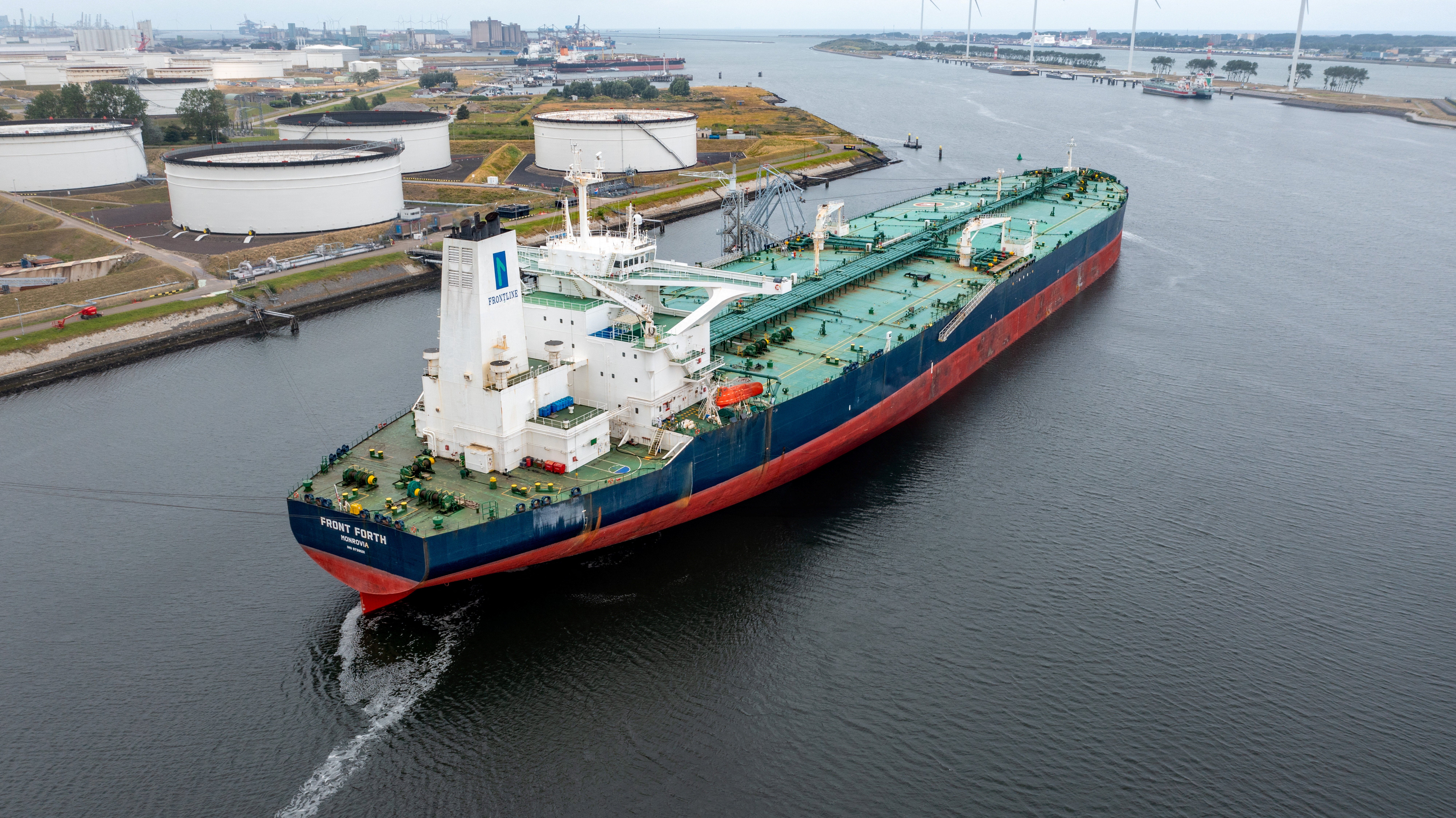
Two UAE oil tankers were struck by Iranian cruise missiles on Tuesday while sailing through the southern lane of the strait in Omani territorial waters, killing one Indian crew member and injuring eight others, the UAE ministry of defence said.
Iran also launched attacks targeting Bahrain as the conflict continued to spread across the Gulf.
Although oil prices remain well below the wartime peak of nearly $120 a barrel, analysts have warned that continued military escalation and uncertainty over the strait’s future could keep markets volatile.
The renewed conflict also weighed on Wall Street on Tuesday, where the S&P 500 fell 0.7 per cent, the Dow Jones Industrial Average slipped 0.4 per cent and the Nasdaq composite dropped 1.4 per cent.