
АНУ-ын Ерөнхийлөгч Дональд Трампын хуулийн зөвлөх асан Тодд Бланш Сенатын танхимд болсон сонсголын үеэр тус улсын хууль сахиулах байгууллагын тэргүүний албан тушаалд нэр дэвшигчийн хувиар оролцож, хууль тогтоогчдын асуултад хариуллаа.
Сонсголын үеэр гол анхаарал Жэффри Эпштейнтэй холбоотой баримт бичгүүдийн ил тод байдал, АНУ-ын Хууль зүйн яамны үйл ажиллагаа болон Трампын засаг захиргааны санаачилсан “зэвсэгжилтээс ангид байх” сангийн асуудалд төвлөрөв. Тодд Бланш Эпштейний хэрэгтэй холбоотой 6 сая орчим баримт бичгийг шалгах явцад алдаа гарсан гэдгийг хүлээн зөвшөөрсөн боловч алдааны хувь хэмжээ бага гэдгийг онцолжээ. Мөн тэрээр хохирогчидтой уулзах асуудалд тодорхой хариулт өгөхөөс зайлсхийж, яамны албан тушаалтнууд уулзалт хийх боломжтой гэж мэдэгдсэн байна.
Сенатын гишүүд Трампын засаг захиргааны “зэвсэгжилтээс ангид байх” сангийн талаар ч ширүүн асуултуудыг тавьсан юм. Бланш тус сангийн үйл ажиллагаа зогссон гэж мэдэгдсэн хэдий ч хууль тогтоогчид уг сангийн санхүүжилт болон түүнтэй холбоотой эрх зүйн баримт бичгүүдийн талаар тодорхой мэдээлэл өгөхийг шаардлаа. Түүнчлэн АНУ-ын хилээр хууль бусаар нэвтэрсэн иргэдийн Үндсэн хуулиар олгогдсон эрхийн асуудлаар байр сууриа илэрхийлэхдээ, Бланш Үндсэн хуулийн хамгаалалт нь АНУ-д хууль бусаар оршин сууж буй хүмүүст бүрэн хамаарахгүй гэх байр суурийг илэрхийлэв.
Сонсголын явцад Бүгд найрамдах болон Ардчилсан намын гишүүдийн зүгээс Трампын засаг захиргааны бодлого, хууль зүйн байгууллагын хараат бус байдлын талаар олон талт шүүмжлэл өрнөсөн. Тодд Бланш хуулийг чанд мөрдөнө гэдгээ амласан боловч түүний өнгөрсөн хугацаанд Трампын өмгөөлөгчөөр ажиллаж байсан нь улс төрийн хүрээнд ихээхэн маргаан дагуулсаар байна.
Дэлгэрэнгүйг эх сурвалжаас харах
↓Эх сурвалжийг нээх ↓
An attorney general confirmation hearing sounds like a dry affair, so it’s best to state in plain terms what actually happened on Wednesday. Sometimes, only the plainest terms will do to underline a situation that is actually completely bizarre.
Todd Blanche, the man who was Donald Trump’s personal lawyer until about five minutes ago, was seeking the permission of U.S. senators to become America’s top law enforcement officer. He’s been doing the job since Pam Bondi was unceremoniously fired two months ago, proving for the zillionth time that you can sign blood loyalty to Donald and he will reward you with a kick in the teeth (Bondi’s DOJ opened lawsuits against Trump’s political enemies, but they largely went nowhere.)
And questions that had to be asked of Blanche included whether Trump can run again in 2028 and whether an “anti-weaponization fund” to pay out Trump allies is actually going ahead. There are no laws against any of this. I guess the framers simply didn’t have the imagination.
And so we got exchanges that developed into claims like those of Republican Sen. Eric Schmitt of Missouri, who claimed that New York was a “hammer-and-sickle” city and that Democrats want to end Western civilization. We had silly, softball questions like those from another Republican, Sen. John Kennedy of Louisiana, which included: “We can agree, can we not, that Mr Epstein was a pig?”
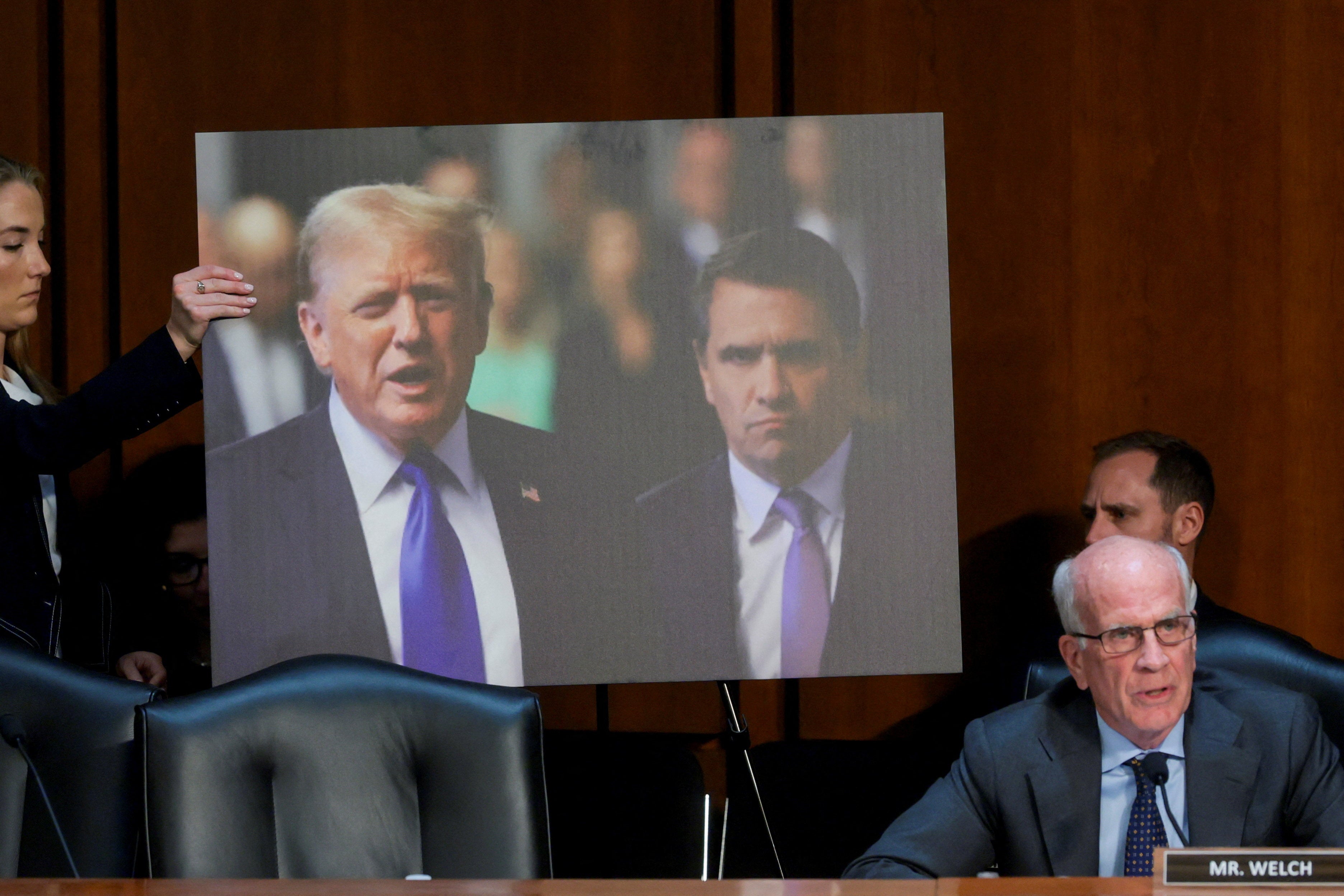
We also had questions from the other side, like Democratic Rhode Island Sen. Sheldon Whitehouse’s entertaining: “How long do you plan to put up with that Kash Patel character?” We had posters and placards lifted up by staffers to make long-winded points, and we had Blanche weaseling out of questions on unserious technicalities (“The definition of full cooperation can be disputed,” for instance, to which most normal people would retort: Oh, come on.)
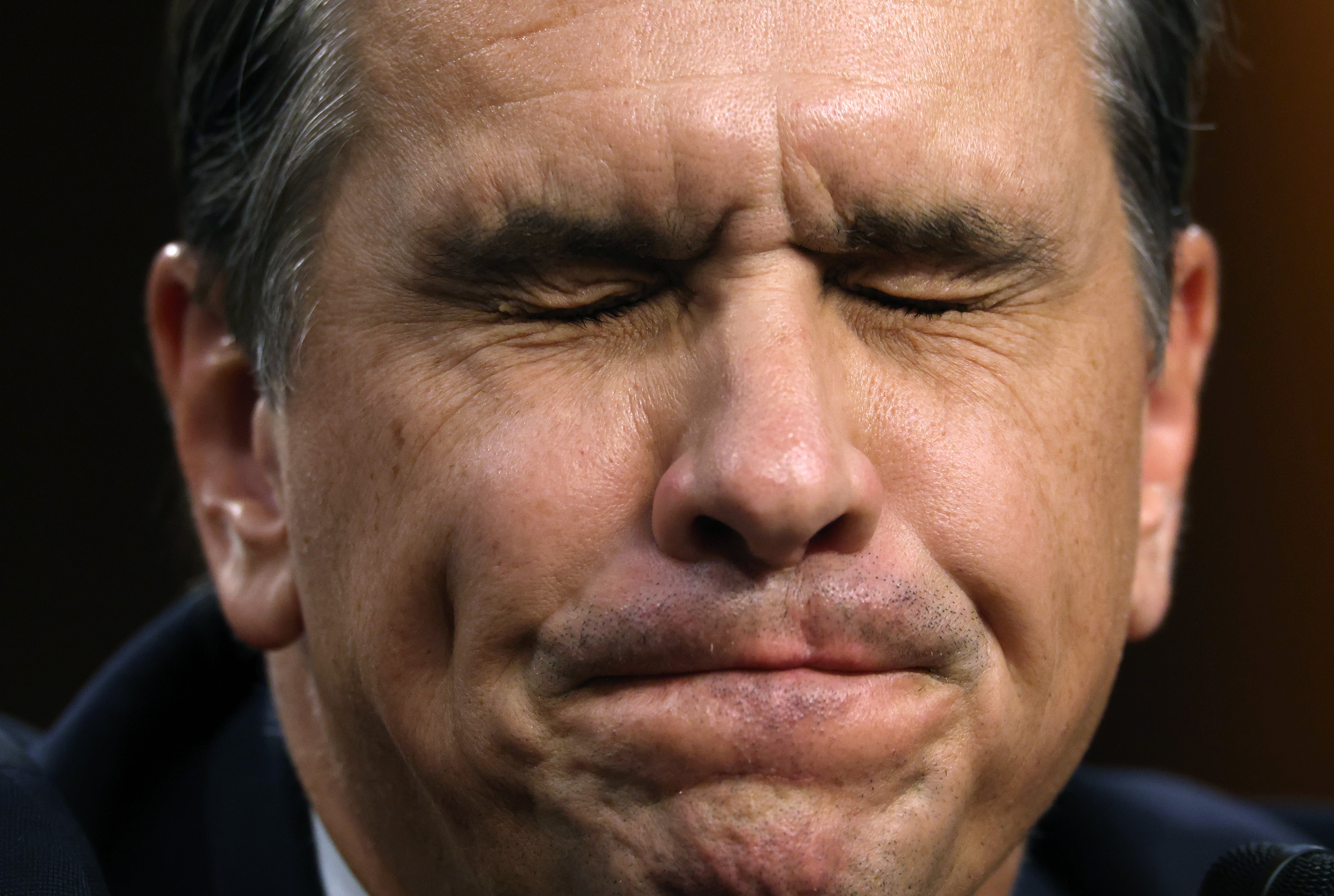
There was also a nail-biting back-and-forth where Kennedy asked, “Are you and President Trump friends?” and Blanche replied: “I’m his lawyer. Was his lawyer!”
So far, so MAGA. But much more telling were some of the lengthier exchanges between Blanche and his questioners.
First up: the Epstein files. Forty-five minutes in, Democratic Sen. Dick Durbin of Illinois, the committee’s ranking member, asked Blanche about the DOJ’s refusal to meet with victims, the movement of Jeffrey Epstein’s convicted accomplice Ghislaine Maxwell to a lower-security prison, the failure to properly redact victims’ names in the files that were released, and the general dumpster fire that ignited not long after Trump promised “full transparency”.
Blanche’s response here was telling. It was “a herculean task” to review all the papers — 6 million of them! — submitted as part of the case. They “took pains to apply appropriate redactions” and “there were mistakes that were made,” but “only 1%” were wrong.
Unfortunately for Blanche, he’d just put two pretty damning numbers together: 1% of 6 million is a pretty large amount of mistakes, after all. Can we take from this that there were mistakes made in 60,000 documents? Before anyone could consider this, Blanche had deflected, Trump-style, right back to Joe Biden.
Not long after this came an entirely absurd exchange between Durbin and Blanche, where the senator asked if it was true that a law had to be passed to force the release of the Epstein files.
“President Trump signed that law,” Blanche immediately shot back.
“Yes, of course he did,” responded Durbin, flatly, because he had to after it was passed by Congress. It’s not exactly a huge concession on the president’s part that he didn’t block a law. But that was by-the-by.
Durbin said he personally remembered the lengths to which the Trump administration went to in order to prevent the full release of the files. There are 10 Epstein victims in the room today, he continued. Will Blanche, under oath, commit to sitting down with them in the next 30 days?
Blanche equivocated. “I appreciate them being here today,” he said, then added that he had a staffer who could meet them.
“Then she can sit right next to you,” Durbin retorted.
Blanche pushed back again. “I think you ought to be in the room,” Durbin continued to insist.
Blanche tried to worm his way out again: “I am definitely part of it,” he said. Will he do it within the next 30 days? “We remain available to meet with any victim or representative,” Blanche returned. He added that his “heart breaks” for every victim of Epstein.
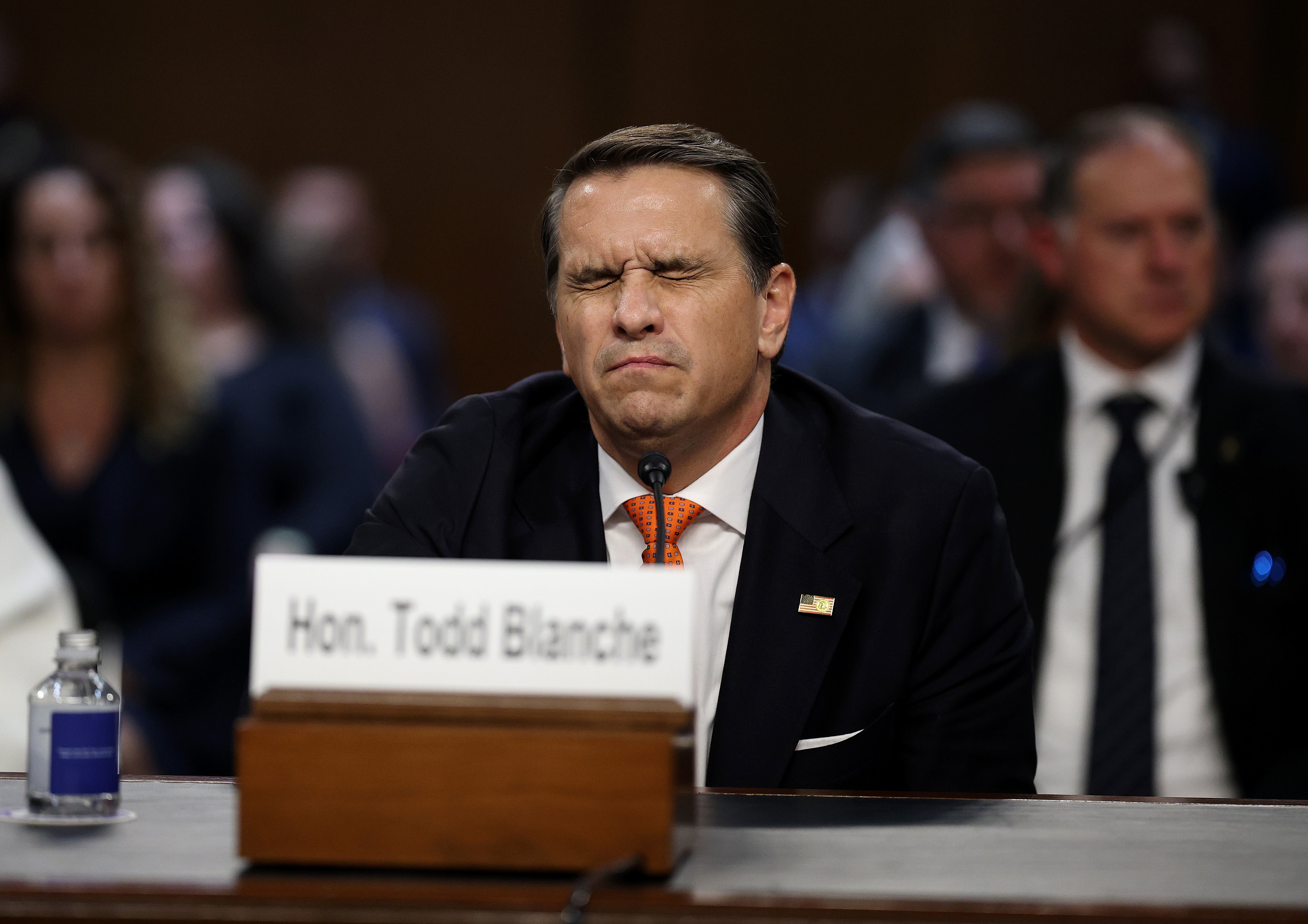
“Will you meet with them in the next 30 days, yes or no?” Durbin pressed. Blanche ducked and weaved again: “I’m not sure what you’re looking for me to say,” he said.
“‘Yes’ is what I’m looking for you to say,” said Durbin. He didn’t get his answer in the end. He simply had to conclude the exchange by saying he hopes Blanche does it.
A very different, but just as telling, exchange came between Blanche and Republican Sen. John Cornyn. Cornyn is one of those Republicans who is not fully MAGA, who comes from the old guard and who can be trusted to at least be somewhat skeptical of the worst Trumpian impulses. (His vote years ago to convict Trump for his role in inciting the Jan. 6 riot earned him a reelection loss in the primary after Trump bucked GOP leadership and endorsed Texas AG Ken Paxton as payback.) But he’s still likely to do whatever Trump wants in the end, even if he has to make a show of pushing back, to ward off MAGA enmity.
The anti-weaponization fund, Cornyn said, “is a moot issue. Is that your position?” He was quoting Blanche to himself. Blanche responded that “there is no anti-weaponization fund,” that it’s “dead” and “not moving forward.” Cornyn then got into the legal weeds: sure, you can say it’s dead, but there’s been some talk of money moving around anyway. Why can’t the DOJ provide anything written to confirm it’s dead? Because there is a written document from before it was killed, and that agreement might be legally enforceable, mightn’t it?
Blanche conceded that it’s possible: “I suppose they could bring a lawsuit and we would litigate it.” He then added that he’d never personally spoken to Trump about the controversial fund — except for “after it was dead”.
Cornyn then abruptly moved on to the abortion pill, pressing Blanche on whether he would help push through a ban on mifepristone (because Cornyn cares so, so much about women, of course, and he just doesn’t want them to bleed out or get sepsis. So philanthropic, so stunning, so brave.) Blanche said he would, having earlier referred to Trump as the “most pro-life president in history.” It seemed like Cornyn was seeking an excuse to vote for Blanche here, a justification for himself and his fellow Americans.
Similar to Cornyn but even more of a wild card is Republican Sen. Thom Tillis of North Carolina, just over 170 days out from Trump-nudged retirement and increasingly inclined to criticize his own party.
“I want to stick a fork in the turkey of this 1776 fund,” Tillis opened with, referring to the anti-weaponization cash. He’d like to see a piece of text that “‘just renders this whole thing dead, gone,” he added. He put forward that if Republicans continue as they are, Democrats will act in the same way in the future, and a terrible precedent will be set.
Blanche was subdued and Tillis elected to give him the benefit of the doubt, telling him that he was “doing a great job” as he concluded. But the message was clear: Finish off the half-dead fund, or face ire from both sides of the aisle.
Elsewhere, there were heated exchanges about Jan. 6 pardons — none of which went anywhere — and a slightly concerning back-and-forth with Republican Sen. Marsha Blackburn of Tennessee, who is very concerned with getting rid of birthright citizenship (Blanche reassured her that, despite the recent Supreme Court ruling, the Trump administration would be using “every tool at our disposal” to try and stymie “birthright tourism”.)
But the most significant exchange outside of these issues was had with Democratic Sen. Amy Klobuchar of Minnesota, still a favorite to one day run for president. She brought up the actions of ICE officers against both citizens and non-citizens, including the deaths of Renee Good and Alex Pretti and the recent shooting in Maine of Joan Sebastian Guerrero. In the cases of Good and Pretti, she said, information was not shared between federal and state investigators; federal cops failed to secure the scene and made mistakes. Will he commit to cooperation in the future?
This is where Blanche claimed that “full cooperation” has different definitions. He added, for good measure, that “news reporting” is “not accurate”.
Would he agree that the “elder pulled out of his house in his underwear in 10-below zero weather,” a US citizen wrongly identified as an illegal immigrant, should never have been treated that way, Klobuchar pressed? Could he say that it’s unacceptable “for federal agents to enter someone’s house without a warrant and drag them onto the street”?
“Depends on the circumstances,” came Blanche’s reply, although, he added, they really should have a warrant. If Klobuchar was looking for a flicker of humanity in Blanche’s eyes, she wasn’t going to get it.
And then Blanche let us all know one of the biggest priorities for the Trump DOJ in the future. “We very much believe in the constitutional protections,” he said, as if there’s any other option under American law. Nevertheless, “the same protections are not afforded to people who are here illegally.”
This isn’t true: until the Trump administration started, very recently, to attempt to argue that they can treat illegal aliens any way they please, the Constitution has been for everybody. General consensus, historically, has been that it applies to all people within the US borders.
But what is history except a boring old irrelevant list of dates that’s up for grabbing, tearing into pieces, and recasting in 24-carat gold under a huge monument dedicated to Donald J. Trump?
“I will absolutely follow the law, whatever it includes,” said Blanche in the end. And if the law happens to change in the eyes of the president, who is he to stand in the way?

