Бүгд Найрамдах Ардчилсан Конго Улсын Ломами болон Конго мөрний хоорондох ширэнгэн ойд урьд өмнө бүртгэгдээгүй сармагчны шинэ зүйл болох Colobus congoensis-ийг эрдэмтэд нээжээ.
Энэхүү сармагчныг нутгийн иргэд “Ликвели” хэмээн нэрлэдэг байсан ч шинжлэх ухааны бүртгэлд ороогүй байв. 2008 онд анхны гэрэл зургийн баримт бүртгэгдсэнээс хойш судлаачид 2018-2022 оны хооронд 114 удаагийн ажиглалт хийснээр тус амьтныг шинэ зүйл болохыг албан ёсоор баталлаа.
Флоридагийн Атлантын их сургуулийн судлаачдын баг генетикийн шинжилгээгээр Colobus congoensis нь хамгийн ойрын төрөл зүйл болох Colobus satanas-аас 4-5 сая жилийн өмнө салж хөгжсөнийг тогтоожээ. Мөн уг сармагчны дуу авианы давтамж нь бусад зүйлээс ялгаатай, өвөрмөц болохыг судалгаагаар илрүүлсэн байна.
Биологич Жуниор Амбокогийн тайлбарласнаар, энэхүү нээлт нь Конго улсын байгалийн баялаг, биологийн олон янз байдал хичнээн агуу болохыг харуулж байна. Гэвч уг зүйл нь тархац нутаг багатай, амьдрах орчны доройтол болон ан агнуурын аюулд өртөж болзошгүй байгаа тул хамгаалалтын ач холбогдол өндөр байгааг эрдэмтэд анхаарууллаа.
Дэлгэрэнгүйг эх сурвалжаас харах
↓Эх сурвалжийг нээх ↓
When biologists discover a new species in the 21st century, it’s usually because they’ve run new DNA analysis, peered more closely down the microscope, or collected specimens from far beyond the human comfort zone.
And yet primatologists have just confirmed the existence of a monkey species that had, until now, evaded the scientific record.
Meet Colobus congoensis, a monkey that has long been hiding in the rainforest between the Lomami and Congo (Lualaba) rivers in the east-central region of the Democratic Republic of Congo (DRC).
Even people who live within the monkey’s range had rarely sighted it.
When they did, Bangala people called it ‘Likweli’; Mituku locals called it ‘kasaba nkoni’, the branch-shaker.
Lukuru Wildlife Research Foundation conservationists Bernard Ikembelo and Ashley Vosper caught the first photographic evidence of a Likweli in 2008, in what became Lomami National Park in 2016.
But even that was just a glimpse.
Now, almost 20 years later, researchers have collected 114 field observations of Likweli, and enough evidence to confirm that it is, indeed, an entirely new species of primate.
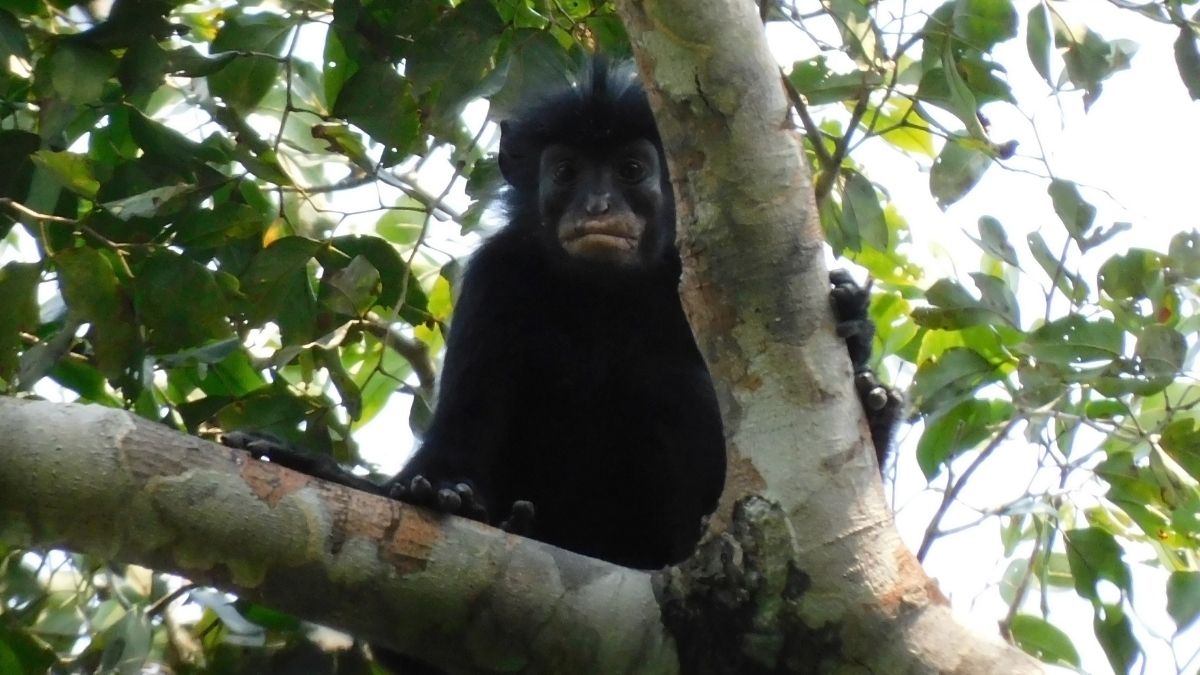
They’ve announced the species officially in the scientific journal PLOS One.
“Following the initial [photographed] sighting, nothing more was reported until November 2018, when Jean Pierre Kapale led a surveillance patrol in the Courbure Sector and photographed a black monkey with pale markings around its mouth and a white perianal patch,” writes the research team, which includes researchers from institutions across the DRC and the US.
It was unlike any other monkey that had been sighted in the area.
“Over the next 10 months, Kapale and his team, using surveillance patrols and directed searches accompanied by local field assistants, found and photographically documented the monkey seven more times in different locations,” the team reports.
With the addition of extra photos from surveillance patrols by other teams working in the Lomami National Park, the researchers had compiled a dataset extensive enough to verify the new species: 114 sightings across around 1,700 square kilometers, between 2018 and 2022.
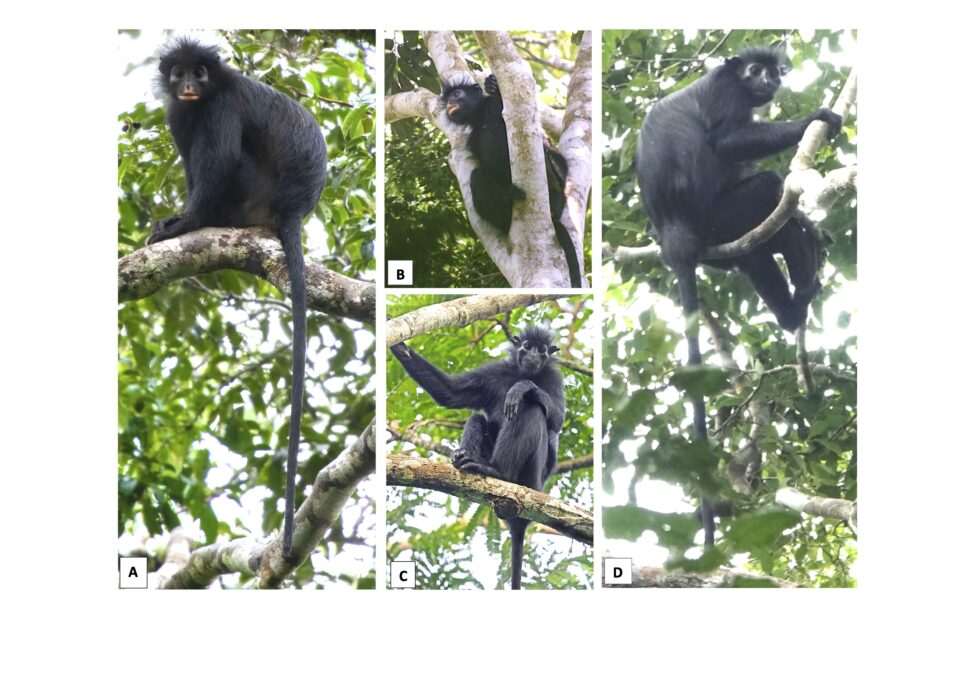
“This discovery is both exciting and deeply personal, highlighting the extraordinary biodiversity of my homeland and how much remains undocumented,” says biologist Junior Amboko, of Florida Atlantic University.
“I was honored to name the species ‘Colobus congoensis‘, recognizing the Congo Basin’s remarkable natural heritage and, we believe, marking the first primate named after the Democratic Republic of Congo itself – underscoring both its global importance and local pride.”
It must be said: these monkeys have excellent faces, with curious dark eyes, cheekbones that would make Cher jealous, and a modelesque pinkish-orange pout that could inspire a whole new lipstick trend.

The monkey’s sleek black fur and long drooping tail are contrasted by a shock of spiky hair radiating from around its expressive face.
Genetic analysis revealed it is separated from its closest relative by 4 or 5 million years.
“The discovery of Colobus congoensis is reshaping our understanding of African monkey evolution,” says anthropologist Kate Detwiler, also from Florida Atlantic University.
“Its closest known relative is Colobus satanas, found more than 1,200 kilometers away in west-central Africa. Yet our genetic evidence shows the two species diverged roughly 4 to 5 million years ago, marking one of the oldest known evolutionary splits within the Colobus lineage.”
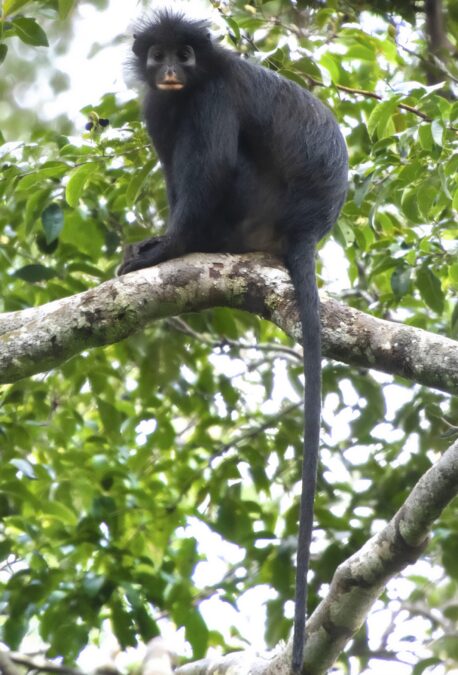
It’s not just its physical and genetic features that distinguish it from other members of its genus: six audio recordings revealed its deep roars bear a unique acoustic signature, too.
Related: In Namibia’s Elephant Corridor, a Turf War Between Humans And Wildlife Is About to Get Worse
And it may have been discovered in the nick of time: its range is limited, and like other species in the region, it faces habitat loss and pressure from hunting.
“The discovery of Colobus congoensis is both a scientific triumph and a sobering reminder that some of Earth’s rarest creatures may vanish before the world even knows they exist,” says Detwiler.
The research was published in PLOS One.
This article was fact-checked by Rachel Garner and edited by Michael Irving. While we pride ourselves on our process, we are only human. If you spot a mistake, please let us know.