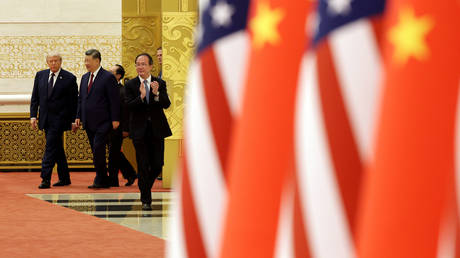
АНУ-ын Ерөнхийлөгч Дональд Трамп 2020 оны сонгуулийн үеэр БНХАУ-ын тагнуулын албад 220 сая сонгогчийн мэдээллийг хулгайлсан гэж мэдэгдсэнийг Бээжин эрс үгүйсгэлээ.
АНУ-ын Ерөнхийлөгч Дональд Трамп олон нийтэд хандсан үгэндээ БНХАУ-ын тагнуулын тусгай нэгж нь Америкийн сонгогчдын нэр, хаяг, утасны дугаар болон намын харьяаллыг багтаасан 220 сая файлыг хууль бусаар олж авсан гэж буруутгав. Тэрээр үүнийг АНУ-ын түүхэн дэх сонгуулийн мэдээллийн аюулгүй байдалд учирсан хамгийн том зөрчил гэж нэрлэсэн юм. Мөн тэрээр АНУ-ын тагнуулын байгууллагууд энэхүү үйлдлийг 2020 онд илрүүлсэн ч түүнд болон Конгресст мэдээлээгүй гэж мэдэгдсэн байна.
БНХАУ-аас АНУ-д суугаа Элчин сайдын яамны хэвлэлийн төлөөлөгч Лю Чан тус мэдэгдлийг няцааж, БНХАУ хэзээ ч АНУ-ын ерөнхийлөгчийн сонгуулийн үйл явцад хөндлөнгөөс оролцож байгаагүй гэдгээ илэрхийлэв. “New York Times” сонины мэдээлснээр, сонгогчдын мэдээлэл нь нээлттэй эх сурвалжаас олж авах боломжтой байдаг бөгөөд зөвхөн энэ төрлийн мэдээллийг эзэмших нь сонгуулийн үр дүнг шууд өөрчлөх боломжгүй юм.
Цагаан ордны ил болгосон баримт бичигт Хятадын тал Трампын эсрэг чиглэсэн зарим нэг анхны шатны алхмуудыг хийсэн байж болзошгүй гэж дурдсан ч БНХАУ сонгуулийн үйл явцад шууд хөндлөнгөөс оролцохыг оролдсон гэх нотолгоо байхгүй гэж дүгнэжээ. Энэхүү маргаан нь БНХАУ-ын дарга Ши Жиньпиний есдүгээр сарын сүүлээр хийхээр төлөвлөсөн АНУ-д хийх айлчлалын өмнө өрнөж байгаагаараа онцлог юм. Ажиглагчдын үзэж буйгаар ийм төрлийн хатуу мэдэгдэл нь хоёр улсын худалдааны хэлэлцээ болон дипломат харилцаанд сөргөөр нөлөөлж болзошгүй байна.
Дэлгэрэнгүйг эх сурвалжаас харах
↓Эх сурвалжийг нээх ↓
China has rejected US President Donald Trump’s claim that Beijing masterminded the theft of 220 million American voter files to meddle in the 2020 election. Trump’s explosive remarks came ahead of Chinese President Xi Jinping’s planned visit to Washington in late September and amid a tentative trade truce between the two countries.
In a prime-time address to the nation on Thursday, Trump accused Chinese intelligence services of illicitly acquiring 220 million voter files containing names, addresses, phone numbers, and party affiliations, claiming that Beijing assigned a dedicated unit to exploit the data.
He called the alleged breach “an unprecedented election security nightmare” and the “largest compromise” of election data in US history.
The president also claimed that US intelligence agencies detected the alleged Chinese data harvesting in 2020, but intentionally hid it from him and Congress. He did not, however, announce any plans for retaliation against Beijing.
Liu Chang, the spokesperson for the Chinese Embassy in Washington, dismissed the claims, saying “China has never and will never interfere in the presidential elections of the US.”
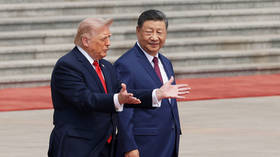
According to the New York Times, China’s efforts to collect voter data have been “broadly known for years.” Voter information in many cases can be freely downloaded or bought, the paper said, adding that possessing the data could offer insight into American voters but would not on its own allow anyone to manipulate votes.
The data declassified by the White House also contains a series of memos by senior cyber intelligence official Chris Porter, who argued that China took “at least some low-level, exploratory steps” to undermine Trump’s chances against then-Democratic nominee Joe Biden. Despite this, Porter agreed with the overall intelligence conclusion that “there was no information suggesting China tried to interfere with election processes.”
Trump’s bombshell accusation comes weeks before Chinese President Xi Jinping’s planned visit to Washington around September 24. According to the South China Morning Post, Beijing will send Vice Foreign Minister Ma Zhaoxu to Washington next week to help lay the groundwork for the trip.
Reuters warned that Trump’s accusations could fray US-China ties and unsettle the fragile trade truce. Denis Simon of the Quincy Institute, a Washington think tank, told the South China Morning Post that the speech was significant because it elevated alleged Chinese election meddling to “a central national security narrative.”
He added, however, that while Trump’s remarks could cast doubt on Xi’s visit, “harsh rhetoric does not automatically prevent summit diplomacy,” and the key question is whether “the two governments can continue to compartmentalize, maintaining channels for negotiation while simultaneously accusing each other of increasingly serious security threats.”
Trump traveled to China in May, though high-level talks with Xi did not produce a breakthrough on trade. China pledged to increase purchases of US soybeans and buy 200 Boeing jets – though the number turned out to be much lower than expected. Trump also said he discussed arms sales to Taiwan with Xi. His administration later said shipments to the island – which Beijing views as its sovereign territory – were paused.

