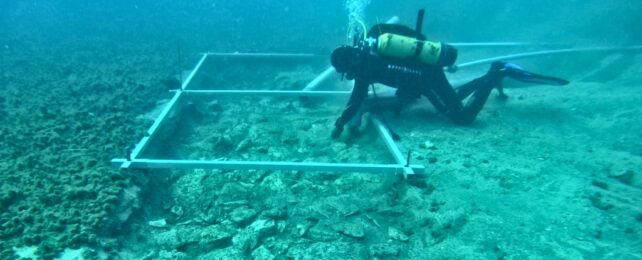
Адриатын тэнгисийн ёроолоос неолитын үеийн суурингийн нэг хэсэг болох эртний чулуун байгууламжийг археологичид олж тогтоолоо.
Хорватын Корчула арлын ойролцоох тэнгисийн ёроолоос 7000 орчим жилийн настай, 4 метр өргөн чулуун замыг илрүүлжээ. Задар их сургуулийн археологич Мате Парица хиймэл дагуулын зураг ашиглан далайн ёроолын ер бусын бүтцийг анх 2021 онд олж харсан бөгөөд судалгааны баг шумбагчдын тусламжтайгаар тус замыг болон түүнтэй холбогдох Солине нэртэй эртний суурингийн үлдэгдлийг баталгаажуулсан байна. Энэхүү байгууламж нь далайн ёроолд лаг шаварт хучигдсан байсан тул олон мянган жилийн турш харьцангуй сайн хадгалагдаж иржээ.
Нүүрстөрөгчийн шинжилгээгээр тус суурин нь МЭӨ 4900 оны үед хамаарч байгаа нь тогтоогдсон бөгөөд үүнийг эртний Хвар соёл иргэншлийн үед холбогдохыг судлаачид онцолсон байна. Солине суурин нь анх хиймэл арал дээр баригдсан байх магадлалтай бөгөөд чулуун зам нь тус арлыг эх газартай холбодог байжээ. Судалгааны баг үүнээс гадна Корчула арлын эсрэг талд Градина буланд ижил төстэй бүтэцтэй, дахин нэг эртний суурингийн үлдэгдлийг илрүүлсэн нь тухайн бүс нутагт неолитын үед хүн амын нягтаршил өндөр байсныг илтгэж байна.
Эдгээр олдвор нь тухайн үеийн иргэншил газар нутгаа төлөвлөлттэйгээр ашиглаж, дэд бүтцийн томоохон байгууламж барих чадвартай байсныг гэрчилж байгаа юм. Судлаачид малтлагын үеэр чулуун сүх, чимэглэл бүхий ваар сав зэрэг Хвар соёлын шинж чанарыг агуулсан олон тооны эд өлгийн зүйлсийг олсон нь тус бүс нутгийн түүхийг судлахад чухал ач холбогдолтой баримт болж байна.
Дэлгэрэнгүйг эх сурвалжаас харах
↓Эх сурвалжийг нээх ↓
A stone road built nearly 7,000 years ago has been uncovered beneath the waters off the Croatian island of Korčula, buried under thick layers of sea mud at the bottom of the Adriatic. The find extends the known reach of the submerged Neolithic site of Soline, one of the most significant prehistoric underwater sites documented in the Mediterranean. Researchers believe the road once served as a physical link between the ancient settlement and the main coast of Korčula island.
The road measures roughly 4 meters wide and was constructed from carefully stacked stone slabs. It now rests at approximately 4 to 5 meters below the water’s surface, where accumulated mud kept it hidden from view for millennia. Once that sediment was cleared, the structure beneath proved to be well preserved.
The discovery is the result of collaboration among experts from the University of Zadar, Dubrovnik Museums, the Museum of the City of Kaštela, and the City Museum of Korčula, working alongside a team of underwater photographers and divers. The University of Zadar described the find in a public statement, noting that people walked on this road nearly 7,000 years ago.
A Neolithic Settlement Once Stood Here as an Artificial Island
The road connects to the broader Soline settlement, which researchers believe was originally built on an artificial island, a landmass deliberately shaped and separated from Korčula’s main coast by a narrow strip of land. The site was first identified in 2021 by archaeologist Mate Parica of the University of Zadar, who spotted unusual features on the seafloor while examining satellite images of the waters around Korčula. He and a colleague dove to confirm the find and discovered stone walls at the bottom, the likely remains of an ancient built environment.
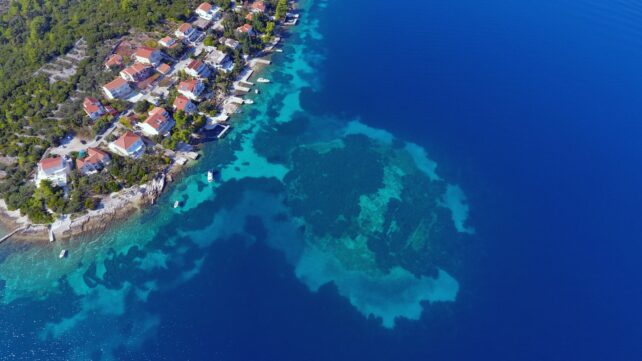
The location of the site played a significant role in its preservation. Soline sits in a sheltered section of the Adriatic, naturally shielded from open-water wave action by the surrounding islands. Parica noted that this protection from large waves almost certainly helped the structures survive largely intact over thousands of years, and the same calm-water conditions appear to have kept the road’s stone slabs in place beneath the mud.
The Soline archaeological site sits in a bay between Korčula Old Town and Lumbarda. The settlement walls lie at around 4 meters below the surface, shallow enough for snorkelers to observe from above. Some objects recovered from the site are now on display at the renovated Town Museum of Korčula.
Radiocarbon Dating Places the Site Around 4,900 BCE
Radiocarbon analysis of preserved wood recovered near the site dates the entire Soline settlement to approximately 4,900 BCE, placing its construction about 7,000 years ago. That period falls within the Neolithic era, when communities across parts of the world were moving away from mobile hunter-gatherer lifestyles toward more permanent, organized settlements. Along the eastern Adriatic, this transition gave rise to communities capable of engineering constructed landmasses and stone-paved pathways between them.
Researchers attribute the construction of both the settlement and the road to the Hvar culture, a Neolithic and Chalcolithic group that inhabited the eastern Adriatic coast and takes its name from the nearby island of Hvar. According to the Hvar culture entry on Wikiwand, the submerged road is believed to have formed a stoneway leading out to the artificial island, which has also since sunk below the waterline. Alongside the road and stone walls, researchers have recovered stone axes, ornamented pottery, and other objects consistent with Hvar culture material from the site.
The presence of constructed infrastructure at this scale points to a level of planning and collective organization that is not always assumed for Neolithic communities. The road was not an incidental feature but a deliberate engineering choice, built from stacked stone and wide enough to function as a proper thoroughfare. It adds a concrete detail to what is known about how the Hvar culture organized and connected its settlements along the Adriatic coast nearly 7,000 years ago.
A Second Submerged Settlement Found on the Other Side of the Island
While working at Soline, the research team received a separate lead from University of Zadar archaeologist Igor Borzić, who noticed unusual structures beneath the waters of Gradina Bay on the opposite side of Korčula. The dive team investigated and found a second underwater settlement resting at the same depth of 4 to 5 meters, with a layout and construction style strikingly similar to Soline. The site had not been previously documented.
Artifacts recovered at Gradina Bay include stone blades, axes, and pottery fragments, closely matching the material found at Soline. The shared cultural profile of both sites suggests the Hvar culture maintained a presence on multiple sides of Korčula during the same broad period. Two sites separated by the full width of the island, sharing the same depth, construction style, and artifact types, indicate the area supported a more substantial Neolithic population than earlier surveys had suggested.
Submerged Neolithic settlements are comparatively rare across the Mediterranean. Most prehistoric coastal sites from this period either eroded, were built far enough inland to survive rising sea levels, or remain undetected on the seafloor. The confirmation of two structurally similar sites around a single island makes Korčula an unusually concentrated location for this type of underwater archaeological evidence, and ongoing fieldwork at both sites continues to expand the picture of how these communities built and organized life along the Adriatic coast.
Enjoyed this article? Subscribe to our free newsletter for engaging stories, exclusive content, and the latest news.

