Хүйтэн дайны үед Зөвлөлт Холбоот Улсын агаарын орон зайд тагнуул хийж байсан SR-71 Blackbird онгоц нь хамгийн өндөр хурдны дээд амжилтыг тогтоосон түүхтэй.
АНУ-ын Агаарын цэргийн хүчин SR-71 Blackbird тагнуулын онгоцыг 1976 онд цагт 2,193 миль хурдлах хүртэл нь хөгжүүлж, хоёр гаруй арван жилийн турш ашиглажээ. Зэвсэглэлгүй энэхүү онгоц нь 85,000 фут өндөрт нисэх чадвартай байсан нь түүнийг дайсны сөнөөгч онгоцнуудаас хамгаалах гол стратеги болж байв.
Балтийн тэнгисийн чиглэлд хийдэг “Baltic Express” хэмээх тагнуулын нислэгүүдийн үеэр хэд хэдэн удаа техникийн саатал гарч байсан түүхтэй. Тухайлбал, 1987 онд хөдөлгүүрийн доголдол гарсан SR-71 онгоцыг Шведийн нисэх хүчний Saab Viggen сөнөөгч онгоцууд хамгаалалтад авч, аюулгүй газардуулахад тусалсан байна. Эдгээр Шведийн нисгэгчдэд 2018 онд АНУ-ын Агаарын цэргийн хүчний медалийг гардуулжээ.
Мөн 1987 онд Норвегийн Ставангер хотод Pratt and Whitney J58 хөдөлгүүрийн доголдолтой SR-71 онгоц ослын буулт хийж байсан удаатай. Эдгээр тохиолдлууд нь тухайн үеийн инженерийн шийдэл өндөр түвшинд байсныг нотолж, дайсны нутаг дэвсгэр дээр ч ноцтой осол гаргалгүйгээр нислэгээ дуусгах боломж олгож байжээ.
Дэлгэрэнгүйг эх сурвалжаас харах
Эх сурвалжийг нээх ↓
The SR-71 Blackbird surveillance plane broke the record for the fastest jet ever flown with a top speed of 2,193 miles per hour in 1976, a record it still holds to this day. The Blackbird wasn’t a one-off piece of equipment for bragging rights over the Soviet Union, either. It had a service life of over two decades, according to the U.S. Air Force.
It wasn’t armed, but it had the advantage of an extremely high service ceiling of around 85,000 feet, and the aforementioned record-breaking speed. The basic theory to keep the Blackbird safe while flying over the U.S.S.R. was to fly higher and faster than any potential interceptor planes.
So what happens if you are an SR-71 pilot and something goes wrong when you are over twice the altitude of a commercial flight? Never an organization to lack a contingency plan; the Cold War-era U.S. Air Force actually had to deal with this scenario a number of different times. It boiled down to pilot preparation and having friendly countries to limp back to if the mission started going south.
Friends in Scandinavia
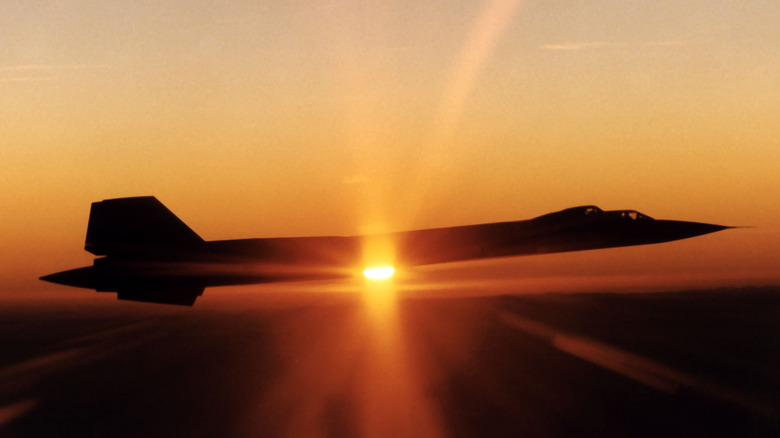
Nasa/Getty Images
The Baltic Sea borders countries in Northern and Eastern Europe like Finland, Latvia, and Poland, but much more to the interest of SR-71 pilots and the United States, it bumps up right against Russia. Flying up and down the Baltic Sea was a common mission for the Blackbird, known as the “Baltic Express.”
The U.S. Air Force notes that in 1987, a Blackbird flying this route experienced engine trouble and couldn’t remain airborne safely. Fortunately, four pilots from Sweden lent a hand, providing an escort with their Saab Viggen fighter jetsfor the Blackbird, allowing it to land safely outside of the range of potential enemy aircraft. Those Swedish pilots were awarded U.S. Air Force medals in 2018.
Also in 1987, a Blackbird experienced problems with one of itsPratt and Whitney J58 engines near Norway and was forced to land in Stavanger, Norway. It too landed without any incident. More specific details of the SR-71’s “adventures” are likely to remain classified for some time. But from what we know, it was a testament to how well the SR-71 was engineered that encountering potentially disastrous issues at over 80,000 feet over enemy territory wasn’t a death sentence or the start of an international incident.