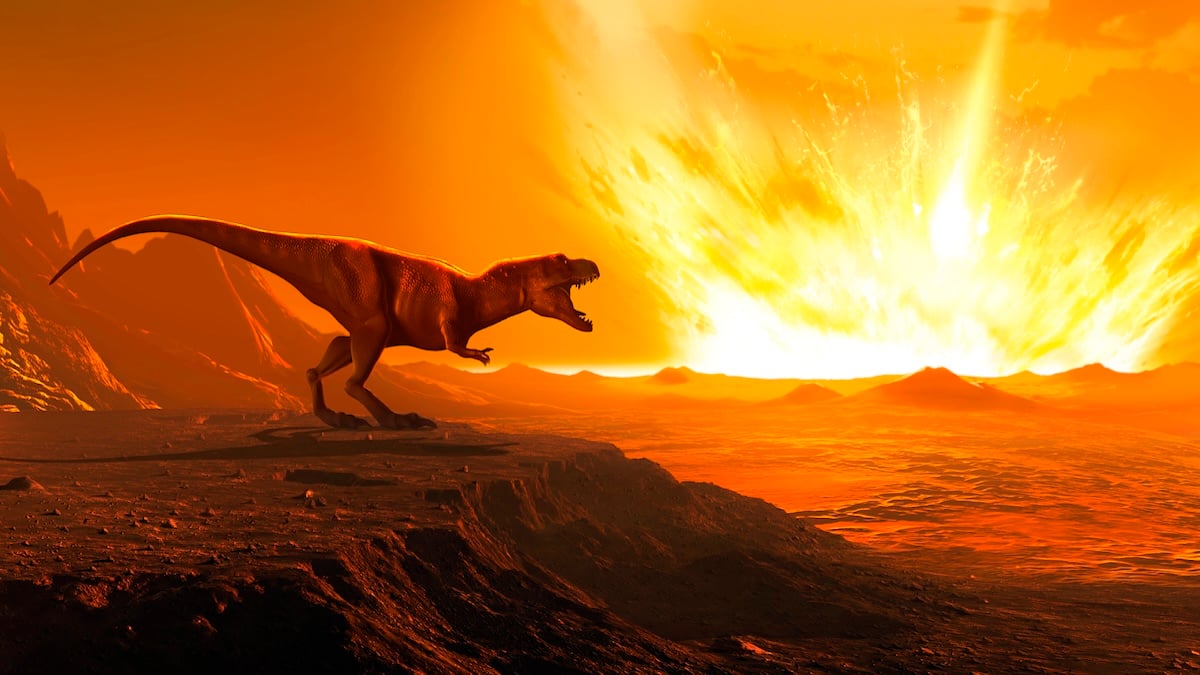
Одоогоос 66 сая жилийн өмнө Мексикийн Юкатаны хойгт унасан асар том солир нь дэлхий даяар ой хээрийн түймэр, цунами, галт уулын идэвхжил болон газар хөдлөлтийг өдөөжээ. Энэхүү гамшгийн улмаас агаар мандалд тархсан тоос шороо нарны гэрлийг халхалж, дэлхийн температурыг бууруулан, хүнсний гинжин хэлхээг бүхэлд нь нурааснаар үлэг гүрвэлүүдийн мөхлийг авчирсан юм.
“Science Advances” сэтгүүлд нийтлэгдсэн шинэ судалгаагаар, уг солир нь нийт солирын тав хүрэхгүй хувийг бүрдүүлдэг нүүрстөрөгч ихтэй хондрит (carbonaceous chondrite) төрлийнх болохыг баталжээ. Бельгийн Врийе их сургуулийн геологич Филипп Клэйс болон түүний баг Дани, Испани, Италийн таван өөр цэгээс авсан дээжид никелийн изотопийн шинжилгээ хийсэн байна. Үр дүнд нь уг биет нь “Carbonaceous Ornans” (CO) хэмээх маш ховор дэд бүлэгт хамаардаг болохыг илрүүлжээ.
Судлаачдын үзэж буйгаар, ийм ховор солир дэлхийг мөргөсөн нь үлэг гүрвэлүүд хэр зэрэг азгүй байсныг илтгэж байна. Ихэвчлэн Бархасбадь гараг сансрын биетүүдийг татах хүчээрээ хамгаалж, ийм том хэмжээний аюулт солир дэлхийг мөргөхөөс сэргийлдэг байна.
Мөн уг солирын найрлагад хүхэр бага байсан нь урьд өмнө таамаглаж байсанчлан хүхэр нь мөхлийн гол шалтгаан биш байсныг харуулж байна. Энэхүү судалгааны дүгнэлтээр, солирын мөргөлтөөс үүдэн агаар мандалд дэгдсэн нарийн ширхэгтэй хог хаягдал нь дэлхийн уур амьсгалыг эрс өөрчилж, амьд организмыг устгах гол хүчин зүйл болсон гэж дүгнэжээ.
Дэлгэрэнгүйг эх сурвалжаас харах
↓Эх сурвалжийг нээх ↓
The dinosaurs had a good run, but when their time was up, it was very much up.
Around 66 million years ago, a massive asteroid slammed into what is now the Yucatán Peninsula, Mexico. The impact triggered worldwide wildfires, towering tsunamis, ocean acidification, volcanic eruptions, and earthquakes.
Debris clouded the sky, reducing sunlight and cooling the planet, which killed plant life and set off a cascade of collapsing food chains.
That’s far from what you’d call a good day, but it turns out the dinosaurs were particularly unlucky: A string of unfortunate coincidences lined up to bring them down.
It’s thought that if the asteroid had hit almost anywhere else on Earth, or had struck at a different angle, the devastation probably wouldn’t have been quite as severe.
Even the time of year – in the midst of spring for the Northern Hemisphere – of the impact reduced the ability for species in that half of the world to recover.
A new study, published in Science Advances, adds another bit of bad luck to the list: The impactor itself was an extremely rare type of meteorite from possibly as far away as the outer Solar System.
We already knew it was a carbonaceous chondrite, a class of meteorite that makes up less than five percent of those that fall to Earth.
But the new study has found that the dino-destroying rock belonged to a subgroup known as CarbonaceousOrnans (CO) meteorites. These make up a minuscule fraction of that fraction.
Jupiter is usually an effective gravitational goalie, keeping space rocks from the outskirts of the Solar System from migrating into our neck of the woods.
Of course, some small ones will occasionally slip through its fingers – but letting a 10-kilometer (6-mile) world-ender past is a pretty embarrassing blunder.
“Carbonaceous chondrites of the Ornans class are definitely not like the typical meteors you find in museum collections,”says Philippe Claeys, geologist at Vrije Universiteit Brussel in Belgium.
“Being impacted by such a rare, distant projectile really underscores how unlucky the dinosaurs were.”
To trace the impactor’s origins, researchers conducted a little forensic analysis – although in this case, the crime scene covered the entire planet.
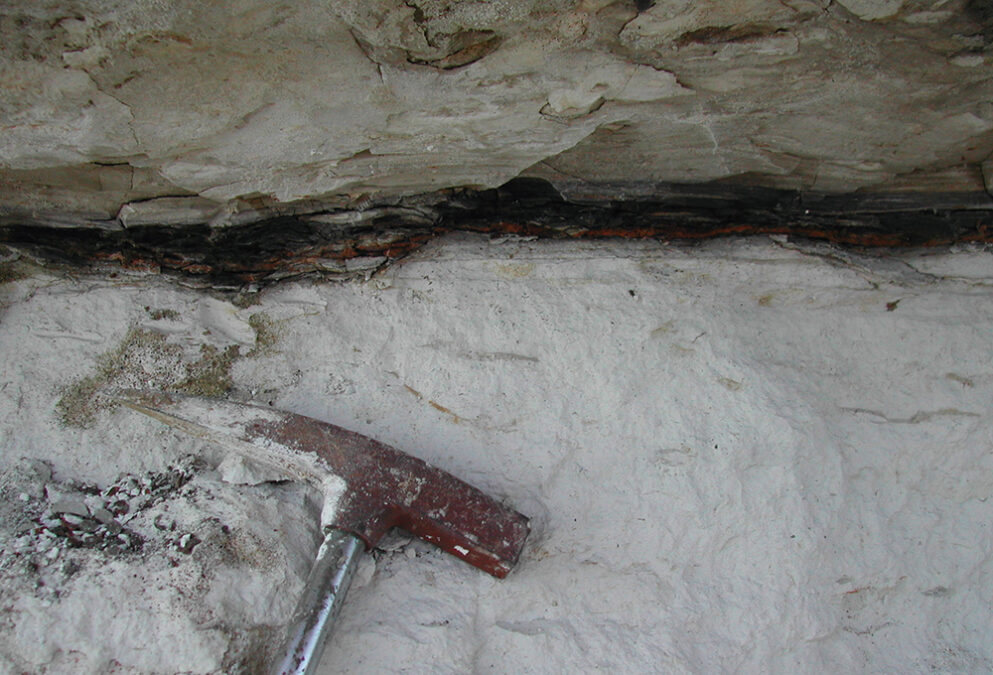
The Cretaceous-Paleogene(K-Pg)boundary is the geological layer that underscores the end of the era of the dinosaurs with a distinct black line in the rock.
The researchers analyzed samples taken from this boundary in five different locations: one in Denmark, one in Spain, and three in Italy. These were compared to samples taken from 11 different carbonaceous chondrite meteorites, from a range of subgroups.
The team was specifically analyzing nickel in the samples. This element is found in far higher concentrations in primitive meteorites than in Earth’s crust, and different types of meteorites have different signatures of nickel isotopes.
The nickel was isolated and purified from the samples, and its isotopes analyzed and compared.

And sure enough, the work pointed most strongly towards the CO group.
“This analysis readily excludes most other potential impactor compositions, including carbonaceous Mighei chondrites, currently most favored in the literature,” the researchers write.
Related: When The Dinosaur-Killing Asteroid Hit, This Life-Form Feasted On The Death
Uncovering the identity of the killer rock adds some intriguing implications for how that fateful day went down.
Sulfur is often blamed as a key factor in the apocalyptic conditions that followed – vaporized sulfur in the atmosphere didn’t just block the Sun, but fell as acid rain that would have polluted the soils and seas for millennia.
But tracing the impactor to this type of meteorite means sulfur probably wasn’t the main villain of the story.
“A CO contains much less volatile elements – like carbon, zinc, water and particularly sulfur – than other classes of meteorites we’ve discovered so far on Earth. It doesn’t alter our theory of what caused the extinction event – but it makes it less likely that sulfur contained in the impactor was the smoking gun,” says Claeys.
“The fine debris thrown into the atmosphere would have been the primary factor.”
It’s enough to make you want to keep an eye out for any stray space rocks that may be heading our way.
The research was published in the journal Science Advances.
This article was fact-checked by Rachel Garner and edited by Rebecca Dyer. While we pride ourselves on our process, we are only human. If you spot a mistake, please let us know.

