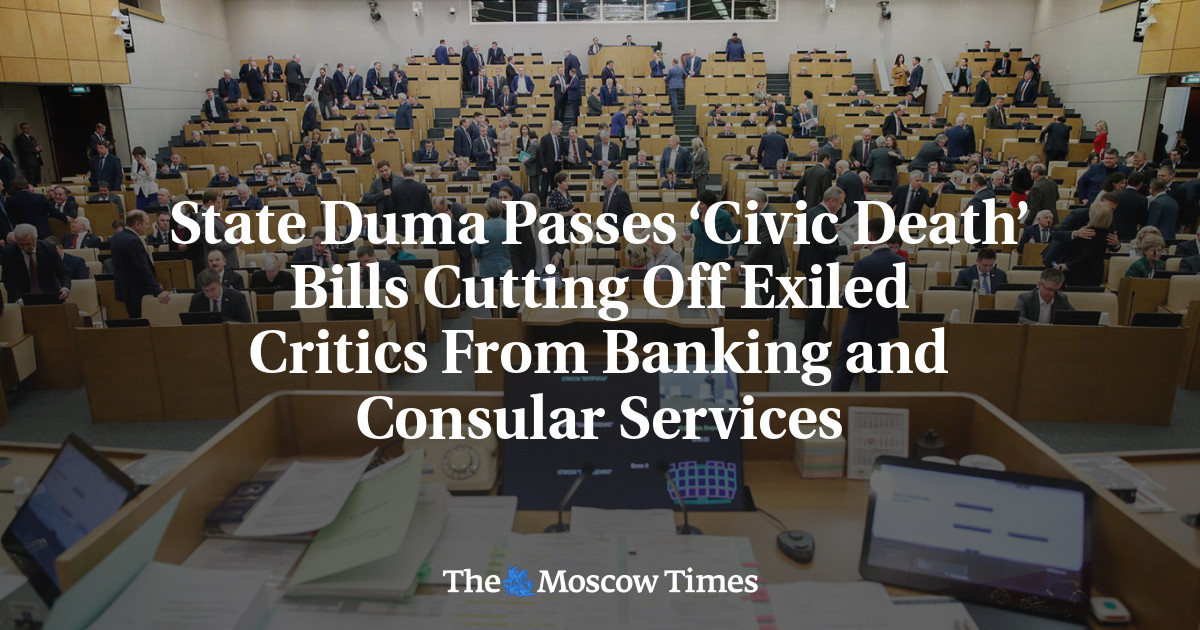
ОХУ-ын Төрийн дум гадаадад амьдарч буй, засгийн газраа шүүмжилсэн иргэдийн банкны үйлчилгээ, үл хөдлөх хөрөнгийн гүйлгээ болон консулын үйлчилгээг хаах тухай хуулийг лхагва гарагт баталлаа.
Энэхүү хуулийн төсөл нь цэргийн ажиллагааг “гутаасан”, “хүсээгүй” байгууллагад оролцсон, “гадаадын агент”-аар бүртгэгдсэн болон салан тусгаарлах үзлийг дэмжсэн хэргээр ял сонссон Оросын иргэдэд хамаарах юм. Хуулийн хүрээнд хариуцлага тооцох иргэдийн нэрсийн жагсаалтыг Хууль зүйн яамны цахим хуудсаар нийтэд зарлах бөгөөд тэдний гадаад паспорт сунгах, гэрлэлт бүртгүүлэх зэрэг консулын бүх үйлчилгээг зогсооно. Мөн Оросын нутаг дэвсгэр дэх банкны дансыг нь царцааж, шүүхийн шийдвэрээр төлбөр барагдуулах, эсвэл Орост үлдсэн гэр бүлийн гишүүдийг дэмжихэд ашиглах эрх зүйн зохицуулалтыг тусгажээ.
Төрийн думын дэд дарга Петр Толстой уг арга хэмжээг засгийн газрыг шүүмжлэгчдэд үзүүлэх үр дүнтэй дарамт шахалт болно гэж үзэж буйгаа илэрхийлсэн байна.
https://t.me/petr_tolstoy/2701
Хүний эрхийн байгууллагууд болон хуульчид энэхүү хуулийг иргэдийг иргэний эрхгүй болгох “иргэний үхлийн хууль” хэмээн тодорхойлж, шүүмжилж байна. “Kovcheg” байгууллагын үүсгэн байгуулагч Анастасия Бураковагийн үзэж буйгаар, уг шийдвэр нь Оросын иргэдийн төртэй харилцах бүхий л сувгийг хааж, тэднийг харьяалалгүй хүмүүсийн байдалд оруулах эрсдэлтэй аж.
https://t.me/aburakova/3690
Хуулийн төсөл Төрийн думаар хоёр болон гурав дахь хэлэлцүүлгээр батлагдсан тул одоо Холбооны зөвлөлийн хэлэлцүүлэгт шилжинэ. Ерөнхийлөгч Владимир Путин гарын үсэг зурсны дараа уг хууль нэн даруй хүчин төгөлдөр болох юм.
Дэлгэрэнгүйг эх сурвалжаас харах
↓Эх сурвалжийг нээх ↓
Russia’s lower house of parliament, the State Duma,passedlegislationon Wednesday that would cut off exiled anti-war Russians from online banking, real estate transactions and consular services, a move rights advocates warn willseverely disrupt the lives of emigres abroad.
A new bill and package of amendments target Russians who have been convicted in absentia of “discrediting” the military, participating in “undesirable” organizations, being designated as “foreign agents” and calling for separatism or sanctions against Russia. A public registry of the targeted individuals would appear on the Justice Ministry’s website.
Taken together, the measures impose more than a dozen new restrictions, includingstripping targets of access to consular services at Russian embassies, effectively preventing them from renewing their passports or registering marriages. Individuals would also be barred from registering vehicles or completing real estate transactions.
While their bank accounts in Russia remain frozen, courts would be authorized to seize funds from those accounts to pay for legal fees and court-ordered damages. Any remaining frozen assets could also be used to support family members still living in Russia.
The State Duma’s Deputy Chairman Pyotr Tolstoy, a member of the ruling United Russia party,predictedon Wednesday that the restrictions would serve as an effective deterrent against criticism of the government.
“I wouldn’t be surprised if some of these uncompromising ‘freedom fighters’ suddenly change their tune. After all, the wallet is a liberal’s most sensitive organ,” Tolstoy wrote in a post on Telegram.
State Duma Speaker Vyacheslav Volodin similarly denounced those targeted as “extremists” and “traitors to the Motherland” who continue to criticize Russia while living in the West.
Rights advocates have warned that the new bill and package of amendments extend the Russian government’s ability to punish dissent far beyond its borders.
Anastasia Burakova, a lawyer and founder of Kovcheg (The Ark), an organization supporting Russian anti-war emigres, said that the legislation effectively strips Kremlin critics of the basic benefits of Russian citizenship.
“This is a catastrophic law that places Russians abroad targeted by the state in the position of stateless persons,”Burakova said.“The state is essentially stripping people of the rights of citizenship by cutting off every avenue of interaction with the nation.”
In May, Human Rights Watch described the new bill as a “civic death law” and called on foreign governments to help affected Russians by granting them access to travel documents, work authorization and essential services abroad.
Having cleared its second and third readings in the State Duma on Wednesday, the bill and amendments now move to the upper-house Federation Council. If approved and signed into law by President Vladimir Putin, the restrictions will take effect immediately.

