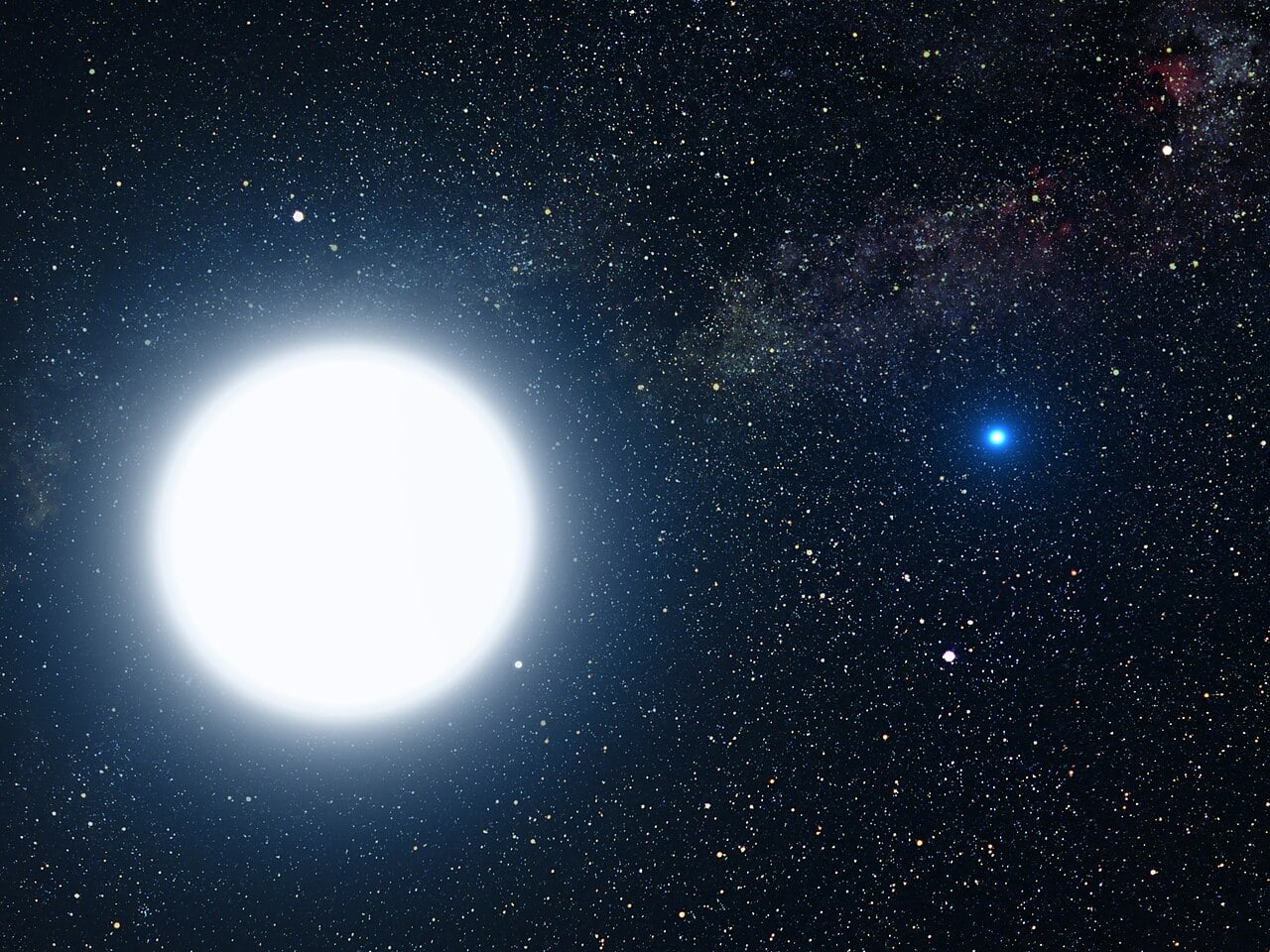
Субрахманьян Чандрасекар физикийн онолыг зөвхөн математикийн тэгшитгэл төдийгүй байгалийн гоо сайхны илрэл гэж үзэн, хар нүх болон оддын бүтцийн судалгаанд үнэтэй хувь нэмэр оруулсан юм.
Физикч Субрахманьян Чандрасекар өөрийн онолын дэвшүүлсэн цагаан ододтой холбоотой санаагаа Артюр Эддингтон эсэргүүцсэний дараа Европыг орхин АНУ-д суурьшжээ. Тэрээр насан туршдаа энэхүү үл ойлголцлын сэтгэл зүйн дарамтыг тээж явсан ч, эцэстээ Эддингтоныг буруутгахын оронд түүнийг шинжлэх ухааны агуу нээлт хийх боломжоо алдсанд нь харамсах болсон байна.
Чандрасекар өөрийн карьерын туршид нэг сэдвийг бүрэн гүйцэд судалж, тухайн салбарт суурь бүтээл туурвисны дараа шинэ салбар руу шилжин ажиллах өвөрмөц арга барилтай байв. Тэрээр цагаан одод, оддын бүтэц, цацрагийн шилжилт, хар нүх зэрэг олон чиглэлээр судалгаа хийж, үнэн гэдэг нь ойлгомжтой бөгөөд гоо зүйн хувьд төгс байх ёстой гэсэн зарчмыг баримталжээ. Түүний үзснээр Рой Керрийн нээсэн Эйнштейний тэгшитгэлийн ягштал шийдэл нь хар нүхний бодит оршин тогтнолыг баталсан нь шинжлэх ухаан дахь гоо зүйн гайхамшиг юм.
Тэрээр Чикагогийн их сургуульд багшлах хугацаандаа Цун-Дао Ли, Чэн-Нин Ян зэрэг ирээдүйн Нобелийн шагналтнуудыг бэлтгэж байв. Мөн 1952-1971 оны хооронд “The Astrophysical Journal”-ыг эрхлэн гаргаж, тус сэтгүүлийг астрофизикийн салбарын хамгийн нэр хүндтэй хэвлэл болгон хөгжүүлсэн юм.
https://www.universetoday.com/articles/chandrasekhar-and-the-limits-of-physics-part-1-triumph
https://www.universetoday.com/articles/chandrasekhar-and-the-limits-of-physics-part-2-humiliation
https://www.universetoday.com/articles/chandrasekhar-and-the-limits-of-physics-part-4-vindication
Дэлгэрэнгүйг эх сурвалжаас харах
Эх сурвалжийг нээх ↓
(This is Part 3 of a series on the life and work of Chandrasekhar. Read Part 1 and Part 2 first.)
The whole affair very nearly drove Chandra out of physics altogether. He couldn’t stay in Europe living under Eddington’s shadow, so he did what a lot of people have done when a place stops having room for them: he left. He moved to the United States. But the wound traveled with him. Chandra carried the anger and the hurt for decades and returned to that day again and again for the rest of his life. There’s a line from Arthur Miller’s biography of him, “Empire of the Stars,” that gets at the human cost of the whole thing: even though science deals in abstractions and grand cosmic issues that dwarf our small human lives, the people who actually do the work are human beings, driven by irrational impulses, haunted by passions and jealousies and fears and ambitions and disappointments. Chandra’s eternal quest for personal peace, Miller writes, could never quite be fulfilled.
And yet. In the end, remarkably, Chandra came around to pitying Eddington rather than hating him. He knew he’d been right, and he understood that Eddington had thrown away an enormous opportunity. Eddington had been thinking hard about white dwarfs for years before Chandra ever boarded the boat. He was perfectly positioned to make the leap himself. Chandra later wrote that if Eddington had only followed the argument where it led, he would have found that there was no reductio ad absurdum and no stellar buffoonery, and that had he done so, he “would stand today as the greatest theoretical astronomer of this century.” Instead he stood in the way.
Here’s the thing about Big Chandra, though. He was no slouch, and he was no sulker. He moved on, and he did it in a way that became his trademark. Over and over across his career he would become fascinated by a subject, obtain complete and total mastery of it, push the field forward enormously, and then turn around and write the definitive book on it, the one everyone else would use for a generation. And then he’d abandon it and start over as a beginner in some entirely new area, gladly. White dwarfs, stellar structure, radiative transfer, hydrodynamic stability, relativity, black holes. He worked his way through them one at a time like rooms in a very large house.
Underneath all of it ran a single conviction, and it’s the part of Chandra I find most beautiful. He believed that correct physics is beautiful physics. He drew the idea from Shakespeare and Beethoven as much as from equations, and he meant it seriously: that the universe is under no obligation whatsoever to be beautiful, and yet it is, and that its beauty is a reliable guide toward its truth. In his own words: “In my entire scientific life, the most shattering experience has been the realization that an exact solution of Einstein’s equations of general relativity, discovered by the New Zealand mathematician Roy Kerr, provides the absolutely exact representation of untold numbers of massive black holes that populate the universe. This shuddering before the beautiful, this incredible fact that a discovery motivated by a search after the beautiful in mathematics should find its exact replica in Nature, persuades me to say that beauty is that to which the human mind responds at its deepest and most profound.” Or, as he put it more simply in a book he actually titled “Truth and Beauty”: what is intelligible is also beautiful.
His life is really the argument for that idea. The beautiful result was the true one. The powerful man who called it ugly was simply wrong.
The rest of the career bears it out. Chandra became a professor at the University of Chicago and worked out of Yerkes Observatory up in Wisconsin, and he became known for an uncommon command of his subjects and a teaching style that was at once graceful and rigorous. There’s a story that captures him perfectly. In the winter of 1948 he drove the long, brutal haul from Yerkes down to the Chicago campus every single week to teach an advanced course to a grand total of two students. Those two students, Tsung-Dao Lee and Chen-Ning Yang, would go on to win the Nobel Prize in 1957, a decade before their teacher. Enrico Fermi, who already had his, would sometimes sit in. When someone asked Chandra why he bothered making that drive for so few, he reportedly just said, “They were good students.”
He also took over as editor of The Astrophysical Journal from 1952 to 1971. When he started, it was a sleepy, low-stakes journal that hardly anyone bothered publishing in. Under his stewardship it became the premier flagship journal for astrophysics in the entire country. It’s still where an enormous share of the field publishes today.
None of this undid January 1935. But it built something much larger around it. And it set the stage for the one part of the story where the universe itself finally, publicly, agreed with him.
In Part 4, the collapsing stars Eddington swore couldn’t exist turn out to be everywhere, and half a century late, the world hands Chandra his due.

