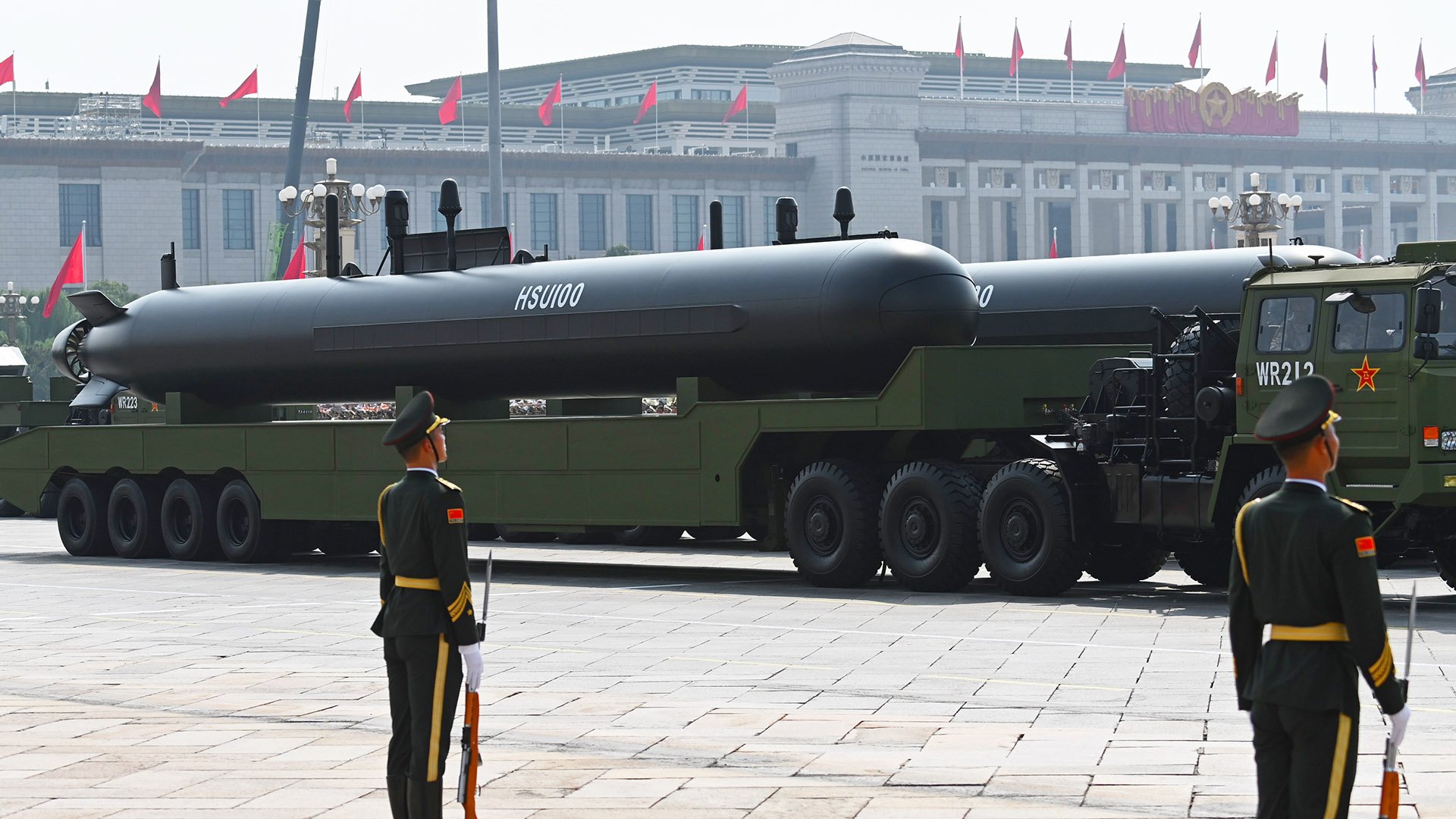
Усан доорх нисгэгчгүй аппарат нь тагнуул хийх, хорлон сүйтгэх болон шууд цохилт өгөх чадвартай тул далайн аюулгүй байдалд шинэ төрлийн эрсдэл учруулж байна. Эдгээр төхөөрөмж нь нууцаар ажиллах, навигацийн дэвшилтэт чадавхтай тул уламжлалт аргаар илрүүлж, саатуулахад хүндрэлтэй байгааг албаны эх сурвалж онцолжээ. Сүүлийн жилүүдэд Украин болон Хути зэвсэгт бүлэглэл зэрэг талууд байлдааны ажиллагаанд UUV ашигласан нь энэхүү технологийн аюулыг бодитой болгож байна.
Эргийн хамгаалалтын албаны Ирээдүйн хөгжил, нэгтгэлийн газар (FD&I) зөвхөн илрүүлэх төдийгүй, тухайн аюулыг сааруулах эсвэл устгах чадвартай технологиудыг эрэлхийлж байна. Тус албанаас гаргасан шийдэл хүсэх баримт бичигт дурдсанаар, сонирхогч талууд технологийн бэлэн байдлын түвшин (TRL) 5 буюу түүнээс дээш, бодит нөхцөлд туршигдсан системүүдийг санал болгох ёстой аж.
Одоогийн байдлаар АНУ-ын Тэнгисийн цэргийн хүчин боомтын хамгаалалтыг сайжруулах зорилгоор агаарын хөшиг үүсгэх, хиймэл замаг бүхий тор ашиглах болон далайн усан доорх цэнэг ашиглан сааруулах зэрэг туршилтын ажлуудыг хийж байна. Эргийн хамгаалалтын алба нь эдгээрээс гадна боомт, усан замд ашиглах боломжтой, өргөтгөх боломжтой, бие даасан эсвэл нэгдсэн шийдлүүдийг ирэх хоёр долоо хоногийн дотор хүлээн авахаар төлөвлөж байгаа юм.
Дэлгэрэнгүйг эх сурвалжаас харах
↓Эх сурвалжийг нээх ↓
From the ongoing conflict with Iran, to the Ukraine war and hotspots around the world, aerial drones have proven to be extremely dangerous and effective weapons and a mad rush is on to counter them. It is a technology race that makes headlines on a near daily basis. However, a similar but far quieter and less visible threat is emerging below the waves and now the U.S. Coast Guard (USCG) is looking to do more about it.
Faced with a growing threat from uncrewed underwater vehicles (UUVs), the USCG is seeking technology not just to detect these weapons, but to defeat them. Ports and other maritime facilities are vulnerable to this kind of attack vector, and our adversaries surely know it. The effort is being led by the Coast Guard Futures Development and Integration (FD&I) Directorate, which oversees research, modeling and simulation, technology forecasting, and field experimentation. It is part of the service’s role to protect U.S. maritime assets and comes as adversary militaries and non-state actors alike, are developing a wide array of UUVs for surveillance, strike and sabotage.
“UUVs are increasingly used in both public and military maritime operations due to their versatility, stealth, and ability to operate in challenging environments,” the Coast Guard noted in its request for solutions (RFS) posted Friday on the government’s online contracting portal. “However, the proliferation of UUV technology has introduced new threats to maritime security. Malicious actors can employ UUVs for a range of activities, including intelligence gathering, surveillance, smuggling, sabotage of critical infrastructure, and kinetic strikes. The covert nature and advanced navigation capabilities of modern UUVs make them difficult to detect, track, and mitigate using traditional maritime interdiction tactics.”
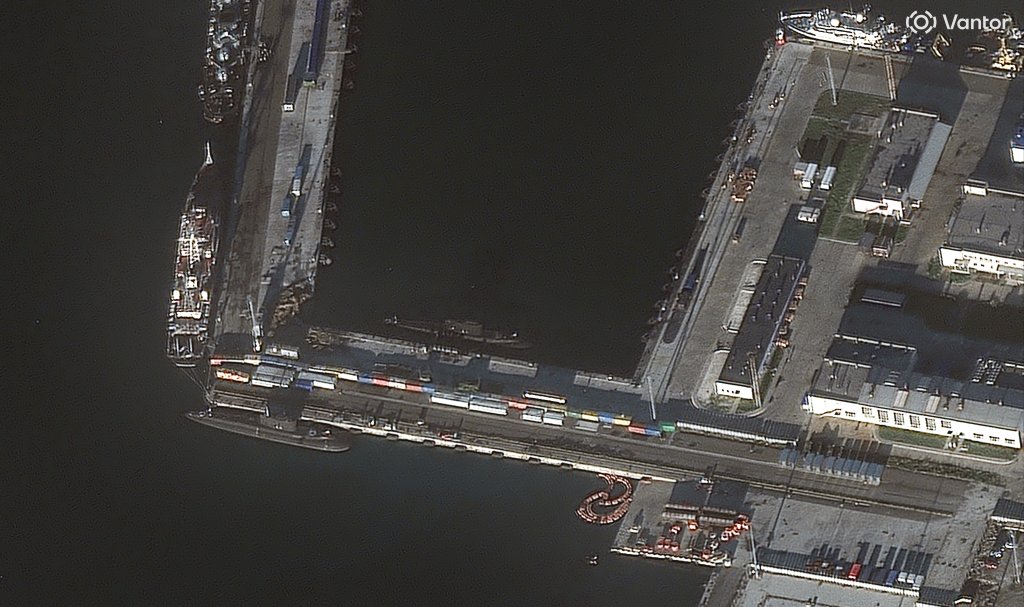
The most vivid example of this threat took place in December, when Ukraine claimed it used a UUV to strike an Improved Kilo class diesel-electric submarine, in the Black Sea naval stronghold of Novorossiysk. Ukraine’s state security service (SBU) told us at the time they used its Sub Sea Baby UUV to navigate through the harbor and hit the submarine.
It remains unclear how much damage the submarine sustained. However, the incident showed Ukraine was able to slip a UUV into a heavily defended harbor, in daylight, and detonate its warhead next to a prized Russian submarine worth, hundreds of millions of dollars.
The following satellite image showed a view of the submarine after the UUV hit.
Here is a video of the attack:
In an earlier example of these vehicles being used as a weapon, the U.S. Navy found itself having to fire on a threatening Houthi UUV in February 2024, according to U.S. Central Command (CENTCOM).
“Between the hours of 3:00 p.m. to 8:00 p.m. (Sanaa time), Feb. 17, CENTCOM successfully conducted five self-defense strikes against three mobile anti-ship cruise missiles, one unmanned underwater vessel (UUV), and one unmanned surface vessel (USV) in Iranian-backed Houthi-controlled areas of Yemen,” the command stated on X at the time. “This is the first observed Houthi employment of a UUV since attacks began on Oct. 23, [2023].”
Hamas used UUVs even before that in an attempt to attack Israeli naval assets in 2021, according to the Times of Israel.
“While the small autonomous underwater drone was still close to the shore, an Israeli Navy vessel destroyed the device, and an IDF aircraft attacked the operatives that launched it in order to thwart the threat,” the military said, according to the outlet.
“Hamas has for years been believed to be developing autonomous submarines,” Times of Israel added. “The Israeli Navy believes that the models in the terror group’s arsenals are guided by GPS and capable of carrying some 30 kilograms (66 pounds) of explosives. Such weapons could be directed against targets both out at sea and along Israel’s coastline.”
The threat from these systems has come a long way. America’s near-peer adversaries are far more advanced in this regard and weapons that can travel great distances undersea, operating on their own, offer a distinct asymmetric advantage. As with Pearl Harbor, it is far more convenient to strike ships in port than to hunt them at sea. China, notably, has invested heavilyinuncrewed underwater vehicles for years.
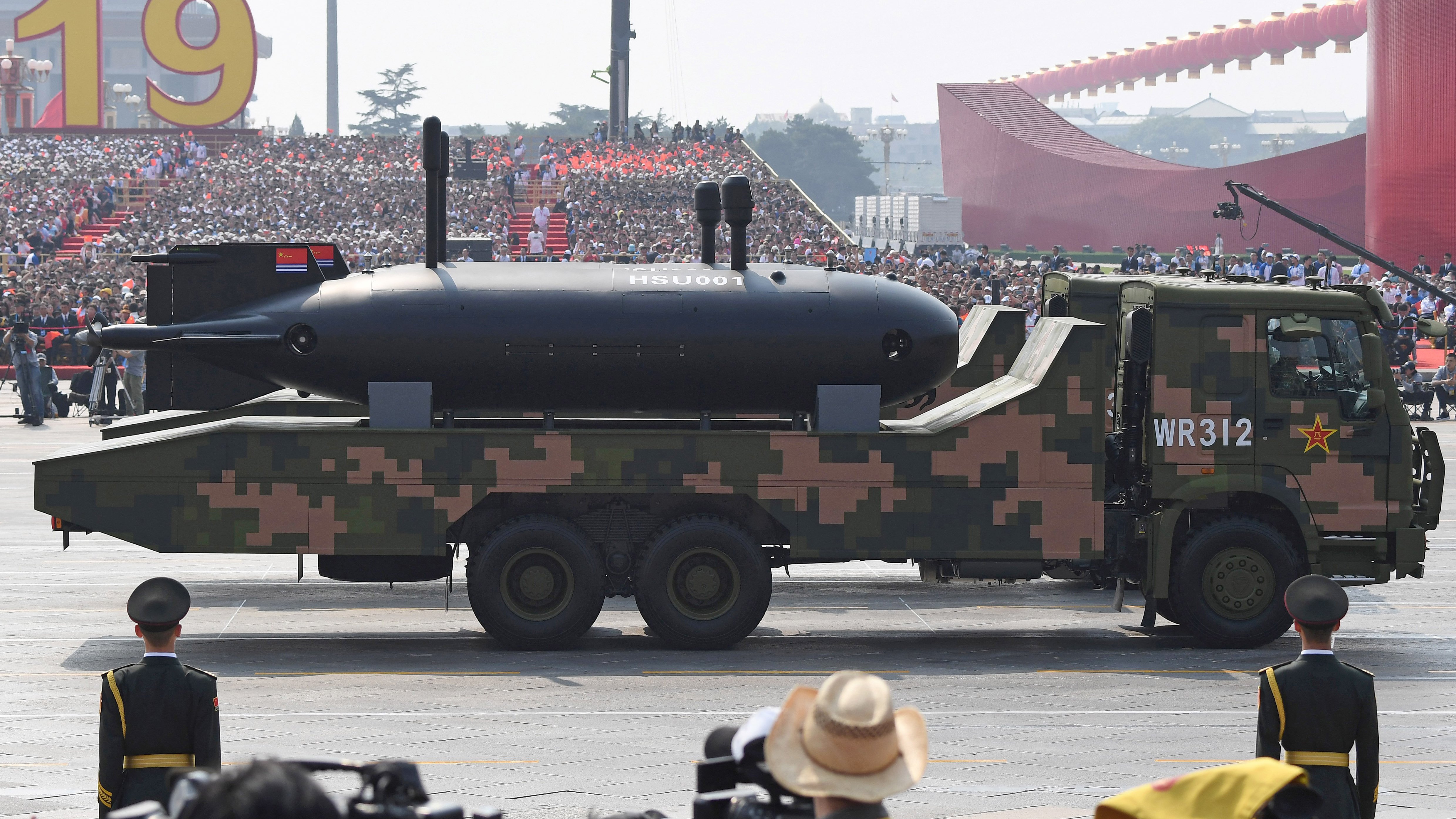
“There are effective technologies with the capability to detect and track UUVs, but few tested and fielded defeat/mitigation systems,” the Coast Guard said in the RFS.
There are really two areas where these technologies land, in general. Providing early warning and tracking of UUVs over larger areas and coastal and harbor defense, the inner layer where UUVs are arguably most dangerous.
For the U.S., persistent and broad area undersea surveillance coverage has historically been provided by large networks of static hydrophones that are extremely costly to establish, operate, and maintain. They were also designed to detect large submarines, not far smaller UUVs. The U.S. Navy’s Cold War Sound Surveillance System (SOSUS) network is perhaps the best-known example of such a system. Portions of SOSUS do remain in service, but are now used more for scientific research than watching for foreign submarines. SOSUS has been largely supplanted operationally by a mix of fixed sensor arrays, surface ships towing sonar, and processing stations ashore known collectively as the Integrated Undersea Surveillance System (IUSS).
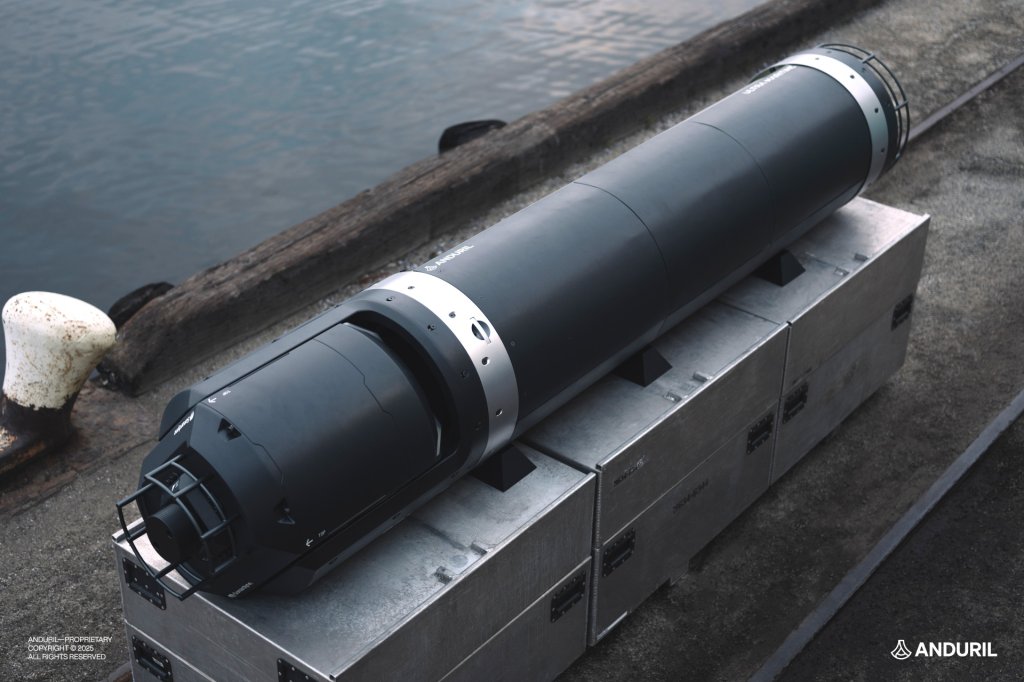
Last year, TWZ highlighted one of many alternatives being developed by industry, Anduril’s readily deployable undersea surveillance system called Seabed Sentry. It uses networks of small and relatively low-cost modular sensor nodes to detect and track undersea threats. You can read more about that system and how it operates in our story here.
Anduril, working with Ultra Maritime’s Sea Spear deployable sonar system, demonstrated the latest iteration of this system during the Navy’s recent Lanternfish exercise, which “brought together the U.S. Navy, United Kingdom Ministry of Defense explosive ordnance disposal units, Royal Australian Navy UUV Operators and defense industry professionals to build seamless interoperability,” according to the U.S. Navy.
The inner layer of defense benefits from ongoing development and evolution, from sensors for detecting divers and objects to marine mammals that can do the same. Still, UUVs offer unique new challenge to contend with.
Last month, Naval Surface Warfare Center (NSWC) Panama City and Unmanned Undersea Vehicle Group (UUVGRU) One “executed a multi-national harbor protection demonstration to show how the advancement of technology plays a crucial role in protecting the Navy’s assets during exercise Baltic Operations (BALTOPS) 2026,” NSWC said.
The demonstration “showcased three emerging technologies including an expeditionary air curtain, an artificial kelp UUV net, and sea water neutralization charges which are designed to counter UUV threats,” the release added.
“The expeditionary air curtain is a rapidly deployable underwater system that is used to protect mission-critical assets below the waterline. The air curtain defends against UUV threats and can be used at Naval bases and military installations as well as ports and harbors by aerating the water to affect the UUV’s depth sensors, acoustic sensors, buoyancy and propulsion.”
“We are testing the air curtain to see how it disrupts and hinders UUV sensors. It is a quick, expeditionary solution because it can be deployed easily,” said Javi Handal, a Senior Electrical Engineer with NSWC Panama City.
He did not provide further details about these systems.
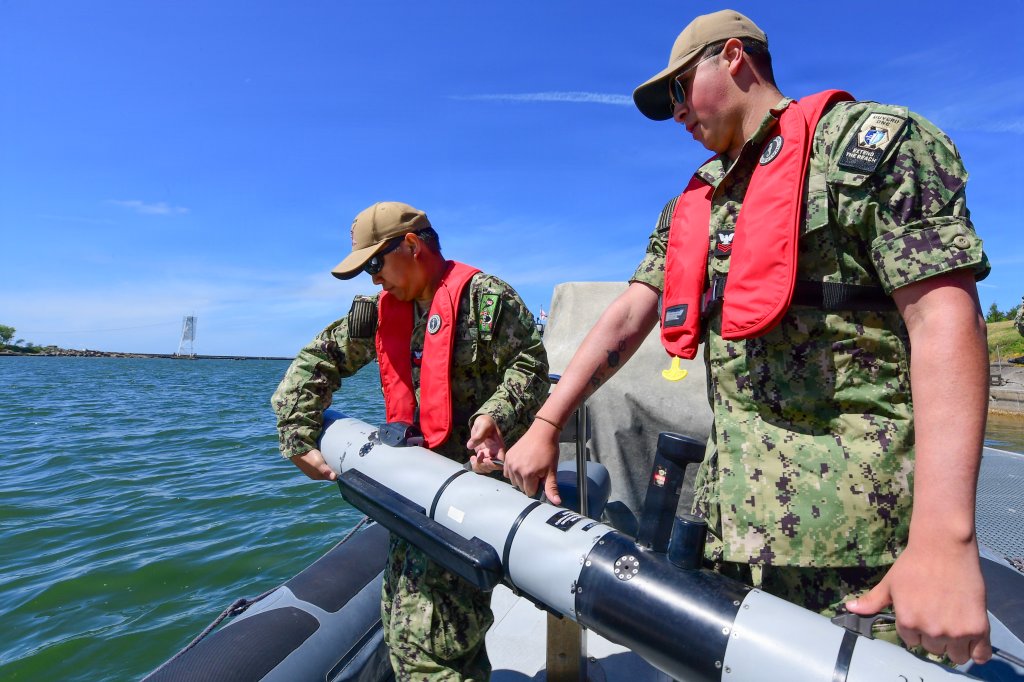
Regardless, the Coast Guard is looking to industry for other options.
“Defeat technologies are an essential piece in the kill chain, as detection is only the first step to stopping the threat,” its RFS explains. “The development and deployment of effective C-UUV defeat solutions will enhance maritime domain dominance (MDD), port security, and critical infrastructure protection, enabling reliable response actions to neutralize UUV-based threats.”
The Coast Guard said it is specifically interested in “solutions that have been tested and demonstrated to be effective in operational settings, with a Technology Readiness Level (TRL) of 5 or higher.”
The Pentagon describes TRL 5 as systems where the “basic technological components are integrated with reasonably realistic supporting elements so it can be tested in a simulated environment. Examples include ‘high fidelity’ laboratory integration of components.”
The requested technologies should be capable of supporting Ports, Waterways & Coastal Security operations, “addressing the unique challenges posed by UUVs in these environments,” the Coast Guard added.
“We are looking for systems that can provide reliable performance in real-world conditions, including but not limited to sensor platforms, kinetic solutions, and integrated response solutions,” the RFS notes. “Respondents are encouraged to submit information on products or systems that are currently available for procurement, have undergone field testing, and are suitable for deployment in port, harbor, and waterway security scenarios. Defeat solutions should be scalable and adaptable for compatibility with existing detection systems and/or various configurations for different ports.”
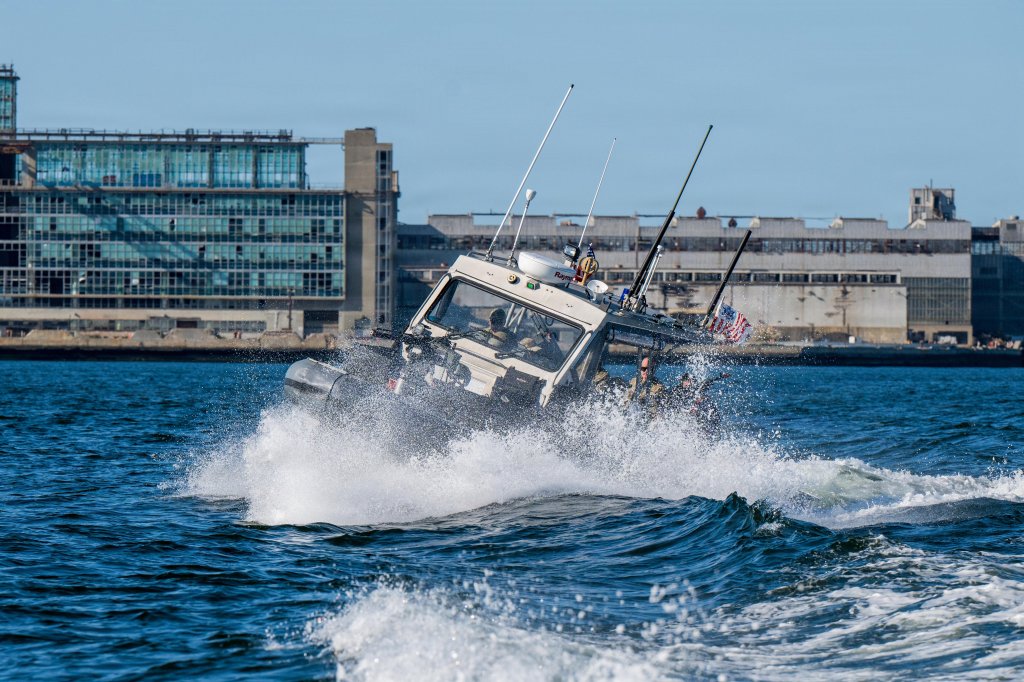
The Coast Guard is limiting its search to “only systems with an effector or with direct mitigating capabilities, or with detection, tracking, identifying, and mitigating capabilities. Submissions that do not include defeat capabilities will not be considered at this time.”
Interested parties have two weeks to submit their proposals. We reached out to the Coast Guard to find out more details about timelines and budgets and will update this story with any pertinent information provided.
As Ukraine proved last year, the threat from UUVs is real and growing, giving adversaries hard-to-detect and difficult-to-defeat autonomous weapons that can be launched from great distances and potentially operated in concert. The Coast Guard request is the latest example of the U.S. government’s increasing effort to get after this emerging threat.
Contact the author: howard@twz.com

