Археологичид далайн яст мэлхийн дүрс бүхий ваартай хамт доош харуулан оршуулсан эртний хүний араг ясыг олж илрүүллээ.
Эль-Сальвадорын Антигуо-Кускатлан дүүргээс олдсон энэхүү булш нь МЭӨ 1000-400 оны орчимд хамаарах Мезоамерикийн соёл иргэншлийн үед холбогдож байна. Йелийн их сургуулийн докторант, археологич Карлос Флорес Манзаногийн удирдсан малтлагын баг уг оршуулгыг галт уулын үнсэн давхаргын доороос олжээ. Судлаачдын таамаглаж буйгаар тус оршуулга нь МЭӨ 850-830 оны үеийн галт уулын дэлбэрэлтийн дараах үеийнх байж болзошгүй юм.
Энэхүү бүс нутагт өмнө нь хийсэн малтлагуудаар хүний золиослол үйлддэг байсан байж болзошгүй гэх ул мөр олдсон байдаг. Тухайлбал, 1970-аад онд археологич Уильям Р.Фаулер Чалчуапа хотын тууриас гар, хөлөө хүлүүлсэн байдалтай олон араг яс олж байжээ. Гэвч шинээр олдсон энэхүү оршуулгыг заавал золиослол гэж үзэхээс илүүтэйгээр, тухайн үеийн хүмүүсийн ертөнцийг үзэхүй болон сансар огторгуйн тухай ойлголттой холбоотой байж магадгүй гэж Флорес Манзано тайлбарлаж байна.
Олдворын хажуунаас олдсон яст мэлхийн дүрст ваар нь Майячуудын хожмын одон орон судлал дахь Орион ордны бүс болон ариун аялалтай холбоотой байж болох талтай. Судлаачид араг ясыг гэмтээхгүйгээр гаргаж авсан бөгөөд одоо химийн шинжилгээнд хамруулахаар төлөвлөжээ. Энэхүү шинжилгээгээр тухайн хүний хооллолт, амьдралын хэв маяг болон нас барсан шалтгааныг тодруулах бөгөөд үр дүнг ирэх жилийн хугацаанд олон нийтэд танилцуулах юм.
Дэлгэрэнгүйг эх сурвалжаас харах
↓Эх сурвалжийг нээх ↓
Archaeologists in El Salvador have uncovered the unusual burial of a face-down human skeleton that was interred along with a ceramic vessel shaped like a sea turtle nearly 3,000 years ago. The burial may be from a pre-Maya civilization that practiced human sacrifice.
According to a translated statement from El Salvador’s Ministry of Culture, the burial was found July 2 in Antiguo Cuscatlán, a suburb of San Salvador, during excavation work directed by Carlos Flores Manzano, an archaeologist and doctoral student at Yale University.
Although the skeleton has not been radiocarbon-dated yet, it was discovered underneath a layer of volcanic ash from an eruption of the Plan de la Laguna volcanic crater thought to date to between 850 and 830 B.C., during the Middle Preclassic period (roughly 1000 to 400 B.C.) in Mesoamerica.
During this period, societies in southeastern Mesoamerica were becoming more sedentary and developing more complex cultures, archaeologists have found. But in addition to the archaeological remains of crop cultivation and painted ceramics discovered over the years in Antiguo Cuscatlán, experts have pointed to some burials as evidence of human sacrifice — and the newly uncovered burial may be similar.
In the late 1970s, archaeologist William R. Fowler excavated at Chalchuapa, an ancient town east of Antiguo Cuscatlán with thousands of years’ worth of history. While digging in an area known as Structure E3-7, Fowler found 33 human skeletons — mostly adult males — that he interpreted as sacrifices of war captives due to signs that their feet and arms were bound.
According to the El Salvador Ministry of Culture’s statement, the newly uncovered burial is likely not the only one in the area. Archaeologists may eventually find a burial mound with several dozen skeletons, similar to what Fowler uncovered at Chalchuapa. However, Fowler’s interpretation of human sacrifice has been questioned in recent years, including by Flores Manzano in a 2020 study.
Instead of being linked to sacrifice, the unusual burial position might be related to an ancient understanding of the cosmos and underworld, Flores Manzano told Diario El Salvador. If that’s the case, the sea turtle ceramic vessel found near the skeleton’s hand may be associated with Orion’s Belt, which features in later Maya astronomy as part of a sacred journey.
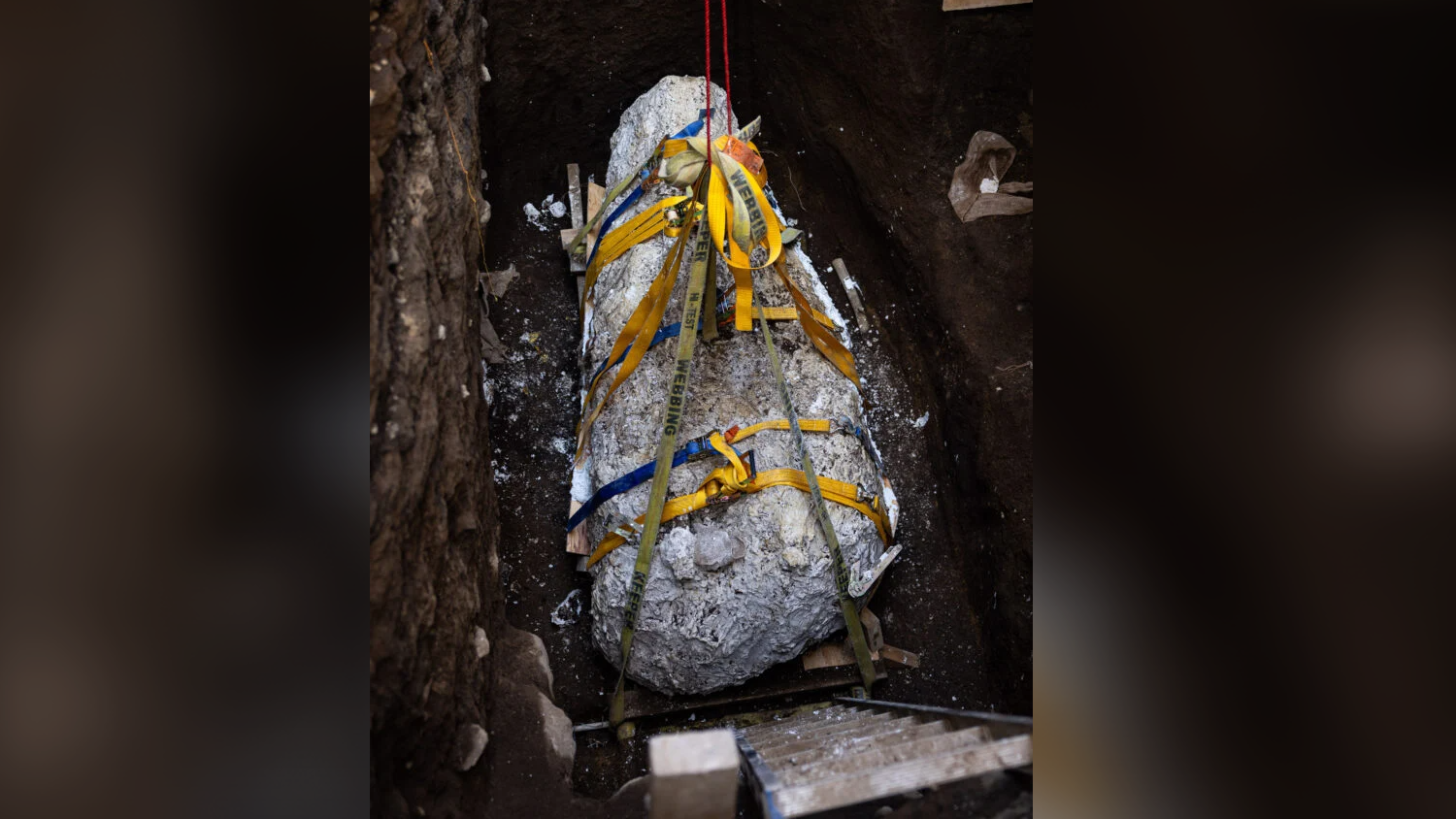
The fragile burial was encased in plaster before being removed for further study. Flores Manzano said the skeleton will now undergo chemical analysis so researchers can learn more about the individual’s life, diet and possible cause of death. He expects the analyses to take about a year, after which the results will be announced to the public.
How much do you know about the first people to reach the Americas? Find out with our First Americans quiz!