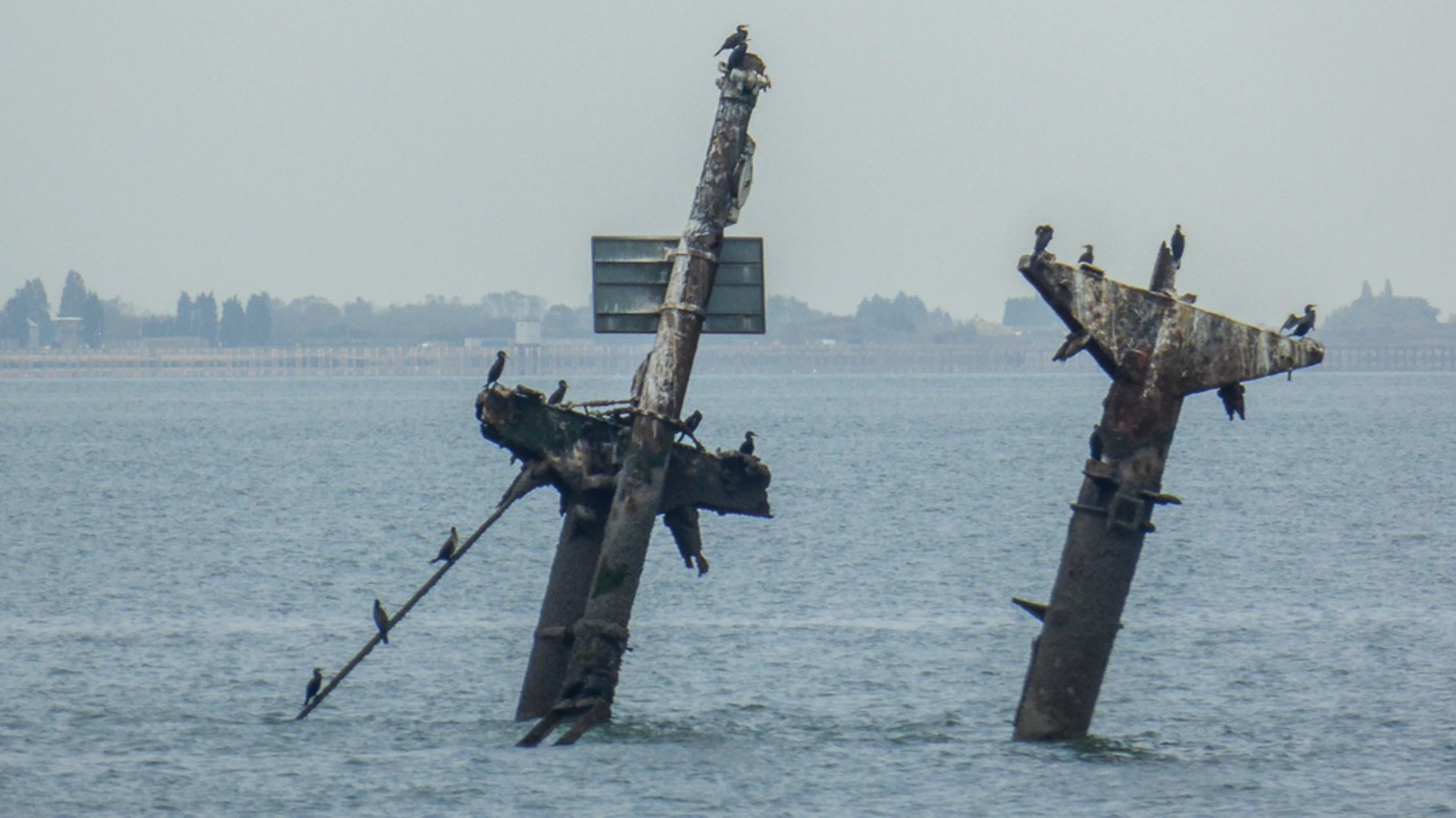
Дэлхийн хоёрдугаар дайны үед Холбоотны хүчин 2710 ширхэг “Liberty Ship” буюу хангамжийн хөлөг онгоцыг ашиглаж байсан нь дайны ялалтад чухал үүрэг гүйцэтгэсэн юм. Эдгээр хөлөг онгоц нь зэвсэг техник, хангамж тээвэрлэхэд зориулагдсан байсан бөгөөд АНУ-д үйлдвэрлэлийн өндөр хурдаар бүтээгдэж байв. Гэвч SS Richard Montgomery хөлөг онгоц байлдааны ажиллагааны үеэр бус, Английн эрэг орчимд сүйрсэн нь өнөөг хүртэл аюул заналхийлэл хэвээр үлджээ.
Хөлөг онгоц живсний дараа ачааны тал хувийг нь тээвэрлэн гаргасан боловч үлдсэн 1400 тонн өндөр хүчин чадалтай тэсрэх бөмбөг, байлдааны хэрэгслийг аюулгүй болгох боломжгүй гэж үзсэн байна. Эдгээр зэвсэг нь өнөөдрийг хүртэл идэвхтэй төлөвт байгаа тул аливаа хөндлөнгийн нөлөөгөөр дэлбэрэх өндөр эрсдэлтэй юм. Хэрэв тэсрэлт болбол хоёрдогч дэлбэрэлтүүд үүсч, ойр орчмын бүс нутагт ноцтой сүйрэл дагуулах аюултай гэдгийг мэргэжилтнүүд анхааруулж байна.
Уг сэгийг тойрсон бүсэд нэвтрэхийг хатуу хориглож, байнгын хяналт тавьдаг. Хөлөг онгоцны уснаас ил гарч буй багануудын бүтэц муудсаны улмаас унах эрсдэл үүссэн тул 2026 онд 12.7 сая долларын өртөгтэй багана буулгах ажлыг эхлүүлжээ. Энэхүү арга хэмжээ нь ослын бүсийг хамгаалахад чиглэсэн боловч тэсрэх бодисыг бүрэн устгах ажиллагааг эрсдэлтэй хэмээн үзэж, хөлөг онгоцыг хэвээр үлдээх шийдвэр гаргасан байна.
Дэлгэрэнгүйг эх сурвалжаас харах
Эх сурвалжийг нээх ↓
World War II was fought all over the planet, and one of the most contested places was the sea. Naval battles raged across the world’s waterways, resulting in more than20,000 ships finding their way to Davey Jones’ Locker. Shipwrecks are inherently dangerous, as they’re located deep below the waves and can be unstable, making diving in and around them perilous. The most dangerous shipwreck of WWII isn’t a massive deadly warship like a battleship, though— it’s a Liberty Ship.
Liberty Ships were used by the Allies for supply and ordnance movement across the oceans, and the United States built 2,710 of them. The nation became so good at putting Liberty Ships together that it took as little as four days to go from laying a keel to setting sail. In many ways, Liberty Ships helped the Allies win World War II, so they were just as vital to the war effort as the larger combat vessels.
The SS Richard Montgomery was like many Liberty Ships, but it met its ultimate fate not in combat, but off the coast of EnglandKent, England. As you can see from the above image, the water is so shallow there that the masts could be seen sticking out of the water. The reason why the SS Richard Montgomery is so dangerous is due to its cargo: over 1,400 tons of high explosives. The potential danger of an explosion has loomed over Kent’s residents for more than 80 years, and the threat of such a detonation ensures that the SS Richard Montgomery is the deadliest shipwreck of WWII.
The dangers posed by the SS Richard Montgomery
After the SS Richard Montgomery sank, efforts to remove its cargo resulted in more than half of its 6,000 tons being safely taken to shore, but getting the rest proved too risky. As a result, high-explosive bombs, aerial munitions, and anti-tank devices remain, and they’re not inert. The slightest provocation could set them off, and if one goes, it’s likely the secondary explosions resulting from the first would cause widespread destruction.
A detonation of 1,400 tons of high explosives could be disastrous to Kent’s residents. A similar wreck in the English Channel, which involved the SS Kielce, detonated its explosive hold, creating a massive crater while registering seismic activity of 4.5 on the Richter scale. That was further out to sea and considerably deeper. The SS Richard Montgomery rests about 50 feet below the water, and it’s much closer to shore. For this reason, the wreck is constantly patrolled, and getting too close could land people in trouble.
A major concern arose due to the masts that stick up out of the water. Their degradation made it likely that they would crumble and fall onto the wreck below, posing a new risk of detonation. In 2026, work to remove the masts began at a cost of $12.7 million. The removal preserves the site for as long as possible, but the wreck remains in an exclusion zone and will likely continue to sit outside of Kent forever, as further efforts to remove the munitions are too risky despite how fascinating the shipwreck is.

