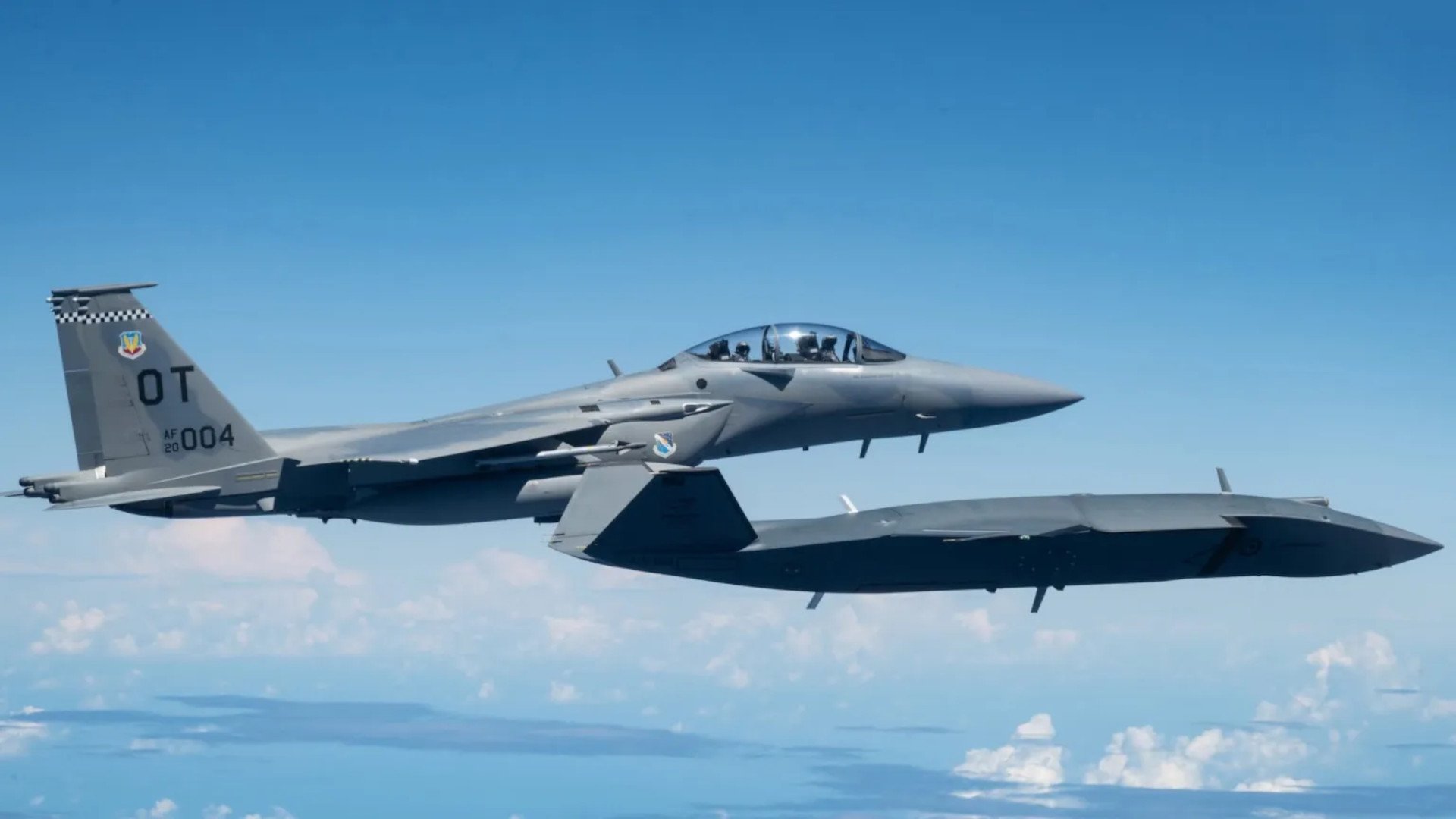
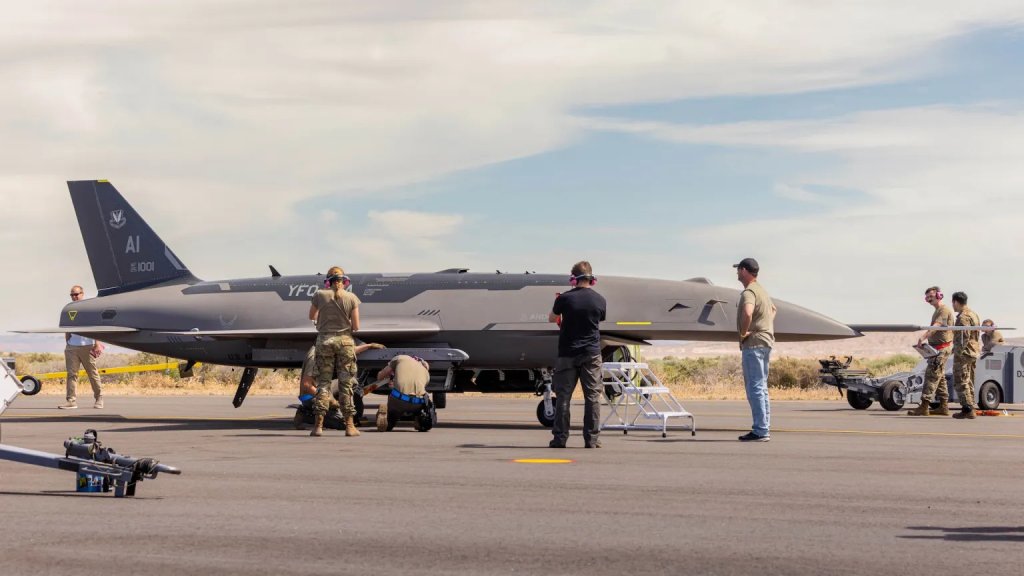
Агаарын цэргийн хүчний Невада муж дахь Туршилтын үйл ажиллагааны нэгж (EOU) нь одоогоор General Atomics компанийн “FQ-42 Dark Merlin” болон Anduril компанийн “FQ-44 Fury” загваруудыг хөгжүүлж байна. Хэдийгээр MQ-28 нь АНУ-ын албан ёсны CCA хөтөлбөрийн нэг хэсэг биш ч хоёр улсын хооронд мэдээлэл солилцох, командлал болон удирдлагын тогтолцоог нэгтгэх ажил идэвхтэй өрнөж байгаа юм. Энэ нь ирээдүйд АНУ-ын бие бүрэлдэхүүн Австралийн нисгэгчгүй онгоцыг шууд удирдах боломжийг бүрдүүлж байна.
Генерал Шнайдер АНУ-ын Агаарын цэргийн хүчин болон Австралийн Хатан хааны агаарын цэргийн хүчний (RAAF) хоорондын харилцаа нь зөвхөн нисгэгчгүй онгоцоор хязгаарлагдахгүй болохыг тэмдэглэв. Тухайлбал, “Talisman Sabre 25” сургуулилтын үеэр АНУ-ын нисгэгчид Австралийн F-35 сөнөөгч онгоцыг жолоодох “interfly” буюу харилцан нисэх гэрээг хэрэгжүүлсэн нь хоёр улсын цэргийн салбарын гүнзгий уялдаа холбоог харуулж байна.
Цаашид АНУ-ын Агаарын цэргийн хүчин “Agile Combat Employment” (ACE) концепцийн хүрээнд байршил солих, тархан байрлах, хуурамч байрлал ашиглах зэрэг тактикийг улам боловсронгуй болгохыг зорьж байна. Мөн байлдааны ажиллагааны үеийн агаарын давуу байдлыг хангах нь үндсэн үүрэг хэвээр үлдэх бөгөөд үүнд хүрэхийн тулд өндөр өртөгтэй болон хямд зардлаар үйлдвэрлэх боломжтой олон төрлийн нисгэгчгүй онгоцнуудыг зөв хослуулан ашиглах нь чухал гэж үзэж байна.
Дэлгэрэнгүйг эх сурвалжаас харах
↓Эх сурвалжийг нээх ↓
The U.S. Air Force is “threaded in tight” with the work Australians are doing with the MQ-28 Ghost Bat uncrewed aircraft, according to the service’s top officer in the Pacific. This was underscored by the MQ-28’s participation at a major exercise earlier this year, lessons from which are feeding into the Air Force’s evolving plans for its forthcoming Collaborative Combat Aircraft (CCA) drone fleets. Deep integration between the U.S. Air Force and the Royal Australian Air Force (RAAF) opens the door to American personnel potentially ordering Australian MQ-28s around in the future, too.
Air Force Gen. Kevin Schneider, head of Pacific Air Forces (PACAF), discussed the importance of the inclusion of the MQ-28 in Exercise Valiant Shield 2026, as well as other topics, earlier today. Schneider’s remarks came during a talk the Air & Space Force Association’s Mitchell Institute for Aerospace Studies hosted online.
“Grateful that we were able to incorporate some of this in Valiant Shield or to be a part of it. I’d say most of the interaction in Valiant Shield was within our test community,” Schneider said when asked about the involvement of the MQ-28 in the exercise. “The experimental operations squadron that we have looking at U.S. Air Force CCA platforms was really threaded in tight with what the Australians were doing. So the cross flow of information within the test and development effort is really strong.”
MQ-28 Ghost Bat Makes Its Debut — F-2, F-35B & P-8 Join Valiant Shield 2026
The experimental squadron Schneider mentioned here is formally called the Experimental Operations Unit (EOU), and is headquartered at Nellis Air Force Base in Nevada. The EOU was first established in 2023 and expanded into a full squadron-sized formation last year. The unit is specifically tasked with supporting the development of new concepts of operations for fielding and employing CCAs, as well as tactics, techniques, and procedures to go with them. The Air Force’s initial CCA force is set to consist of a mixture of General Atomics FQ-42 Dark Merlin and Anduril FQ-44 Fury drones. These are the two types now in development as part of the initial phase, or Increment 1, of the program.
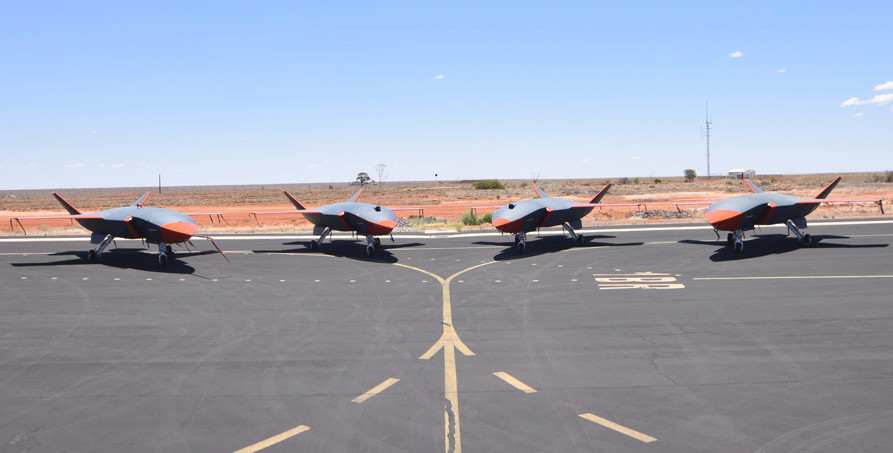
The MQ-28, which Boeing has been developing for the Royal Australian Air Force (RAAF) since the 2010s, is not formally part of the Air Force’s CCA program at present, at least as far as we know. The Air Force has said in the past that it has used at least one of these drones to support work on advanced autonomous capabilities and other related developments. To date, the RAAF has received eight Ghost Bats, all in pre-production Block 1 configuration. Boeing is now working on the first batch of Block 2 MQ-28s, an improved version that is seen as a direct stepping stone toward the now-in-development Block 3 type. The Block 3 will be substantially different from its predecessors, with a longer main wing, internal weapons bays, and other new design elements, as you can read more about here.
At Valiant Shield, the MQ-28 flew together with one of the U.S. Air Force’s new F-15EX Eagle II fighters, among a host of other American and allied aircraft. Whether any of those platforms issued any direct commands to the Ghost Bat during the exercise is unclear. Boeing and the RAAF have previously demonstrated airborne control of the drone via an E-7A Wedgetail airborne early warning and control plane.
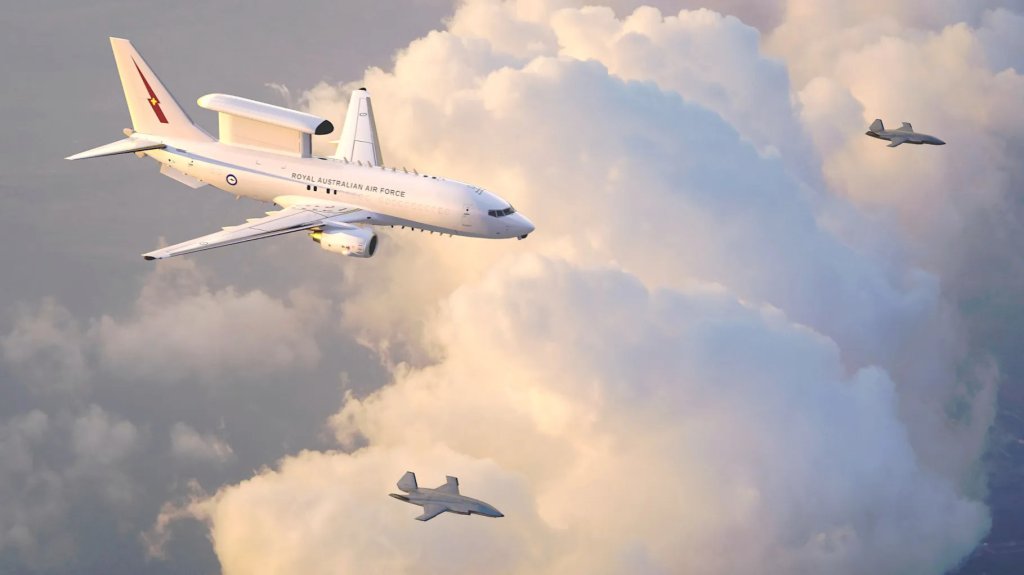
“As that continues to play out and evolve, then we can start looking at operator-to-operator, between the RAAF and the PACAF and USAF, to look at command and control architectures, authorities, exactly how we would use this,” Gen. Schneider continued. “I’m really impressed with how that program, the Ghost Bat program, is going, and what it sets as an example for others that are going down this road with CCAs.”
Being able to pool CCA-like drone capacity, even during a heated and complex fight, based on common architectures, rather than necessarily common platforms, would be of major benefit to all involved. This would extend beyond the tactical realm to maintenance and logistics. TWZ previously laid out a detailed case for exactly this level of deep cooperation, particularly between the United States and Australia, as well as the United Kingdom, as part of the trilateral AUKUS defense cooperation agreement.
Schneider was also asked later in the talk to elaborate on the current state of the Air Force’s own CCA plans in light of his comments about the MQ-28.
“I’m going to give you an unsatisfactory answer. I would say that of my many flaws, one of them is I am somewhat trapped in the present and the here and now. So my sight picture is from today to about three to five years in the future,” the PACAF commander said. “Where CCAs are sitting right now in terms of their development, that’s kind of the edge of my radar scope.”
“Headquarters Air Force is thinking long and hard about this, and especially as they look at future [force] design,” he continued. “So there are others that are more certainly thinking the big thoughts, trying to understand what it is that we need going forward, especially as we look at what are the Increment 2, the second generation of CCAs, what those requirements are, and then how we would incorporate those.”
“I absolutely do see value and opportunity,” Schneider added. “There’s discussion about what are the specific use cases and and how we would employ them. But I would say the better people to pose those questions to are probably sitting in the Pentagon and sitting in Headquarters A5/7 [the office of the Deputy Chief of Staff for Air Force Futures] right now.”
The Air Force has been working to refine the CCA Increment 2 requirements for some time. Officials have said in the past that the service isleaningtoward lower-cost and less complex designs for this second tranche of drones. Novel capabilities, including the ability to be launched from other aircraft, could also be on the table.
“Platforms are important, the high-end exquisite platforms, but rails and munitions, and just in a broad sense, I owe the combatant commander options on how to deal with operational problems,” the head of PACAF also said, talking more generally. “I don’t want to be in a position to go, boss, [and say] ‘I can only offer you this one solution to a operational problem set.’”
“I do think our ability to mass fires and to do a lot of things at at once is also required,” he continued. “You know there is a mix, and we are having the conversation in the Air Force: is what’s the right mix of exquisite to to to exquisite capabilities and mass capabilities, and we’re taking a hard look at all of that.”
It’s also worth noting here that the Air Force already has a formal agreement with the U.S. Marine Corps and the U.S. Navy to develop common control architectures that will enable theseamlesstransfer of control ofCCAs between the services during future operations. Gen. Schneider’s comments today point to the possibility of a similarly deep level of future interoperability with the RAAF, if that isn’t already on the official agenda. There is already direct foreign participation in the Air Force’s CCA program, with the service formalizing a partnership with the Netherlands earlier this year.
Australia is a major U.S. ally, and Gen. Schneider highlighted the especially deep level of integration that already exists between his service and the RAAF during today’s talk.
“Jumping back to [Exercise] Southern Cross in Australia, I am watching American F-35 pilots, not exchange pilots, but American F-35 pilots from an operational unit get into Australian F-35s,” Schneider said. “The Australian air chief [Australia’s Chief of Air Force Air Marshal Stephen Chappell] signed an interfly agreement allowing U.S. Air Force line pilots to fly his airplanes.”
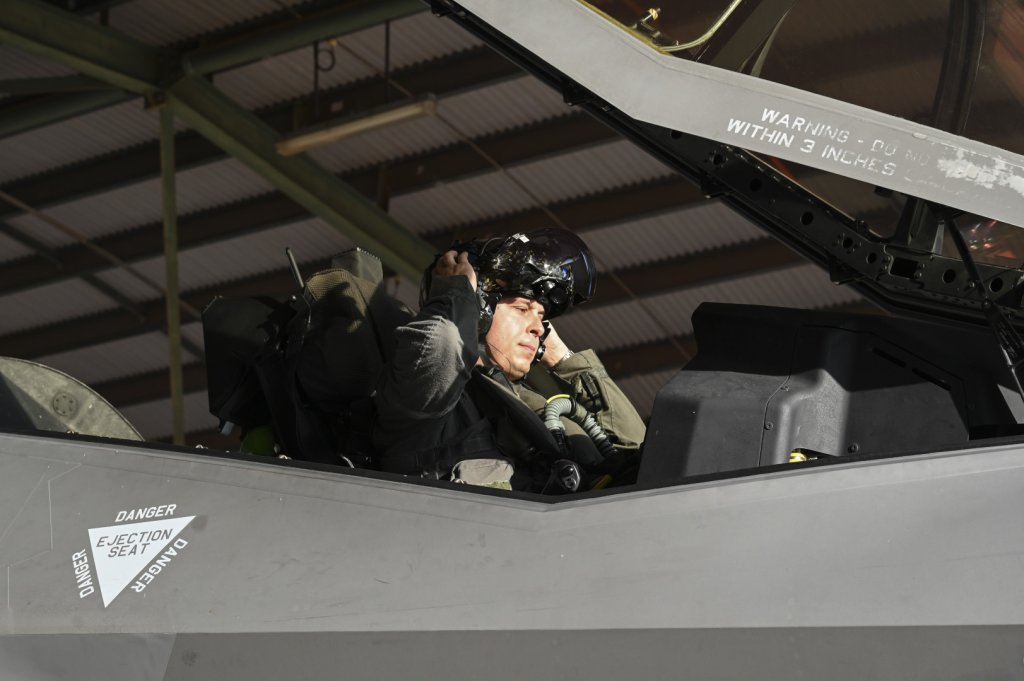
“There’s a little bit of a risk associated with that, I’m sure. There’s a burden with that, but you know allies and partners are stepping up at all levels to share that burden. And I was tremendously impressed with Chaps [Air Marshal Chappell] and his team for their willingness to do that,” the PACAF commander continued. “We’re getting towards interchangeability where we can do each other’s jobs, and in this case, the Australians letting us fly their airplanes, which again is tremendous work.”
Gen. Schneider was also asked about the Air Force’s Agile Combat Employment (ACE) concepts of operations. At its core, ACE is centered on rapid and irregular deployments to far-flung operating locations, often with limited logistics support. The concept has been baked into the service’s CCA requirements from the start. This was underscored by an exercise involving both Increment 1 designs that the EOU ran out of Creech Air Force Base in Nevada just last week, which TWZ was first to report on. ACE is also seen as especially critical for future operations in the Indo-Pacific region, particularly during a high-end fight with China. The concept has been evolving now for more than a decade.
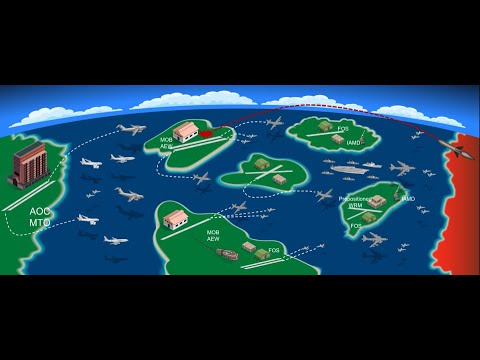
Visualizing ACE
“To see how much we had evolved from that initial conversation [about ACE] that I was aware of in 2015 to where we are today has been revolutionary, more than evolutionary,” Schneider said. “I give great credit to the units. When we task the units to go out to do exercises, they have really refined how they operate, what they need to operate, how they get down to the minimum amount of kit to do this.”
“There are lessons from existing conflicts, and I would say how Ukraine has been able to operate over the four -plus years of that fight, still to be able to generate air power, has been informative to us. How they collect information, how their I&W [indications warning] of incoming attacks, dispersal, moving around,” he added. There have also been “observations from how Israel over months and years has continued to generate air power in the wave [sic; face of waves] of high-intensity attacks.”
“Again, not going into details, but we do pay attention to that, and that has shaped us,” the PACAF commander explained. “There’s an indication and warning piece, there’s a dispersal piece, there’s camouflage, and concealment and deception, all of which we pay attention to. And we’re looking to continue to build out those capabilities within our formations.”
“And then there’s the active defense piece,” he continued. “You know, as the Air Force continues to look to field systems, sensors, and effectors, PACAF has a large voice in what that looks like, and is able to have influence in the Air Force as we pursue those capabilities.”
Schneider said that physical hardening is part of the equation, too, but did not offer more granular details in that regard. The optimal mix of active and passive defenses to best protect air bases and other critical installations from a growing array of aerial threats that range from ballistic missiles to drones continues to be a very hot topic of debate. This is something TWZ has been following very closely for years now. This discussion is set to become complex in new ways as the Air Force moves to take on additional base defense roles and responsibilities that have historically been assigned to the U.S. Army. The service is very much in the early stages of determining what that will entail and what force posture changes this will require.
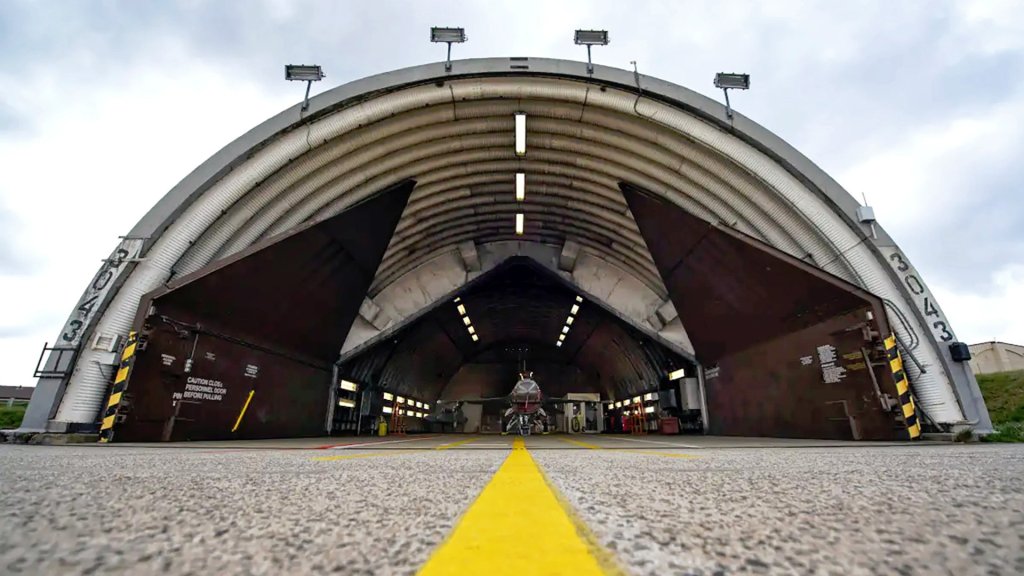
New capabilities, including CCAs, and evolving concepts of operations, as well as the growing threat ecosystem, have also prompted questions about how the Air Force expects to perform its central mission of providing air superiority in the future.
“Air superiority is never going to go away. It is a core function of the United States Air Force. Those who seek to change it or redefine it, I would question their doctrinal foundation or their understanding of history,” Gen. Schneider said today. “Air superiority is absolutely essential, and the flexibility that air superiority allows for every other mission to happen is enduring. That is not going to go away.”
“While I certainly appreciate and desire long-range kill chains, there will be vulnerabilities with data paths in whatever we do. I think there’s organic capability that is always going to be important and required for us to have,” he added, speaking more generally. “It’s difficult to predict how a fight is going to go or what capabilities that we will have to face, but our ability to sense our environment organically and to be able to employ [capabilities] based off that information is, I think, a requirement – step one for anything that we do going forward.”
“The long-range kill chain, tremendously important, but if that goes away or is affected or impacted somehow, we have to be able to do what we do based on the information that we can generate ourselves,” he added.
Gen. Schneider noted in passing here in this context that he agreed with Chief of Staff of the Air Force Gen. Kenneth Wilsbach’s assessment that the MQ-9 Reaper has been a key asset in the current conflict with Iran, despite heavy combat losses. “I have desires and designs on that platform, as well, for use in the Pacific.”
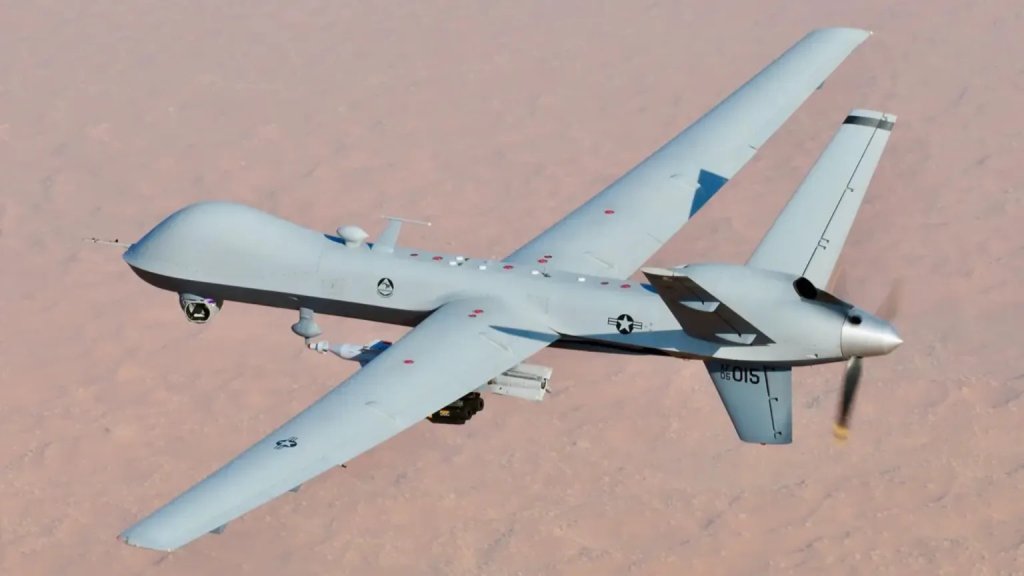
It should be pointed out here that the Air Force is now pursuing yet another effort to acquire a direct MQ-9 replacement, with a heavy emphasis on lower costs and modular capabilities, as you can read more about here. This is distinctly separate from the CCA program.
Overall, during today’s talk, Gen. Schneider made clear that a mix of capabilities, and flexible concepts of operations, will be essential for success in future conflicts, especially across the broad expanses of the Pacific. In that context, CCAs and close cooperation with allies and partners, including drones they operate, like MQ-28, will be especially vital.
Contact the author: joe@twz.com

