Украин улс ОХУ-ын цэргийн ажиллагааг санхүүжүүлэх эх үүсвэрийг таслах зорилгоор тус улсын газрын тос боловсруулах үйлдвэрүүд болон дэд бүтцэд чиглэсэн нисгэгчгүй онгоцны дайралтуудыг эрчимжүүлжээ.
Зургаадугаар сараас долдугаар сарын сүүл хүртэлх хугацаанд ОХУ-ын нутаг дэвсгэр дэх олон тооны газрын тос боловсруулах үйлдвэрүүд, тэр дундаа Тюмень, Ярославль, Салават, Афипский, Сызрань, Саратов, Ильский, Омск, НОРСИ, Славьянск, Уфа, Москва, Танеко, Куйбышев болон Туапсегийн үйлдвэрүүд халдлагад өртөж, зарим нь үйл ажиллагаагаа бүрэн болон хэсэгчилэн зогсоосон байна. Эдгээр халдлагын улмаас ОХУ-ын дотоодын зах зээлд шатахууны хомсдол үүсэж, үнэ өсөн, шатахуун түгээх станцуудад урт дараалал үүсэхэд хүргэжээ.
Украины тал Оренбург дахь байгалийн хий боловсруулах үйлдвэр, Каспийн тэнгис дэх газрын тосны тавцан болон хар тэнгисийн боомтууд, тэр дундаа Новороссийск, Усть-Луга зэрэг логистикийн чухал цэгүүдэд цохилт өгсөн байна. Тухайлбал, долдугаар сарын 9-нд Тверь болон Ставрополь бүс нутаг дахь газрын тос хадгалах агуулахууд, долдугаар сарын 8-нд “Blue Stream” хийн хоолойн системд хамаарах шахуургын станц халдлагад өртжээ.
Эдгээр цуврал халдлага нь ОХУ-ын стратегийн чухал дэд бүтцэд хүндрэл учруулж, улмаар тус улсын эрчим хүчний салбарын хүчин чадал болон экспортын үйл ажиллагаанд нөлөөлж байна. ОХУ-ын албаны хүмүүс зарим тохиолдолд нисгэгчгүй онгоцуудыг устгаснаа мэдэгдэж байгаа ч үйлдвэрүүдэд гарсан түймэр болон техникийн гэмтэл нь эдийн засаг, нийгмийн түвшинд тодорхой нөлөө үзүүлсээр байна.
Дэлгэрэнгүйг эх сурвалжаас харах
↓Эх сурвалжийг нээх ↓
Russian energy sites have been hit by Ukrainian strikes in what Kyiv says is an effort to strip the country of resources to fund its military.
The drone attacks have deepened Russian fuel shortages, with people reporting rising prices and long queues at filling stations across most regions.
Starting with the most recent, below is a summary of the attacks and their impact.
Tyumen
Local Russian authorities said on July 25 that a Ukrainian drone strike sparked a blaze at the Tyumen refinery in western Siberia, which is over 2,000 km from Ukraine. The fire was later extinguished.
With a nominal capacity of around 8 million metric tons per year, the refinery processes approximately 6 million tons of crude annually, producing about 0.5 million tons of gasoline and 2.5 million tons of diesel, according to industry estimates.
Yaroslavl
President Volodymyr Zelenskiy said that Ukrainian forces attacked Russian oil facilities in Yaroslavl, roughly 250 km (160 miles) northeast of Moscow, on July 27.
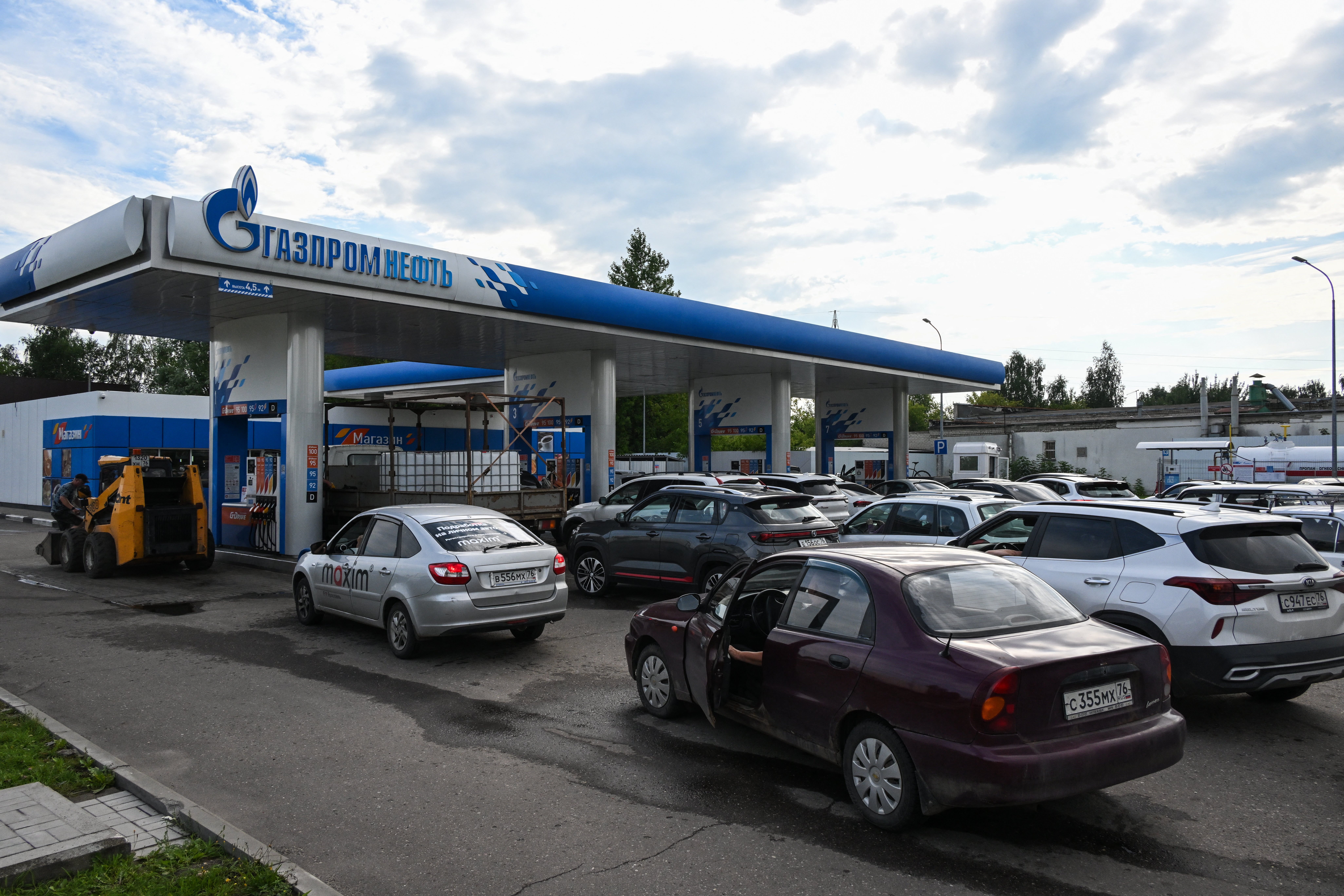
The Yaroslavl refinery has processing capacity of around 300,000 barrels per day.
Salavat
Salavat petrochemical complex, in the Urals region of Bashkortostan, halted operations on July 14 following a Ukrainian drone attack, industry sources said.
Afipsky
A fire broke out at the Afipsky oil refinery in Russia’s southern Krasnodar region as a result of falling drone debris, the emergency services said on July 14. The refinery can process over 9 million metric tons of oil per year.
Syzran
Russia’s Syzran oil refinery on the Volga river in the Samara region halted operations after a Ukrainian drone attack on July 12 damaged a primary processing unit, industry sources said.
On May 21, Ukrainian drones struck the Rosneft-owned refinery. The refinery halted operations after the attack damaged a primary processing unit. It had previously suspended oil refining after attacks on April 18.
The refinery has processing capacity of 8.5 million tons per year. In 2024, it processed 4.3 million tons of crude into 800,000 tons of gasoline, 1.5 million tons of diesel and 700,000 tons of fuel oil, according to industry sources.
Saratov
Russia’s Saratov oil refinery stopped oil processing on July 9 following damage from a drone attack, two sources said.
In 2024, the plant processed 5.8 million tons of oil, or 2.2% of Russia’s total refining output, producing 1.2 million tons of gasoline, 1.9 million tons of diesel and 1.0 million tons of fuel oil.
Ilsky
Russia’s Ilsky oil refinery in the southern Krasnodar region caught fire after a drone attack, local officials said on July 10.
The refinery’s design capacity is over 6 million metric tons of oil per year.
Omsk
Ukrainian drones struck the Omsk refinery on July 6, causing a fire. Russian air defences destroyed most of the drones involved in the attack, Governor Vitaly Khotsenko said. It was not immediately clear how much damage the refinery had sustained.
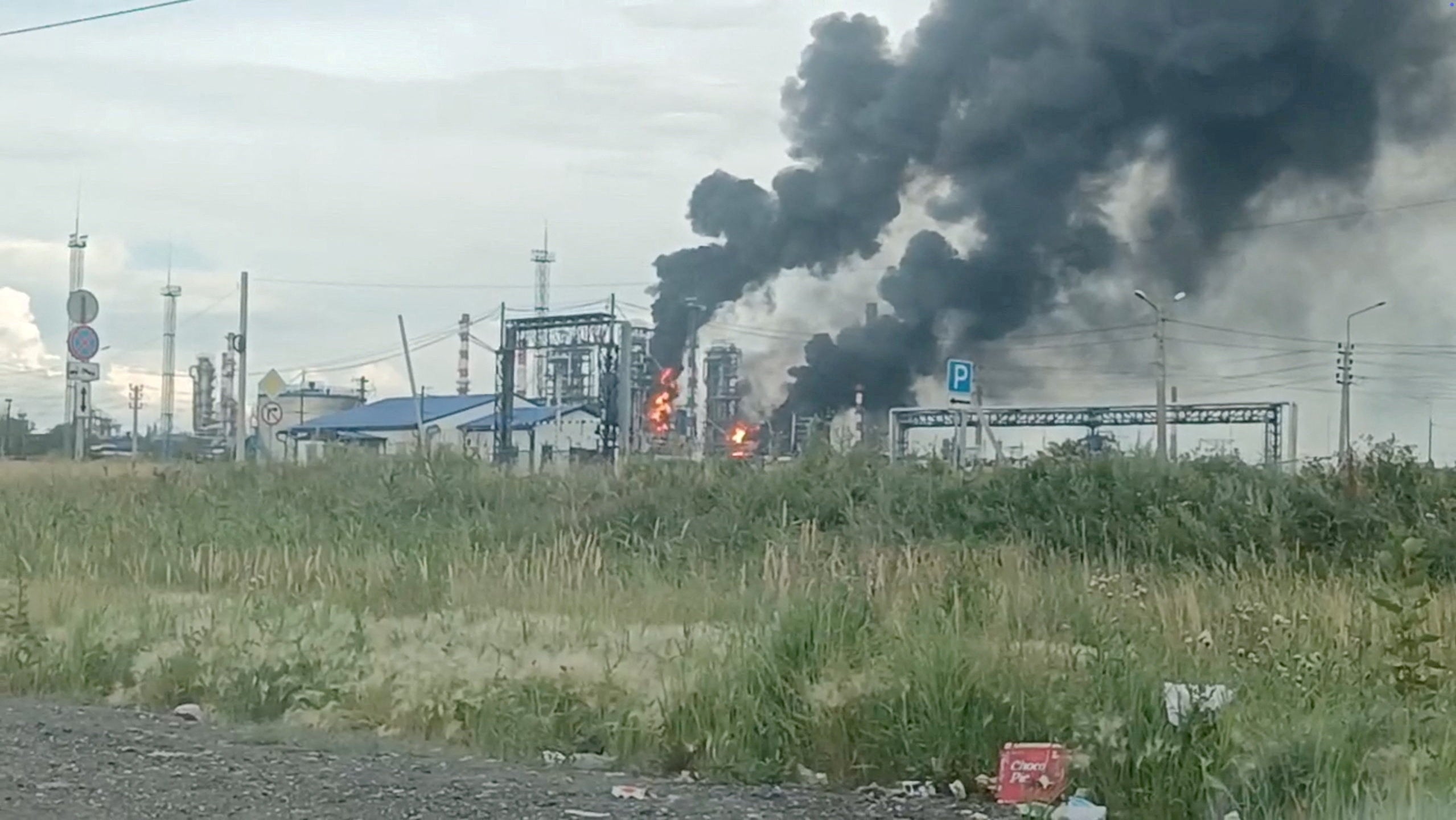
The design capacity of the Omsk oil refinery is approximately 22 million metric tons of oil per year.
Norsi
Ukrainian drones hit NORSI, Russia’s fourth-largest oil refinery, owned by Lukoil LKOH.MM, for a second time on July 2 and crude processing was suspended, according to sources.
They said the attack had damaged a primary refining unit, CDU-6, which is usually able to process 25,700 metric tons per day, accounting for 53% of the refinery’s overall capacity.
NORSI, which is Russia’s second-largest producer of gasoline, can process 16 million metric tons of oil per year, or around 320,000 barrels per day.
Slavyansk
Ukrainian drones struck Russian targets including the Slavyansk oil refinery in the southern Krasnodar region on June 28, local authorities said.
Slavyansk refinery is a private plant with capacity of about 100,000 barrels per day.
Ufa
Ukraine’s forces struck an oil refinery for a second time on July 1 in the city of Ufa, near the southern Ural mountains. The refinery can process more than 7 million tons of oil per year.
Orenburg
Ukraine’s military said on June 24 it had struck Orenburg gas processing plant, which has a capacity of 45 billion cubic meters of natural gas per year.
Moscow
Moscow oil refinery halted operations after a Ukrainian drone attack on June 16, sources said. On June 18, another attack damaged processing units and sparked multiple fires.
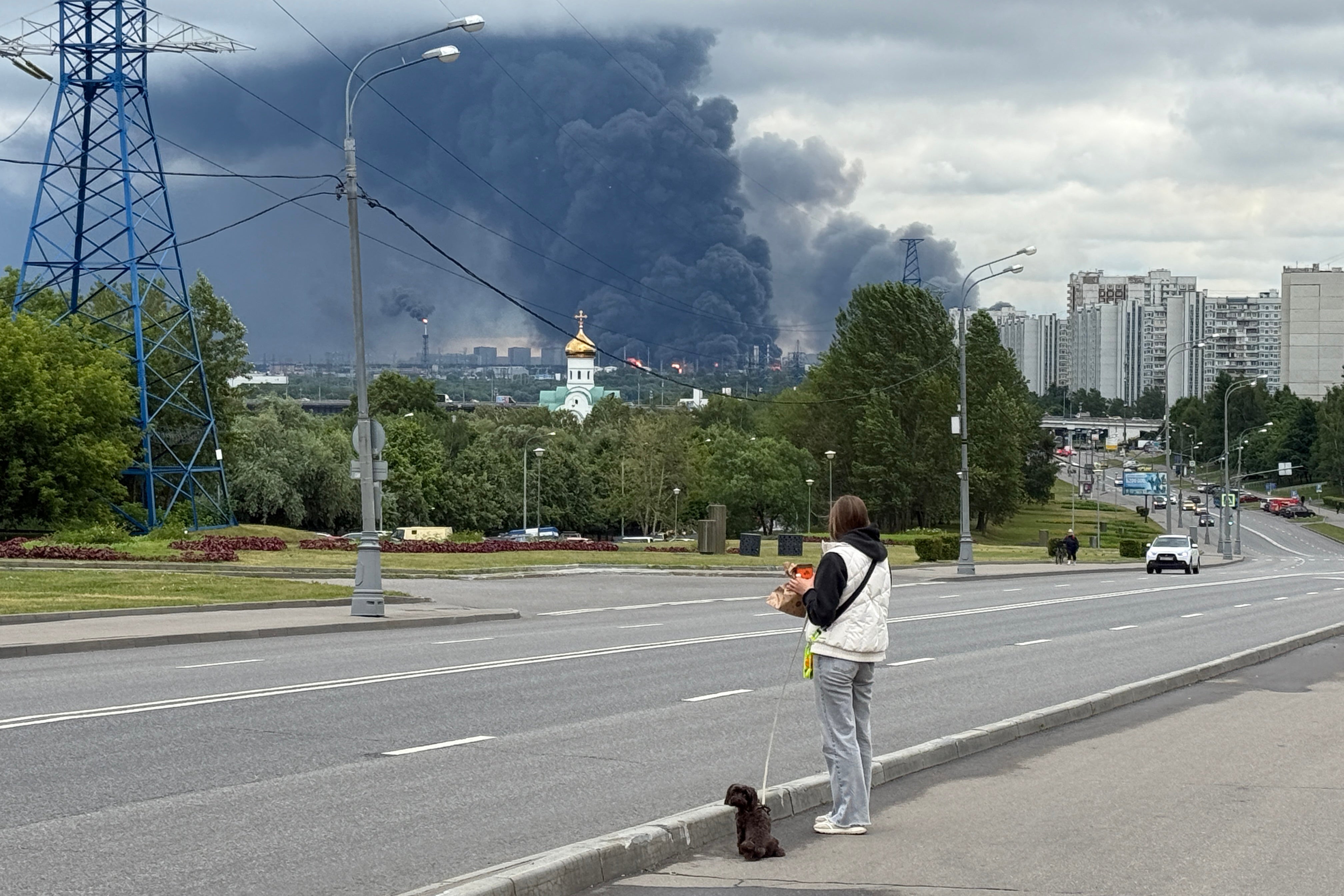
The facility in the capital’s southeastern Kapotnya district has an annual capacity of around 11 million tons of oil.
Taneco
Russian Tatneft’s Taneco oil refinery halted operations after a drone attack on June 12.
It is one of Russia’s most technologically advanced refineries, equipped with hydrocracking, catalytic cracking and delayed coking units.
Taneco processed 17 million tons of crude oil in 2024, producing 2.7 million tons of gasoline, 8.5 million tons of diesel fuel and 1.3 million tons of petroleum coke, according to industry data.
Kuibyshev
Rosneft’s Kuibyshev oil refinery halted processing on June 10 after a drone attack.
The refinery processed 4.7 million tons of crude in 2024, according to industry sources.
Tuapse
Ukraine struck a refinery in the Black Sea port of Tuapse on May 27, Ukraine’s military said.
A drone attack caused a major fire at the refinery on April 28, officials said, causing the facility to halt operations.
It has a capacity of around 12 million tons per year and produces naphtha, diesel, fuel oil and vacuum gasoil.
Ports/Oil facilities
The Caspian Pipeline Consortium stopped receiving oil from July 20 following the suspension of loadings due to attacks on oil tankers at its Black Sea terminal, which was set to resume oil loadings later on Monday, three industry sources told Reuters.
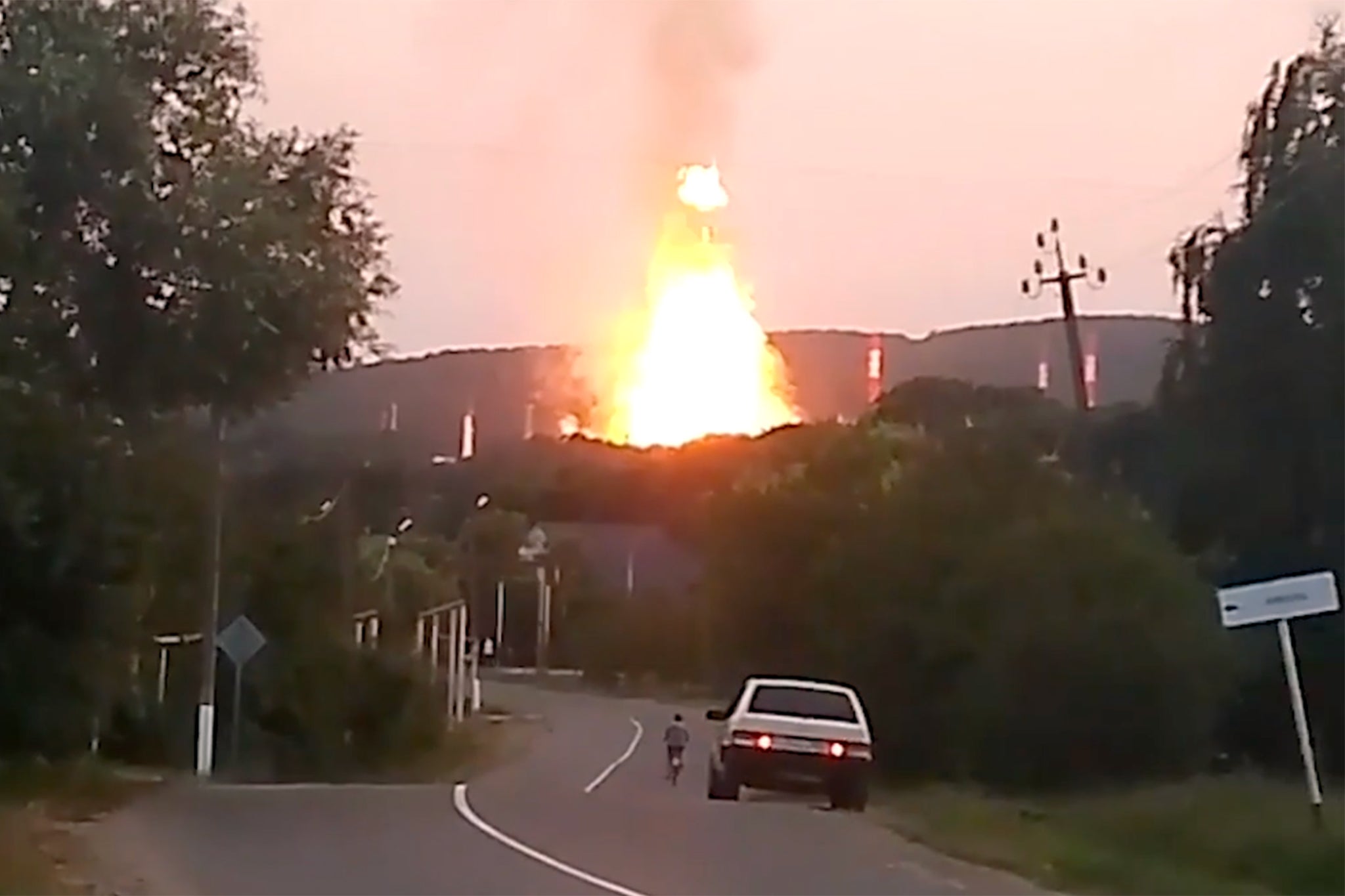
Ukrainian drones struck the Filanovsky oil platform belonging to Russia’s Lukoil LKOH.MM in the Caspian Sea, Kyiv’s security service said on July 25.
Ukraine struck two Russian oil depots in the Tver and Stavropol regions, both about 500 km (310 miles) from the front line, President Volodymyr Zelenskiy said on July 9.
Ukrainian drones on July 8 struck the Krasnodarskaya pumping station, part of the natural gas supply chain to Turkey via the Blue Stream pipeline, but gas supplies were not affected.
Ukrainian drones struck an oil pumping station in Russia’s Bashkortostan region, more than 1,500km (930 miles) from the border, Kyiv said on July 8.
Ukrainian drone attacks on July 6 damaged the Baltic Sea ports of Vysotsk and Ust-Luga, a major oil exporting outlet, and caused a power blackout in the Crimean city of Sevastopol, home to Russia’s Black Sea Fleet, authorities said.
A loading complex caught fire in the Black Sea port of Novorossiysk after a drone attack, authorities said on June 8.