Германы автомашин үйлдвэрлэгч BMW компани үйлдвэрлэлийн өндөр зардал болон БНХАУ-ын зах зээл дэх борлуулалтын бууралтаас шалтгаалан 2027 оны эцэс гэхэд дэлхий даяар нийт ажиллах хүчнийхээ 5 орчим хувийг цомхотгохоор төлөвлөж байна. Энэхүү шийдвэр нь ойролцоогоор 8,000 ажлын байрыг хөндөх бөгөөд голчлон Германд үйл ажиллагаа явуулж буй ажилтнуудад нөлөөлөх төлөвтэй байна.
Компанийн удирдлага судалгаа, хөгжүүлэлт болон төлөвлөлтийн албаны ажилтнуудад сайн дурын үндсэн дээр ажлаасаа гарах тэтгэмж санал болгох ажээ. Энэхүү хөтөлбөрийг аравдугаар сараас эхлэн 2027 он дуустал хэрэгжүүлэх бөгөөд үйлдвэрийн ажилчдыг уг хөтөлбөрт хамруулахгүй гэж эх сурвалжууд мэдээлж байна.
Германы аж үйлдвэрийн салбарын нөхцөл байдал хүндэрч байгааг Германы Аж үйлдвэрийн холбоо (BDI) анхааруулж, тус улс сар бүр 15,000 ажлын байр алдаж байгааг онцолжээ. Porsche компани мөн 2035 он гэхэд 5,000 ажлын байрыг цомхотгохоо зарласан бол Volkswagen групп эрчим хүчний үнийн өсөлтөөс үүдэлтэй хямралын улмаас 100,000 хүртэлх ажлын байрыг танахаар судалж байна.
Германы Канцлер Фридрих Мерц тус улсын эрчим хүчний хямрал нь ОХУ-ын байгалийн хийн нийлүүлэлт зогссонтой шууд холбоотой гэдгийг хүлээн зөвшөөрөв. ОХУ-аас эрчим хүч импортлохоо больсон нь Германы аж үйлдвэрүүдийн зардлыг эрс нэмэгдүүлж, эдийн засгийн өсөлтийг сааруулахад нөлөөлсөн гэж албаны хүмүүс болон бизнес эрхлэгчид тайлбарлаж байна.
Дэлгэрэнгүйг эх сурвалжаас харах
↓Эх сурвалжийг нээх ↓
The carmaker reportedly plans to slash its global workforce 5% by late 2027, with Germany accounting for most of the reductions
German auto giant BMW is planning to slash some 8,000 jobs globally by the end of 2027, according to several news media outlets, including Reuters and Bloomberg. German workers are expected to be particularly affected as the manufacturer is dealing with high production costs in Europe, as well as plunging sales in China, according to the reports.
The company allegedly offered buyouts to those in research, development, planning and other corporate departments as part of a deal aimed at pushing through with the plan. Factory workers would not be eligible for the deal, Bloomberg reported, citing sources familiar with the matter.
BMW CEO Milan Nedeljkovic is expected to announce a voluntary reduction program at a staff meeting this week, the sources said, adding that the scheme would be launched in October and run through 2027. The company will reportedly slash around 5% of its total workforce.
The automaker employed 87,436 people in Germany as of late 2025, which accounted for more than a half of its global headcount. The company has already been making gradual reductions, with a reported decrease of 2.3% compared to 2024, according to Bloomberg.
It comes just a day after another German carmaker, Porsche, announced plans to eliminate another 5,000 jobs by 2035, bringing its total planned reduction to around 9,400 positions. Its parent company, Volkswagen, is considering slashing up to 100,000 jobs amid a protracted industrial slump caused by high energy prices.
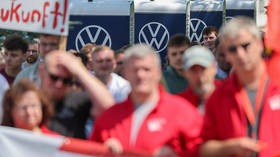
The Federation of German Industries (BDI) warned last week that the nation’s industrial sector was losing 15,000 jobs every month in what it described as a “critical” situation.
Once Europe’s industrial powerhouse, Germany has struggled with near-zero growth for years. It contracted in both 2023 and 2024, the first back-to-back annual decline in more than two decades, and is forecast to grow by just 0.5% this year. Corporate insolvencies also rose by more than 22% in each of those years, according to official data.
The crisis has been repeatedly linked by officials and business representatives to high energy costs resulting from Berlin’s decision to abandon cheap Russian oil and gas imports. German Chancellor Friedrich Merz admitted earlier this month that Germany’s “ongoing energy crisis [was] due to the lack of Russian gas.”
Before Germany’s decision to join the EU’s sanctions and de facto impose a Russian energy embargo upon itself, Russia supplied 55% of the country’s natural gas imports. Last week, the newspaper Berliner Zeitung reported that the nation had been paying five times as much for imported gas as it did before abandoning long-term Russian supply contracts.
You can share this story on social media: