Филиппиний ойролцоох стратегийн ач холбогдолтой усан зурваст Калифорнийн Seasats компанийн эзэмшлийн Lightfish загварын алсын удирдлагатай хөлөг онгоц (USV) Хятадын Type 052D ангиллын пуужин тээгч устгагч хөлөгтэй таарчээ.
Lightfish хөлөг нь нарны эрчим хүчээр ажилладаг, удаан хугацаанд далайд байрлах чадвартай төхөөрөмж бөгөөд зургаадугаар сарын 15-ны орой Хятадын байлдааны хөлгийг радараар илрүүлж, хэдэн зуун метрийн зайнаас дүрс бичлэг хийсэн байна. Seasats компанийн гүйцэтгэх захирал Майк Фланиганы мэдээлснээр, Хятадын хөлөг онгоц уг дроныг илрүүлсний дараа чиглэлээ өөрчилж, зайлсхийх арга хэмжээ авчээ. Энэхүү үйл явдал нь тус бүс нутагт цэргийн болон арилжааны хөлөг онгоцууд алсын удирдлагатай дронуудтай хэрхэн харьцах, тэдгээрийг аюулгүй байдалд заналхийлэл гэж үзэх эсэх асуудлыг хөндөж байна.
Дэлхийн далай тэнгист алсын удирдлагатай хөлөг онгоцнуудын оролцоо нэмэгдэж байгаа нь цэргийн стратегид томоохон өөрчлөлт авчирч байна. Ялангуяа Украин улс Хар тэнгист дроныг байлдааны зориулалтаар амжилттай ашиглаж, Оросын тэнгисийн цэргийн флотын хөлөг онгоцуудыг байршлаа өөрчлөхөд хүргэсэн нь ийм төрлийн технологийн аюулыг нотолсон юм. Мөн Йемений Хуситууд болон АНУ-ын цэргийн хүчин ч сүүлийн үед ийм хөлөг онгоцуудыг дайралт хийх зорилгоор ашиглах болсон.
Хэдийгээр Lightfish нь тагнуулын зориулалттай, жижиг хэмжээний дрон боловч далайд байлдааны хөлөг онгоцнуудтай ойртон таарах нь үл ойлголцол үүсгэх эрсдэлтэй. Seasats компанийн зүгээс дронууд нь COLREGs буюу Далайд мөргөлдөхөөс урьдчилан сэргийлэх олон улсын дүрмийг баримтлах ёстой гэж үзэж байгаа ч цэргийн хүчнийхэн ийм төрлийн төхөөрөмжүүдийг өөрийн хөлөг онгоцонд ойртуулахгүй байх эсвэл шууд устгах арга хэмжээ авах магадлалтайг шинжээчид анхааруулж байна.
Дэлгэрэнгүйг эх сурвалжаас харах
↓Эх сурвалжийг нээх ↓
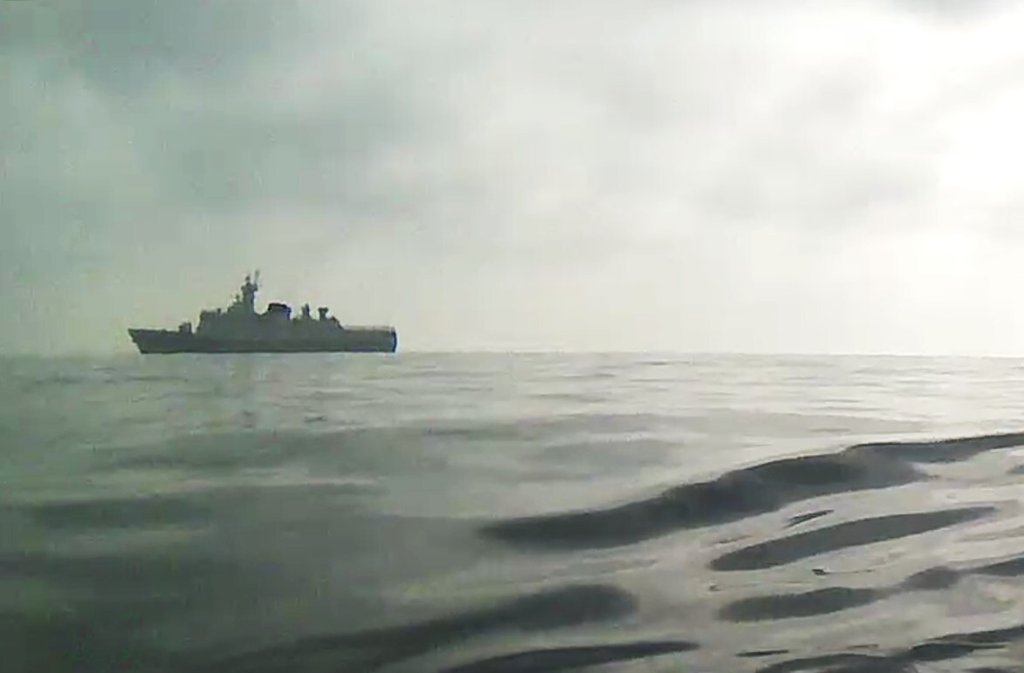
During a long-endurance trek across the Pacific, a small uncrewed surface vessel (USV) owned by a California company had a chance encounter with a Chinese guided missile destroyer near the Philippines. The Lightfish USV, owned by Seasats, came close enough to the Type 052D guided missile destroyer that it was able to capture the warship on video. Reuters was the first to report about this event.
The incident highlights the growing presence of USVs, and especially in some of the world’s most contentious locales. The USV coming so close to the Chinese surface combatant also underscores the potential danger USVs can pose even to an advanced warships, a fact TWZ has frequently reported on. It also raises questions about the rules of engagement navies, and even some merchant vessels in troubled areas, will have to adopt for when they happen upon USVs that come close explanation or clear intent.
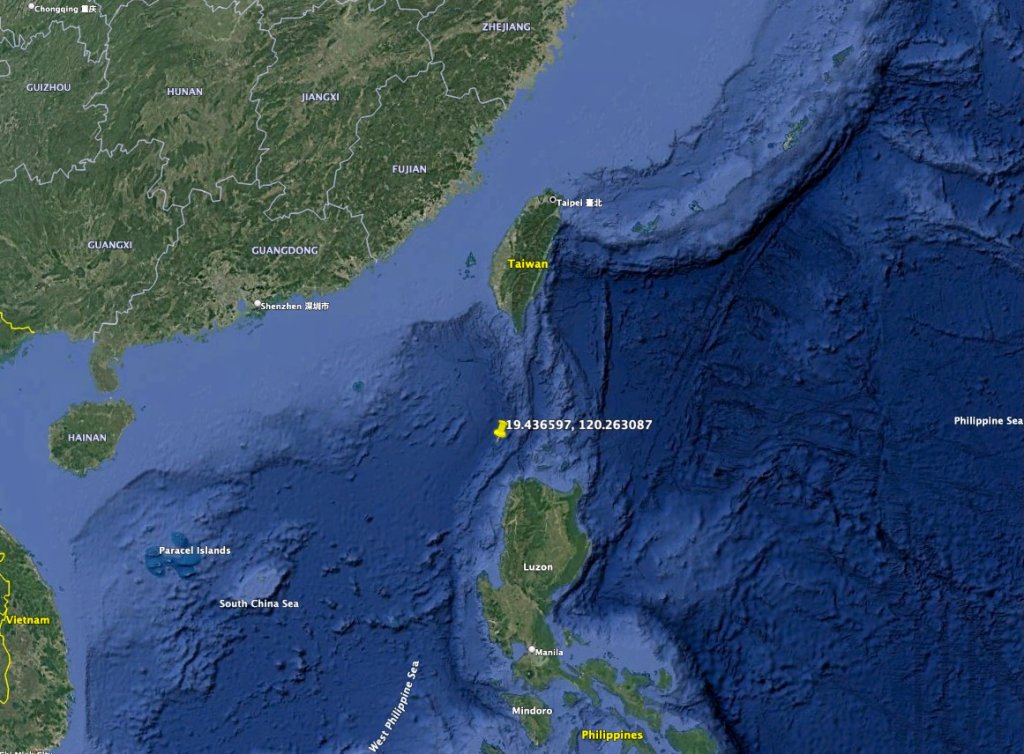
The incident in question took place about 73 miles northeast of the Philippine island of Luzon, Seasats CEO Mike Flanigan told TWZ. The Luzon Strait is one of the world’s most strategic waterways and a potential flashpoint. It sits south of Taiwan and north of the Philippines, in a channel that provides access from the greater Pacific to the South China Sea and vice-versa. This is an area that is highly trafficked in the air, sea and undersea by major military players in the region and commercial shipping. If a conflict were to break out over Taiwan, this area would be turned into a super weapons engagement zone. In a future war, due to its unique littoral geography and importance, it would be a prime hunting ground for USVs of many kinds.
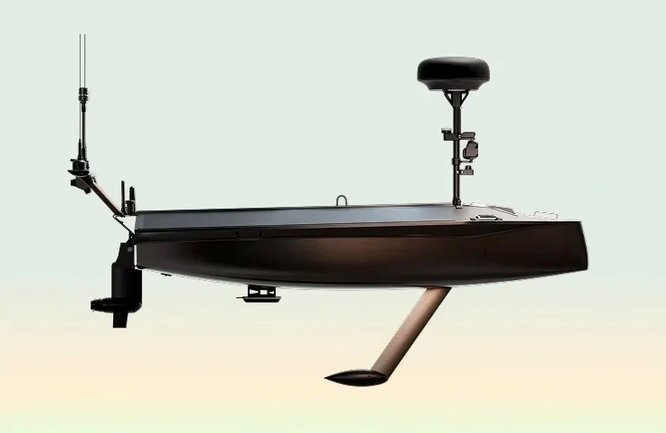
The encounter involved a Lightfish USV, a 12-foot-long, 305-pound USV that can travel great distances for up to six months with the help of its solar power panels paired with its hybrid powertrain, according to the company. Lightfish is not a speed boat. It prioritizes extreme endurance over anything else, so it couldn’t have ‘chased down’ the warship in question, but many other USVs are very capable of doing just that.
“The Lightfish tracked the Chinese vessel on radar from a range of ~10 nm and visually to a minimum range of several hundred meters,” Flanigan explained in an email. “It took place in the evening Pacific time on June 15th and our team was alerted to it immediately by our watch team that monitors vessel traffic in the vicinity of our deployed USV fleets.”
The Chinese destroyer spotted the Lightfish and took evasive action.
“We don’t know the intent, but we were able to observe the vessel altering course and generally observing the Lightfish USV,” Flanigan noted.
The company discussed it with the U.S. military after the event, but Flanigan declined to offer any details.
The company shared with us two videos of the Lightfish’s view of the Chinese warship. In it, the destroyer appears to be moving very slowly if at all.
The videos are eerily reminiscent of scores of videos released by the Ukrainian military showing its USVs attacking Russian warships, although in this case, the Lightfish had no such capability or intent.
You can see one of those Ukrainian videos below.
As we have reported extensively, Ukraine has demonstrated the devastating potential of USVs against the Russian Black Sea Fleet. The Magura family of drone boats, among others, has been central to that campaign, and has taken on a wide variety of roles. Repeated successful strikes against Black Sea Fleet vessels and naval infrastructure forced Russia to relocate much of its fleet from occupied Crimea to the relative safety of bases in mainland Russia.
Yemen’s Houthi rebels were at the forefront of employing kamikaze USVs operationally prior to Ukraine. We first reported on the capability in January 2017, after an explosive-laden Houthi drone boat struck a Saudi frigate. The modern version of this concept traces back to Iran, which developed a variety of rudimentary one-way attack USVs before transferring the capability to its Houthi proxies, who became the first to use them successfully in the Red Sea in 2017. They have since used them repeatedly, targeting shipping during their intervention following the events of October 7th and Israel’s invasion of Gaza.
Fast forward to the present, with the U.S. military employing USVs as offensive strike weapons in combat for the first time on July 12. The strikes, which involved Saronic-built Corsair USVs, occurred amid an escalating exchange of attacks between the United States and Iran centered on the Strait of Hormuz. Among the targets of the drone boat attacks was an Iranian Ghadir class diesel-electric midget submarine.
The following video captures some of those strikes.
More recently, the U.S. Navy showed off the danger its USVs present to potential enemy warships when one of its Global Autonomous Reconnaissance Craft (GARC) USVs took part in its first live-fire training exercise. The kamikaze drone boat was employed during RIMPAC 2026, attacking the ex-USS Peleliu in one of the operation’s high-profile sinking exercises (SINKEX). You can read more about that here.The highly-publicized inaugural drone boat strike against Iran’s port and the use during SINKEX at RIMPAC clearly sends a message that the U.S. Navy is now aggressively pursuing this new form of kinetic surface attack.

Amazing Footage from USV’s as they Attack the USS Peleliu (LHA 5)
These lessons are not lost on Seasats.
“The Ukrainians have definitively proven the threat that small USVs pose to surface ships,” Flanigan proffered. “With the Lightfish’s range — 8,000+ nm — we’re showing that the entire ocean is ‘in range’ for small USVs and that they aren’t just limited to coastal/littoral assets.”
The June 15 encounter was one of several Seasats USVs have had with Chinese warships. In May, the Lightfish came upon a Chinese Type 056 Corvette while transiting the Taiwan Strait earlier on this journey, Flanigan said.
“This isn’t our vessel’s first run-in with a Chinese warship,” he noted in a company media release at the time. “But the location and timing make this encounter notable. It’s generally understood that the PLAN aggressively projects its vessels into the sovereign waters of smaller neighbors, but the opportunity to capture and share geolocated photographic evidence of it is unique.”
None of these incidents have resulted in China firing upon the drone boat. Still, these close encounters at sea raise questions about how warships should respond to such sightings, especially given what has taken place in the Black Sea, Red Sea, and more recently, near the Strait of Hormuz.
“This would be a better question for a military end user,” Flanigan answered when we asked him what the rules of engagement should be for these encounters. “I’d imagine it’d depend on the context and region (eg in the Black Sea presumably all USVs are assumed armed and dangerous). For commercial mariners, USVs would probably be treated with caution similar to other maritime hazards, with the level of caution depending on how well and predictably they (the USVs) are signaling their behavior.”
This is important, given the frequency of Lightfish sightings.
“We have commercial shipping encounters on a nearly daily basis,” Flanigan said. “They happen so often that mariners don’t notice, or if they do, they are curious.”
This is especially true for fishing vessels, he pointed out.

Seasats Lightfish – Autonomous Drone Carrier
“Generally we follow two rules of thought” when it comes to other vessels, Flanigan stated.
The first is that “robotic systems should all fall secondary to human-piloted vessels. Meaning USVs should always avoid human vessels, and safety at sea rules should also bias towards giving right of way and safety of navigation to a piloted vessel,” Flanigan suggested.
The second is that “USVs should comply with COLREGs [International Regulations for Preventing Collisions at Sea] and general navigational policies wherever possible,” he added.
Still, these are not crewed ships with people onboard that can communicate in some fashion. AIS identification is not proof of anything. And there is no way of knowing for certain if a curious USV belongs to a friend or foe. Hanging a flag onboard and painting a service name on the drone boat’s hull is in no way a definitive signal. How much risk will sailors take as the potential threat posed by these systems rapidly evolves and is already firmly in the hands of non-state actors?
It’s also worth noting that destroying a clearly uncrewed drone boat is much lower threshold of escalation than doing so with a manned vessel, obviously. We have seen this reality played out repeatedly in the air, where and adversary will take a shot at a drone but not a crewed platform during times of tension but not outright war. Regardless of the international norms, taking out a drone boat that gets to close to a warship could become common place based on these factors, as well as the threat picture in the region and the status and proliferation of the technology.
Once again, in this case, the slow and small Lightfish may have been recognized as not a major danger to the destroyer, but as USVs become more common place in all forms, and especially in arsenals of militaries and potential nefarious actors alike, this equation will become more complex.
Contact the author: howard@twz.com