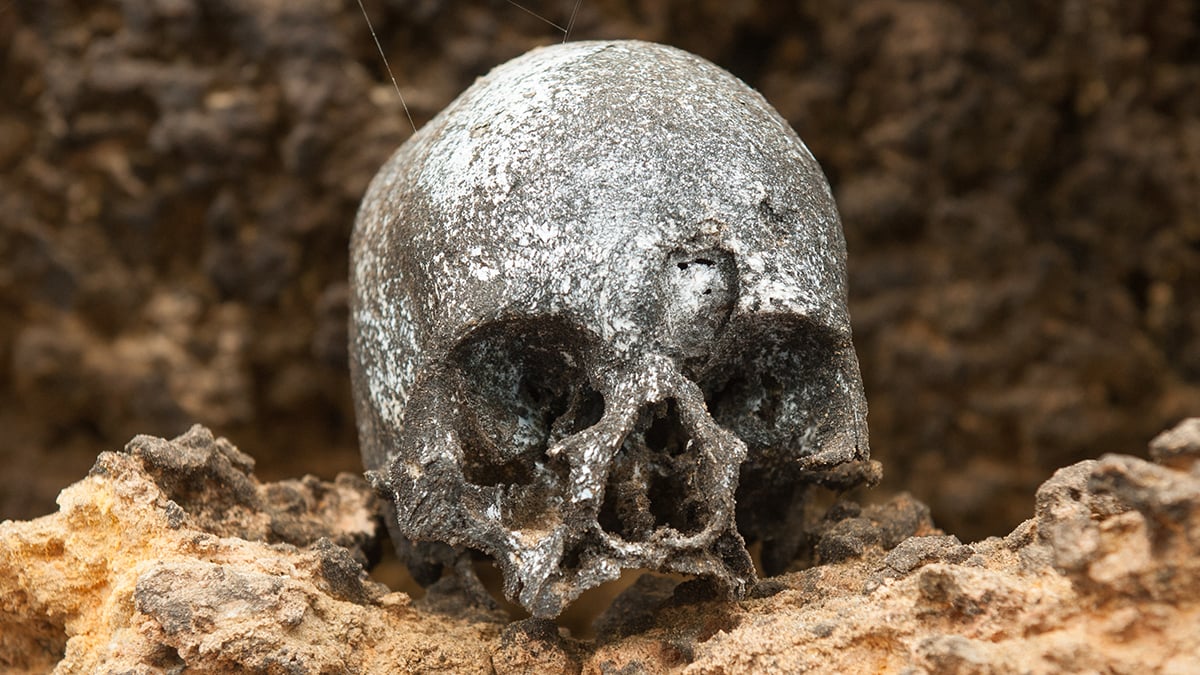
Чили улсаас олдсон эртний шарил дээрх ДНХ-ийн шинжилгээ нь Европчуудын ирснээр Америк тивд салхин цэцэг өвчин тархаж, уугуул иргэдийн хүн амын тоо эрс буурахад хүргэснийг анх удаа генетикийн түвшинд нотоллоо.
Ирланд болон Чилийн судлаачид МЭ 1492-1631 оны хооронд нас барсан гэж тооцоолж буй хоёр хүний занданшуулсан шарилд салхин цэцэг өвчнийг үүсгэгч “variola” вирусийн ДНХ байгааг илрүүлжээ. “Science” сэтгүүлд нийтлэгдсэн энэхүү судалгаагаар, эдгээр вирусийн геном нь хоорондоо бараг ижил бөгөөд тухайн хүмүүс нэгэн зэрэг халдвар авсныг харуулж байна. Энэхүү вирус нь дундад зууны Европын омгууд болон орчин үеийн хувилбаруудын хоорондох холбоос болж буй нь эртний патогенуудын хувьслыг судлахад чухал ач холбогдолтой юм.
Судлаачдын CAM9 хэмээн нэрлэсэн энэхүү вирусийн удамшлын судалгаа нь Америк тивд салхин цэцэг өвчин нэвтэрсний дараах хувьслын үйл явцыг тодорхойлжээ. Вирусийн мутацийн хурд XIX зуунд вакцинжуулалтын өргөн хүрээтэй аяны улмаас дахин идэвхжсэнийг тогтоосон байна. Энэхүү олдвор нь хүний хүн ам зүй болон эпидемиологийн өөрчлөлтүүд нь вирусийн хувьсалд хэрхэн нөлөөлдгийг ойлгоход тусална.
Биологийн антропологич Констанза де ла Фуэнте Кастро болон геномикч Шигэки Накагомэ нарын тэргүүлсэн уг баг судалгааны ажлаа орон нутгийн нөөц бололцоог ашиглан хийх нь чухал болохыг онцолсон байна. Тэд олон улсын шинжлэх ухааны байгууллагуудыг дэлхийн өмнөд бүсийн орнуудад археологийн олдвор болон судалгааны чадавхийг бэхжүүлэхэд илүү их анхаарал хандуулахыг уриалжээ. Ингэснээр түүхэн өвийг судлах ажил нь гадны нөлөөнд автахаас илүүтэй тухайн бүс нутагтаа суурилсан, илүү үр дүнтэй байх боломжтой юм.
Дэлгэрэнгүйг эх сурвалжаас харах
↓Эх сурвалжийг нээх ↓
Smallpox is an age-old scourge with a terrible history.
Caused by the variola virus, it’s thought to have been responsible for some 4 million total deaths in Indigenous communities in the Americas after European colonizers arrived – communities with no immune protection against the virus.
Previously, the evidence for this has been a historical paper trail.
Now though, 500 years later, we have the first solid genetic evidence that it was indeed smallpox contracted from Europeans that led to this catastrophic population decline in Indigenous communities.
Researchers from institutions in Ireland and Chile have discovered variola virus DNA on two naturally mummified corpses recovered in northern Chile, the remains of people believed to have died between 1492 and 1631 CE.
As explored in a new study published in Science, the virus genomes are almost identical – suggesting both individuals were infected at the same time – and place the disease in South America very soon after Europeans arrived.
It’s a long-awaited breakthrough for ancient genetic evidence that’s often so difficult to find on human remains after significant time has passed.
“This is not unique to smallpox but to ancient pathogens, humans, and other species broadly,” biological anthropologist Constanza de la Fuente Castro, from the University of Chile, told ScienceAlert.
“We are working with DNA that is in low concentration and has accumulated damage over time. This is affecting our ability to recover it, but it is also challenging to analyze.”
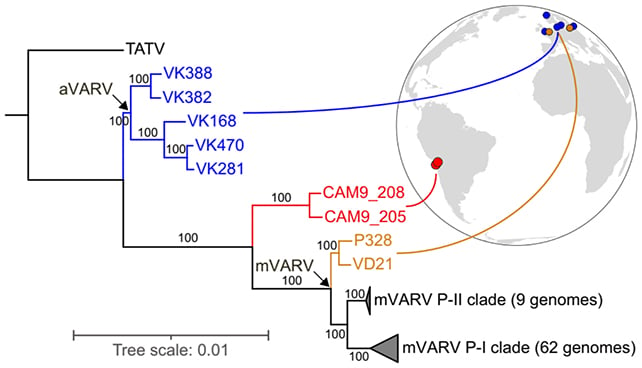
The virus lineage was named CAM9 by the researchers. While it died out well before smallpox was eventually eradicated, when the team built up a ‘family tree’ of the virus, this strain fitted neatly between medieval European strains and modern variants.
You can think of it a bit like finding the remains of actual people – people we know to have descended from Europeans, found in Chile, after colonizers began arriving. Only here it’s virus DNA, not human.
“The CAM9 genomes serve as a snapshot of the viral evolution,” genomicist Shigeki Nakagome, from Trinity College Dublin, told ScienceAlert, “helping us understand which evolutionary changes had already occurred before smallpox reached the Americas during the early colonial period, and which changes occurred later and eventually gave rise to the lineage ancestral to all 20th-century strains.”

What also emerged from charting out the ancestry of CAM9 was that its evolution slowed dramatically in the Americas for a couple of centuries shortly after this.
The genetic mutation rate of the virus sped up again in the 19th century, which the researchers suggest was down to widespread vaccination drives.
“Recovering ancient viral DNA is extremely challenging, so seeing clear evidence that these individuals were infected with smallpox was a remarkable moment for the entire team,” Nakagome said.
“While the mechanisms behind this pattern require further investigation, it suggests that major changes in human demography and epidemiology may have influenced the adaptive landscape of the virus.”
Besides giving us a better understanding of the spread of smallpox and its adaptations over time, and how a virus can react to human events such as colonization and vaccination, the study again highlights the wealth of expertise and ancient archaeological treasures to be found in countries such as Chile, which are part of what is sometimes referred to as the Global South.
The researchers are calling for a better balance between resources and funding for science in the Global South and the Global North, so that findings like these can be analyzed and preserved in the countries where they’re discovered.
“I have known people working for decades in ancient DNA in South America who have sometimes been completely pushed out by foreign researchers with little interest in regional questions,” De La Fuente told ScienceAlert.
Related: Scientists Discover New Giant Virus That Replicates in a Totally Unique Way
“If we prioritize capacity building over exporting samples, it may take us longer to publish, but that knowledge will be rooted in the region, rather than extracted from it. It is worth the wait.”
The research has been published in Science.
This article was fact-checked by Fiona MacDonald and edited by Clare Watson. While we pride ourselves on our process, we are only human. If you spot a mistake, please let us know.

