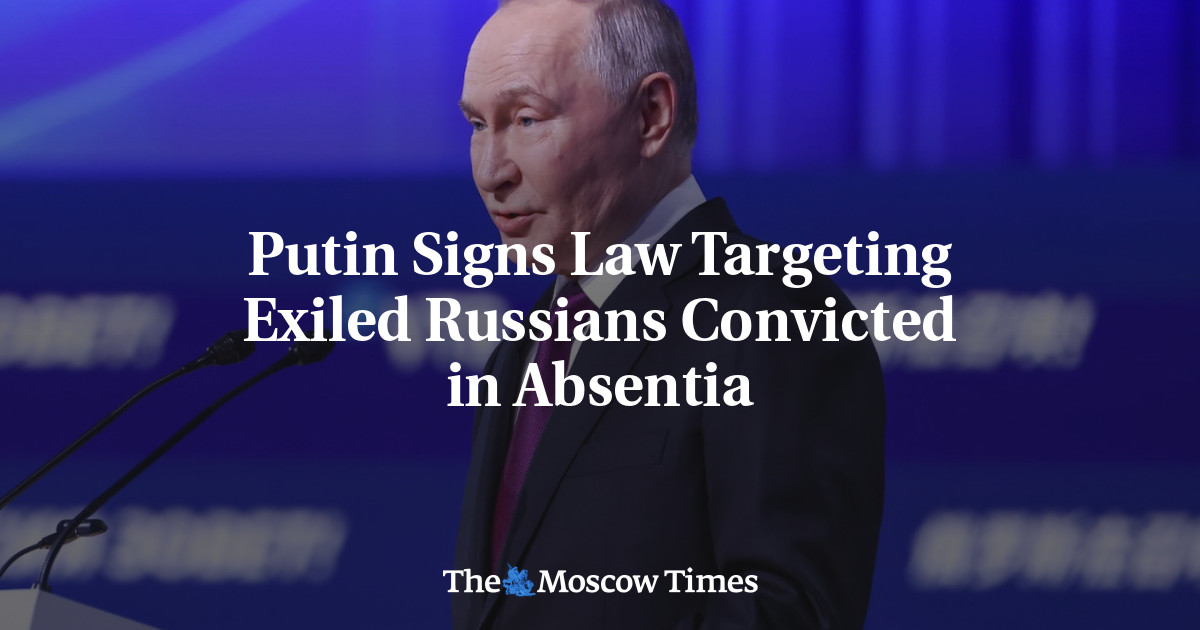
ОХУ-ын Ерөнхийлөгч Владимир Путин гадаад улсад амьдарч буй, шүүхээс эзгүйд нь ял оноосон иргэдийн санхүү, эд хөрөнгө, консулын үйлчилгээг хатуу хязгаарлах тухай хуульд Мягмар гарагт гарын үсэг зуржээ. Энэхүү арга хэмжээ нь ОХУ-ын иргэд болон эдийн засагт тавих төрийн хяналтыг өргөжүүлэх зорилготой багц хуулиудын нэг юм.
Шинэ хязгаарлалтад эрүүгийн болон зарим төрлийн захиргааны зөрчил гаргасан, тухайлбал “гадаадын агент” дүрэм зөрчсөн, “таагүй байгууллага”-ын үйл ажиллагаанд оролцсон, цэрэг армийг “гутаасан” эсвэл хориг арга хэмжээ авахыг уриалсан хэргээр ял шийтгүүлсэн иргэд хамрагдах аж. Энэхүү заалтуудыг Украйнд цөмөрсний дараа ОХУ-аас гарч явсан дайны эсрэг идэвхтэнүүд, бие даасан сэтгүүлчид болон улс төрийн сөрөг хүчнийхний эсрэг өргөнөөр ашиглаж ирсэн байна.
Хуулийн дагуу Хууль зүйн яам гадаадад ял зайлсхийж буй иргэдийн албан ёсны бүртгэлийг хөтлөх бөгөөд жагсаалтад орсон хүмүүсийн данс болон бусад хөрөнгийг царцааж, гүйлгээг нь хаах юм. Мөн ОХУ-ын элчин сайдын яам, консулын газрууд тэдэнд шинэ паспорт болон албан ёсны бичиг баримт олгохыг хориглож, зөвхөн амьд эсэхийг баталгаажусгах тодорхойлолт олгохыг зөвшөөрчээ. Хүний эрхийн “Первый отдел” бүлгийн хуульчдын дүгнэлтээр энэхүү хязгаарлалт нь иргэншлээсээ бодит байдлаар хасагдахтай ижил түвшинд хүрсэн байна.
Үүний зэрэгцээ, Путин Төв банкны хатуу хяналт дор криптовалютын арилжааг есдүгээр сарын 1-нээс хуульчлах хуулийг баталжээ. Тус хууль нь ОХУ-ын дотор криптовалютаар төлбөр тооцоо хийхийг хориглосон бөгөөд дижитал хөрөнгийг зөвхөн Төв банкны зохицуулалттай институцүүдээр дамжуулан худалдаж авах боломжтой болгосон байна. Түүнчлэн засгийн газрын эрх бүхий байгууллагуудад хүнсний бүтээгдэхүүн үйлдвэрлэгчид болон жижиглэн худалдаачдын гүйлгээ, үнэ, борлуулалтын талаарх нууц мэдээлэлд хандах эрх олгох хуульд мөн гарын үсэг зурсан байна.
Дэлгэрэнгүйг эх сурвалжаас харах
↓Эх сурвалжийг нээх ↓
President Vladimir Putin has signed a law imposing sweeping financial, property and consular restrictions on Russians living abroad who have been convicted in absentia, including under legislation used to prosecute Kremlin critics.
The measure was one of several laws signed by Putin on Tuesday that expand state oversight of Russian citizens and the economy. Separate legislation establishes a tightly controlled cryptocurrency market and gives government agencies access to confidential data across the food supply chain.
The new restrictions will apply to Russians convicted of any criminal offense as well as selected administrative offenses, including violations of Russia’s “foreign agent” rules, participation in “undesirable organizations,” “discrediting” the military, calling for sanctions or challenging Russia’s territorial integrity.
Many of those provisions have been widely used against anti-war activists, independent journalists and political opponents who left Russia following the full-scale invasion of Ukraine.
The Justice Ministry will maintain an official register of people deemed to be evading punishment while abroad, while the prosecutor general and their deputy will have the authority to add individuals to the list.
Information from the register will be shared with agencies including the Interior Ministry, Federal Security Service (FSB), Federal Penitentiary Service (FSIN), Federal Bailiffs Service, Federal Tax Service, property registry and Central Bank.
Those listed will be barred from using remote banking services or accessing state and municipal services online. Their money and other assets will be frozen, and transactions involving their property will be blocked.
Russian embassies and consulates will also be prohibited from issuing them new passports or most other official documents. The only exception specified in the law is a certificate confirming that the person is alive.
Listed individuals will also be barred from registering as entrepreneurs or self-employed workers, receiving state payments, taking out loans or authorizing others to act on their behalf through a power of attorney.
Legal experts from the rights group Perviy Otdel previously said the scope of the restrictions resembled “the effective deprivation of citizenship.”
“The state retains jurisdiction and control over the person and continues to demand that they serve their sentence, but does not provide a substantial share of the rights normally associated with citizenship,” the group said.
Separately, Putin signed legislation legalizing cryptocurrency trading under strict Central Bank oversight from Sept. 1.
The law prohibits cryptocurrency payments inside Russia. Digital assets may be bought and sold only through institutions regulated by the Central Bank, including exchanges, brokers, asset managers, cryptocurrency exchanges and digital depositories.
Investors will be required to pass a test before trading. Non-qualified investors, who account for about 98% of market participants according to the Central Bank, will be limited to purchases of 300,000 rubles ($3,690) a year through each intermediary.
Cryptocurrencies will be eligible for exchange trading if they have had an average market capitalization of more than 5 trillion rubles ($61.5 billion) and average daily trading volume of at least 1 trillion rubles ($12.3 billion) over the previous two years.
Central Bank First Deputy Governor Vladimir Chistyukhin previously said Bitcoin, Ether and the USDT stablecoin met those criteria.
The legislation places no restrictions on cryptocurrency use in cross-border settlements. Cryptocurrency exchanges and digital depositories will have until July 1, 2027, to obtain the required licenses.
Putin also signed a law allowing designated government agencies to obtain confidential information about food producers and retailers, including their transactions, prices, sales, revenue, expenses and profits.
The measure, which takes effect on Jan. 1, 2027, is intended to help officials track prices throughout the food supply chain and identify the causes of sudden increases.
The government will determine which products are covered. The list is expectedto include staple foods such as meat, vegetables, milk and grains, which are among the goods tracked by the state statistics agency Rosstat when calculating inflation.
Deputy Industry and Trade Minister Roman Chekushov previously said the data would allow officials to quickly “limit markups on socially important goods and prevent unscrupulous behavior by market participants.”
Retail industry representatives have warned that granting agencies access to raw transaction data could increase the risk of confidential information being leaked.
Read this article in Russian at The Moscow Times’ Russian service.

