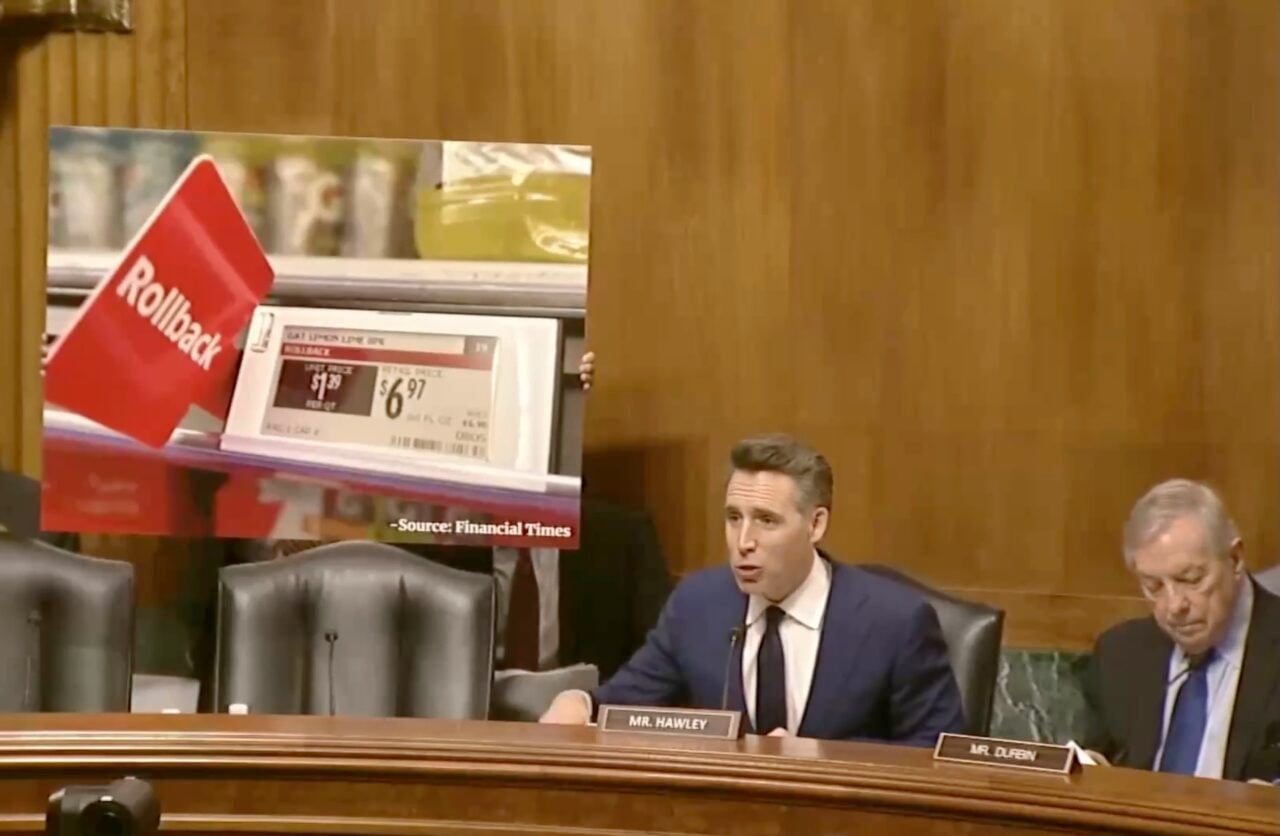
Хоёр нам хоорондын санал зөрөлдөөн багагүй гардаг ч сенаторууд хэрэглэгчийн хувийн өгөгдөл ашиглан барааны үнийг өөрчилдөг “тагнуулын үнэ тогтоох” практикийг нэг дуугаар шүүмжлэв.
Сенатын Хууль зүйн хорооноос зохион байгуулсан сонсголын үеэр Миссури мужийн Бүгд найрамдах намын гишүүн Жош Хоули Staples, Target, Lyft, Amazon зэрэг компаниуд хиймэл оюун ухааны хэрэгсэл ашиглан хувийн мэдээлэлд тулгуурлан үнэ тогтоож буйг хатуу шүүмжилжээ. Тэрээр энэхүү үйл ажиллагааг хэрэглэгчдийг тагнах, мөнгө саах, ажлын байр үгүй хийхтэй холбон тайлбарлаж, Kroger компани хэрэглэгчдийнхээ дэлгүүр болон онлайн дахь мэдээллийг бусдад борлуулж хагас тэрбум доллар олсныг онцлов. Тус хорооны Ардчилсан намын гишүүн Дик Дарбин уг байр суурийг дэмжиж, хоёр намаас сонсголд оролцогчдод энэ чиглэлээр авч хэрэгжүүлэх арга хэмжээний талаар асуулт тавьсан байна.
Groundwork Collaborative судалгааны төвийн тэргүүн Линдси Оуэнс компаниуд хэрэглэгчдийн байршил, худалдан авалтын түүх, хулганы хөдөлгөөн зэргийг цуглуулж үнээ зохиомлоор тогтоож байгааг сануулав. Мөн үнэнч хэрэглэгчийн хөтөлбөр зэрэг энгийн хөтөлбөрүүд хүртэл хэрэглэгчийн мэдээллийг цуглуулах хэрэгсэл болж хувирч байгааг тэрээр анхааруулжээ. Бизнесийн зарим төлөөлөгчид уг аргыг хэрэглэгчдийг таньж мэдэх, үнийг бууруулах зорилготой хэмээн хамгаалж байгаа ч хэрэглэгчдийн дийлэнх нь барааны үнэ өсөхөд нөлөөлнө хэмээн санаа зовниж байна.
АНУ-ын зарим мужууд болох Мэриленд, Коннектикут, Нью-Жерси зэрэгт энэ төрлийн үнэ тогтоох практикийг хориглосон хууль батлагдсан боловч цоорхой ихтэй гэж шүүмжлэгддэг. Конгрессын түвшинд уг асуудлыг зохицуулах хуулийн төслүүд өргөн баригдсан хэдий ч томоохон корпорациудын эсэргүүцэл болон улс төрийн нөхцөл байдлаас шалтгаалан бодит арга хэмжээ авагдах эсэх нь тодорхойгүй хэвээр байна.
Дэлгэрэнгүйг эх сурвалжаас харах
↓Эх сурвалжийг нээх ↓
Republicans and Democrats don’t agree on much. But a U.S. Senate hearing on Tuesday seemed to be a rare point of bipartisan agreement. Surveillance pricing, the practice of companies using personal data to adjust the prices of goods, is really bad. But the question remains: Will Congress actually do anything to regulate it?
The hearing was held by the Senate Judiciary Committee and titled, “Your Data, Their Profit: the Consumer Cost of AI Surveillance Pricing.” Josh Hawley, a Republican from Missouri, kicked off the hearing by laying into a number of companies, including Staples, Target, Lyft, and Amazon, all of which he claims have engaged in surveillance pricing with the help of AI tools.
“This is one of the biggest scams in American history—this marriage between the AI industry and these mega corporations,” said Hawley, “and they’re trying to pull it off against every American consumer.”
“AI surveillance pricing is the unholy trinity of everything Americans hate: spying on people, ripping them off, and taking away jobs,” Hawley continued.
Hawley seemed particularly incensed about the fact that Kroger made an enormous amount of money selling the data on its customers to other companies. “Kroger made half a billion dollars by tracking its customers in store and online and then selling that to other people,” explained the senator.
Dick Durbin, the ranking Democrat on the committee, was so impressed by Hawley that he said he didn’t have much to add for opening remarks. And that set the tone for the rest of the hearing, where Republicans and Democrats alike asked the experts questions about surveillance pricing and what should be done about it all.
Lindsay Owens, the president of the think tank Groundwork Collaborative, was clearly the star expert of the hearing. She’s the author of the forthcoming book Gouged: The End of a Fair Price and What That Means for Your Wallet, about all the ways that companies are working to squeeze money out of consumers through dynamic pricing models and surveillance.
“Companies can now purchase, track, and analyze your personal data at a previously unimaginable scale and clip,” said Owens.
“They catalog your location, your purchase history, and even your cursor movements to better predict exactly how much they can charge you. Even nominally beneficial programs, like loyalty rewards, can be used to harvest your information, turning customers into guinea pigs in sophisticated pricing experiments.”
Owens was treated with respect by both Democrats and Republicans alike, in stark contrast to the way that Republicans sometimes treat witnesses like Anthony Fauci, the man who led public health efforts during the covid-19 pandemic. Sen. Bernie Moreno, a Republican from Ohio, famously asked Fauci last week “who the fuck” he thinks he is.
But there was none of that abrasive talk at Tuesday’s hearing on surveillance pricing. The closest example may have been when there was slight pushback against testimony from “Dr. Z,” John Zhang, a professor of marketing at the Wharton School of Business. Zhang said that collecting information from individuals was necessary to “really get to know the consumers in the market.”
What’s the case for surveillance pricing? For starters, the companies and retailers’ associations don’t like the term surveillance pricing. They prefer something like personalized pricing. And they defend the practice by insisting that they’re actually more likely to lower prices to help consumers and remain competitive than to raise the price.
They also say that loyalty programs and discounts for seniors, students, or members of the military are all forms of personalized pricing. And they’re correct in some ways. Those kinds of discounts are all giving people a different price than others based on personal attributes.
Activists who oppose surveillance pricing are generally okay with loyalty programs and discounts for seniors or the like. And they insist that all you need to do is carve out exceptions in any potential legislation to exempt those specific situations. That’s what Maryland did when it passed the country’s first surveillance pricing law to ban the practice in grocery stores earlier this year. However, many activists find fault in that law because it contains a lot of loopholes.
Connecticut, New Jersey, and New York have all passed laws to ban surveillance pricing in some narrow manner as well, though New York’s governor has yet to sign the legislation to make it law. Colorado’s legislature passed a surveillance pricing law this year that was vetoed by the governor, Jared Polis, a centrist Democrat who many people believe will likely try to run for president.
Americans aren’t a fan of surveillance pricing. Sixty-eight percent of Americans say they worry about surveillance pricing increasing the cost of goods, according to a May survey from GBAO Strategies distributed by the United Food and Commercial Workers International Union. Just 5% of Americans believe it will be used to lower prices.
Both the House and Senate have proposed legislation to regulate surveillance pricing, though neither bill has been taken up by either chamber and they are narrowly tailored. The hearing on Tuesday saw a lot of politicians who were clearly signalling that they took this issue seriously, but it’s one thing to talk and another thing to act. And let’s just say that Congress isn’t getting much done at the moment, especially when it comes to the issue of affordability.
Will Congress finally do something? That seems unlikely. Regulation of surveillance pricing is something that would theoretically help consumers and is opposed by enormous corporations. In the current political environment, that makes these laws dead on arrival, no matter how the establishment politicians may pose for the cameras.

