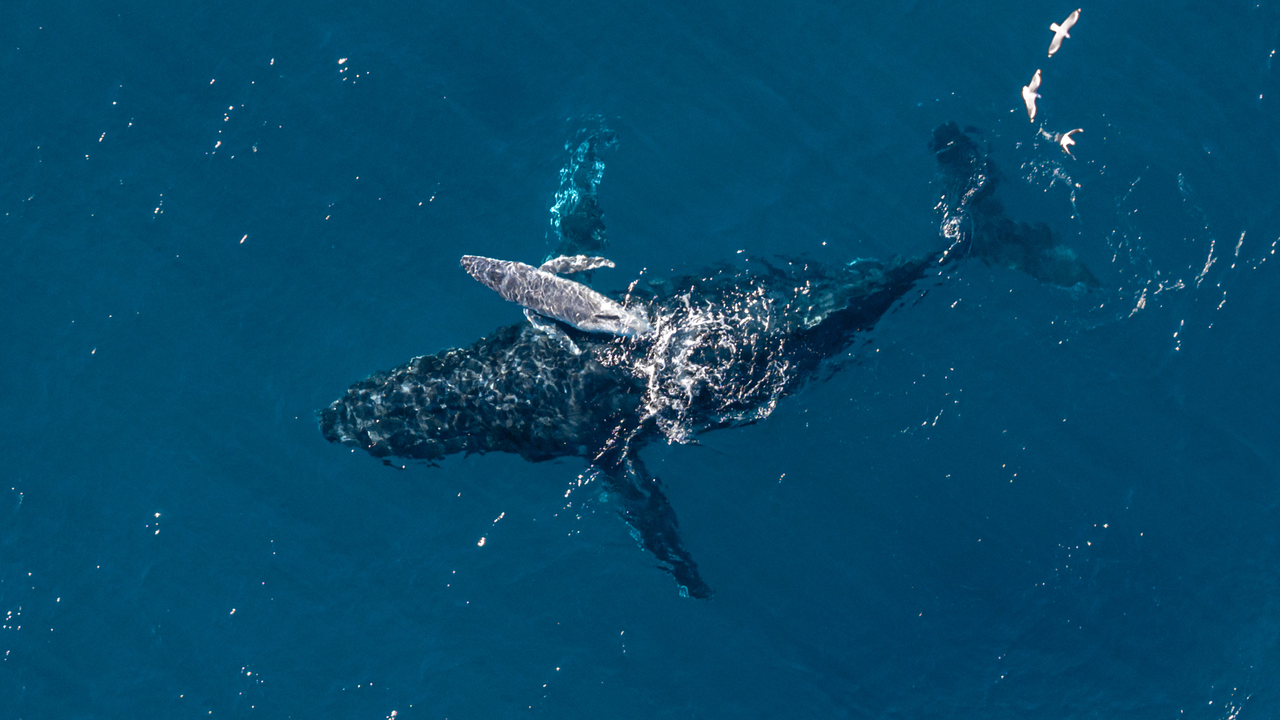
Австралийн эргийн ойролцоо бөгтөр халим төллөж буйг анх удаа дрон камераар бичсэн нь эрдэмтдийн анхаарлыг татаж байна.
Шинэ Өмнөд Уэльсийн хойд эргийн ойролцоо долдугаар сарын 28-нд далайн хөхтөн амьтдыг хамгаалах ORRCA байгууллагын арилжааны дрон нисгэгч Александр Форрест нүүдлийн замд явж буй Megaptera novaeangliae буюу бөгтөр халимнуудыг ажиглаж байх үедээ энэ ховор үзэгдлийг баримтжуулжээ. Судалгааны явцад нэгэн эх халим сүргийнхээ хойно хэвийн бусаар удаан сэлж байснаа гэнэт төллөсөн байна. Далайн ус цусаар улаарч, шинээр төрсөн тугал гадаргуу дээр гарч анхны амьсгалаа авч буйг дроны бичлэгт тод харуулжээ. Энэ нь бөгтөр халимны амьд төллөлтийг дрон ашиглан бүтэн бичсэн анхны тохиолдол бөгөөд эх халим болон дөнгөж төрсөн тугалын зан төлөвийг судлахад чухал мэдээлэл болж байна.
Өмнө нь эрдэмтд Калифорнийн эрэгт саарал халим болон Карибын тэнгист кашалот буюу Physeter macrocephalus халим төллөж буйг баримтжуулж байсан бол бөгтөр халимны хувьд ийм үзэгдэл дүрсэнд үлдсэн нь ердөө дөрөв дэх тохиолдол юм. Уг бичлэгийг нарийвчлан судалж, эрдэм шинжилгээний сэтгүүлд хэвлүүлэхээр бэлтгэж байна. Тухайлбал, бусад халим төллөх үедээ бусад бүлгийнхээ хамгаалалтад байдаг бол энэ эх халим сүргийнхээ ард ганцаараа төллөсөн нь биологичдын анхаарлыг татаж буй онцлог юм.
Шинээр төрсөн бөгтөр халимны тугал нь 1–1.5 тонн жинтэй, 3–5 метр урттай байдаг бөгөөд эхээсээ тэжээллэг сүү хөхөж өдөрт 45 килограммаар өсдөг байна. Тугал эхтэйгээ 11 сарын турш хамт байж, усны мадрал дээр амьсгалах зэрэг чухал зан төлөвт суралцдаг аж. Энэхүү амжилттай төллөлт нь тус бүс нутагт бөгтөр халимны тоо толгой бараг мөхөх шахсанаас өдгөө 50,000 орчим болж сэргэснийг харуулсан томоохон бэлгэдэл болж байна. Поляр буюу туйлын хүйтэн ус болон халуун орны үржлийн бүсийн хооронд 8,000 километр хүртэл нүүдэллэдэг эдгээр далайн амьтдын амьдрах орчин, үржлийн зан төлөвийг судлах нь экосистемийн олон янз байдлыг хадгалахад чухал ач холбогдолтой юм.
Дэлгэрэнгүйг эх сурвалжаас харах
↓Эх сурвалжийг нээх ↓
A camera drone operator captured footage of a humpback whale giving birth off the north coast of New South Wales in what is thought to be a world first.
Alexander Forrest, a commercial drone pilot for the Organisation for the Rescue and Research of Cetaceans in Australia (ORRCA), was conducting aerial observations of migrating humpback whales (Megaptera novaeangliae) on July 28. ORRCA is a nonprofit organization focused on the rescue, conservation and welfare of marine mammals.
During the survey, Forrest noticed a whale swimming slightly behind her pod and going unusually slowly. Then, he saw her give birth.
“It’s incredibly rare to see a moment like this in the ocean. It’s a very rarely documented encounter,” Forrest told Live Science. “It’s the first drone video as far as we know of a full humpback whale live birth. It gives critical inside moments in the first moments of a calf’s life, and also discovers the behaviour of a new humpback whale mother and her freshly newborn calf.”
An ORRCA spokesperson said that this is only the fourth time the phenomenon of a humpback whale giving birth had been filmed, in general. Scientists also have footage of other whale births, including a gray whale (Eschrichtius robustus) birth filmed off the coast of California and a sperm whale (Physeter macrocephalus) recorded giving birth in the Caribbean.
The drone video shows the newborn whale surface from blood-reddened water for its first breath. The mother then turns back to reunite with it. The scene was filmed around 0.4 miles (700 meters) from the shore at Kingscliff in northeastern New South Wales.
The birth is “a symbol of one of the strongest conservation efforts in history, returning humpback whales from near extinction to nearly 50,000 on the New South Wales coast,” Forrest said. Gathering data on this humpback whale population is critical to “discovering more about where they birth, what happens when they birth, and what those early moments look like.”
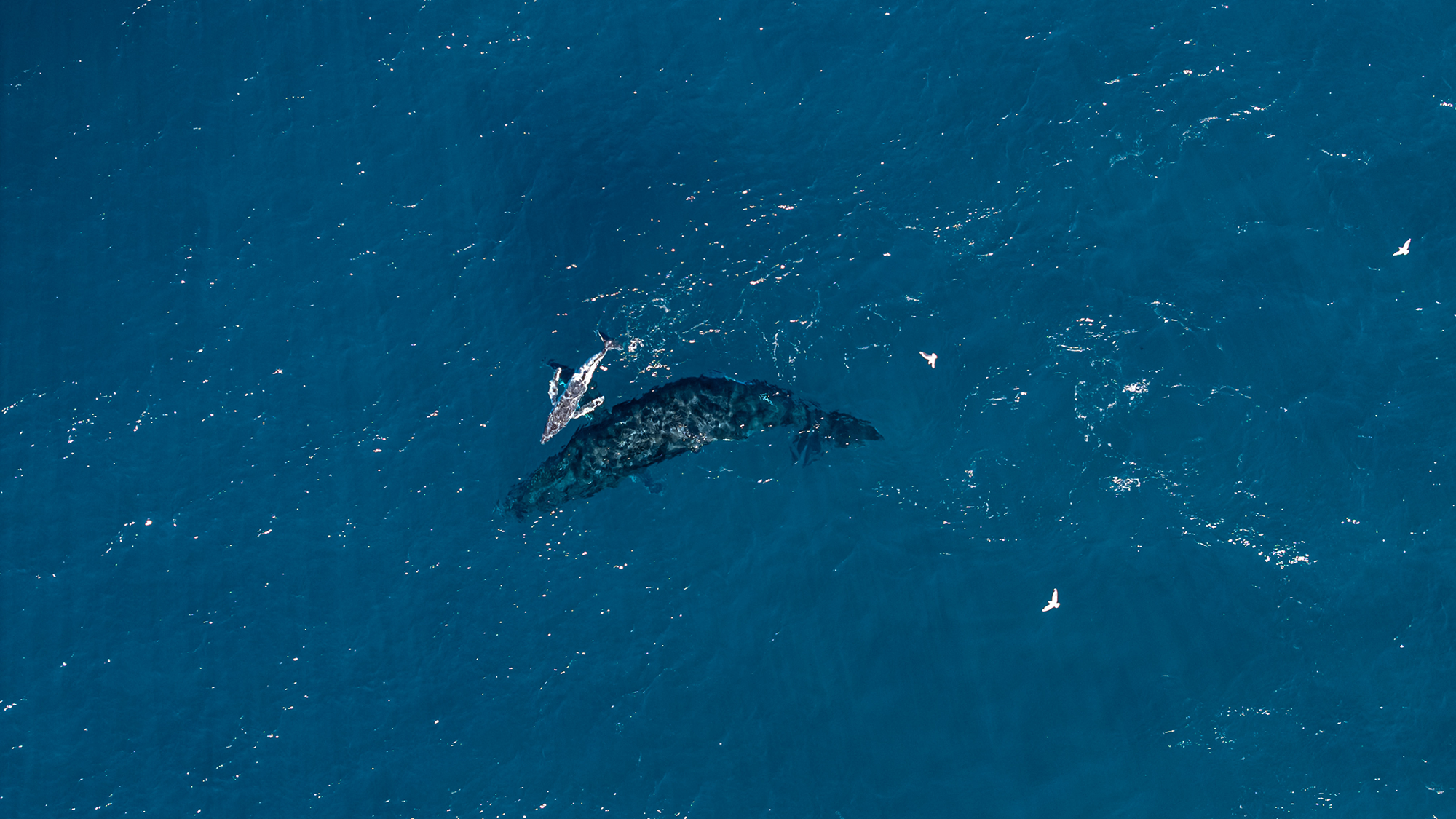
The footage will now be analyzed so that a report on the observation can be peer-reviewed and published in a scientific journal. Notably, the mother whale was trailing behind her pod when she gave birth, a detail biologists will compare with observations of other birthing whales that were accompanied by members of their pod. For instance, the 2023 drone footage of the sperm whale giving birth showed that she had 10 adult females near her that formed a protective circle and took turns lifting the calf up so it could breathe at the water’s surface.
Throughout their first weeks, calves stay close to their mothers and learn critical behaviors, such as breathing at the surface.
“Humpback whales seem to have an incredible maternal bond with their offspring,” Forrest said. “There is an 11-month period where this calf will be raised and feeding on very nutrient-rich milk until it is a yearling and can fend for itself.”
A newborn humpback whale calf weighs 1 to 1.5 tons (900 to 1,360 kilograms) and measures roughly 10 to 16 feet (3 to 5 meters) in length. While feeding on its mother’s milk, the calf will gain 100 pounds (45 kg) a day and develop the strength and food storage it needs for its first migration. Humpback whales undertake one of the longest migrations of any mammal, travelling up to 5,000 miles (8,000 kilometers) each way between the cold waters of the poles to warm tropical breeding grounds.

