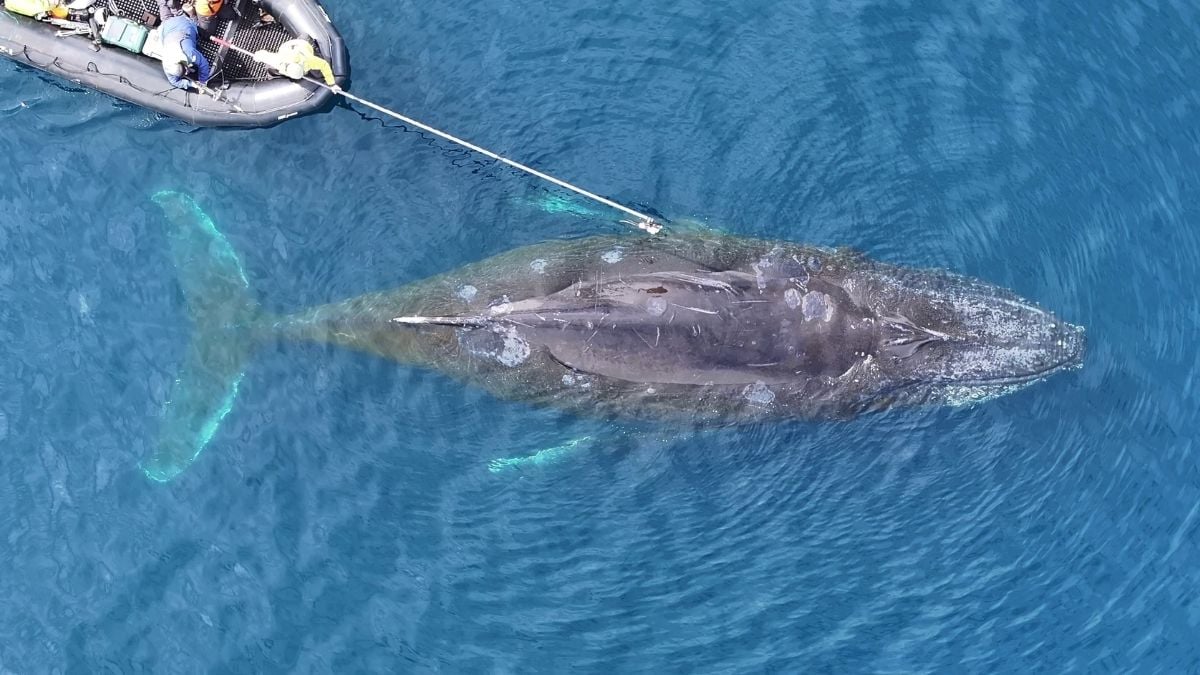
Судлаачид хөх болон гүдгэр халим ангуучлах үедээ хүчилтөрөгч шаардсан эрчимтэй хөдөлгөөнийг дэмжихийн тулд зүрхний цохилтоо уян хатан байдлаар нэмэгдүүлдэг болохыг илрүүлжээ.
Стэнфордын их сургуулийн Хопкинсын далайн станцын судлаач Эшли Блавасаар ахлуулсан эрдэмдійн баг Калифорнийн эрэг орчим болон Баруун Антарктидын хойтод судалгаа хийжээ. Тэд хөх халим (Balaenoptera musculus) болон гүдгэр халим (Megaptera novaeangliae) зэрэг шүдгүй халимнуудыг далайн гүн рүү шумбан хооллох үедээ зүрхний цохилтоо хэрхэн өөрчилдөг болохыг хэмжсэн байна. Уг судалгааны үр дүнг PNAS сэтгүүлд нийтэлжээ.
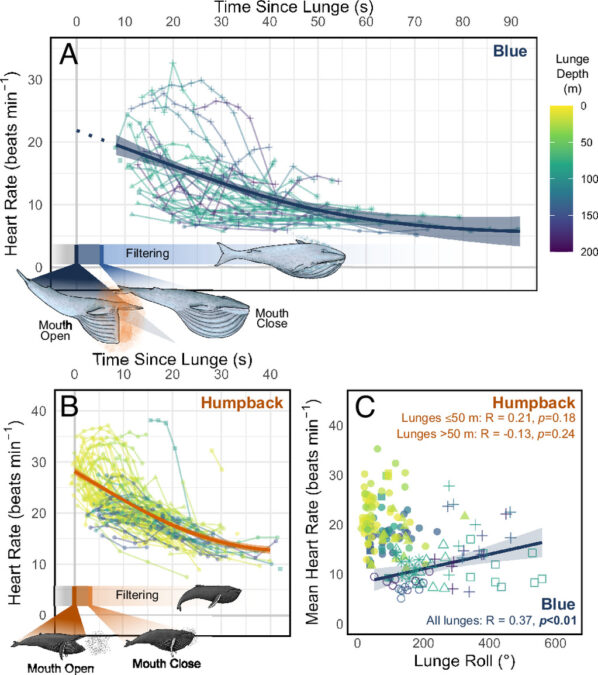
Судлаачид халимнуудыг амьсгалахаар усны мадралд гарч ирэх үед нь хөдөлгөөн болон зүрхний цахилгаан бичлэгийг хэмжих тусгай соруулан мэдрэгчийг бэхэлжээ. Эдгээр мэдрэгч нь 12-36 цагийн турш ажиллаад өөрөө салж хөвөн гарч ирэх бөгөөд эрдэмтэд хиймэл дагуулын дохиогоор дамжуулан мэдээллийг хүлээн авч судлав. Хэмжилтээр халимнууд олзоо шүүрч авахаар огцом дайрах үед зүрхний цохилт нь хөх халимд минутад 21.9, гүдгэр халимд 28.2 цохилт болон хурдасч, олзоо шүүрдэж дуусах явцад аажмаар буурч байжээ.
Энэхүү судалгаа нь халимнууд далайн гүнд маш бага буюу минутад ердөө хоёр удаа цохилж хүчилтөрөгчөө хэмнэдэг хэдий ч олз барих үедээ хүчилтөрөгчөөр баяжсан цусаар зүрхний үйл ажиллагааг дэмждэг болохыг баталсан юм. Түүнчлэн судалгааны баг усны мадралд хөдөлгөөнгүй амарч буй гүдгэр халимны тайван үеийн зүрхний цохилтыг хэмжсэн нь минутад 18.5 байжээ. Энэ нь хуурай газрын хөхтөн амьтад, тухайлбал заантай төстэй үзүүлэлт бөгөөд ирээдүйд халимны эрүүл мэнд, стресс болон дуу чимээний бохирдлын нөлөөллийг үнэлэхэд чухал ач холбогдолтой ажээ.
Дэлгэрэнгүйг эх сурвалжаас харах
↓Эх сурвалжийг нээх ↓
When a blue whale dives below the waves, their heart rate plummets to conserve oxygen.
Their massive hearts can slow to just two beats per minute as they dive hundreds of meters in search of food.
If your heart slowed that much, you’d probably pass out.
And yet, somehow, filter-feeding cetacean divers like the blue whale (Balaenoptera musculus) and humpback whale (Megaptera novaeangliae) still manage to lunge after their food, in spite of the extreme bradycardia their bodies are experiencing.
It has been described as the “largest biomechanical event on Earth”, an impressive feat of sharp plunges, turns, and barrel rolls performed at depth to scoop up prey, when the whale’s heart has slowed to a plod.
Marine scientist Ashley Blawas is a researcher at Stanford University’s Hopkins Marine Station. She led a study, recently published in PNAS, to understand how flexible whales’ heart rates might be, given that they are also exerting large amounts of energy underwater.
“The challenge whales and other divers face is that they have to balance this oxygen-conserving dive response with the need to perform potentially oxygen-demanding exercise while underwater to capture prey,” Blawas told ScienceAlert.
In previous work, Blawas and colleagues had taken measurements to estimate the energy whales expend while foraging. This time, their focus was the animals’ heart rates.
“What we found in this study,” Blawas said, “is that blue whales and humpback whales have flexible heart rates underwater during foraging that increase to support prey capture via sprint-like lunges, and decrease slowly between lunges.”
The researchers tracked and tagged five blue whales and four humpback whales in Monterey Bay and the Channel Islands in California, and in the Western Antarctic Peninsula.
To record the whales’ biometrics, Blawas and team attached a suction-cup tag onto each whale when it surfaced to breathe. Each tag includes an accelerometer, gyroscope, and magnetometer to track the whales’ movements, and an ECG to measure heart rate.
“Successfully recording an ECG from a whale requires stable attachment of electrical points of contact to the animal, elimination of saltwater intrusion that could electrically short your measurement, and placement of the device close enough to the heart to pick up these small signals,” Blawas explained.
Unfortunately, the whales’ blubber makes it impossible to place the tag directly over their hearts, so the signal can be pretty faint.
Nonetheless, after several attempts at engineering the tags, they were able to get a design fit for purpose.
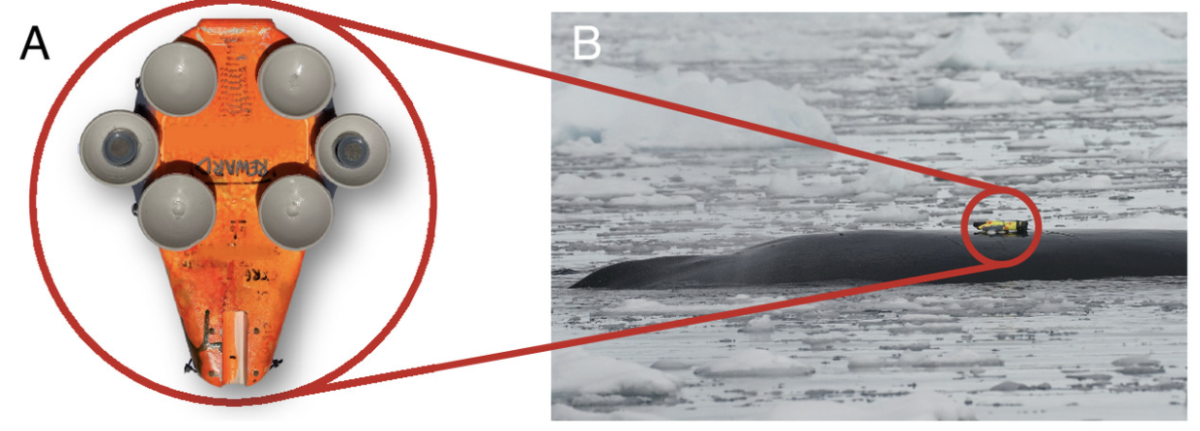
These tags stay attached for about 12-36 hours, and float when they fall off, sending out a satellite signal that allows the researchers to pick them back up and download the data collected.
This data revealed that immediately after lunging at their prey, heart rates increased to around 21.9 beats per minute (bpm) in blue whales and 28.2 bpm in humpbacks.

Their heart rates remain quite elevated in the post-lunge phase, then gradually decline, as the whales are filtering their mouthful of seawater.
“This is similar to what we see in the heart rate patterns of humans recovering between interval sprints, where heart rate stays high even after the sprint is over and then slowly recovers,” Blawas explained.
“These results suggest that, just like humans, rorquals whales likely rely on some amount of anaerobic energy stores for lunge sprints that oxygenated blood helps to renew between lunges.”
Blawas said one of the most exciting findings actually came from data collected from a humpback whale that wasn’t diving at all: It was resting.
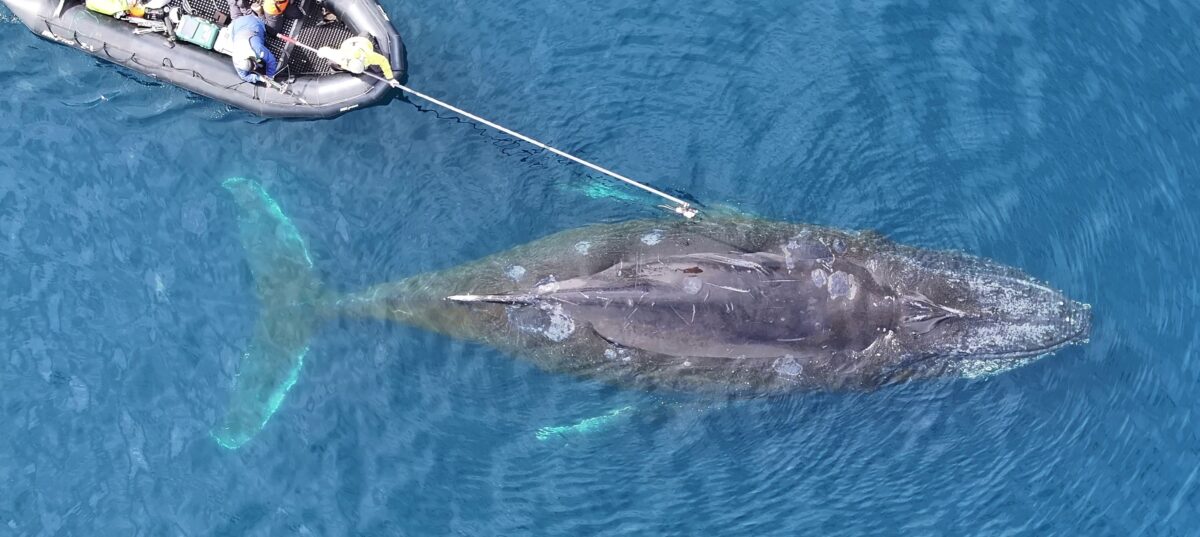
“We happened to record the heart rate of a humpback that was doing what we call ‘logging’… a restful behavior characterized by low to no movement when the animal stays at the surface for many minutes at a time,” she explained.
“The heart rate data during this time is likely the closest anyone has come to a measurement of resting heart rate in a free-ranging whale!”
Its resting heart rate was 18.5 bmp: much slower than the human average, which is about 60 to 100 bpm. But it’s in line with what scientists would expect for an animal of this size, if they were on land. Elephants, for instance, have a resting heart rate of 30 bpm.
Related: Whales Appear to Be Evolving a New Dialect in The Mediterranean Sea
“It suggests that the same drivers of metabolism and oxygen demand during rest appear to be shared between terrestrial mammals and these big whales,” Blawas added.
“Changes in resting heart rate can be used as an indicator of health, stress, and more, so starting to collect this data in whales will be useful for future studies assessing the impacts of things like changing prey populations or noise pollution.”
The research was published in PNAS.
This article was fact-checked by Clare Watson and edited by Clare Watson. While we pride ourselves on our process, we are only human. If you spot a mistake, please let us know.

