Хоккейн лигийн хөгжөөн дэмжигчдийн дунд явуулсан өргөн хүрээтэй санал асуулгаар үзэгчдийн тоглолт хүлээн авах дадал болон технологийн өөрчлөлтийн нөлөөг тодорхойллоо.
Сүүлийн арван жилийн хугацаанд NHL-ийн тоглолтын хурд, ур чадвар мэдэгдэхүйц нэмэгдэж, гоолын тоо өссөн нь үзэгчдийн сэтгэл ханамжид эергээр нөлөөлжээ. Санал асуулгад оролцсон хөгжөөн дэмжигчдийн 82.6 хувь нь лигийн тоглолтыг үзэх сонирхол нь хэвэндээ эсвэл өссөн гэж хариулсан байна. Ялангуяа Олимпын наадамд NHL-ийн тоглогчид эргэн ирж, шилдгүүд хоорондоо өрсөлдөх болсон нь лигийн нэр хүндийг өсгөж байна.
Технологийн хөгжлийг дагаад кабелийн телевизийг орлох стриминг үйлчилгээний хэрэглээ эрс нэмэгдсэн хэдий ч төлбөрийн нөхцөл болон олон төрлийн захиалга шаардлагатай байгаа нь үзэгчдэд хүндрэл учруулж байна. Мөн орон нутгийн телевизийн сувгуудын тоглолт дамжуулах эрх болон “blackout” буюу тодорхой бүс нутагт тоглолт үзэхийг хязгаарлах асуудал хөгжөөн дэмжигчдийн 40 орчим хувьд нөлөөлсөөр байна.
Хөгжөөн дэмжигчдийн ихэнх нь сошиал медиагаар дамжуулан онцлох үйл явдлуудыг харахаас илүүтэйгээр бүтэн тоглолт үзэхийг илүүд үздэг байна. Судалгаанд оролцогчдын 78.3 хувь нь долоо хоногт 1-4 тоглолт үздэг бол 40.5 хувь нь зөвхөн өөрийн дэмждэг багийн тоглолтыг үздэг гэжээ. Хэдийгээр тасалбарын үнэ өсөж байгаа ч үзэгчдийн 48.4 хувь нь өнгөрсөн улиралд 1-5 тоглолтыг биечлэн үзэж, цэнгэлдэх хүрээлэнгийн дүүргэлт өндөр түвшинд хадгалагдсаар байна.
Дэлгэрэнгүйг эх сурвалжаас харах
↓Эх сурвалжийг нээх ↓
Ten years ago, only one NHL player finished the regular season with more than 90 points. The Vegas Golden Knights hadn’t been born yet. Connor McDavid was a rookie. Braden Holtby was the Vezina Trophy winner and Brian Elliott posted a league-high .930 save percentage. No Canadian teams made the playoffs and the Toronto Maple Leafs had just drafted Auston Matthews with the No. 1 pick. Alex Ovechkin hadn’t yet won the Stanley Cup and Sidney Crosby was just celebrating the second championship of his career. NHL league-average save percentage was .915.
In other words, a lot has changed in the NHL over the past decade. Has it been for better or for worse? That’s the first question we’ll dive into as part of the fan experience segment of our survey, which polled over 20,000 hockey readers from The Athletic. Part 1 of our survey is here and Part 2 is here.
Will Dougie Hamilton remain on the Devils?
Sean Gentille and Peter Baugh
How does your enjoyment of consuming hockey now compare to 10 years ago?
The game is clearly moving in the right direction, as 82.6 percent of fans reported that their enjoyment of hockey has remained steady or increased compared to the past 10 years — and it’s easy to understand why.
The speed and skill of the current product is through the roof and scoring is up massively, which has made the product more entertaining. Games are very competitive on a night-to-night basis and often feature thrilling comebacks, and there’s finally some momentum with the return of best-on-best hockey, now that NHLers have returned to the Olympics.
How do you most frequently follow the NHL (games and/or highlights)?
Streaming products have overtaken cable TV in how fans follow the league, which matches the societal shift in that direction. There is some increasing frustration, though, with how difficult it’s becoming for some fans to affordably access all their favorite team’s games.
Sportsnet is controversially jacking up prices again, and they’ve sold off rights for certain games to Crave and Prime Video, which means Canadian fans need multiple streaming subscriptions to watch every game.
The future of local broadcasts is also worth monitoring — American teams are taking different approaches, and the NHL recently unveiled centralized production for regional broadcasts for the Hurricanes, Blue Jackets, Wild and Blues.
Are you regularly impacted by blackouts for NHL games in your market?
Blackouts are still meaningfully reducing access for some fans, as nearly 40 percent of respondents reported being regularly affected by them during NHL games in their market. It can be frustrating, but the reality is that regional sports networks pay the league a lot of money for exclusive rights to broadcast games in their local market. It’ll be fascinating to see how this evolves, since the landscape of regional sports networks is changing amid the financial struggles Bally Sports has faced, but for now, blackouts will continue to affect a decent chunk of hockey fans.
How often do you watch NHL game broadcasts?
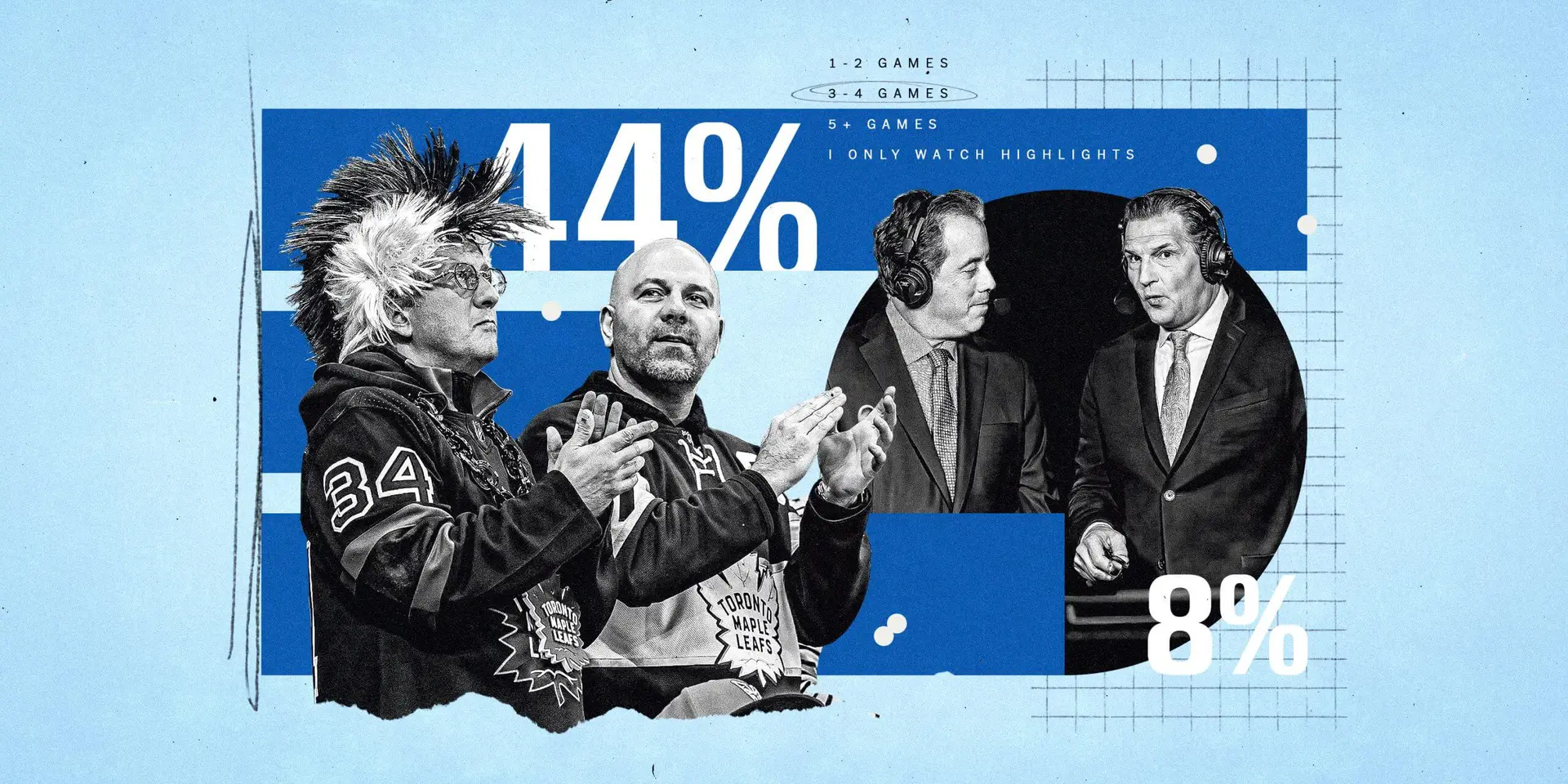
There are a couple of takeaways from this. The first is that despite the explosive growth of social media usage over the past decade and the increased exposure to highlights as a result, most hockey fans still find it worthwhile to watch live, full-length games — only 8 percent of fans said they rely on highlights only.
However, it’s also fascinating that the majority of game watchers are moderate consumers, as 78.3 percent of fans watch between 1-4 games per week, with only 13.9 percent watching more than five games per week. It makes a lot of sense, though, when you see the results of the next survey question.
How often do you watch NHL games that do not involve your favorite team?
Many hockey fans don’t venture too far beyond their favorite team. 40.5 percent said they only watch their own team, and of the ones that buck that trend, the overwhelming majority are tuning in to one or two games per week that don’t involve their favorite team. It’s also worth remembering that The Athletic probably skews toward an audience of diehard hockey fans, meaning the number of fans that only follow their team would probably go up if this question were distributed to a broader cohort that would likely include far more casual fans.
How often do you listen to NHL games on the radio?
It’s interesting to compare these radio listening habits to the MLB fan survey. In baseball, radio is still a major part of accessing games, as 61 percent of fans tuned into it at least once per week. In hockey, though, it’s a niche product, as only 31 percent of fans rely on the radio to listen to games on a weekly basis.
On some levels, it makes sense. Baseball translates to a radio listening experience far more easily than hockey because it’s stop-and-start. Hockey is continuous, more dynamic, and it’s harder to paint a complete picture of plays with just audio. Baseball is better suited for passive consumption, and the MLB regular season features nearly twice as many games, which surely affects the numbers, but the gap is so large that it reflects a different culture around audio consumption of games.
How many NHL games did you attend last year?
These are pretty healthy results considering how significantly the cost of attending games is rising in many markets. 48.4 percent of fans attended one to five games last season, with only 35.2 percent not going to any games.
In general, NHL attendance is in a strong place, as only six teams averaged below 90 percent capacity during our midseason 2025-26 attendance check-in.