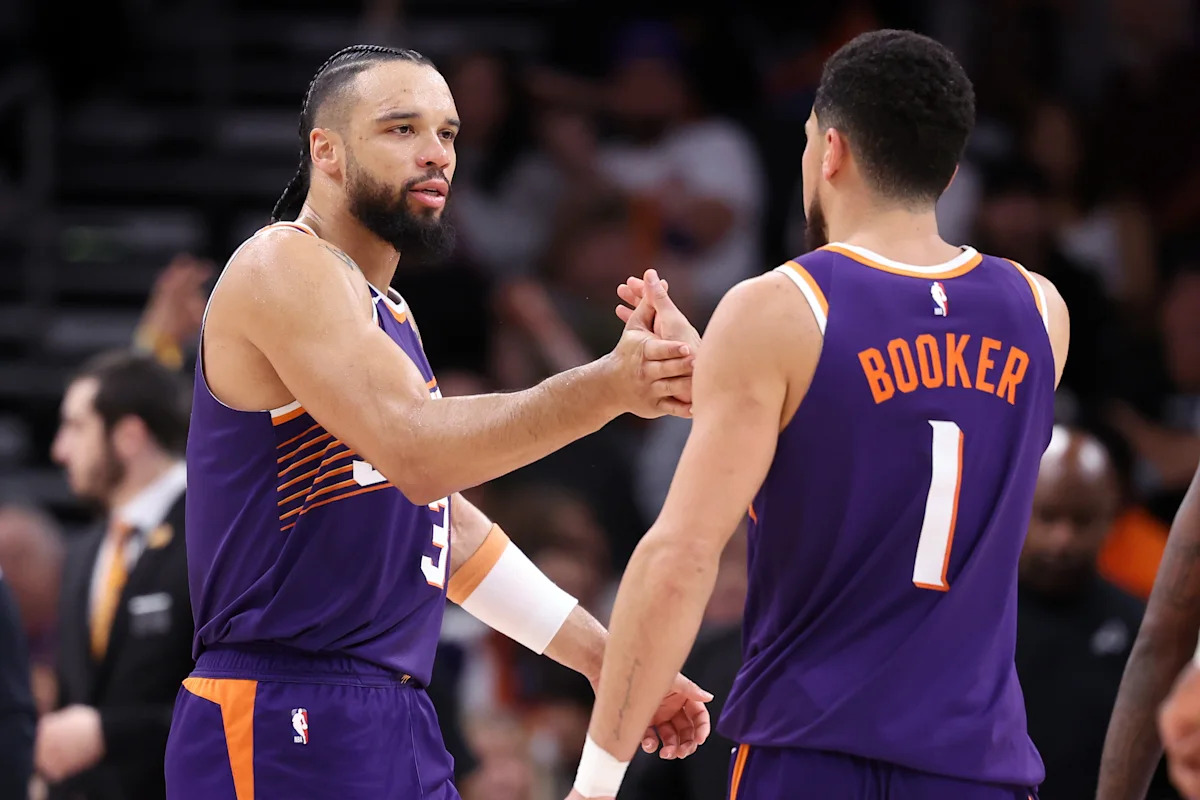
Финикс Санс баг довтлогч Диллон Брукс болон бусад гол тоглогчидтойгоо гэрээгээ сунгаснаар ирэх жилүүдэд багийн тогтвортой байдлыг хадгалах бодлого баримталж байна.
Финикс Санс баг довтлогч Диллон Брукс гурван жилийн 73 сая долларын гэрээ байгуулж, багаа үргэлжлүүлэн хүчирхэгжүүлэхээр боллоо. Тус баг Бруксоос гадна Коллин Гиллеспитэй дөрвөн жилийн 48 сая, Марк Уильямстай гурван жилийн 38 сая, Жордан Гудвинтай гурван жилийн 19 сая долларын гэрээ байгуулснаар ирээдүйн бүрэлдэхүүнээ баталгаажуулав. Эдгээр гэрээнүүд нь багийн санхүүгийн уян хатан байдлыг хадгалах боломжтой бөгөөд шаардлагатай тохиолдолд тоглогч солилцоонд ашиглах боломжтой юм.
Диллон Брукс нь Финикс Санс багийн хамгаалалтын соёлыг шинэчлэхэд чухал үүрэг гүйцэтгэж, багийн хамгаалалтын чансааг лигийн шилдэг 10-т оруулсан билээ. Тэрээр довтолгооны хувьд Девин Бүүкерээс гаднах найдвартай сонголт болж байгаа бөгөөд ирэх улиралд Бүүкер, Жэйлен Гринтэй хоршин тоглох нь багийн довтолгооны үр ашгийг нэмэгдүүлнэ гэж үзэж байна. Финикс Санс өнгөрсөн улиралд үндсэн гурван тоглогч нь 150-аас бага минут хамт тоглосон ч 45 хожил авсан нь багийн нөөц бололцоог харуулж байна.
Дасгалжуулагч Жордан Отт багийн бүрэлдэхүүнийг бүрэн бүрэлдэхүүнээр нь ажиллуулах төлөвлөгөөтэй байгаа бөгөөд Майлс Брижийг багтаа элсүүлсэн нь ирээдүйн томоохон солилцоонуудад багийн залуу тоглогчид хэрхэн нөлөөлөхийг харуулах юм. Хэдийгээр багийн ирээдүйн талаарх шүүмжлэлүүд байдаг ч Финикс Санс өрсөлдөх чадвараа хадгалж, NBA-ийн тэнцвэртэй өрсөлдөөний эрин үед тогтвортой байдлыг эрхэмлэж байна.
Дэлгэрэнгүй эх сурвалжийг харах
Эх сурвалжийг нээх ↓
When news broke earlier this week of Dillon Brooks’ three-year, $73 million extension to stay in Phoenix, I’d imagine a decent subsection of the basketball consortium scratched its collective head in confusion.
Not because of Brooks’ current value on the market — $24 million AAV for a playoff-tested veteran wing that will be 32 once the extension kicks in might quietly be a bargain, which we’ll get into later — but more in line with what the Suns’ overall vision is as a play-in team. In an offseason that has been dictated by seismic movement from contenders repositioning themselves in a Knicks-centric world and an underlying lack of activity from bottom feeders hoping to latch on to losing, Phoenix appears to be interested in neither.
Brooks’ extension is simply a continuation of continuity. The Suns have now secured guard Collin Gillespie (four years, $48 million), Mark Williams (three years, $38 million) and Jordan Goodwin (three years, $19 million) along with Brooks for the next iteration of the franchise. All four are on reasonable salaries that can be moved if an outside need arises. And in today’s erratic, inconsistent, ever-changing atmosphere, sticking to what you know is nothing to scoff at.
Ring culture has consumed us and drives the bulk of league conversations, but there’s inherent value in remaining relevant. A plethora of teams would trade their fortunes for, say, the Portland Trail Blazers’ 2014-19 run. Over those six seasons, the franchise won 54, 51, 44, 41, 49 and 53 games. Outside of their Western Conference finals appearance in 2019 (a 4-0 sweep at the hands of Golden State), the Blazers were never considered a true threat. And that’s OK!
(There’s also no reason to think that Phoenix can’t be the next hotbed for another big move. The Suns’ current cap sheet, even while operating as a team over the first apron, is manageable. Head coach Jordan Ott is young, bright and has a clear-cut vision of how he operates. Yes, their asset war chest is shot — surrendering an unprotected 2033 first to acquire Miles Bridges was a real thing — but there’s enough young, interesting talent on the roster that would and should suffice in larger trades.)
Tying everything back to Brooks, who’s made a pretty penny for himself ever since being shoved out the door in Memphis, hitching his next few years to the Suns makes a ton of sense for both parties. Stepping into an elevated role, a huge usage spike all while maintaining a true shooting percentage in the ballpark of his Houston days, has paid dividends for a Suns team that needs answers not named Devin Booker in the half-court. If you agree with the idea that Brooks is a top-75ish offensive talent (54th in offensive WAR, 80th in DARKO), then pairing him over the long haul with Booker and Jalen Green should work in theory.
(I’m curious, however, to see how Ott manages the losses of Grayson Allen and Royce O’Neale, combined with the high midrange frequency of Brooks, Booker and Green. The Suns were fifth in 3-point rate last season, a critical component of their offensive balance and league average half-court efficiency, but there will be a natural sweet spot that both Ott and his roster come to. I’m also somewhat skeptical of how Bridges and his shot-chucking fits in from a floor-spacing standpoint.)
A full season with a healthy Brooks (and Green for that matter) should also give the Suns a better idea of what their team actually looks like at full strength. That Phoenix was still able to win 45 games in the West with its core trio playing less than 150 minutes together all season is impressive. That triumvirate outscored opponents by 8 points in 283 possessions, according to PBP Stats.
Defensively, there’s no question what Brooks brings to the table. He’s almost singlehandedly responsible for resetting the Suns’ culture at that end of the floor, bringing consistent aggression at the point of attack, encouraging physicality and versatility to a unit that finished the regular season among the top 10 in defensive rating. (Some of the Suns’ on/off defensive numbers, as it relates to Brooks, are wonky due to how well the team played in transition, forcing turnovers and its overall superb depth, but Brooks has carved out a presence everywhere he’s been.) With Bridges, Brooks can also scale down some of his larger assignments, being free to assist with screen navigation, chasing guards around and being an overall irritant.
With Brooks tied up for the foreseeable future, Phoenix enters into the NBA’s parity era with both feet firmly planted in the ground. This may not be the team that lights up League Pass on a nightly basis or one that threatens the status quo, but going under the radar isn’t a death sentence. Sometimes, the best place to be is hidden in plain sight.

