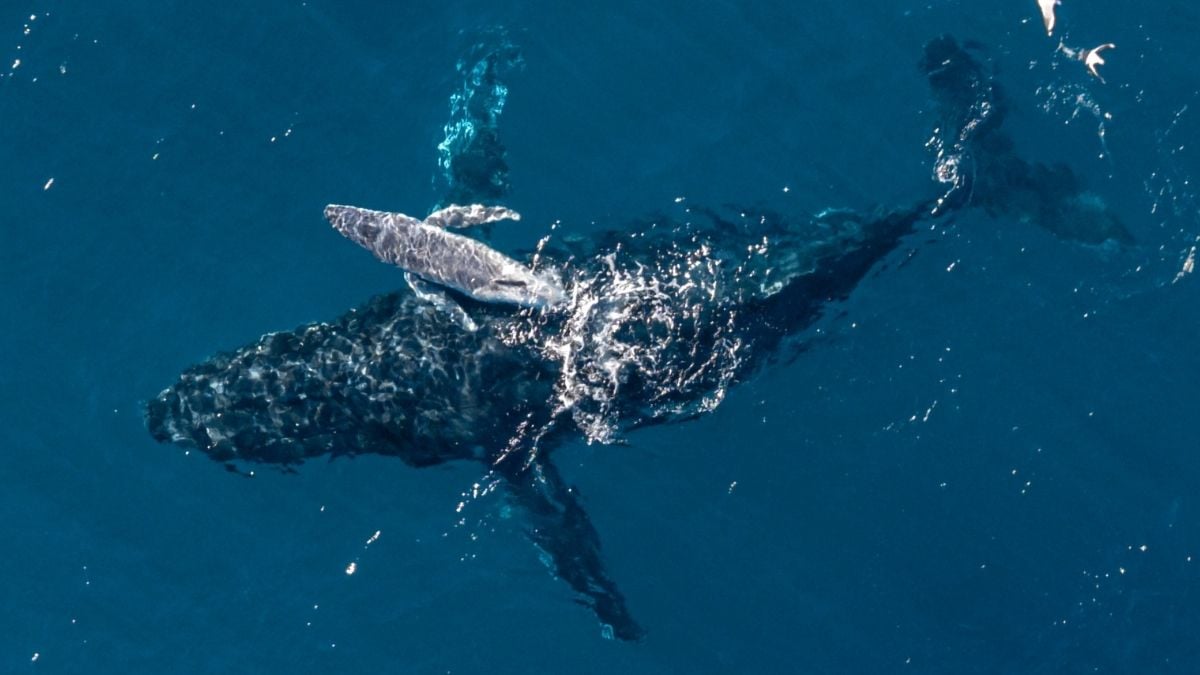
Австралийн эрэг орчимд бөгтөр халимны төрөлтийг дроны тусламжтайгаар анх удаа өндөр нарийвчлалтайгаар дүрсэнд буулгаж, судлаачид халимны эхийн зан төлөв болон төрсний дараах эхний мөчүүдийг шинжлэх ухааны үүднээс судалжээ.
Долоодугаар сарын сүүлээр Австралийн Шинэ Өмнөд Уэльс мужийн хойд эрэг орчимд нүүдэллэж буй халимнуудыг ажиглаж байсан зураглаач Александр Форрест ердийнхөөс удаан хөдөлгөөнтэй, эрэг рүү чиглэсэн халимыг анзаарчээ. Удалгүй халимны эргэн тойронд улаан өнгийн ялгадас гарч, түүний араас нялх халим усны мандал дээр гарч ирэн анхны амьсгалаа авсан байна. Энэхүү үйл явдлыг ажигласан баг халимны эх болон төлийн зан төлөвийг хэдэн цагийн турш баримтжуулж, чухал ач холбогдолтой хээрийн тэмдэглэл хөтөлжээ.
Бөгтөр халимны төрөлт шинжлэх ухааны түүхэнд ердөө гуравхан удаа бүртгэгдсэн байдаг бөгөөд агаарын дроноор ийнхүү баримтжуулсан нь анхны тохиолдол болж байна. Шинээр төрсөн халим нь уушгаа цэвэрлэж, усны мандал дээр хөвж сурахын тулд маш их анхаарал төвлөрүүлж байсныг судлаачид онцолжээ.
Одоо Александр Форрест болон Австралийн далайн хөхтөн амьтдыг хамгаалах, судлах байгууллага (ORCCA) хамтран цуглуулсан мэдээллээ шинжлэх ухааны сэтгүүлд хэвлүүлэхээр бэлтгэж байна. Энэхүү судалгаа нь халимны төрөлт, эх үрийн харилцаа болон далайн хөхтөн амьтдын амьдралын эхний мөчүүдийн талаарх ойлголтыг гүнзгийрүүлэхэд чухал хувь нэмэр оруулах юм.
Дэлгэрэнгүйг эх сурвалжаас харах
↓Эх сурвалжийг нээх ↓
A baby humpback whale’s first moments in the open ocean have been captured using drone photography for the first time.
Calm conditions and perfect timing allowed drone pilot and exhibition filmmaker Alexander Forrest to capture the birth in unprecedented detail.
Forrest, who regularly takes his camera drone out to capture imagery of Australia’s wildlife, was tracking a group of migrating humpback whales from above as they passed by the north coast of New South Wales in late July.
He noticed an adult female swimming much slower than they usually do, almost as if drifting to shore.
“It was just a routine flight… and there was this one whale that wasn’t migrating north or south like all the others, but just got this super slow, consistent, almost labored behavior right behind the surf break,” Forrest told ScienceAlert.
Following a hunch, he focused his camera in on the lethargic whale, when suddenly, a plume of red erupted in the water around her.
From out of this sanguine haze, a tiny, pale, brand new humpback whale emerged, surfacing for its very first breath.
“Suddenly this red plumage appears, and my first instinct was, maybe an interaction with a predator,” Forrest said.
“But fortunately, a white shape shoots up to the surface and it’s a little humpback whale calf.”
At this point, Forrest realized he had witnessed – and recorded – something truly special.
He called up a fellow drone operator Tanya Snowden, a member of ORCCA (Organization for the Rescue and Research of Cetaceans in Australia) and friend Dominic Cotter-Dephoff to join him in documenting the events of the newborn whale’s first day.
The group tracked the calf and its mother across several hours, taking as many detailed visual and behavioral notes as they could before the sun set.
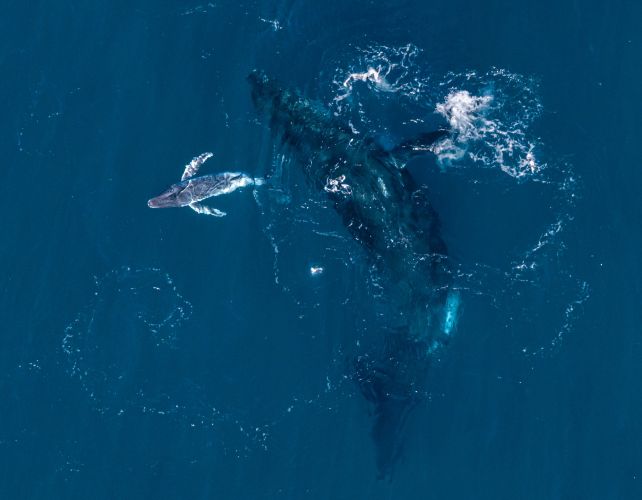
“During that time we made sure to get those crucial field notes of early maternal behavior between new humpback whale mum and her freshly-born calf, and what those first moments look like, to contribute to science,” Forrest said.
“Following the birth, the mother was instinctively looking out for her calf. The calf wasn’t very direction-focused, hadn’t quite figured it all out, swimming up to three meters away from her… but they were keeping pretty close for the most part.
“We can breathe without thinking about it, but whales have to focus on it,” Forrest said.
“The calf… was really focused on clearing those lungs and staying afloat for those first moments. It goes to the surface as soon as it leaves the birth canal.”

Only three other observations of humpback whale births have been documented in scientific records, and this appears to be the first time such an event has been captured using aerial drone photography.
The birth occurred during prime whale-watching season in Australia’s east coast, when around 50,000 humpback whales migrate from their feeding grounds in Antarctica to the warmer waters of their tropical breeding grounds.
Related: Incredible Video Shows Sperm Whales Come Together to Birth a Calf
Although most calves are usually born closer to the equator, this humpback and her new baby didn’t quite make it that far. Now, the little one will be swimming alongside its mother for the rest of the way.
Forrest is now working with ORCCA to prepare the gigabytes’ worth of observations for peer-review and publication in a scientific journal, which will reveal new insights about whale birth, maternal care, and the critical first moments of a mammal born underwater.
This article was fact-checked by Fiona MacDonald and edited by Fiona MacDonald. While we pride ourselves on our process, we are only human. If you spot a mistake, please let us know.

