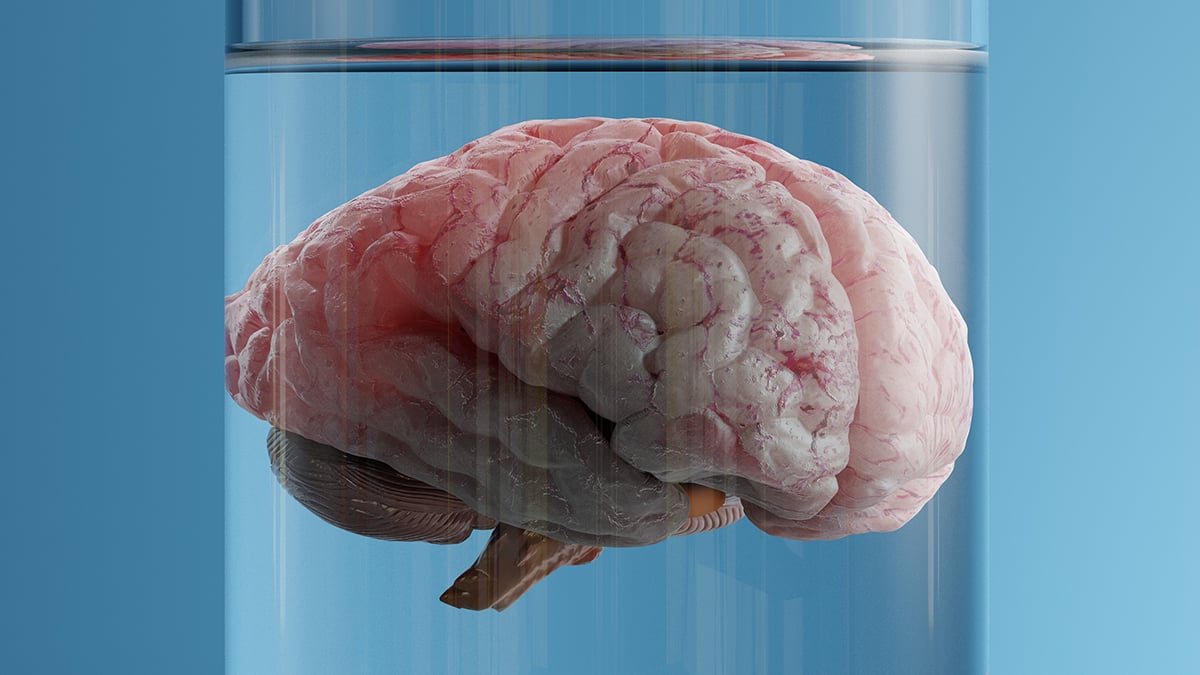
Нэрт нейробиологич Кристоф Кох ухамсар нь тархины үйл ажиллагааны үр дүнд бий болдог гэсэн уламжлалт ойлголтыг эргэн харах шаардлагатайг дэвшүүллээ.
Аллен хүрээлэнгийн нейробиологич Кристоф Кох 2026 оны дөрөвдүгээр сард Португалийн Порто хотод болсон симпозиумын үеэр ухамсар болон тархины харилцан хамаарлын талаарх өөрийн шинэлэг байр суурийг танилцуулав. Тэрээр тархи нь ухамсарыг бүтээдэг гэхээсээ илүүтэйгээр түүнийг шүүж, хэлбэржүүлдэг байж болох талтай гэсэн таамаглалыг дэвшүүлж байна. Хэдийгээр тархины гэмтэл эсвэл өвчлөл нь хүний ухамсарт нөлөөлдөг нь тодорхой ч, физик тархины үйл ажиллагаа яагаад хувь хүний субъектив мэдрэмжтэй хослон илэрдэг нь шинжлэх ухааны хамгийн том нууц хэвээр байгаа юм.
Кох энэхүү асуудлыг тайлбарлахдаа “аналитик идеализм” хэмээх философийн хүрээг ашигладаг бөгөөд үүний дагуу ухамсарыг тархины үүсгэдэг зүйл бус, харин бодит байдлын суурь шинж чанар гэж үздэг. Тэрээр өөрийн хувийн амьдралдаа туулсан туршлага болон орчин үеийн физикийн хөгжил дэвшил нь шинжлэх ухааны өнөөгийн таамаглалыг өөрчлөх шаардлагатайг сануулж буйг онцолжээ. Түүний үзэж буйгаар, шинжлэх ухаан нь бодит байдлыг илүү энгийн, объектив болон субъектив туршлагыг хослуулсан суурин дээр дахин барих хэрэгтэй байна.
Энэхүү онолын хүрээ нь хиймэл оюун ухааны хөгжилд ч чухал нөлөөтэй бөгөөд компьютерын тооцоолох хүчин чадлыг нэмэгдүүлэх нь ухамсартай машин бүтээхэд хангалтгүй байж болзошгүйг харуулж байна. Кох өөрийн санаагаа шинжлэх ухааны туршилтаар шалгаж болохуйц таамаглал болгон хувиргах нь ирээдүйн хамгийн чухал зорилт гэдгийг цохон тэмдэглэв. Түүний судалгааны ажил Nature Reviews Neuroscience сэтгүүлд хэвлэгдсэн бөгөөд ухамсрын мөн чанарыг ойлгохын тулд тархи, оюун ухаан, бодит байдлын харилцааг цоо шинээр харах шаардлагатайг сануулж байна.
Дэлгэрэнгүйг эх сурвалжаас харах
↓Эх сурвалжийг нээх ↓
For decades, neuroscientists havesearched the brain for the biological basis of consciousness, assuming our thoughts, emotions, and subjective experiences emerge from networks of neurons.
But what if that assumption is incomplete?
That’s the provocative question explored by neuroscientist Christof Koch of the Allen Institute in Seattle.
Koch recently presented his ‘challenges’ to our understanding of consciousness at the Bial Foundation’s ‘Behind and Beyond the Brain‘ symposium in Porto, Portugal, in April 2026 – building on a body of published work that includes this 2016 paper in Nature Reviews Neuroscience.
Koch explained to ScienceAlert that it may be time to rethink one of neuroscience’s deepest assumptions: that consciousness is something the brain produces.
Koch does not dispute the brain’s essential role in conscious experience.
Decades of research have shown that injuries, disease, anesthesia, and electrical stimulation can profoundly alter – or even eliminate – awareness.
Instead, he asks a different question: Does the brain createconsciousness, or could it be shaping something more fundamental?
Despite remarkable progress in understanding how the brain processes information, neuroscience still faces a profound mystery, Koch argues.
Scientists can increasingly identify the neural circuits involved inperception, memory, emotion, and decision-making. Yet those discoveries still cannot explain why physical brain activity is accompanied by subjective experience.
As Koch writes in a new, as-yet unpublished essay shared with ScienceAlert: “Nothing in science explains how three pounds of matter, a piece of furniture of the Universe like any other, subjects to the same natural laws, can love, hate, dream, imagine, fear or hope for its future.”
It isn’t the first time Koch has grappled publicly with this puzzle. In 2023, he conceded a 25-year bet with philosopher David Chalmers, admitting neuroscience was no closer to pinning down consciousness’s neural mechanism than when he made the wager in 1998.
To address that question, Koch turns to a philosophical framework known as analytic idealism, which proposes that consciousness may be a fundamental feature of reality rather than something generated by the brain.
Within this framework, the brain is viewed less as a producer of consciousness and more as a filter or shaper of conscious experience.
The ideas did not emerge from a single scientific experiment. Instead, Koch describes a deeply personal experience that fundamentally changed the way he thinks about consciousness and reality.
Several years ago, while sitting alone on a beach, he recalls the boundary between himself and the world dissolving, describing the experience as a timeless and universal reality.
In his essay, Koch describes the experience as”the most meaningful of my life,”writing that it”flipped my view of reality”.
Koch is careful not to present the experience as scientific evidence. Instead, he writes that it gave him”a view of Mind-at-Large”and prompted him to re-examine the metaphysical assumptions that had guided much of his scientific career, taking alternative philosophical perspectives more seriously.
He also acknowledges that such experiences are inherently subjective. But he argues they should not be dismissed simply because they are difficult to explain, suggesting they, too, are part of the phenomenon science is ultimately trying to understand.
In the essay, he points to developments in modern physics as another reminder that some of science’s deepest assumptions have already been revised. He does not argue that quantum physics explains consciousness. Rather, he suggests that the history of physics shows scientists have repeatedly been forced to rethink the nature of reality when new evidence emerged.
Koch argues that”our understanding of reality must be rebuilt on a simpler foundation, compatible with both the ‘objective’ outcome of empirical science as well as with ‘subjective’ experience.”
Koch argues that if current assumptions about consciousness prove incomplete, neuroscience itself may eventually require a similarly profound conceptual shift.

The ideas also have implications for artificial intelligence. If consciousness is not simply the product of increasingly complex computation, the path toward conscious machines may be more complicated than simply building increasingly powerful AI systems.
That does not mean futureAI systems could never become conscious. Rather, he argues that the debate cannot be settled simply by making computers more intelligent or more computationally sophisticated.
Koch acknowledges that analytic idealism is not an established scientific theory but a metaphysical framework whose future depends on whether its ideas can be translated into empirically testable hypotheses.
Related: Consciousness May Emerge Before We’re Even Born, Evidence Shows
As he writes, “The most important task for the future is to take these insights and translate them into empirically testable hypotheses.”
He argues that consciousness remains one of science’s greatest unsolved mysteries, and that understanding it may require researchers to rethink long-held assumptions about the relationship between mind, brain, and reality.
Koch’s work has been published in Nature Reviews Neuroscience.
This article was fact-checked by Fiona MacDonald and edited by Fiona MacDonald. While we pride ourselves on our process, we are only human. If you spot a mistake, please let us know.

