Анагаах ухааны нотолгоогүй эмчилгээний арга 1830-аад оны үед Америкийн хүнсний зах зээлд хэрхэн нөлөөлж, хуурамч бүтээгдэхүүний өрсөлдөөнийг өдөөсөн түүхийг судлав.
1834 онд эмч бөгөөд сонирхогч ургамал судлаач Жон Күүк Бэннэт улаан лоолийг холер, суулгалт, толгой өвдөх болон хоол боловсруулах эрхтний хямралыг эмчлэх шидтэй хэмээн сурталчилж эхэлснээр энэхүү хачин жигтэй үзэгдэл эхэлжээ. Түүний шинжлэх ухааны үндэслэлгүй энэхүү мэдэгдэл нь тухайн үед улаан лоолийг эм болгон борлуулах бизнесийн эхлэлийг тавьсан юм. Энэхүү санаачилга нь улаан лоолийг хүнсний ногоо гэхээсээ илүүтэйгээр эмчилгээний зориулалтаар ашиглах хугацааг бий болгосон байна.
Удалгүй Арчибальд Майлс болон Йелийн их сургуулийн төгсөгч, эмч Гай Р.Фелпс нар өөр өөрсдийн улаан лоолийн ханд бүхий эмийг зах зээлд гаргаж, хоёр жилийн турш үргэлжилсэн ширүүн өрсөлдөөнийг эхлүүлжээ. Гэвч хожим хийсэн шинжилгээгээр тэдгээр “эм”-ийн найрлагад улаан лоолийн ямар ч орц агуулагдаагүй болох нь тогтоогдсон байна.
Улаан лоолийн эмчилгээний энэхүү бизнес 1839 оны сүүлээр идэвхгүй болсон ч зарим худалдаачид бүтээгдэхүүнээ 1850-аад он хүртэл үргэлжлүүлэн борлуулжээ. Улаан лооль нь эмчилгээний зориулалтаар ашиглагдахаас илүүтэйгээр хоол хүнсний хэрэглээнд баттай байр сууриа эзэлж, улмаар кетчуп зэрэг бүтээгдэхүүний гол орц болсон нь түүхэн баримтаар нотлогддог.
Дэлгэрэнгүйг эх сурвалжаас харах
↓Эх сурвалжийг нээх ↓
In the 1830s, Americans could buy pills promoted for ailments ranging from indigestion to syphilis. Their supposed medicinal ingredient was something far more familiar: the tomato.
The claims became lucrative enough to trigger a public fight between competing sellers over whose tomato medicine was genuine. Tests later found that some of the products contained no tomato at all.
At the center of the craze was physician and amateur botanist John Cook Bennett, who publicly promoted tomatoes as medicine in 1834. His campaign helped turn the fruit into the basis of a short-lived patent-medicine business decades before tomato ketchup became firmly established as a commercial condiment.
John Cook Bennett Promotes Tomatoes as Medicine
Bennett argued that tomatoes could prevent cholera and treat problems including diarrhea, headaches and dyspepsia, an older term for indigestion. Atlas Obscura notes that there is no evidence he conducted scientific research himself to establish those claims.
His campaign arrived as tomatoes were becoming more familiar in American kitchens. They were also beginning to appear in ketchup recipes.
History Cooperative identifies Philadelphia scientist James Mease as the author of one of the first recorded tomato-ketchup recipes, published in 1812. That placed tomato ketchup on the American culinary record more than two decades before Bennett’s medical campaign.
Tomato Pills Turn the Claims Into a Business
Entrepreneurs soon began selling products presented as concentrated tomato remedies.
By 1837, American newspapers were carrying advertisements for Dr. Miles’ Compound Extract of Tomato. Cleveland merchant Archibald Miles promoted the pills for complaints ranging from indigestion to syphilis.
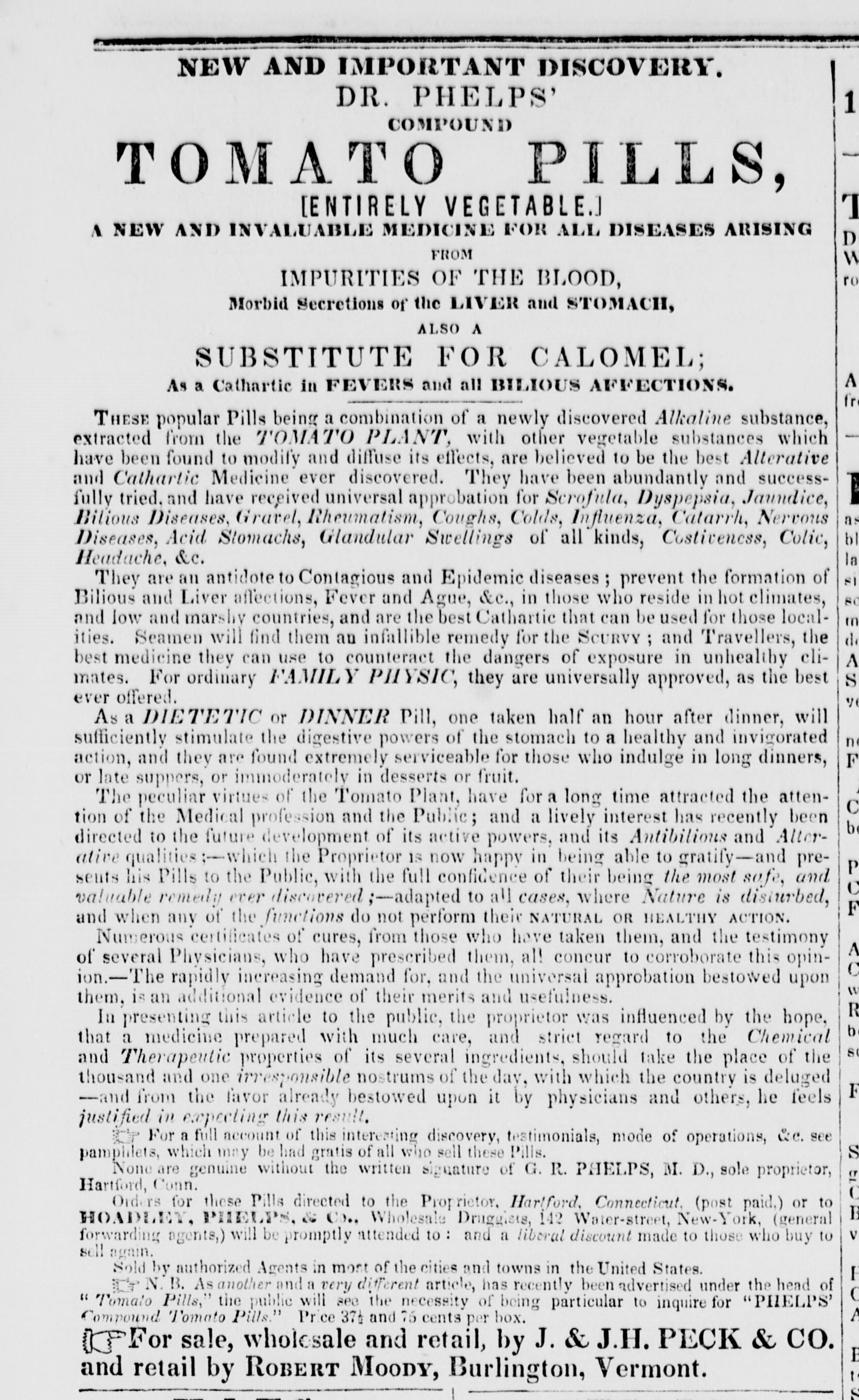
Guy R. Phelps, a Yale-trained physician, entered the same market with his own Compound Tomato Pills.
The competition quickly became personal. Miles and Phelps publicly challenged each other over whose product was genuine, beginning what Atlas Obscura describes as a two-year “tomato pill war.”
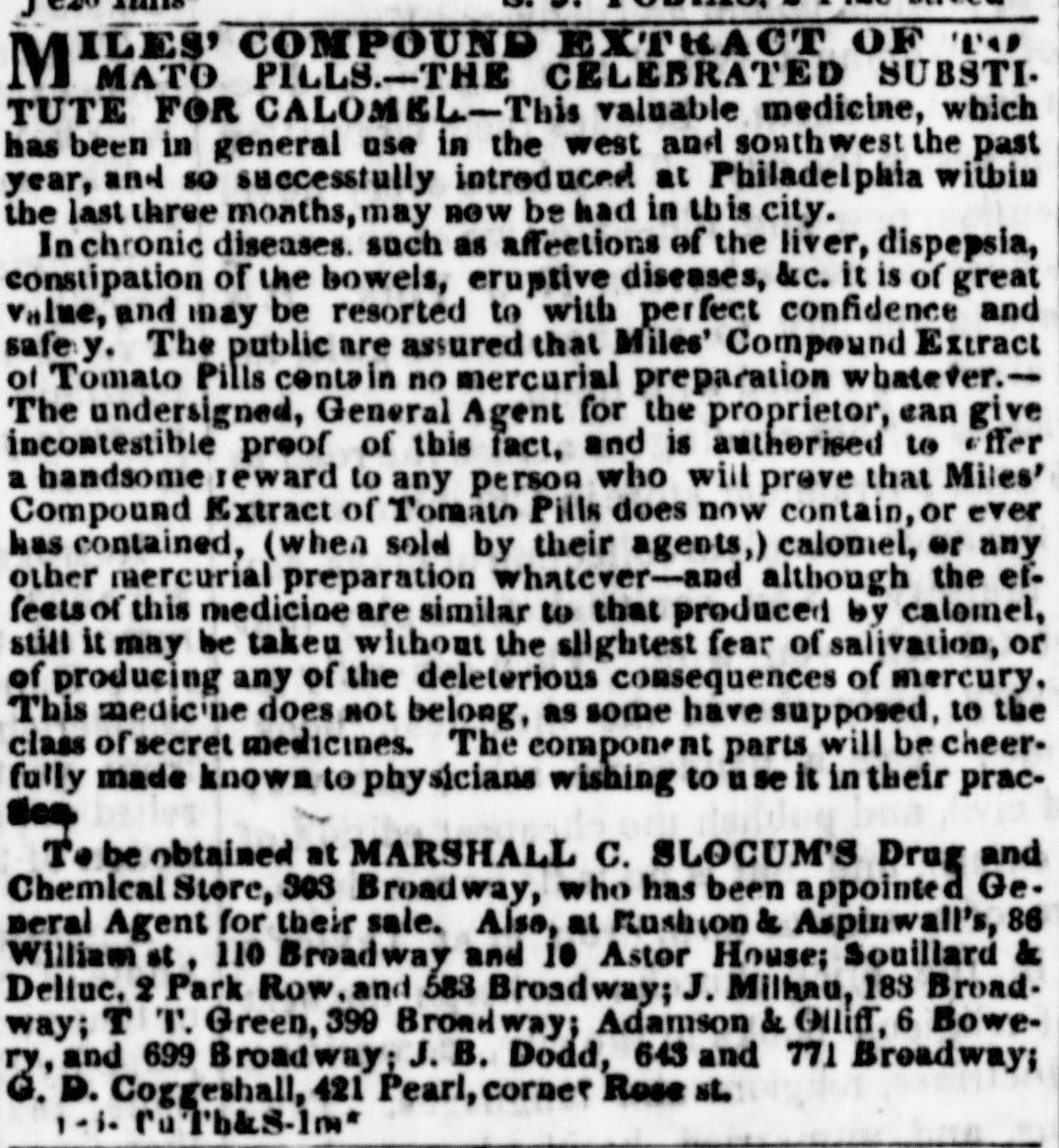
The dispute eventually exposed a more serious problem with the medicines themselves. Analyses of pills sold by Miles and Phelps found no trace of tomato.
Their advertising battle ended in late 1839, but tomato pills remained on sale afterward. Phelps continued selling his version into the early 1850s.
Tomato Ketchup Outlasts the Medicine Craze
As the pill business faded, tomatoes continued spreading through American food culture. Cookbooks, magazines and seed catalogues promoted them, and they appeared in dishes including soups, jams, jellies and ketchup.
Ketchup itself had a much older history than the 19th-century tomato-medicine episode. History Cooperative traces its ancestry to fermented fish sauces in Asia. British cooks later made their own versions with ingredients such as mushrooms and walnuts before tomato-based ketchup emerged in the United States.
Food historian Andrew F. Smith examined the tomato’s unusual medical chapter in his 1991 paper, “Tomato Pills Will Cure All Your Ills”, documenting a period when competing beliefs about tomatoes shaped how Americans regarded the fruit.
The medicinal craze did not last. The public battle between Miles and Phelps was over by the end of the 1830s, and Phelps’s tomato pills disappeared in the following decades. Tomato ketchup, meanwhile, remained part of the American food market long after the pills sold in its main ingredient’s name were gone.
Enjoyed this article? Subscribe to our free newsletter for engaging stories, exclusive content, and the latest news.


