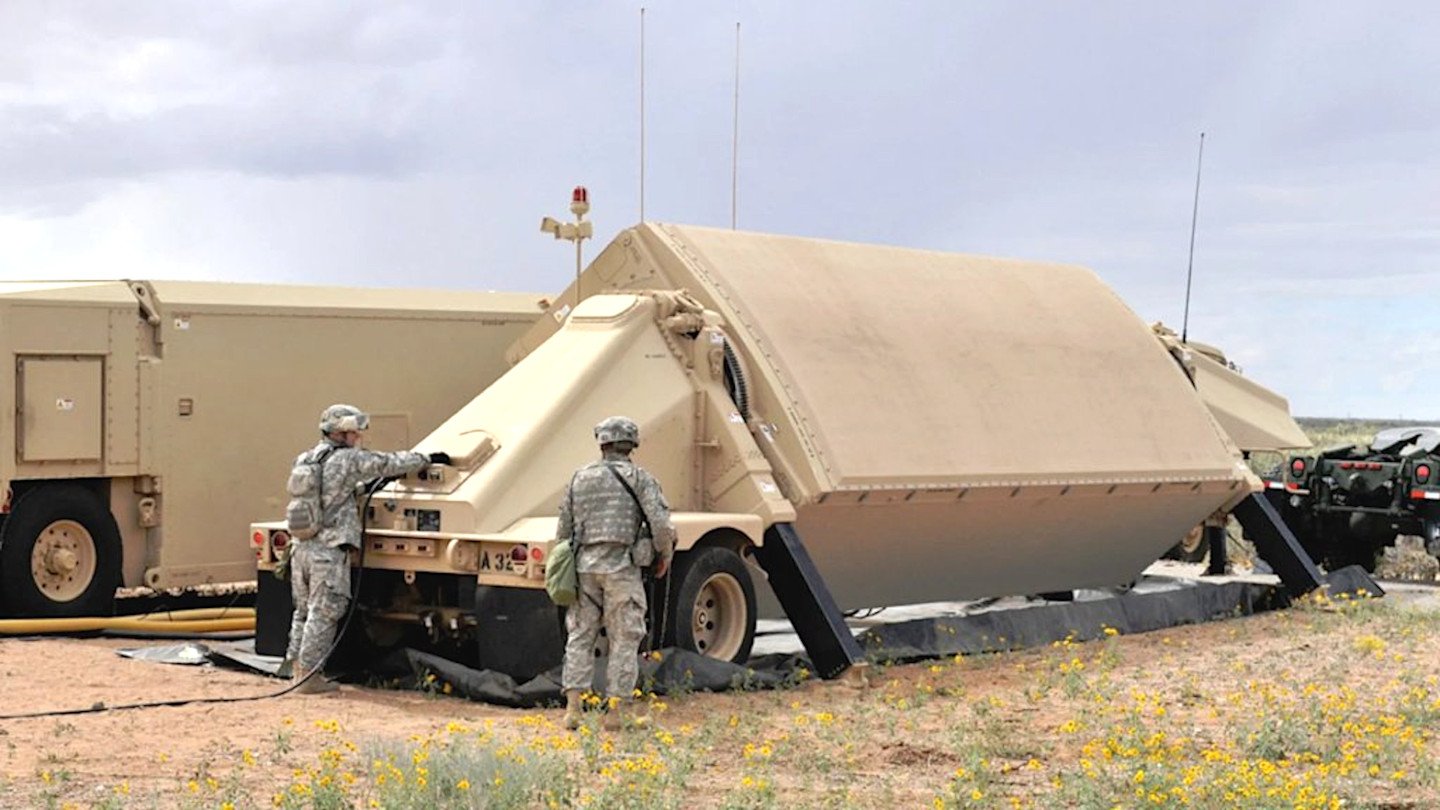
Ираны зүгээс агаарын довтолгооноос хамгаалах суурин системүүдийг амжилттай устгасан нь АНУ-ын Батлан хамгаалах агентлагийг радарын технологийг шинэчлэхэд хүргэлээ.
АНУ-ын Пуужингийн довтолгооноос хамгаалах агентлаг (MDA) одоо ашиглагдаж буй AN/TPY-2 радарын системийг орлох шинэ үеийн, илүү хөдөлгөөнт радарын төсөл боловсруулж байна. Энэхүү “Forward-Based Mode (FBM) Radar Next” нэртэй шинэ төслийн хүрээнд агентлаг шинэлэг прототипүүдийг бүтээх санал хүлээн авч эхэлжээ. Одоогийн байдлаар тус агентлаг гэрээ байгуулахын өмнөх шатанд байгаа бөгөөд 2027 оны төсөвтөө шинэ үеийн радар бүтээхэд шаардлагатай санхүүжилтийг суулгасан байна.
AN/TPY-2 систем нь одоогоор THAAD баллистик пуужингийн хамгаалалтын бүрэлдэхүүнд голчлон ашиглагддаг боловч түүнийг хурдан хугацаанд нүүлгэн шилжүүлэх боломж хязгаарлагдмал юм. Иран улс энэ жил АНУ болон холбоотнуудынх нь хөдөлгөөнгүй байрлалтай радарын станцуудыг, тэр дундаа AN/TPY-2 системийг устгасан нь ийм төрлийн хөрөнгийн эмзэг байдлыг илтгэсэн дохио болсон гэж албаныхан үзэж байна. Иймд шинэ радар нь C-17 тээврийн онгоцоор болон тактикийн тээврийн хэрэгслээр хурдан зөөвөрлөх, богино хугацаанд байршуулах, дайны нөхцөлд тэсвэртэй байх шаардлагыг хангасан байх ёстой.
АНУ-ын Сансрын командлалын дэд командлагч, дэслэгч генерал Ричард Зеллманн байлдааны талбарт нисгэгчгүй онгоц болон баллистик пуужингийн хосолсон цохилт улам бүр нэмэгдэж байгааг онцолжээ. Сансрын хиймэл дагуулын арилжааны хэрэглээ нэмэгдсэнээр байлдааны талбар ил тод болж, өрсөлдөгч талууд GPS болон бусад навигацийн технологийг ашиглан өндөр нарийвчлалтай цохилт өгөх чадвартай болсон байна. Ийм нөхцөлд радарын системийг олон талт, сүлжээнд суурилсан, модульчлагдсан бүтцээр хөгжүүлэх нь хамгаалалтын найдвартай байдлыг нэмэгдүүлэх гол хүчин зүйл болох юм.
Дэлгэрэнгүйг эх сурвалжаас харах
Эх сурвалжийг нээх ↓
The U.S. Missile Defense Agency (MDA) has plans for a new radar to succeed the AN/TPY-2. The AN/TPY-2 is most commonly associated with the Terminal High Altitude Area Defense (THAAD) ballistic missile defense system, but it can also be used as a stand-alone sensor in a larger integrated air defense network. MDA’s main desire now is to find a more mobile radar system to make them less susceptible to enemy missile and drone attacks. Iran’s successful targeting of largely static missile defense radars this year, including the reported destruction of at least one AN/TPY-2, has been a wake-up call to just how vulnerable these prized assets have become already. TWZ explored this reality and its implications in a detailed feature earlier this year.
MDA put out a call for “innovative prototype concepts” for what it is currently calling the Forward-Based Mode (FBM) Radar Next yesterday. This notably came just ahead of the annual Space & Missile Defense (SMD) Symposium in Huntsville, Alabama, that opened today and at which TWZ is in attendance.
The contracting notice stresses that the agency is currently in the pre-solication phase of this effort, but that it does have plans to eventually pursue these prototypes through an Other Transaction Authority (OTA) agreement. OTA is a mechanism typically used to support rapid prototyping and other research and development work outside of a typical and often drawn-out contracting process. In its budget request for the 2027 Fiscal Year, which was released earlier this year, MDA also explicitly asked for funding for a pair of “next generation radar prototypes to prove out and mature emerging technologies for the future FBM Radar fleet.”
For some additional context, MDA uses the term FBM here to refer to a radar used to detect threats, traditionally ballistic missiles, after launch. Deployable radars like the AN/TPY-2 employed in this role are typically emplaced at semi-permanent sites. The U.S. military also has higher-end static strategic radar sites around the globe, along with space-based assets, to help provide additional layers of early warning detection.
FBM is one of two typical modes of operation for the X-band AN/TPY-2. The other is a terminal mode where the radar is used to cue interceptors to incoming threats. As mentioned, AN/TPY-2 is most commonly used in the terminal mode as part of the THAAD system, but it also has a demonstrated ability to feed data to Patriot surface-to-air missile systems.
At the time of writing, the U.S. military is publicly known to have two AN/TPY-2s deployed in the FBM mode in Japan, as well as three more at sites in Israel, Qatar, and Turkey. Additional AN/TPY-2 are also currently forward-deployed elsewhere globally as a component of the THAAD system.
AN/TYP-2s, as well as the generators needed to power them, are trailer-mounted and technically road mobile. However, they are not designed to be very rapidly relocated from one site to another. This brings us back to the FBM Radar Next.
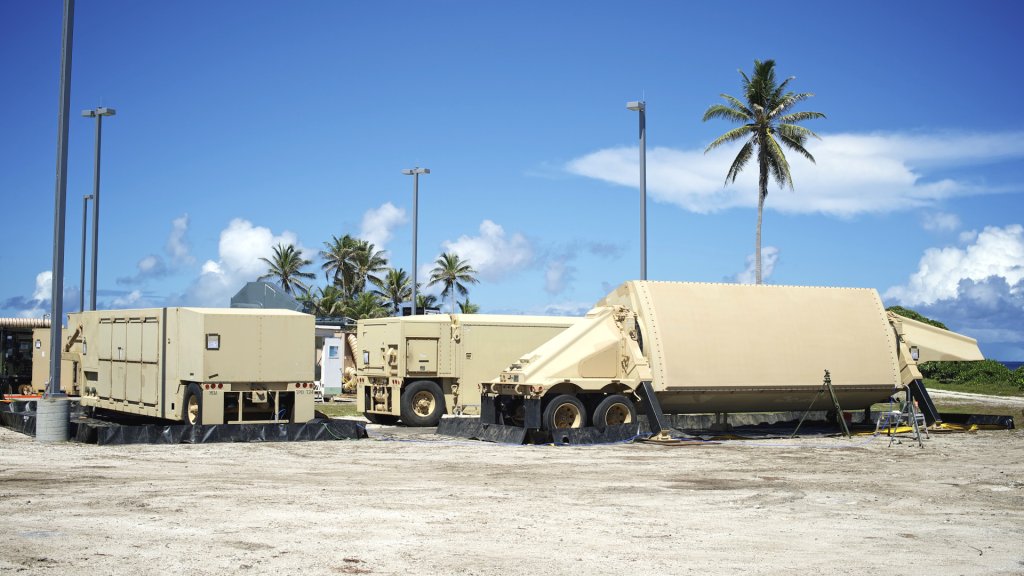
“As adversarial missile capabilities become increasingly sophisticated, the need for agile, survivable, and highly precise forward-based sensors has never been greater. Current static or semi-mobile radars are vulnerable to counterattacks and lack the rapid relocation capabilities necessary for modern distributed operations,” the pre-solication notice explains. “FBM Radar Next will close this gap by providing a system that can be quickly transported, set up, and operated in austere forward locations while maintaining interoperability with existing Command and Control, Battle Management, and Communications (C2BMC) networks.”
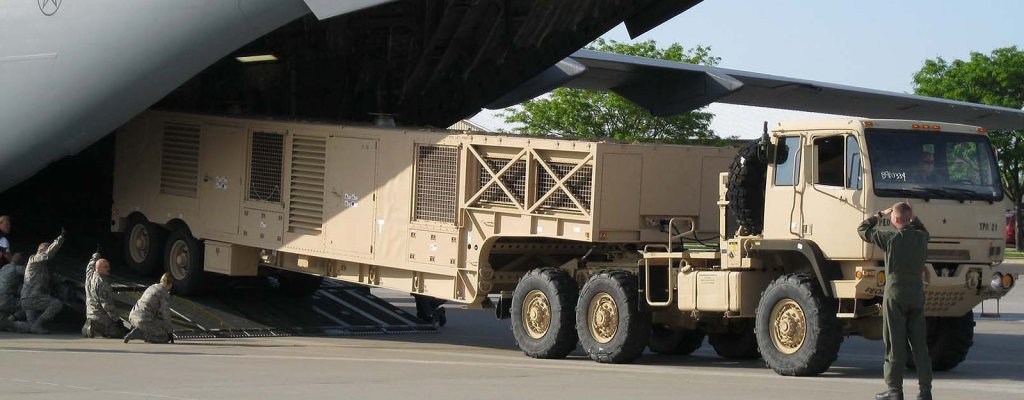
In terms of transportability and deployability requirements, “the system must be capable of rapid deployment and transport via C-17 military airlift and tactical ground vehicles,” the notice says. “The radar must demonstrate rapid setup and teardown times (e.g., operational within specified hours of arrival, and tear down within minutes to maximize survivability).”
The next-generation radar must also be capable of “high-sensitivity detection, persistent tracking, and precise discrimination of advanced threats in high-clutter and contested electromagnetic environments,” the notice continues. MDA also wants “engineered physical, thermal, and electromagnetic signatures to
ensure platform survivability in contested environments.”
Furthermore, “the design must support remote operations, command and control integration, and automated system health monitoring,” the notice adds. Minimizing the onsite operator footprint is critical to improving personnel safety and increasing overall tactical flexibility.”
MDA wants the FBM Radar Next to be able to slot into more “versatile deployment architectures, with the capability to operate either as a highly integrated single aperture or as multiple distributed arrays to optimize geographical coverage, sensitivity, survivability, or electronic protection.” In line with this demand, there are additional requirements for a modular design with open architecture systems, as well as seamless integration with the existing Command and Control, Battle Management, and Communications (C2BMC) architecture.
The MDA video below highlights the general capabilities of the C2BMC architecture in the context of a notional engagement of a hypersonic threat utilizing the still-in-development Glide Phase Interceptor (GPI).
A highly networked and distributed concept of operations could open the door to more novel radar configurations, including ones involving larger groups of smaller and less capable types, to succeed the AN/TPY-2. Smaller individual radars could also have reduced signatures, be easier to conceal, and be more readily relocable, all helping to reduce vulnerability. This could also make the entire system more resilient in the event that nodes are lost or otherwise rendered inoperable for any reason.
There could be benefits in terms of unit cost and scalability of production from such an approach, too. Prime contractor Raytheon is understood to have only produced 16 AN/TPY-2s to date, in total, for all customers, not just the U.S. military. The unit cost of a single one of those radars is generally pegged at around $250 to $300 million, and these are long-lead-time items that take years to deliver.
“The system design must prioritize manufacturing ease, design-for-manufacturing-and-assembly (DFMA) principles, and cost-efficiency. It is critical that the prototype demonstrates a viable pathway to rapid, high-volume production at an affordable unit cost,” MDA’s FBM Radar Next notice makes clear. “This ensures the capability to quickly scale production and cost-effectively replace radar units in highly active forward-deployed environments.”
Regardless of the approach MDA ultimately decides to pursue, the threat ecosystem that is driving the FBM Radar Next plans is real now, and is not just limited to enemy missile attacks. Weaponized drones, especially long-range one-way attack types, present real dangers to high-value targets. This fact had already been driven firmly into the public consciousness by the ongoing war in Ukraine. It has now been further demonstrated by Iran’s aforementioned targeting of prized air and missile defense radars around the Middle East during fighting earlier this year. The ramifications of all of this go well beyond these particular conflict zones, too.
As we wrote back in March after Iran’s very deliberate targeting of U.S. and allied radars became clear:
“Strategic air and missile architectures, in general, exist in a world now where the threats they face are not limited to very-long-range standoff capabilities possessed only by peer or near-peer adversaries.“
“It used to be, generally, that you had to fire a ballistic missile or high-end cruise missile in an attempt to strike one of these systems. Now, long-range one-way-attack drones, as well as increasingly capable cruise and ballistic missiles, continue to proliferate steadily, including to smaller nation-state armed forces and even non-state actors. An attack could even come from a small drone with a C4 charge launched from a fishing trawler 10 miles away from one of these critical radar installations. The threat of these kinds of near-field attacks has largely been overlooked for years, even as the low-end drone threat has exploded and ‘democratized’ precision-guided weaponry, as they did not fit the established aerial threat matrix and the countermeasures used to repel those threats.”
…
“The scale and scope of Iran’s retaliatory attacks so far, while clearly threatening, pale in comparison to what one would expect to see in a major high-end fight between the United States and China in the Pacific. The overall ramifications would also be more severe.“
“Beyond the more immediate impacts of losing this kind of strategic radar coverage, there are far larger implications. In some cases, these radars are designed to provide critical early warning and verification of incoming nuclear strikes, or other large-scale attacks by a major adversary, targeting a nation’s home soil. They are critical parts of the nuclear deterrent. As such, losing these sensors can have major downstream impacts on strategic decision-making cycles based on concerns about what suddenly is not being seen. Fewer radars also means fewer ways to double-check that a track is not a false positive in a scenario where the total available decision-making time could be seriously truncated, to begin with. These are concerns TWZ explicitly highlighted after Ukraine’s attack on theArmavir Radar Stationin Russia in 2024.”
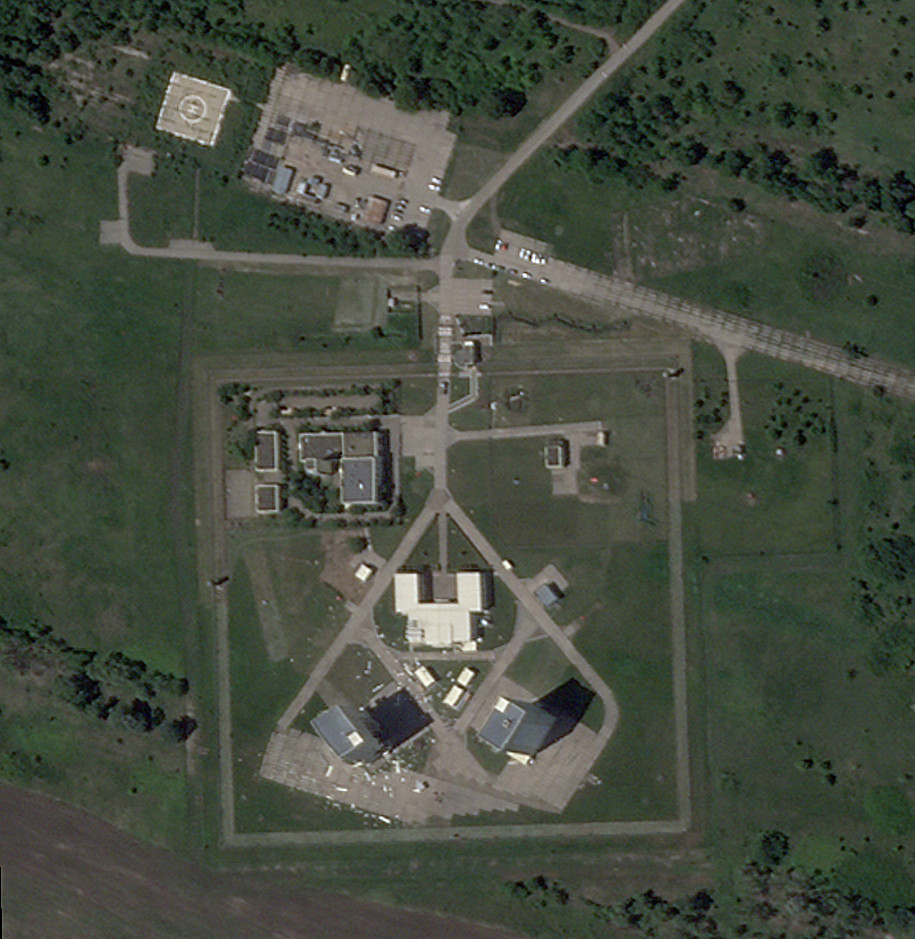
During a panel discussion at the SMD Symposium today, U.S. Army Lt. Gen. Richard Zellmann, Deputy Commander of U.S Space Command, further underscored the reality of the current threat ecosystem, including one-way attack drones layered in with traditional missile barrages. The general also highlighted the impact of more readily available space-enabled targeting and navigation capabilities.
“We see, I think, the low end on Epic Fury [the official nickname for U.S. operations against Iran earlier this year]. Sure, the missiles are more high-end, but we’ve seen our adversary employ a number of one-way attack systems that are coupled with these ballistic missile volleys,” Zellman explained. “We are really at this point in the history of warfare because of the democratization of space. Space isn’t a sanctuary. It’s no longer just the playground of nations with a lot of money.”
“The commercialization of space has created what many call essentially a transparent battlefield. And because I can see everything all the time with commercial ISR [intelligence, surveillance, and reconnaissance; in this case primarily satellite imagery], it’s given our adversaries capabilities that they haven’t had in the past,” he continued. “That ISR, if you couple it with a platform that has access to GPS or some other PNT [Position, Navigation, and Timing] system, and then you add in another layer of over-the-horizon comms, like say from an Iridium or a Starlink [satellite communications terminal], and you have a pretty lethal asymmetric weapon system that our adversaries can get a hold of.”
Munitions that use GPS, or a similar form of navigation, alone for guidance are only employable against static targets. This, in turn, only drives home even more the importance of the transportability and deployability requirements that are at the heart of the FBM Radar Next plan.
It’s also important to note that, like AN/TPY-2 now, FBM Radar Next will still be just one part of a larger air and missile defense architecture. In our analysis earlier this year, we noted that Iranian attacks on radars in the Middle East had reinforced arguments for new layered defenses to protect those and other prized assets and for migrating more early warning and missile tracking capabilities into space. There is still a question of how much of that functionality will be shared and eventually ported over into orbital sensing capabilities. As Lt. Gen. Zellmann pointed out today, threats to space-based capabilities continue to grow, and that domain can no longer be considered a sanctuary, either. Having a layered, redundant, and flexible mix of terrestrial and orbital sensing for ballistic missile tracking will remain highly important for the foreseeable future.
What exactly a successor to the AN/TPY-2 looks like in the end remains to be seen. What is clear now is that very real missile and drone threats have prompted a major rethinking on the part of MDA about how future missile defense radars will need to be employed to ensure they can survive going forward.
Contact the author: joe@twz.com
The post Hunt For New Mobile Missile Defense Radar Reinforced By Lessons From Iran War appeared first on TWZ.


