Хөлбөмбөгийн Дэлхийн аварга шалгаруулах тэмцээний үеэр брэндүүд олон нийтийн анхаарлыг татахын тулд бүтээлч маркетингийн шийдлүүдийг ашиглан өрсөлдлөө.
Энэ удаагийн Дэлхийн аварга шалгаруулах тэмцээний үеэр Адидас брэнд “You Got This” уриа болон тэмцээний албан ёсны бөмбөгний идэвхжүүлэлтээрээ маркетингийн зах зээлд бусад өрсөлдөгчдөөсөө илүүрхэж чадлаа. Аргентин болон Испанийн шигшээ багууд Адидасын хувцас хэрэглэлийг ашигласан нь брэндийн нэр хүнд болон борлуулалтад эерэгээр нөлөөлсөн байна. Тус компани өмнөх Дэлхийн аваргатай харьцуулахад дөрөв дахин их өмсгөл, хоёр дахин их бөмбөг борлуулсан гэх тоо баримт бий.
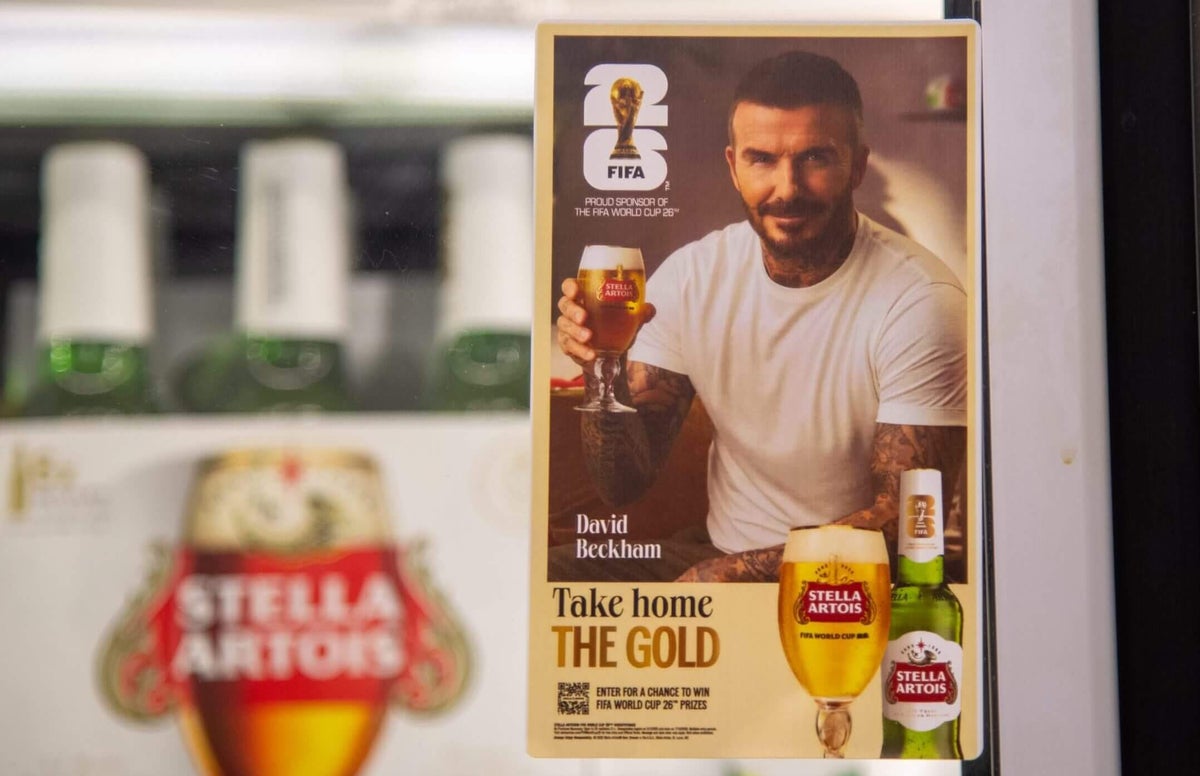
Дэвид Бекхэм олон тооны сурталчилгаанд оролцож, хувийн брэндийн нөлөөгөө дараагийн шатанд гаргасан бол Левис брэнд цэнгэлдэх хүрээлэнгийн нэршлийг халхлах шаардлагатай болсон FIFA-гийн дүрэмтэй холбоотойгоор бүтээлч байдлаар олон нийтийн анхаарлыг татаж чадлаа. Мөн Калши компани тэмцээний явцад стратегиа зөв тодорхойлж, хөрөнгө оруулалтын өгөөжөө нэмэгдүүлсэн нь томоохон амжилт болсон юм.
Канзас-Сити хот тэмцээний зохион байгуулагч хотуудын дундаас хэрэглэгчдийн зарцуулалтын өсөлт болон сошиал идэвхжүүлэлтээрээ тэргүүлж, спортын шинэ төв болохоо баталлаа. Тэмцээний үеэр FIFA-гийн нийт орлого 15 тэрбум ам.долларт хүрэх төлөвтэй байгаа нь энэхүү арга хэмжээний арилжааны өндөр амжилтыг харуулж байна.
Дэлгэрэнгүйг эх сурвалжаас харах
↓Эх сурвалжийг нээх ↓
Whether it was David Beckham appearing on what seemed like every other TV advert, an all-Adidas final, or a brilliant marketing ploy by Levi’s, the recent men’s World Cup was awash with commercial activity.
For FIFA, the event’s organiser and world football’s governing body, it was the most lucrative tournament it has ever staged, with revenues expected to hit $15billion (£11bn) for the 2023-26 cycle.
There were controversial hydration breaks — which effectively split two-half matches into four quarters— that were populated by TV commercials, fan-zone activations, celebrity-filled broadcast adverts and digital creator-led partnerships that were watched by millions of people online.
This particular World Cup will most likely be remembered for controversial goings-on off the pitch, such as Folarin Balogun’s one-game ban being suspended after a phone call from U.S. President Donald Trump to FIFA president Gianni Infantino, but its commercial success is undeniable.
Brands can spend millions of dollars to partner with FIFA for a World Cup in pursuit of boosting their visibility, yet these investments can sometimes fall flat, especially if the company cannot cut through the noise and stand out against its rivals.
The consensus is that Adidas ‘won’ the World Cup from a brand standpoint, thanks to its “You Got This” slogan, a star-studded Backyard Legends campaign and the popularity of the kits it produced for competing teams. It helps that Spain and Argentina, the two eventual finalists, wore Adidas, too.
But the German sportswear company was not alone in leaving a commercial mark on the tournament.
Beckham, prediction-market firm Kalshi, as well as Gillette and Levi’s, all generated noise during the World Cup. The rollouts in Kansas City did not go unnoticed either.
“The top story is Adidas versus Nike, and Adidas won that,” says Gareth Balch, CEO and co-founder of Two Circles, a global sports and entertainment marketing company, when asked which brands stood out at the World Cup.
“I don’t think it was just having two teams in the final with Lionel Messi and Lamine Yamal. Their ball activation was sensational. In a number of host cities, the ball was central to the authenticity of how that city came to life.
“The ball was absolutely central to how Adidas won that, and they then produced completely amazing creative and had an amazing strapline in ‘You Got This’.”
A giant version of the Adidas ball for the 2026 World Cup, the Trionda, in San Jose, California during the World Cup (Emilee Chinn/Getty Images)
Adidas highlighted that it sold four times as many jerseys and twice as many balls as for the previous men’s World Cup, hosted by Qatar in 2022.
Its expectation is that event-related sales will surpass $1.7billion, while it also received an Emmy nomination for its Backyard Legends advert in the Outstanding Commercial category.
It is not just Balch who believes Adidas had a great World Cup either, with Misbah Uraizee, CEO and co-founder of Nectar Social, an AI-driven commerce platform designed for consumer brands, also highlighting its reach.
After analysing “more than 2.7million pieces of World Cup content across TikTok, Reddit, Instagram, YouTube and X, generating over 64billion impressions”, it found Adidas broke through more than any other brand.
“Something Adidas did that was interesting is that they were running something of a hybrid model, where they understood that creators, particularly on socials, serve as a really good distribution engine and also a visual hook,” Luke Tillitski, author of the report and a go-to-market strategist at Nectar Social, says.
“On social media, people are looking for native content or native creators that they are expecting to see on their feeds, so Adidas realised they could combine creators with all the celebrities and athletes they already have signed on endorsement deals and use creators as the hook.”
Legendary Mexican goalkeeper designs a kit for The Athletic
Jack Lang
As well as Adidas, many feel that Beckham, who is also an Adidas athlete and starred in its World Cup campaign video, elevated his personal brand to a new level due to the number of commercials he appeared in.
The 51-year-old former England captain partnered with more than 11 companies, including long-term partners Adidas and Pepsi, Bank of America, Lay’s (Walkers in the UK), Home Depot, McDonald’s, Ninja Kitchen and Stella Artois.
“It was the ultimate moment for him,” Balch says of Beckham’s endorsements and visibility. “You can see why a brand executive sat in a room 12 months ago and said, ‘Right, how are we going to participate in the World Cup?’, and the level of access, instant recognition and level of intrigue you get whenever David Beckham is in anything is enormous.
“It was brilliant. People will joke about how frequently used he was, but I thought he did it fantastically, and he’s building a new playbook that many others will follow.”
Balch also highlighted Kansas City, one of the 16 host cities for this World Cup across Canada, Mexico and the United States, as one of the biggest winners for boosting tourism.
According to Bank of America, Kansas City recorded the largest increase in consumer spending of any U.S. host city during the group stage and round-of-32 matches, while more than 400,000 people attended its fan festival.
“Kansas City was the smallest host city by any normal metrics for population,” Balch says, “and it was in the top few metrics for all relevant social engagement. They also punched their way to become the sporting capital of the U.S., which is what they want to become known for.
“You’ve got Austin and Nashville, for example, that are known for different cultural benefits, and Kansas City’s doing that. It really elevated itself in that way.
“It has a vibrancy of avid fans and it really brought that to life, and all the brands that were participating around that did doubly well.”
For Uraizee, one of the ways a brand can measure its success is whether it was able to “drive the conversation”, irrespective of whether it was an official FIFA partner, a World Cup licensee or simply looking to get involved in the biggest sporting event on Earth.
One brand that perhaps did this better than most was Levi’s.
Even though Levi’s has held naming rights to the San Francisco 49ers NFL team’s home stadium in Santa Clara, California, for more than a decade, FIFA required it and all World Cup venues to cover up any pre-existing branding to “protect its brands and the exclusive rights of its sponsors”.
So, for the duration of this World Cup, it was known as San Francisco Stadium (despite being almost 50 miles south of that city) rather than Levi’s Stadium.
The clothing brand poked fun at the notion of having to cover its logos around the stadium using white tarpaulins and then adjusted its avatar on social media platforms to mirror what it had done in real life for the tournament, as well as uploading a video of its work that received more than 2.5million likes on Instagram.
“The reason you saw Levi’s winning and driving so much virality and so much conversation about them is that they made a moment that gave people something to talk about,” Uraizee says. “That is the biggest thing. How do you manufacture virality? How do you drive algorithms?”
From a return on investment (ROI) standpoint, Uraizee highlights Kalshi, the prediction-market company that waited until the tournament had started before agreeing to co-brand with ADI Predictstreet, as the likely winners.
“They played it smart. They waited to see if it was going to be a high ROI,” Uraizee adds. “For the latter half of the tournament, they amplified themselves significantly and showed a well-executed strategy.
“They were not spending on a David Beckham sponsorship, plus an official sponsorship, before the tournament even started, and still had a high level of amplification.”
Uraizee highlights TikTok as the social-media platform with “unlimited reach potential” and, in information shared by FIFA (it partnered with TikTok for the tournament), there were 1.2trillion views on World Cup-related content globally.
There were also 28billion views and 1.7bn likes on the ‘@fifaworldcup’ profile during the tournament, which gained 57m followers since the turn of the year.
With the Women’s World Cup in Brazil taking place next June and July, followed by the Olympic and Paralympic Games in Los Angeles in 2028, companies are already thinking about how they can drive the conversation at those events.
The men’s World Cup showed that brands do not need to spend millions of dollars on becoming an official partner to garner attention. It could prove to be an interesting trend as other major sporting competitions loom large.


