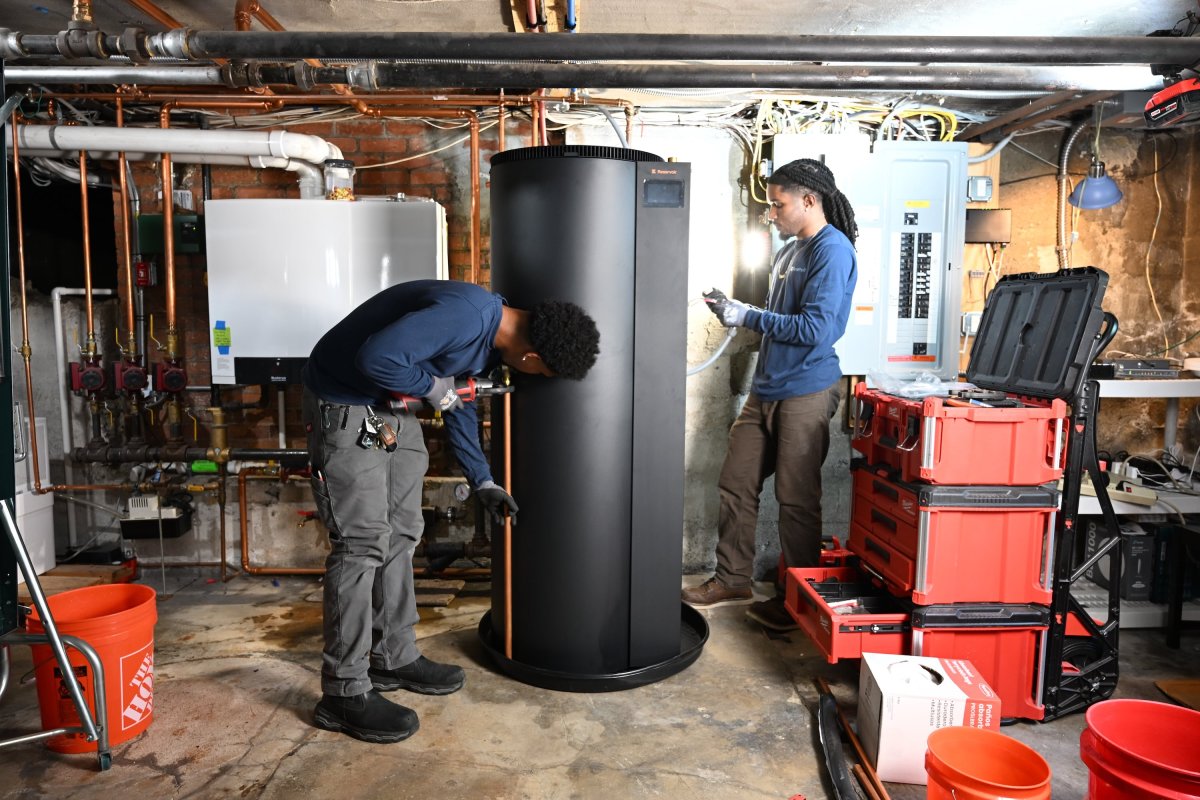
Шинэ үеийн ус халаагч төхөөрөмж нь эрчим хүчний хэрэглээг оновчлох замаар цахилгаан түгээх сүлжээний ачааллыг бууруулах боломжтой юм
Ухаалаг технологийн Reservoir стартап Asymmetric Capital Partners тэргүүтэй хөрөнгө оруулагчдаас 8 сая долларын үрийн шатны санхүүжилт татлаа. Энэхүү хөрөнгийг Бостон орчмын айл өрхүүдэд бүтээгдэхүүнээ суурилуулах болон үйл ажиллагаагаа өргөжүүлэхэд зарцуулахаар төлөвлөж байна. Тус компани өдгөө 100 орчим төхөөрөмжийг суурилуулаад байгаа бөгөөд ирэх оны сүүл гэхэд 1,000 нэгжид хүргэх зорилт тавьжээ.
Reservoir-ийн ус халаагч нь хиймэл оюун ухаанд суурилсан урьдчилан таамаглах системтэй бөгөөд хэрэглэгчийн зан төлөвт суралцан, цахилгааны тариф хямд үед усыг халаах замаар эрчим хүчний зардлыг хэмнэдэг. Мөн төхөөрөмж нь хэт авианы мэдрэгчээр дамжуулан усны алдагдлыг илрүүлж, гар утасны аппликейшнээр дамжуулан хэрэглэгчид дохио өгдөг байна. Тус компанийн дулааны насос нь уламжлалт цахилгаан ус халаагчаас дөрөв, байгалийн хийн халаагчаас тав дахин илүү үр ашигтай ажилладаг аж.
Тус стартап борлуулалтын үйл явцыг хурдасгах болон үйлчилгээний чанарыг сайжруулах зорилгоор өөрийн сантехник суурилуулалтын компанийг байгуулжээ. Бүтээгдэхүүний үндсэн загвар болох “Core” нь 5,000 доллар, илүү өргөн боломжтой “Max” хувилбар нь 6,500 долларын үнэтэй бөгөөд суурилуулалтын зардлыг багтаасан байна. Массачусетс мужийн оршин суугчид 1,050 долларын хөнгөлөлт эдлэх боломжтой бөгөөд компани төхөөрөмждөө 10 жилийн баталгаа олгож байна.
Дэлгэрэнгүйг эх сурвалжаас харах
↓Эх сурвалжийг нээх ↓
It’s hard to imagine a home appliance more forgotten — yet more consequential — than the water heater. Most people only think of water heaters when their shower runs cold, but they represent about 18% of a household’s total energy budget and are one of the main causes of residential water damage.
To Luke Winston-Almanzar, water heaters are in clear need of an upgrade. “The typical water heater is devoid of intelligence, it’s using a god-awful amount of energy, and my air fryer is smarter than it,” he told TechCrunch. “I was using more energy to heat my water than it takes to drive my electric car.”
So Winston-Almanzar, who was previously chief business officer at 3D printing startup Formlabs, co-founded Reservoir along with Gabriel Parisi-Amon and Jake Felser to make a water heater that they would want to buy.
Reservoir announced Wednesday that it has raised $8 million in a seed round led by Asymmetric Capital Partners with participation from Founder Collective and MCJ.
The funding will help the company install more of its water heaters in homes around the Boston area, it’s initial market. Reservoir has installed about 100 devices to date, and Winston-Almanzar said his company hopes to have around 1,000 installed by the end of next year. “That’s when you start talking about a megawatt-scale in terms of capacity,” he said.
Storing megawatt-hours of energy as hot water could go a long way to stabilizing the grid. Today’s water heaters tend to be dumb devices, responding only to changes in temperature in the tank. But Reservoir, by predicting when people will need hot water, can heat the tank when electricity demand is low and prices are cheap. Plus, the device’s heat pump is nearly four times more efficient than an electric water heater and five times more efficient than a natural gas version.
The startup has been able to show that it can relieve strain on the grid at the neighborhood level, Winston-Almanzar said. Eventually, Reservoir could aggregate its fleet of water heaters to participate in utility demand response programs, which pay handsomely for large users to avoid tapping the grid at certain times. Winston-Almanzar said he’s looking at ways to use those payments to keep Reservoir’s prices down.
While energy storage might get grid experts excited, it won’t sell many water heaters. Most people replace their water heaters with whatever their plumber has on hand. The Reservoir team knew they needed to do more than build another heat pump water heater. “The sustainable product need to just be the better product,” he said.
To make an appliance that customers will seek out, Reservoir has included a number of features that aren’t found in typical water heaters.
The predictive heating feature ties in with energy storage. Reservoir’s water heater will spend the first month in a home gathering information about water usage patterns to train a model. Once trained, it will run the unit’s heat pump at the most efficient and cost effective times to save money while also ensuring ample supply.
Reservoir also added an ultrasonic flow sensor to help detect plumbing leaks throughout the home, sending homeowners an alert through its app. In the Max version, Reservoir added more features, including a recirculation valve to provide instant hot water and a mixing valve that can prevent pipes from freezing in cold snaps. In the Max version, a 50-gallon tank can deliver up to 150 gallons of hot water in “party mode,” which can be set either on the device’s touchscreen or through the app.
To keep pricing simple and to speed up the sales process, Reservoir has also started its own plumbing company. Winston-Almanzar said that decision was inspired by his experience at Formlabs. “We built direct relationships [there] because, in a lot of cases, distributors weren’t embracing the new technology.”
Reservoir’s “Max” version costs $6,500, while the base “Core” version costs $5,000, installation costs included. Massachusetts residents qualify for a $1,050 rebate, bringing the price down significantly.
At $3,950, the Core model is competitive with or cheaper than existing heat pump water heaters. For comparison, the 80-gallon AO Smith that’s sitting in my basement currently costs about $3,500, and installation would add about $1,000. Traditional electric water heaters might cost less up front, at about $1,700 for an 80-gallon tank. But Winston-Almanzar said a Reservoir would save typical Boston homeowners up to $1,000 per year in energy costs. Breakeven should happen long before the Reservoir dies sincethe company offers a 10-year warranty.
“We don’t think it’s enough just to have great technology. We think it needs to be affordable,” Winston-Almanzar said.
Water heating is ripe for some new technology. The newest advance, heat pump water heaters, have failed to make a dent, commanding a small part of the market. If Reservoir succeeds, it might finally push them into the mainstream — and in the process take some pressure off the grid.
When you purchase through links in our articles, we may earn a small commission. This doesn’t affect our editorial independence.


