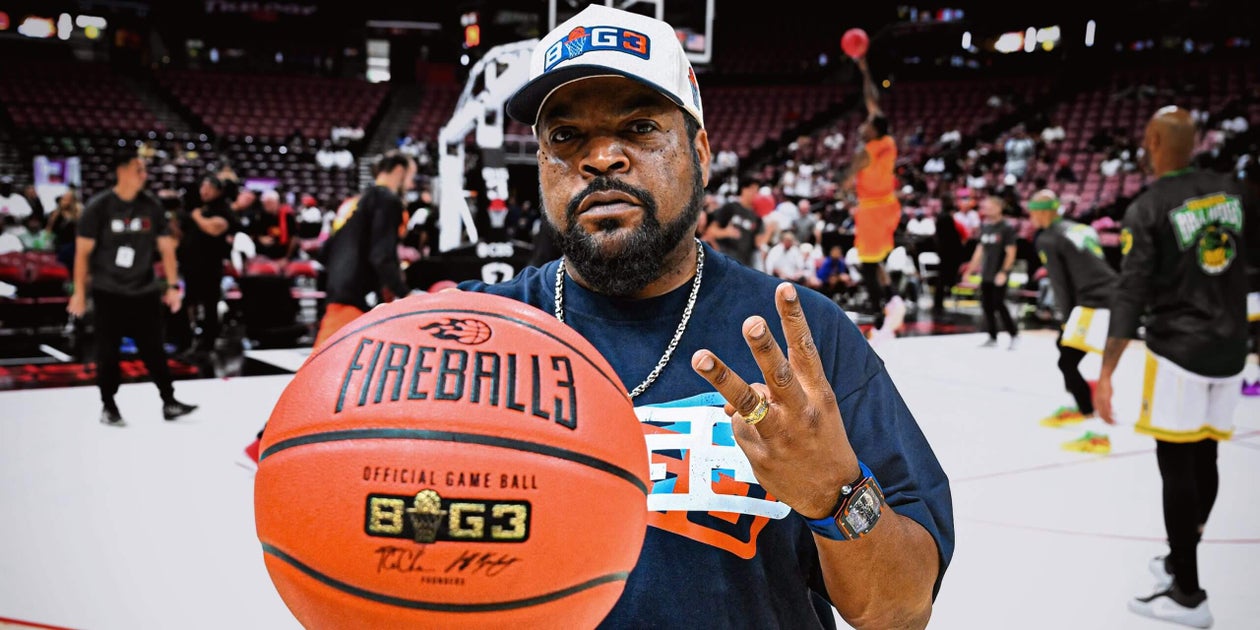
NBA-ийн домогт тоглогчид Ice Cube-ийн үүсгэн байгуулсан 3х3 сагсан бөмбөгийн лигт итгэл хүлээлгэж, тамирчдын карьерийн дараах үеийн чухал талбар болсоор байна.
Big3 лиг 10 дахь улирлаа үдэж байгаа бөгөөд NBA-ийн олон алдартай тоглогчид тус лигт нэгдэн тоглож байна. Тухайлбал, NBA-ийн 18 улирлын турш тоглож, 2020 онд Лос Анжелес Лэйкерстэй хамт аваргалсан Дуайт Ховард карьераа өндөрлүүлснийхээ дараа Big3-д хоёр дахь улиралдаа LA Riot багийг ахлан тоглож байгаа юм. Тэрээр Ice Cube-ийн санаачилсан энэхүү төсөлд нэгдэхэд таатай байгаагаа илэрхийлжээ.
Тус лигийг Ice Cube болон бизнесийн түнш Жефф Кватинец нар 2017 оны нэгдүгээр сард үүсгэн байгуулсан бөгөөд COVID-19 цар тахлын улмаас 2020 онд тоглоогүйг эс тооцвол амжилттай үргэлжилж байна. Big3-ийн комиссараар ажилладаг Клайд Дрекслер лигийн амжилтыг “Ice Cube-д итгэдэг” хэмээн тодорхойлж, энэхүү шинэ спортын төрөл гайхалтай хөгжиж байгааг онцолсон юм.
Big3 лиг үзэгчдийн тоогоо өсгөж, өнгөрсөн зун дунджаар 558,000 үзэгчтэй байсан бол плей-оффийн үеэр 850,000-д хүрсэн нь 2024 оноос 48 хувиар өссөн үзүүлэлт юм. Энэ улиралд CBS болон BET сувгаар дамжуулж буй тоглолтууд дунджаар 565,000 үзэгчтэй байна. Мөн лигийн зүгээс 2027 он гэхэд 12 багтай болон өргөжих төлөвлөгөөтэй байгаагаа зарлажээ.
Лигийн тоглогчид болон дасгалжуулагчдын бүрэлдэхүүнд Жулиус Ирвинг, Жорж Гервин, Рик Бэрри, Лиза Лесли, Нэнси Либерман, Гэри Пэйтон, Аллен Айверсон зэрэг сагсан бөмбөгийн алдрын танхимын олон алдартнууд багтдаг. Мөн Майкл Бисли, Ник Янг зэрэг тоглогчид Big3 лиг нь тамирчдад өөрсдийн зан чанарыг илэрхийлэх, карьерын дараах амьдралдаа дасан зохицох боломжийг олгодог талбар гэдгийг онцолж байна.
Дэлгэрэнгүй эх сурвалжийг харах
Эх сурвалжийг нээх ↓
INGLEWOOD, Calif. — Dwight Howard is in a hurry and doesn’t have much time to talk. The Naismith Memorial Basketball Hall of Famer, an eight-time NBA All-Star now competing as the captain of the LA Riot in the Big3, isn’t rude, but it’s clear he intends to get onto the Intuit Dome court to go through a necessary pregame workout.
Every minute is valuable, much like the pregame workouts he once saw during his lengthy NBA career.Howard announced his retirement from the NBA in March after 18 seasons, but he’s now in his second season with the Big3, the rising three-on-three basketball league co-founded by legendary rapper Ice Cube.
Howard is a Hall of Fame player, an NBA champion with the 2020 Los Angeles Lakers and a three-time NBA Defensive Player of the Year. He doesn’t need the Big3.
So, why play?
“I was going to be a part of whatever Ice Cube is doing,” Howard said.
As the Big3 continues to celebrate its 10th season, the allure of working under the 2016 Rock & Roll Hall of Fame inductee remains strong among many former NBA players. The league, currently preparing for postseason play this weekend, was introduced by Cube and his business partner and co-founder Jeff Kwatinetz in January 2017. Excluding the 2020 season, when no games were played due to the COVID-19 pandemic, the league has been running successfully ever since.
What’s made the Big3 so appealing to those athletes is the opportunity to compete for an executive/media icon who not only understands the players but also allows them to be unapologetically themselves while continuing to play the sport they love after their NBA or overseas careers.
Additionally, athletes — particularly those from the Los Angeles area or those who have spent extensive time there — recognize Cube’s importance to the sports and cultural landscape. Beyond music and movies, Cube, 57, has been a longtime supporter of the sports world.
“He gave me an opportunity to play here. I just wanted to make the best of it,” Howard said of Cube. “It’s good basketball, and again, I love Ice Cube, so I’m just happy about that.”
Dwight Howard has been a longtime fan of Ice Cube, Jeff Kwatinetz and the Big3 operation. (Photo: mpi04 / MediaPunch / IPX)
Throughout the years, the Big3 has seen its share of former NBA stars. Howard has a decorated NBA résumé. Rashard Lewis was an NBA champion with the Miami Heat. Stephen Jackson won an NBA title with the San Antonio Spurs. Seven-time All-Star Joe Johnson is considered one of the best Big3 players ever. Even Jaylen Brown played in the Big3 All-Star Game in 2023, becoming the first active NBA player to compete in the league.
Leandro Barbosa was the 2007 NBA Sixth Man of the Year with the Phoenix Suns and won a championship with the Golden State Warriors in 2015, last playing in the NBA in 2019. He’s now an assistant coach with the Sacramento Kings. Barbosa’s time in the Big3 was cut short by a leg injury in 2022, but during the prior season, he was considered one of the best the league had seen.
Playing allowed him to rekindle a fire that never really went out.
“I don’t think people realize, when you finish your career in the NBA — I’m not saying all the players, but a lot of them — it is tough to turn that key off,” Barbosa said. “The Big3 gives that chance for you to kind of slowly turn that key off.”
The players have NBA clout, but some of the Big3 coaches, past and present, are among the greatest names in all of basketball. Julius Erving, George Gervin, Rick Barry, Lisa Leslie, Nancy Lieberman, Gary Payton, Allen Iverson and Calvin Murphy highlight the growing list of Hall of Fame players who have or are currently coaching in the league.
Additionally, Clyde Drexler has not only served as a Big3 coach, but he is also the current commissioner of the league, having held the position since 2018, succeeding Roger Mason Jr.
Drexler defined the league with four words.
“In Cube I trust,” he said. “We’re only here because of Ice Cube, so this league, this new sport that they’ve invented, has been nothing short of spectacular.”
The Big3 averaged 558,000 viewers last summer and reached a peak of 850,000 viewers during the playoffs, a 48-percent increase from 2024. This season, with games televised on CBS and BET, Big3 games are averaging 565,000 viewers, according to league representatives.
How has the Big3 managed to stick around, mostly without full NBA support? Much of that involves Cube, and how he’s attracted fans via his music and movies since the 1980s.
That star power also lures players to a league that he believes is more than just basketball.
“You can do good music; you (can) do the movies. But if your reputation is bad, you don’t get players like this playing,” Cube said. “It’s all positivity. They feel comfortable playing in a league like this. They know what we’re trying to do, and it is a great collaboration and a great partnership between us and the players trying to get this league to new heights.”

As Ice Cube, the co-founder of the Big3, operates as CEO, Clyde Drexler serves as the league’s commissioner. (Tasos Katopodis / Getty Images for Idol Roc Entertainment)
Since 2017, the league has undergone several rule changes. In 2020, it lowered the competition age limit from 30 to 22. Using feedback from players and coaches, the league also opened the roster to international players.
The Big3 incorporates a 4-point shot and “Bring the Fire,” which allows a team to challenge a foul call with the players involved playing one-on-one. Last year, eight teams were assigned to cities. In December, Kwatinetz said the league plans to expand to 12 teams by 2027. Additionally, the league has opened up ownership to the public.
With all the perks, few outshine the idea that Cube, a longtime Lakers fan and someone whose music includes many sports references, is still a significant reason for the Big3’s success. Much of that is because of his authenticity, which trickles down to him allowing players to be themselves.
Michael Beasley is one of the league’s most recognizable and outspoken players. The No. 2 pick selected by the Heat in the 2008 NBA Draft, Beasley is the reigning two-time Big3 MVP and won the Big3 championship last year with Miami 305. He has remained a part of the league because of the platform it provides some of the most candid voices in basketball.
It’s a league where players and coaches are direct and unhesitant, yet also genuinely heard and appreciated.
“I think Cube has done as good a job as any owner dealing with personalities,” Beasley said.
Beasley was initially persuaded to give the Big3 a try by former NBA player Lance Stephenson, who also has a larger-than-life personality. As a whole, the league features some of the biggest trash talkers in NBA history, whether players or coaches.
Nick Young, who coaches the Riot, is a 12-year NBA veteran who is well known for having an unserious personality. He was introduced to the league by friend and former NBA All-Star Gilbert Arenas, who encouraged him to play.
Young won an NBA title playing with the Warriors in 2018, but he wanted to coach, an opportunity that few NBA teams have offered. The Big3 gave Young his shot.
“I know a lot of people see my persona and what people see me as. That’s what I love about the Big3,” Young said. “They don’t care about all that. They give all people a chance.”
Kwatinetz has known Cube for almost 30 years. Kwatinetz and others say everything works without unorganized chaos because of the legendary rapper’s genuineness and credibility.
“Actors, directors, writers, music artists, athletes have always gravitated to Cube because they know they get the real from him,” Kwatinetz said. “He truly wants artists and players to be happy and to enjoy what they do.”
Some athletes say the Big3 helps them adjust to life after the NBA. Retired players still want to compete, but their days of 82-game regular seasons are over. Cube attracts players, coaches, executives and others, but what’s more important is that he’s built and maintained relationships that keep individuals coming back.
“We want to get some good run in, get a good chance to network more about the league, how we can get ownership in the league, how we can connect with the fans,” Howard said. “I think it’s a little bit different than what we’re all accustomed to.”
“It builds camaraderie, and it also builds relationships away from the court,” added Detroit Amps coach Rick Mahorn, a 1989 NBA champion with the Detroit Pistons who also coached the Detroit Shock in the WNBA from 2005-09. “Just getting to know guys from the music world to the athletic NBA world, this is all fun.”
Cube has been a part of multiple music groups throughout his career. The Big3, however, might be his most ambitious group project, one that juggles a variety of characteristics.
Erving said he wanted to be associated with the league simply after Cube and Drexler asked him. He currently coaches the Chicago Triplets and is a fan of the style of play.
Having been part of the ABA at the start of his professional playing career, Erving is familiar with leagues adding entertainment value, a major part of the Big3’s selling point.
“It’s a big show. It’s a show within the show,” Erving said. “The thing that Cube has done, because he’s from the entertainment world, he’s brought the entertainers out to be there at halftime in between games. I think the fans are pretty excited about not only seeing the basketball, but seeing the entertainment piece, too, and that makes for a good conversation.”

A strong working relationship between Ice Cube and Julius Erving is one of several reasons why the Big3 has been successful for 10 seasons. (Mitchell Leff / Big3 / Getty Images)
The Big3 has been considered a sports league underdog to many since its inception because it operates with minimal NBA support. Isaiah Austin, a center for the Houston Rig Hands and the No. 1 selection in the 2021 Big3 SuperDraft, is aware that Cube has taken on an immense challenge to keep the league operating.
However, there’s a reason why Austin and others are so loyal to the league. In addition to his daily fight for a platform to engage basketball fans in the summer, Cube’s belief in giving all players an opportunity keeps Austin steadfast.
“Ice Cube, his whole life, he’s fought,” Austin said. “He just continued to make strides, and this is what he’s doing now. He’s impacting the youth. He is impacting our cultures, impacting the game of basketball, with him just being his authentic self.
“Everything that he’s done and everything that he has accomplished, he deserves.”
Lieberman, who coaches the Dallas Power, said family is central to the league. She coaches her son, T.J. Cline. Drexler’s son, Adam, plays for the Rig Hands. Cube’s son, O’Shea Jackson Jr., is a sideline reporter, and his wife and children are courtside as often as entertainers or other athletes.
And then there are the wins off the court. Players are encouraged to bring their families to games, as most are scheduled on weekends. It’s something that Lieberman believes is a lesser-discussed victory in the name of mental health.
“I think on mental health and anxiety, on depression, the Big3 should be applauded. Because now, the family is getting to interact with dad in my locker room,” Lieberman said. “You can bring your kids in there; I want them to run around, I want you to see what daddy does. Mom, girlfriend, auntie, grandma can come into my locker room for me for 30 minutes or so before every game.”
Part of mental health with athletes involves how to handle post-career expectations. While Cube has remained active in music and film into his 50s, he realizes that athletes often face major life shifts in their 20s and 30s.
Cube points to stories like Austin, once a projected first-round draft pick in 2014 but was diagnosed with a mild form of Marfan syndrome, a rare genetic disorder that affects the body’s connective tissue. The NBA, which was told at the time that Austin would no longer be able to play competitive basketball, recognized him during the 2014 draft with a ceremonial pick. NBA commissioner Adam Silver selected Austin between the 15th and 16th picks at Barclays Center.
However, Austin was medically cleared to play basketball again in November 2016, though he still couldn’t attract NBA interest and chose to play overseas.
After five years of playing internationally, Austin was ready to play closer to friends and family. Some fans wondered what happened to him after he wasn’t drafted and didn’t realize he was cleared to play roughly 2 1/2 years after his diagnosis. Austin is now an assistant college basketball coach at Florida Atlantic, but the Big3 has allowed him to play pro basketball in this country.
The Big3 has become an avenue for sharing his testimony.
“When we got Isaiah, you could tell he was still angry about not having a shot in the NBA,” Cube said. “Then, he started to win and become a team leader, start working with youth, and I’ve seen him mature.
“It might have turned out different if the Big3 wasn’t here.”
The Big3 has additional growth plans from a business perspective. Last month, the league announced plans to go public at a $290 million valuation. Drexler said a big media deal will allow the league to further “blow up.”
There have been minor moments of frustration, as with any budding business, but Drexler believes in Cube’s work ethic to drive growth. Drexler — who won an NBA championship in 1995 with Hakeem Olajuwon — called Cube a “dream” to work with.
“He is kind. He’s nice. His intentions are incredible,” Drexler said of Cube. “He respects the guys. He loves the guys. He comes to every single game we play.
“This is his baby, and he treats it as such.”

