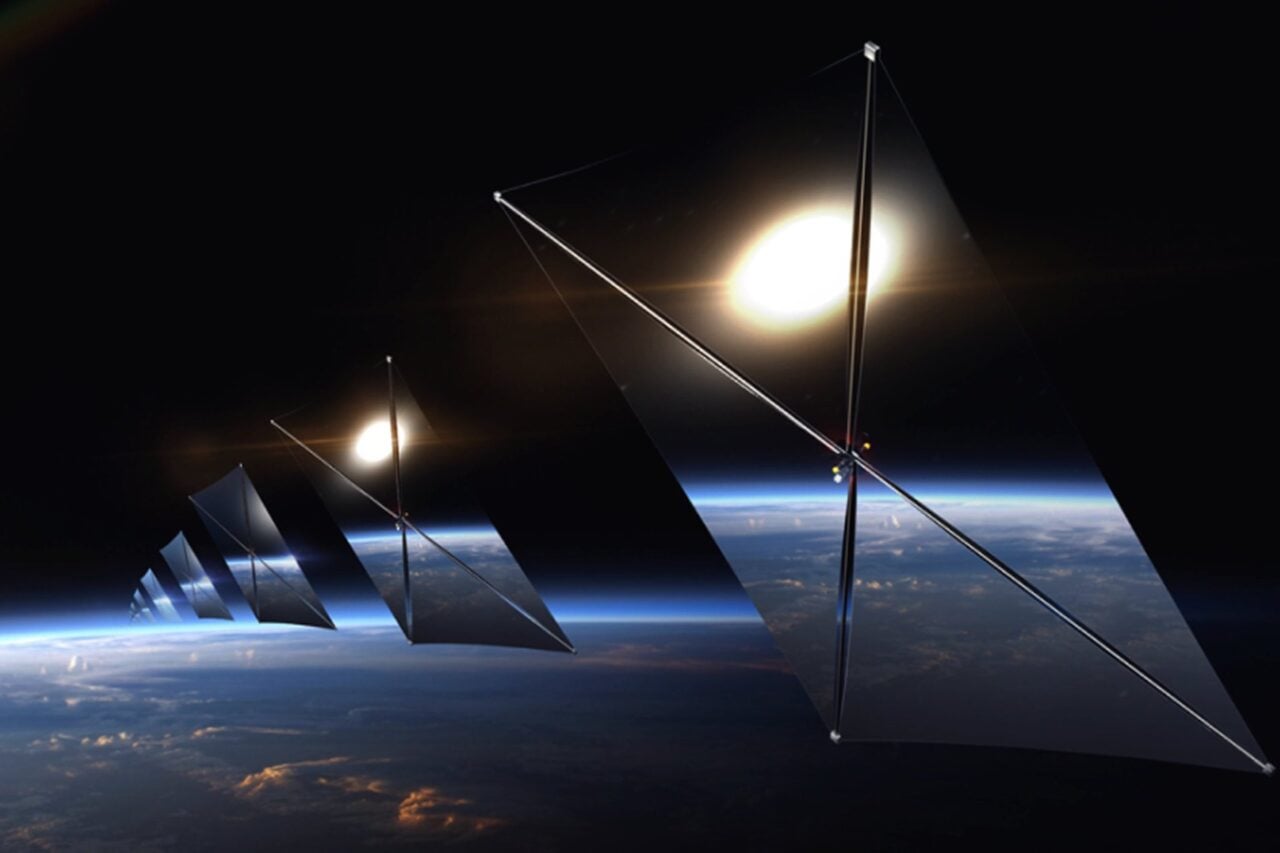
Калифорнийн гарааны компанийн хэрэгжүүлэхээр төлөвлөж буй уг төсөл нь сансраас гэрэл ойлгон дэлхийг гэрэлтүүлэх зорилготой боловч одон орон судлаачид болон мэргэжилтнүүдийн болгоомжлолыг төрүүлээд байна.
АНУ-ын Холбооны Харилцаа Холбооны Комисс (FCC) “Reflect Orbital” компанийн сансрын толин тусгал бүхий прототип хиймэл дагуулыг хөөргөх зөвшөөрлийг олгожээ. Тус компани ирэх хугацаанд 50,000 хүртэлх тооны толин тусгал бүхий хиймэл дагуулыг нам орбитод байршуулж, 5 км хүртэлх талбайг 0.8-2.3 люкс эрчимтэй гэрлээр гэрэлтүүлэхээр төлөвлөж байна. Энэ нь цэлмэг шөнийн тэнгэр дэх бүтэн сарны гэрлээс харьцангуй өндөр үзүүлэлт юм.
“Earendil-1” нэртэй прототип хиймэл дагуул нь 18 метрийн урттай хальсан тусгагчийг ашиглах бөгөөд одон орон судлаачид энэхүү төсөл нь сансрын ажиглалтад саад учруулахаас гадна хүний нүдний хараанд ноцтой гэмтэл учруулж болзошгүй гэж үзэж байна. Оптик инженер Эрик Бретшнайдерийн тайлбарласнаар, нарны хиртэлтийн үед нар руу хамгаалалтгүй харах нь нүдэнд аюултай байдагтай адилаар, сансраас ойсон хүчтэй гэрэл нь хүний харааг гэмтээх эрсдэлтэй юм.
Royal Astronomical Society-ийн дэд захирал Роберт Мэссигийн хэлснээр, сонирхогч одон орон судлаачид дурангаараа шөнийн тэнгэрийг ажиглах явцдаа энэхүү толин тусгал руу санамсаргүй харах нь хараагаа алдах шалтгаан болж болзошгүй ажээ. Байгаль орчныг хамгаалах дөрвөн байгууллага уг шийдвэрийг эсэргүүцэж, дахин авч үзэхийг шаардсан өргөдөл гаргасан байна.
“Reflect Orbital” компани нь одон орон судлаачидтай хамтран ажиллаж, хиймэл дагуулын гэрлийг хянах, шаардлагатай үед гэрлийг унтраах эсвэл бүдгэрүүлэх бүрэн боломжтой гэж мэдэгдсэн юм. Гэсэн хэдий ч судлаачид хиймэл дагуулыг хэзээ, хаана ажиллахыг урьдчилан мэдэх боломжгүй байгаа нь эрсдэлийг улам нэмэгдүүлж байна гэж болгоомжилж байна.
Дэлгэрэнгүйг эх сурвалжаас харах
Эх сурвалжийг нээх ↓
A California-based startup’s wild idea to deliver sunlight after dark may pose a serious health hazard for those gazing up at the night skies, experts are warning.
The Federal Communications Commission (FCC) recently gave the green light for Reflect Orbital to launch its prototype satellite, which will test its ability to reflect light down to Earth. If all goes well, the company is hoping to launch thousands more of its in-space mirrors. The proposed constellation would not only disrupt astronomers’ views of the cosmos, it could also result in permanent eye damage, The Verge reported.
Space reflection
The idea behind Reflect Orbital’s proposed constellation is simple: bouncing sunlight off a mirror and reflecting it onto a designated area. To do that, the companywants to deploy up to 50,000 in-space mirrors mounted on satellites to low-Earth orbit. Its prototype satellite, named Earendil-1, is designed to deploy a 59-foot (18-meter) film reflector when it launches to space later this year.
Reflect Orbital would use its satellite constellation to illuminate areas up to 3 miles (5 kilometers) at a time with intensities ranging between 0.8 and 2.3 lux. By comparison, a full Moon provides an illumination of around 0.05 to 0.3 lux on a clear night.
The company claims it “exists to demonstrate that sunlight from space can be an important part of humanity’s clean-energy future and provide critical lighting at night to save lives,” Reflect Orbital claimedon X. Several astronomy groups, however, have sounded the alarm over the proposed constellation.
The FCC’s approval of Reflect Orbital’s prototype satellite was met with heavy criticism, with four environmental groups filing a petition urging to reverse the decision, NBC reported. DarkSky International also issued astatementin response to the proposed constellation, advocating for “transparency, environmental review, and public accountability before any such systems are approved or deployed.”
Experts are warning that looking up at the reflected light could damage people’s eyes, similar to a solar eclipse. “Any time you have a solar eclipse, what do meteorologists, astronomers and eye doctors tell you? Don’t look at it without protection. Why? Sunlight is incredibly intense,” optical engineer and LED lighting expert Eric Bretschneider told NBC. “People’s eyesight gets damaged, so it’s not a question of if it’s going to happen. It’s a question of when.”
Similarly, amateur astronomers looking at the night skies through telescopes could easily be blinded if facing the direction of the prototype satellite, Royal Astronomical Society deputy executive director Robert Massey told The Verge.
Bright skies
For its part, Reflect Orbital stated that it works closely with astronomers to mitigate the effects of its satellites as a member of the International Astronomical Union’s Centre for the Protection of the Dark and Quiet Sky.
“Our satellites’ default will be “off” and we will retain full control to turn them off, dim the light and relocate the spot at any stage,” the company wrote in an emailed statement. “Every spot of light we deliver will be requested, approved and contained. We will only provide redirected sunlight when it is signed off by the appropriate authorities in the relevant jurisdiction.”
Concerned astronomers worry they won’t know when the satellites will be turned on or where they’ll appear in the night sky, potentially causing them to look directly at the satellites by accident, according to The Verge.
The upcoming launch of the company’s prototype satellite will not only be a test of the technology but also of how much it will affect those gazing up at our skies.

