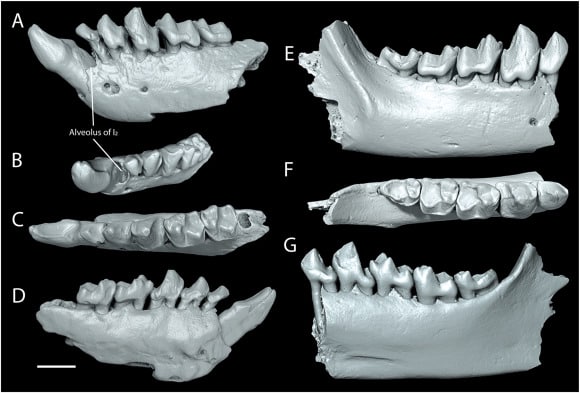
Эртний приматын шинэ зүйл болох Tetonius varleyorum-ийн олдвор нь уг бүлгийн хувьслын түүх урьд өмнө төсөөлж байснаас илүү төвөгтэй болохыг харууллаа.
Канзасын их сургуулийн Биологийн төрөл зүйл, байгалийн түүхийн музейн судлаачид Вайоминг мужийн өмнөд хэсэгт орших “Tim’s Confession” хэмээх газраас 50 сая жилийн настай приматын эрүү болон шүдний хэлтэрхийнүүдийг илрүүлжээ. Энэхүү амьтан нь Eocene эрин үед амьдарч байсан омомид (omomyids) хэмээх жижиг, том нүдтэй приматын төрөлд хамаарах бөгөөд хэмжээгээрээ орчин үеийн хулганан лемуртай төстэй байв. Уг олдвор нь тухайн бүс нутагт өмнө нь олдож байгаагүй гурван өөр төрлийн омомид зэрэгцэн оршиж байсныг баталсан нь палеонтологийн хувьд нэн ховор тохиолдол болж байна.
Судлаач Паркер Райнхартын тайлбарласнаар, 1987 онд Томас Боун, Кеннет Роуз нарын хийсэн судалгаагаар приматын энэ бүлгийг нэг зүйлээс нөгөөд шууд хувьсан өөрчлөгддөг “анагенез” (anagenesis) загвараар тайлбарлаж иржээ. Гэвч шинээр олдсон Tetonius varleyorum-ийн үлдэгдэл нь Bighorn сав газраас олдсон олдворуудад суурилсан хувьслын энэхүү шугаман дарааллыг тасалдуулж байна.
Journal of Human Evolution сэтгүүлд нийтлэгдсэн уг судалгаа нь өмнө нь тогтоогдсон хувьслын онол нь Вайоминг мужийн бусад бүс нутгийн олдворуудыг нэгтгэн дүгнэхэд учир дутагдалтай болохыг харуулж байна. Одоогоор эрдэмтэд олдсон олон зуун хэлтэрхий дээр үндэслэн приматын хувьслын түүхийг дахин нягталж байгаа бөгөөд энэ нь эртний амьтдын бүлгийн түүх урьд өмнө төсөөлж байснаас илүү олон салаа мөчиртэй байсныг гэрчилж байна.
Дэлгэрэнгүйг эх сурвалжаас харах
↓Эх сурвалжийг нээх ↓
A tiny primate that lived in what is now Wyoming around 50 million years ago has turned out to be a species scientists had never identified before. Called Tetonius varleyorum, the animal was about the size of a modern mouse lemur, and its fossilized remains are making a familiar story about primate evolution less straightforward.
The species belonged to the omomyids, a family of small, big-eyed primates that looked somewhat like modern tarsiers. They lived in North American forests during the Eocene epoch and first appeared across the northern hemisphere roughly 55 to 56 million years ago.
Parker Rhinehart, a doctoral student with the Biodiversity Institute and Natural History Museum at the University of Kansas, explained that these animals were true primates, even though their entire group is now extinct. Their position in the primate family tree places them near the point where the lineage leading to lemurs separates from the one associated with monkeys, apes and humans.
Tiny Teeth In Wyoming Reveal A New Species
Researchers found dozens of jaw and tooth fragments belonging to Tetonius varleyorum at a sandstone locality called Tim’s Confession. The site is part of the Smiley Draw local fauna in southern Wyoming’s Great Divide Basin. The name of the new species also honors the people who helped make the discovery possible.
“We named it Tetonius varleyorum,” Rhinehart explained in a statement. “Varley is the name of a family that runs a truck stop near the campground where we stay when we’re collecting fossils, and they’ve been a great help to us.”
Finding such small fossils is difficult. For ancient primates, teeth and pieces of jaw are often the remains that survive millions of years of erosion.
“Identifying ancient primate fossils in the field typically requires hunting tiny fossil jaws and teeth, the only body parts tough enough to withstand erosion over geologic time,” Parker Rhinehart said.
Nearly 1,000 tooth-bearing jaw fragments from various ancient mammals have already been recovered at the site. These fossils are providing fresh insights into Tetonius evolution, adding new evidence beyond the fossils previously known from Wyoming’s Bighorn Basin. Rhinehart noted that including fossils from outside the Bighorn Basin changes the picture of the group’s history.
“One of the things our paper points out is when you start incorporating fossils from outside of the Bighorn Basin, this picture becomes a little bit more complicated,” he said.
This Little Primate Was Not Living Alone
The discovery of Tetonius varleyorum became even more notable because of the other primates found at the same site. Researchers also identified two rare omomyids, Arapahovius gazini and Anemorhysis savage. The research team reported that these discoveries represent only the second and third documented occurrences of those two species.
Finding them together created an unusual fossil record. The researchers stated that three different omomyid species had never previously been found at a single early Eocene site. A fourth omomyid, which has not yet been formally described, was also recovered from the same locality.
“While the earlier paper and figure have been vital to theTetoniusstory, fossils from Smiley Draw would challenge some of its conclusions.”

New fossils challenge a classic Tetonius timeline
The tiny fossils from Wyoming are forcing scientists to revisit a decades-old idea about Tetonius evolution. For years, a 1987 study by paleontologists Thomas Bown and Kenneth Rose shaped the understanding of this extinct primate lineage.
Based on fossils from the Bighorn Basin, their work described a gradual evolutionary transition known as anagenesis, where one species changes into another without branching into separate lineages. But the new fossils from Smiley Draw do not follow that pattern. The team found that the specimen breaks the previously proposed sequence.
“Our analysis reveals that the new fossils ofTetonius varleyoruminterrupt the purported anagenetic lineage from the Bighorn Basin,” Rhinehart said.

Published in the Journal of Human Evolution, the study adds new evidence showing that the evolutionary history of Tetonius was not as simple as scientists once thought.
Enjoyed this article? Subscribe to our free newsletter for engaging stories, exclusive content, and the latest news.

