House House компанийн бүтээсэн Big Walk тоглоом нь тоглогчдыг хамтдаа оньсого тааж, нээлттэй ертөнцөд аялахыг уриалсан хамтын ажиллагааны өвөрмөц бүтээл болжээ.
2026 оны наймдугаар сарын 4-нд худалдаанд гарах Big Walk нь зөвхөн олон тоглогчийн горимд зориулагдсан бөгөөд тоглогчдоос бие биетэйгээ үр дүнтэй харилцахыг шаарддаг. Тоглоомын явцад тоглогчид үгээр бус, биеийн хөдөлгөөн болон дохио зангаагаар дамжуулан нарийн төвөгтэй оньсогонуудыг шийдвэрлэх шаардлагатай болдог нь энэхүү бүтээлийн гол онцлог юм. Хөгжүүлэгчид тоглоомын ертөнцийг тайван, ямар нэгэн дарамтгүй байхаар зохиомжилсон тул тоглогчид өөрсдийн хэмнэлээр ертөнцийг судлах боломжтой.
Тоглоомын механик нь нөхөрлөл болон хамтын ажиллагаанд тулгуурладаг бөгөөд бараа материал ашиглах, харилцаа холбоо тогтоох зэрэгт найз нөхдийн туслалцаа заавал шаардагддаг. Оньсогонуудын хувьд эхлээд ижил төстэй мэт санагдаж болох ч, хөгжүүлэгчид тэдгээрийг улам бүр төвөгтэй болгож, шинэ сорилтуудыг нэмснээр тоглогчдын харилцааны чадварыг сорьдог байна.
Big Walk нь ямар нэгэн тулаан, аймшгийн элементгүй, зөвхөн хамтдаа асуудлыг шийдвэрлэхэд чиглэсэн гэдгээрээ онцлог юм. Steam Deck төхөөрөмж дээр ажиллах баталгаатай энэхүү тоглоомыг 20 ам.доллар буюу 16 фунт стерлингийн үнэтэйгээр худалдан авах боломжтой.
Дэлгэрэнгүйг эх сурвалжаас харах
↓Эх сурвалжийг нээх ↓
What is it? A co-op (only) game about solving puzzles on an island with your pals.
Release date: August 04, 2026
Expect to pay: $20/£16
Developer: House House
Publisher: Panic
Reviewed on: Intel i7 9700K, RTX 4070 Ti, 16GB RAM
Steam Deck: Verified
Link: Official site
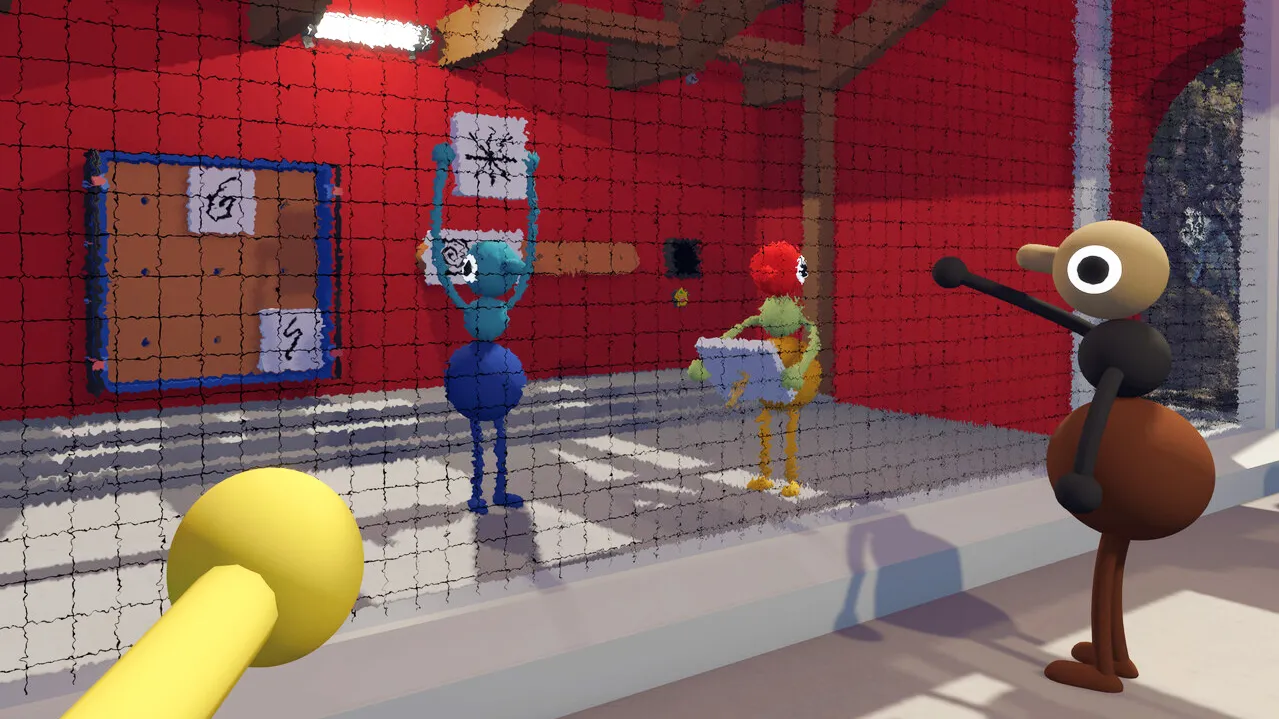
Behind soundproof glass, Tyler is frantically signalling to me by wiggling both his arms over his head. I look over at Morgan, behind a different glass wall, who is holding a puzzle piece over his head—but he can’t see Tyler’s frenzied arm-swings. I repeat Tyler’s gesture, wiggling both of my arms, and Morgan silently gets the message: Wrong piece. He drops it and picks up another.
What’s interesting is that in the dozen hours we’ve been playing first-person co-op puzzle game Big Walk together, wiggling both arms over our heads has meant a number of things and “wrong” is just one of them. It’s alternately meant “I’ve found something” or “come here” or simply “hooray!”
And as well as meaning “wrong,” like it does now, it has also meant the complete opposite: “Correct!” That’s the genius of Big Walk: it teaches you to communicate with your co-op partners so effectively that you can use the same gesture to mean a half-dozen different things, yet you’ll almost always know exactly what your companions are saying. Even when you can’t hear them.
Little steps
Here’s how chill the vibes are in Big Walk: there’s a tutorial zone where you learn how to jump, crouch, and pick up and use objects, but at no point is there any indication you’ve finished the tutorial. There’s no big arrow pointing at where to go next, or even when to go: we just sort of eventually wandered away from the tutorial and discovered a huge mysterious island waiting for us. No rush.
In our initial wandering we found a tall crane-like structure and eventually noticed it had a button on it, well out of reach. When we figured out how to push that button, we were rewarded with a small poof of confetti and a bulbous red object we decided to call a “nubbin” because it doesn’t have a real name. We soon located a slot for that nubbin elsewhere, which led to more puzzles containing more nubbins.
Big Walk was communicating with us non-verbally: solve puzzles, collect nubbins, find more puzzles.
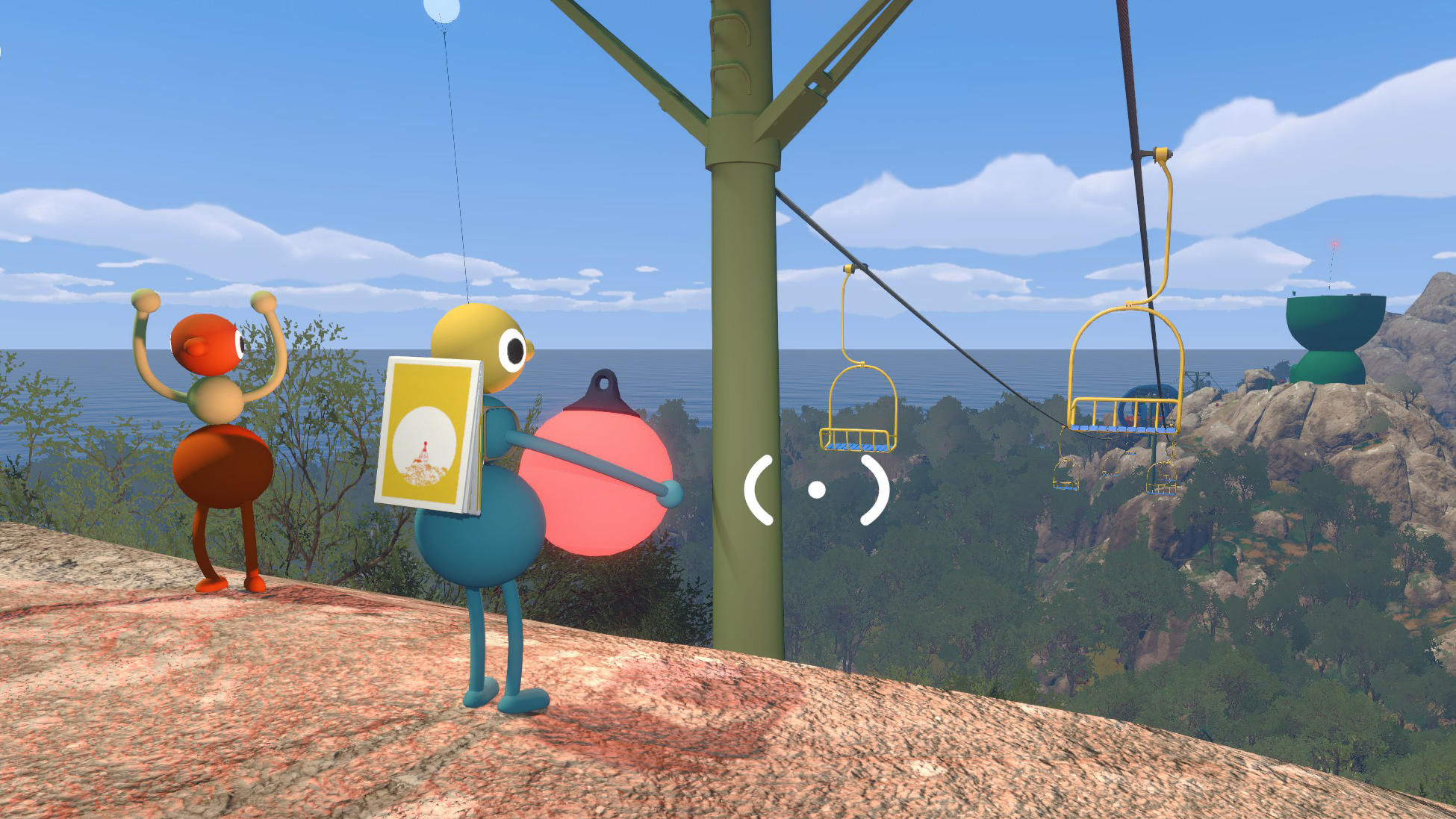
As chill as the world is, however, the limitations of Big Walk are more extreme than a lot of games. The nights are dark, much darker than many survival games, making it easy to get momentarily lost in tropical sprawl. You can carry only one object in your hands at a time, and even when you find storage solutions like backpacks, you need a friend to both attach it to your body and retrieve gear from it. Welcome to a world so dedicated to cooperation that you need a friend just to access your own inventory.
If you want to talk over the game’s proximity chat you need to be within a dozen yards of each other. Any further and you’ll need a walkie-talkie to keep in touch—though if you’re all carrying walkie-talkies, how are you going to carry all those nubbins you’re finding?
These restrictions are there to teach you what Big Walk is all about: sticking together, communicating, and relying on your friends for everything—which is precisely what makes it so great.
Puzzle me this
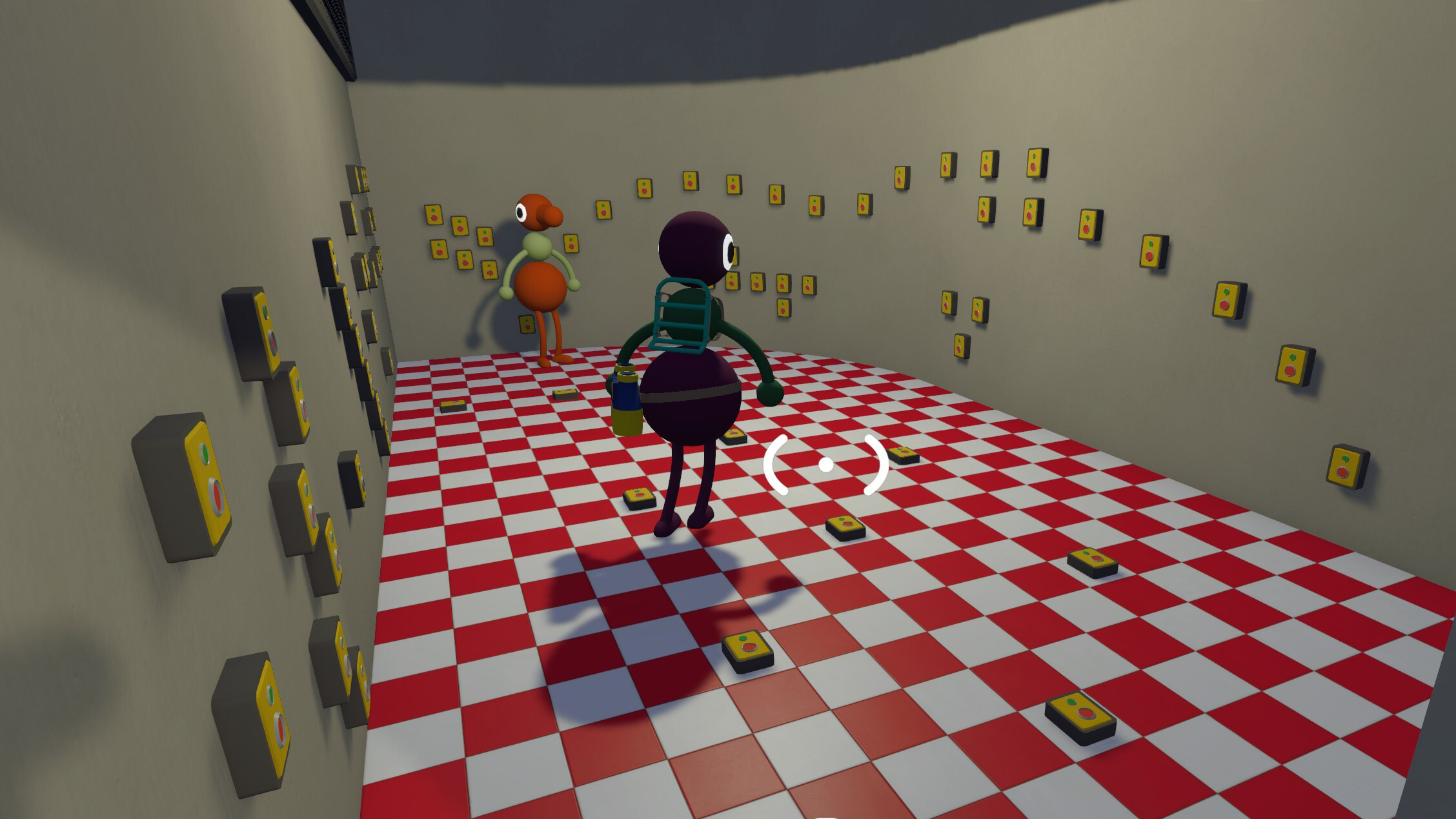
There’s a nice variety of puzzles on the island: some require pushing buttons in unison or in a sequence, some want you to work together to get an object to a certain spot before a timer expires, some need you to describe symbols or shapes to a player who can’t see them. But we weren’t that far into Big Walk before puzzle elements we’d already seen started being recycled, which worried me early on: were we just going to be doing the same handful of puzzle types over and over?
Sort of. Big Walk’s puzzle elements quickly begin repeating themselves—you’ll see the same symbols, buttons, soundproof doors throughout a playthrough—but developer House House has done a great job remixing and complicating its solutions, throwing in new twists on the formulas we’d already learned.
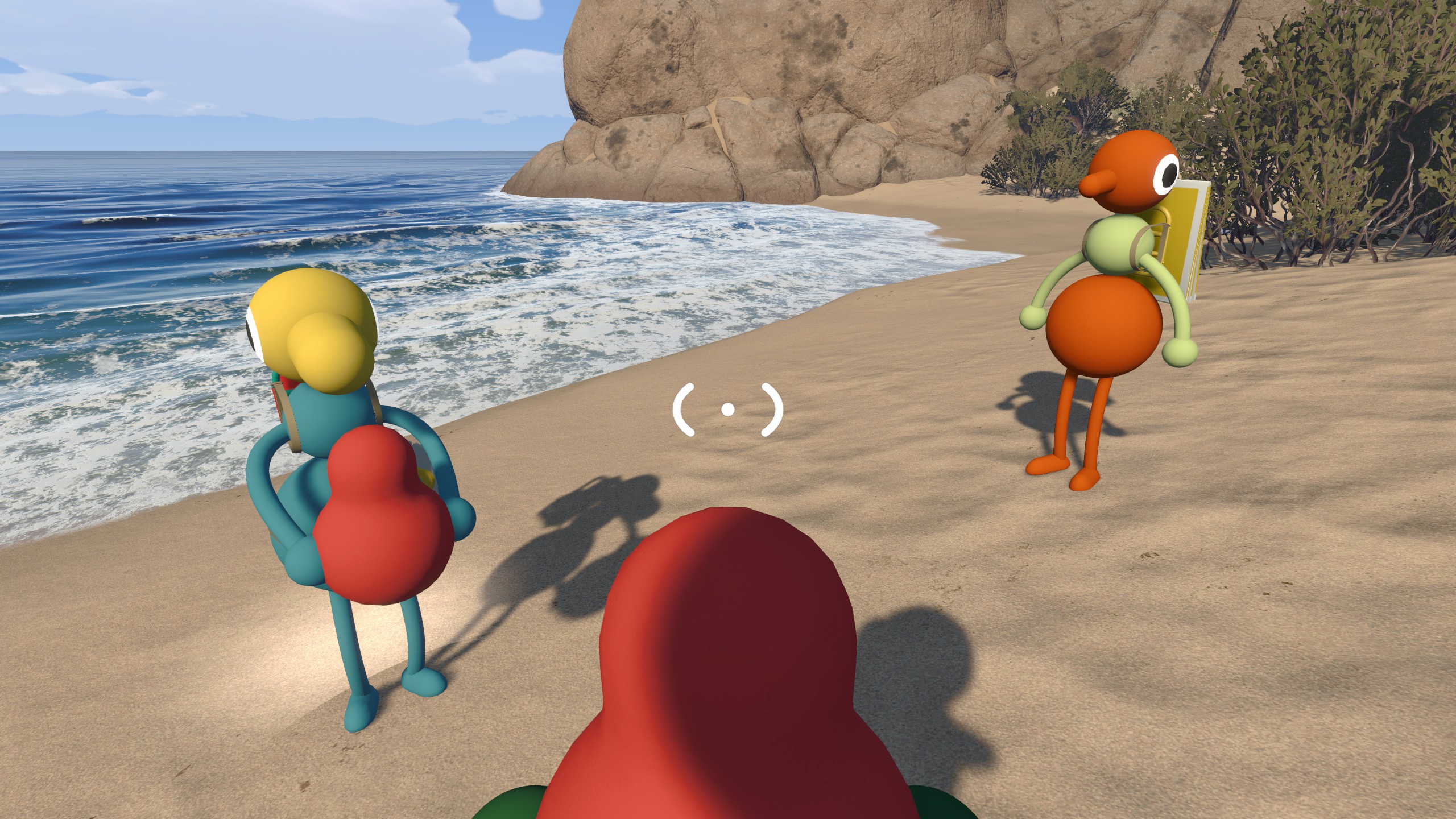
If one puzzle needed us to describe symbols to each other over voice chat, the next iteration might ask us to pass fragments of the solution from one player to the next like a game of telephone, or send signals from a mile away, or develop an impromptu code.
As we solved similar types of puzzles a few times, we were unconsciously developing a shorthand—a way we could understand each other even given new limitations. Non-verbally, through its thoughtful and clever puzzle design, Big Walk was teaching us how to also communicate non-verbally.
Pal world
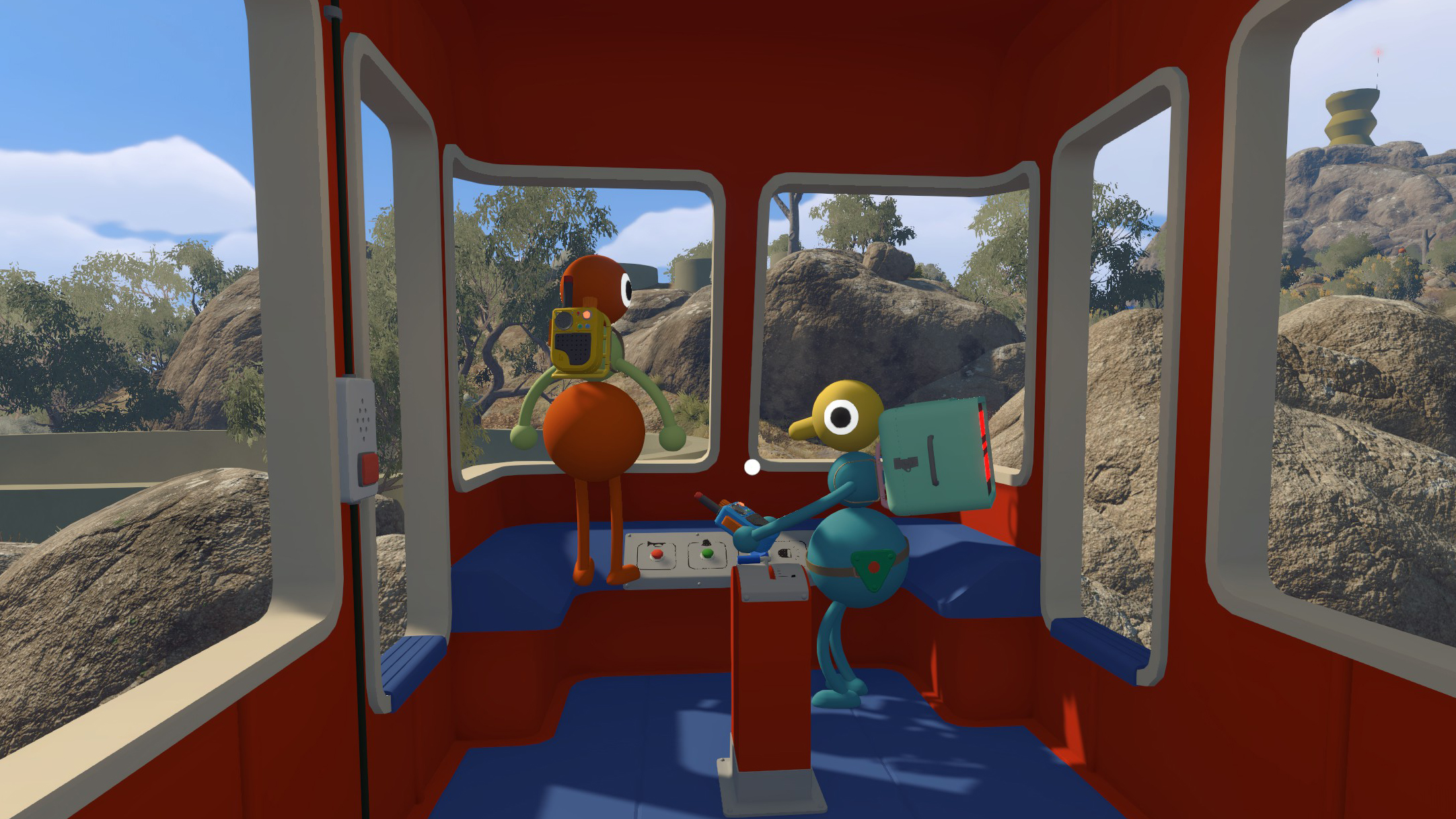
It wasn’t always easy: occasionally we had to quit a puzzle halfway through to discuss a new strategy. But I was surprised and delighted how many times we encountered a new wrinkle in a puzzle but still aced it without a rehearsal. That’s when waving our arms over our head meant “hooray!” the most: each puzzle completed was a real cause for celebration.
I won’t spoil the game’s ending, but after a dozen hours everything we’d learned was put to the test, letting us use the shorthand we’d developed in ways I couldn’t have predicted. And we crushed it. Finishing Big Walk was a real feeling of satisfaction, and it was twofold: not only had we learned the game’s puzzle-based language, but we’d invented our own, almost without knowing it.
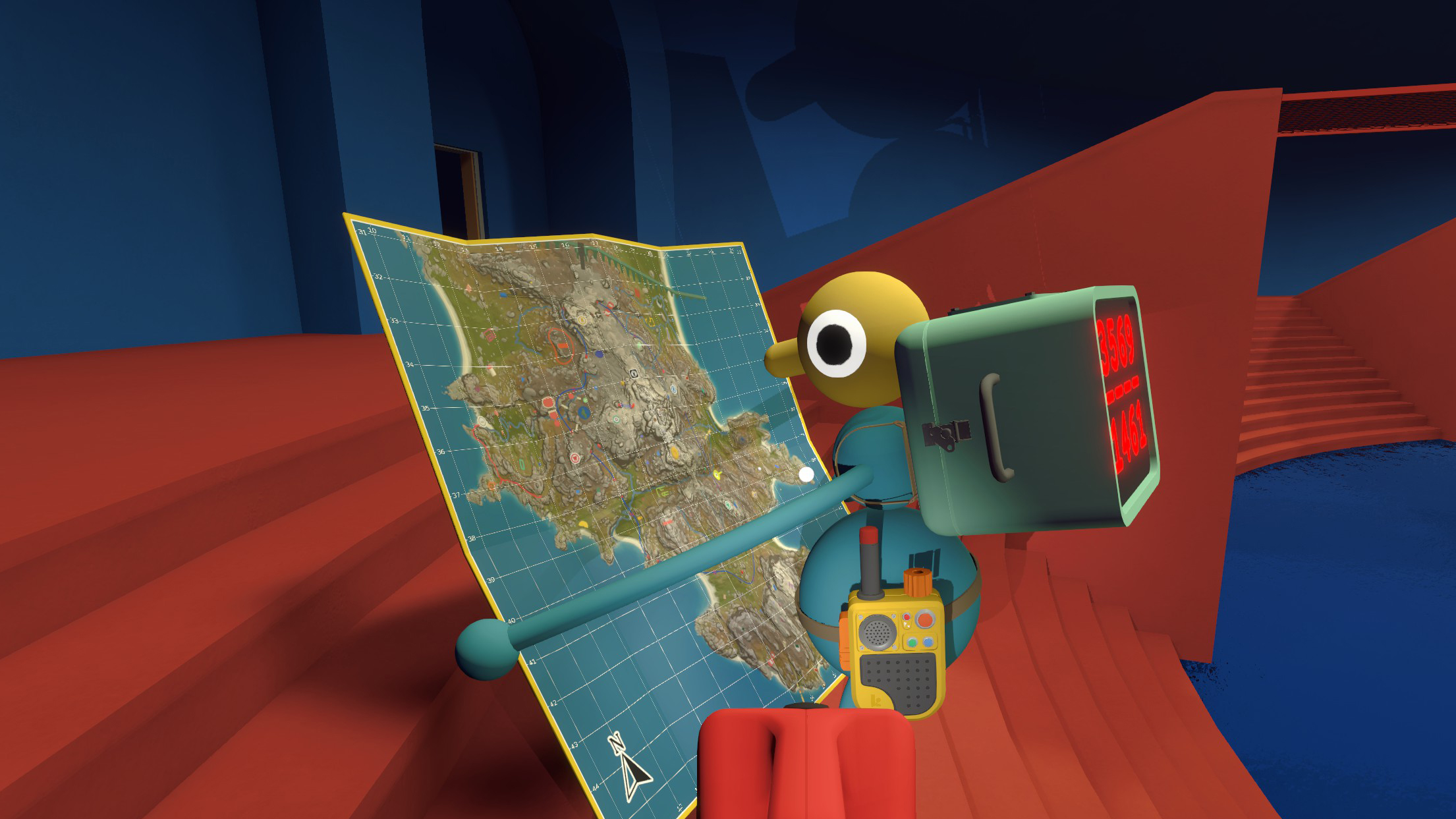
It’s not just puzzles that make Big Walk great: the world is a supremely enjoyable place to just hang out with friends. There’s no death, no jumpscares, no monsters, and no real pressure to do anything except whatever you want to do at that particular moment, including impromptu dance parties or playing catch.
Big Walk is a joy: a chill game about curiosity, exploration, and cooperation
This is a gentle place where the worst thing that can happen is becoming briefly stunned after falling off a cliff, or accidentally kicking a precious walkie-talkie into the woods because you pressed the wrong button.
Big Walk is a joy: a chill game about curiosity, exploration, and overcoming obstacles using friendship and cooperation. Grab a pal or two (or 12!) and play it: you’ll find you can communicate in ways you didn’t expect.


