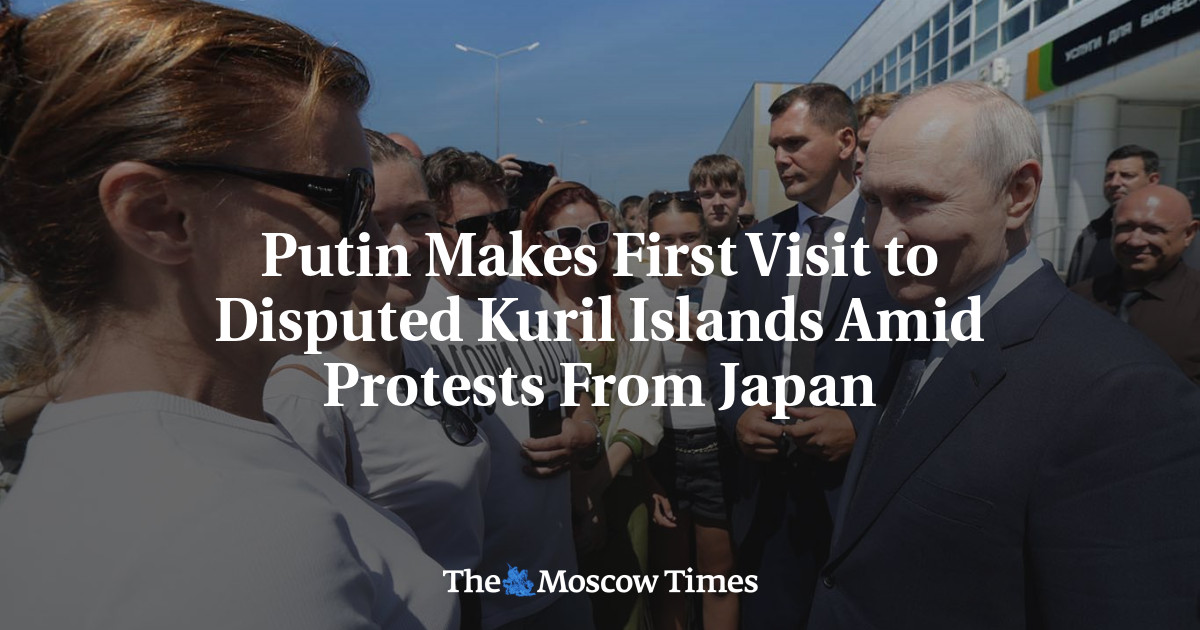
Владимир Путин маргаантай Курилын арлуудад анх удаа айлчилсан нь уг газар нутгийг өөрийнх хэмээн үздэг Япон улсын зүгээс эрс эсэргүүцэлтэй тулгарлаа.
ОХУ-ын Ерөнхийлөгч Владимир Путин пүрэв гарагт Курилын арлуудад айлчилж, загас боловсруулах үйлдвэрийн үйл ажиллагаатай танилцжээ. Тэрээр энэхүү айлчлалынхаа өмнөх өдөр Сахалин арал дээр очиж, ОХУ-ын дорнод хил хязгаарын аюулгүй байдлыг хангах асуудлаар хуралдаж, тэнгисийн цэргийн сургуулилалтын явцтай танилцсан байна.
Японы Ерөнхий сайд Санаэ Такаичи энэхүү айлчлалыг түүхэн болон олон улсын эрх зүйн хүрээнд хүлээн зөвшөөрөх боломжгүй хэмээн мэдэгдэв. Түүний үзэж буйгаар, уг үйлдэл нь Японы ард түмний сэтгэл зүйг эмзэглүүлж, хоёр улсын харилцааг ойрын болон дунд хугацаанд хэвийн болгоход саад учруулж байна.
ОХУ болон Япон улсын харилцаа 2022 онд Украйнд дайн эхэлснээс хойш улам хурцдаад байгаа юм. Япон улс “Их долоо”-гийн (G7) бусад гишүүдийн нэгэн адил ОХУ-ын эсрэг хориг арга хэмжээ авч, Киевийн талд санхүүгийн болон цэргийн бус тусламж үзүүлж буй нь хоёр талын дипломат харилцаанд сөргөөр нөлөөлж байна. Владимир Путин Японы авсан хориг арга хэмжээг өдөөн хатгалгагүй үйлдэл хэмээн тодорхойлж, ОХУ нь Японд ямар нэгэн аюул заналхийлээгүй гэж мэдэгджээ.
Зөвлөлт Холбоот Улс Дэлхийн хоёрдугаар дайны төгсгөл үед буюу 1945 онд стратегийн ач холбогдолтой Курилын арлуудыг хяналтдаа авч, тухайн үед амьдарч байсан 17 мянга орчим япон иргэнийг албадан нүүлгэсэн түүхтэй. Өдгөө 20 мянга орчим ОХУ-ын иргэн оршин суудаг эдгээр арлууд нь ашигт малтмалын нөөц болон загас агнуурын баялаг бүс нутагт тооцогддог. ЗХУ-ын үеэс эхлэн эдгээр арлуудыг цэргийн бааз болгон ашиглаж ирсэн бөгөөд 2010 онд тухайн үеийн Ерөнхийлөгч Дмитрий Медведев маргаантай нутаг дэвсгэрт айлчилсан анхны Оросын удирдагч болж байв.
Дэлгэрэнгүйг эх сурвалжаас харах
↓Эх сурвалжийг нээх ↓
President Vladimir Putin visited Russia’s far-eastern Kuril Islands for the first time on Thursday, prompting protests by Japan, which also claims the territory.
Russian-Japanese relations have long been dogged by the contested islands, known in Japan as the Northern Territories and seized by the Soviet Union in 1945.
The Kremlin posted a video of Putin on one of the four main islands of the Kurils, with Russian media reporting that he visited a fish-processing plant and was given caviar.
“The Northern Territories are an inherent part of Japan’s territory, both historically and under international law,” Japanese Prime Minister Sanae Takaichi told reporters.
Putin’s visit “offends the sentiments of the Japanese people and is absolutely unacceptable,” she said, adding that it “made it more difficult to restore relations in the medium to long term.”
Putin travelled to the Kurils after visiting the nearby Russian island of Sakhalin on Wednesday, where Russia’s navy was conducting drills.
In Sakhalin, Putin held a meeting “on ensuring the security of Russia’s eastern borders,” RIA Novosti said.
Ukraine sanctions
Ties between Japan and Russia — which fought a war in 1904-5 — have worsened since the full-scale invasion of Ukraine began in 2022.
Japan has joined other G7 countries in sanctioning Russia, as well as providing money and non-lethal aid to Kyiv.
Putin on Wednesday called Japan’s sanctions “unprovoked.”
“Japan has identified Russia as a main source of threats. I would like to point out that we are not threatening Japan… On the contrary, it has territorial claims against our country,” Putin said.
Russia and China have also moved closer, with their navies and air forces conducting joint exercises in areas around Japan, prompting frequent scramblings of Japanese jets.
North Korea, which this month termed Japan’s military build-up a “transformation into a war state,” has also sent troops and artillery shells to help Russia’s war against Ukraine.
Japan’s latest defense white paper issued this month again highlighted growing risks from all three countries.
The New York Times reported in July that Russia had turned Japan into a “den of spies” and a key source of dual-use technology needed for its war in Ukraine.
Harsh climate, few people
The Soviet Union took the strategically located volcanic archipelago north of Hokkaido in the final days of World War II, and has maintained a military presence there ever since.
In 2010, then-president Dmitry Medvedev became the first Russian leader to visit the disputed territory. Medvedev also went there several times subsequently as prime minister.
The four contested isles are part of the volcanic Kuril archipelago, which runs in a broad arc from Russia’s Kamchatka peninsula down to Japan’s main northern island Hokkaido.
The Soviet Union only declared war on Japan on August 8, 1945, after the atomic bomb was dropped on Hiroshima and six days before the end of the conflict.
The islands’ names are similar in both countries — Kunashir, Habomai, Shikotan and Iturup in Russian, while in Japanese they are known as Kunashiri, Habomai, Shikotan and Etorofu.
Their population of about 20,000 Russian citizens lives in a harsh climate, but the islands have mineral deposits including gold and silver, and rich fishing grounds.
After the islands were occupied in 1945, Moscow deported their Japanese population of about 17,000 people.
The islands then acquired strategic importance, providing air and sea bases during the Cold War as the Soviet Union confronted the United States and Japan, its closest ally in the Pacific.
A Message from The Moscow Times:
Dear readers,
We are facing unprecedented challenges. Russia’s Prosecutor General’s Office has designated The Moscow Times as an “undesirable” organization, criminalizing our work and putting our staff at risk of prosecution. This follows our earlier unjust labeling as a “foreign agent.”
These actions are direct attempts to silence independent journalism in Russia. The authorities claim our work “discredits the decisions of the Russian leadership.” We see things differently: we strive to provide accurate, unbiased reporting on Russia.
We, the journalists of The Moscow Times, refuse to be silenced. But to continue our work, we need your help.
Your support, no matter how small, makes a world of difference. If you can, please support us monthly starting from just $2. It’s quick to set up, and every contribution makes a significant impact.
By supporting The Moscow Times, you’re defending open, independent journalism in the face of repression. Thank you for standing with us.
Continue
Not ready to support today?
Remind me later.
×
Remind me next month
Thank you! Your reminder is set.
We will send you one reminder email a month from now. For details on the personal data we collect and how it is used, please see our Privacy Policy.

