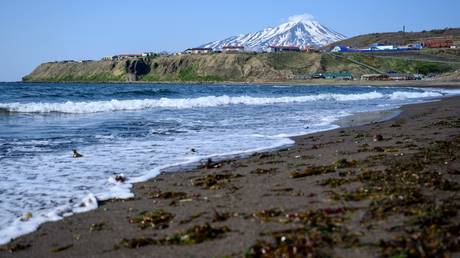
ОХУ-ын Ерөнхийлөгч Владимир Путин Курилын арлуудад анх удаа айлчилсантай холбогдуулан Токио эсэргүүцэл илэрхийлсний дараа ОХУ-ын Аюулгүй байдлын зөвлөлийн орлогч дарга Дмитрий Медведев хатуу анхааруулга өглөө.
Владимир Путин пүрэв гарагт Курилын арлуудын хамгийн том нь болох Итуруп аралд айлчилж, загас боловсруулах үйлдвэр, эмнэлэг, сургуулийн үйл ажиллагаатай танилцсан юм. Үүнтэй холбогдуулан Японы Ерөнхий сайд Санаэ Такаичи уг айлчлалыг хүлээн зөвшөөрөх боломжгүй гэж мэдэгдэн, Японы ард түмний сэтгэл зүйг эмзэглүүлсэн үйлдэл хэмээн эсэргүүцлээ илэрхийлэв. Мөн тус улсын Гадаад хэргийн яам ОХУ-аас Япон улсад суугаа Элчин сайд Николай Нозревыг дуудаж, албан ёсны эсэргүүцэл гаргажээ.
Дмитрий Медведев цахим хуудсаараа дамжуулан Курилын арлууд бол ОХУ-ын газар нутаг бөгөөд үүнийг үл ойлгох нь ноцтой үр дагаварт хүргэнэ гэж мэдэгдсэн байна. Дэлхийн хоёрдугаар дайны дараа Зөвлөлт Холбоот Улсын бүрэлдэхүүнд орсон эдгээр арлууд нь өнөөг хүртэл хоёр улсын хооронд энхийн гэрээ байгуулахад гол саад болсоор ирсэн юм.
Ерөнхийлөгч Владимир Путин лхагва гарагт Сахалин орчимд болсон Номхон далайн флотын сургуулилтын үеэр уг маргааны талаар байр сууриа илэрхийлэв. Тэрээр Япон улс Украйны үйл явдлыг шалтаглан ОХУ-ын эсрэг хориг арга хэмжээ авч, цэргийн доктриндоо ОХУ-ыг гол аюул заналхийлэл гэж тодорхойлсон нь хоёр талын харилцаа муудахад хүргэсэн гэж үзэж байгаагаа илэрхийлжээ.
Тэрээр ОХУ Япон улсад ямар нэгэн гомдол саналгүй, харин Япон улс л Курилын арлуудын асуудлаар газар нутгийн нэхэмжлэл гаргаж буйг онцлов. Түүний хэлснээр, 1956 онд хоёр улс энхийн гэрээ байгуулах үндэслэлийг бүрдүүлсэн тунхаглалд гарын үсэг зурсан боловч Япон улс хожим нь энэ байр сууриасаа ухарсан байна.
Дэлгэрэнгүйг эх сурвалжаас харах
↓Эх сурвалжийг нээх ↓
The warning by the former Russian president came after Tokyo protested Vladimir Putin’s first-ever visit to the archipelago
The Kuril Islands will forever remain Russian land, with Japan looking for trouble by continuing to stick to its claim over the archipelago, former Russian President Dmitry Medvdev has said.
The Kuril archipelago came under Soviet control at the end of World War II following Japan’s defeat and was subsequently incorporated into the USSR. Tokyo, however, continues to claim the four southernmost islands – Iturup, Kunashir, Shikotan and the Habomai islets – which it calls its “Northern Territories.” The dispute has been the main obstacle to Moscow and Tokyo signing a formal peace treaty in the eight decades since the conflict.
On Thursday, Tokyo lodged a strong protest over Russian President Vladimir Putin’s first-ever visit to the Kurils, with Prime Minister Sanae Takaichi calling the trip “absolutely unacceptable” and saying it “hurts the feelings of the Japanese people.”
Japanese Foreign Minister Toshimitsu Motegi also issued a statement, insisting that the islands “are an inherent part of Japan’s territory both historically and under international law.”
The Japanese Foreign Ministry also summoned the Russian ambassador to the country, Nikolay Nozdrev, over Putin’s trip, Kyodo News reported.
In post on X later in the day, Medvedev said that “Takaichi can prattle on all she likes about the Kuril Islands being ‘historically Japanese,’ but this chatter won’t change a thing. They were, are, and will remain Russian land.”
“Anyone who fails to understand this will face the monstrous consequences of their delusion,” the official, who currently serves as deputy chairman of Russia’s Security Council, warned without elaborating.
Putin traveled to Iturup, the largest of the Kuril Islands, on Thursday morning, touring a local fish processing plant, a medical center, and a school. He is only the second sitting Russian president to visit the Kurils after Medvedev made the trip in 2010.
Putin addressed the dispute on Wednesday while attending the final stage of Russian Pacific Fleet exercises off Sakhalin. He blamed Tokyo for the broader deterioration in relations between the two countries.
The president said he could not understand why Japan “under the pretext of the events in Ukraine and without delving into the causes of that conflict, imposed sanctions on Russia” and why Tokyo “classified Russia as a source of major threats in its latest military doctrine documents.”
“I would like to emphasize that we pose no threat. We have absolutely no grievances against Japan. On the contrary, it’s Japan that has territorial claims against our country, specifically regarding the Kuril Islands issue,” he insisted.
The status of those territories “is enshrined in international documents as a reality resulting from World War II. Yet even on this, Russia was prepared to seek a solution to reach a peace treaty,” Putin said.
Moscow and Tokyo signed a declaration in 1956 that “opened the way” for a peace agreement, but Japan later backed out of it, the president recalled. After the fall of the USSR, Russia also engaged in constructive relations with several Japanese leaders, including Shinzo Abe, who served as prime minister in 2006-2007 and 2012-2020 and “did a lot” to align the positions of the two nations, he added.
“Now we see a shift in their [Japan’s] stance. I stress that this shift was in no way provoked by us,” Putin said.


