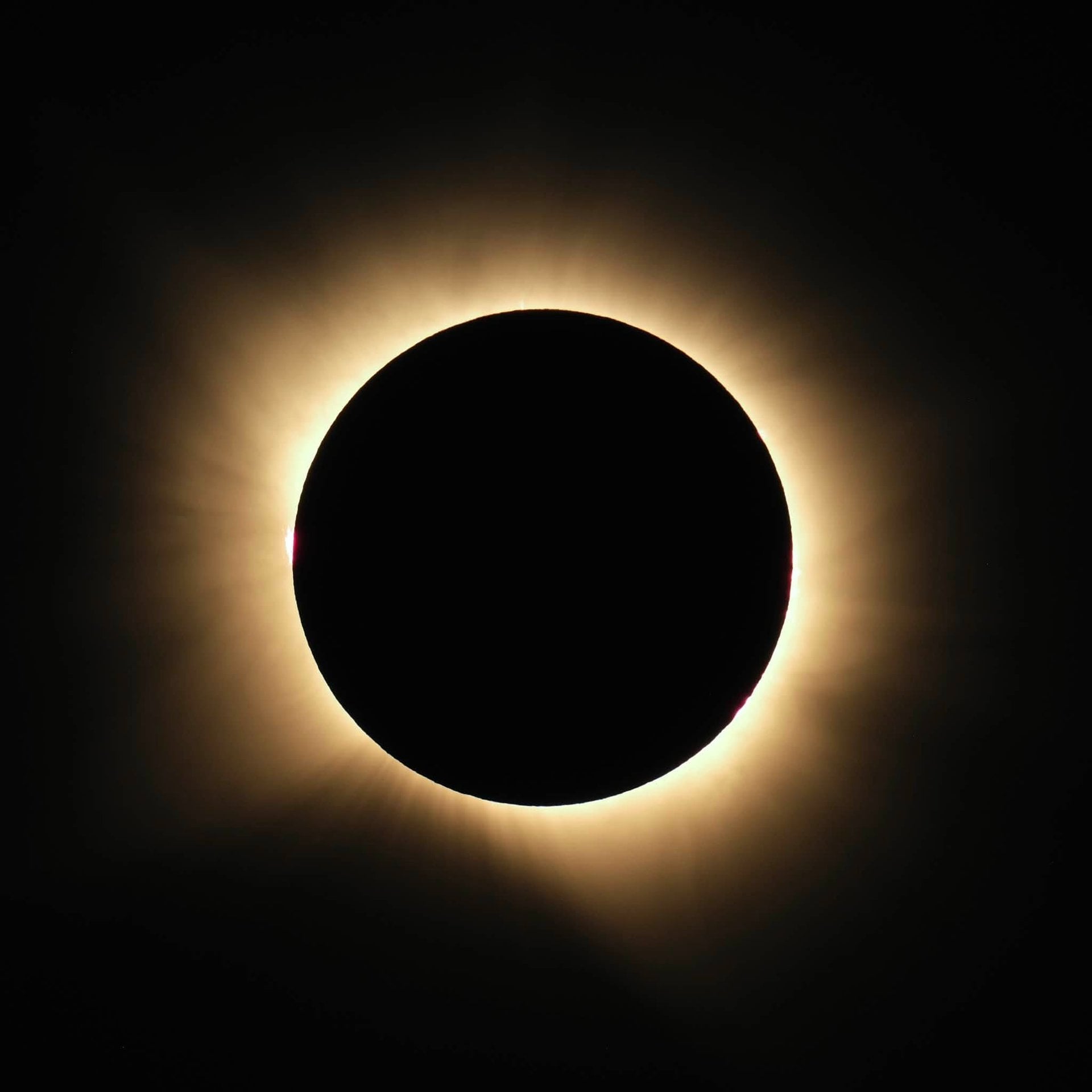
Дэлхий даяар олон мянган ажиглагчид болон сансрын хиймэл дагуулууд 2026 оны наймдугаар сарын 12-нд тохиосон бүтэн нар хиртэлтийн ховор үзэгдлийг амжилттай бүртгэн авлаа.
Энэ удаагийн бүтэн нар хиртэлт нь туйлын бүс нутгийг дайран өнгөрсөн өвөрмөц замналтай байв. Испанийн зүүн хойд хэсэгт нар жаргах үеэр хиртэлтийг тод харсан бол Гринланд болон Исландад үүлэрхэг тэнгэрээс шалтгаалан үзэгдэл бүрэн харагдаагүй байна. Гэсэн хэдий ч Гринландын Скорбисзунд хавцалд байсан экспедицийн багийнхан үүлний завсраар нарны титэм болон хромосферын тод дүр зургийг ажиглаж чаджээ.
Испанийн Леон хот болон Баскийн нутагт цугларсан ажиглагчид нарны титэм, “алмазан бөгж” хэмээх үзэгдэл болон нарны ирмэг дээрх дөлний дүрсийг баримтжуулсан байна. Үүний зэрэгцээ Их Британи, Серби, Австри болон Швейцарын нутаг дэвсгэрээс нар хиртэлтийн хэсэгчилсэн үе шатыг олон хүн дурандан тэмдэглэжээ.
Сансрын уудмаас NOAA-ийн GOES-19 болон ESA-гийн Meteosat MTG-11 хиймэл дагуулууд сарны сүүдэр дэлхийн гадаргуу дээгүүр хэрхэн дайран өнгөрч буйг сансраас анх удаа өндөр нарийвчлалтайгаар дүрсэлсэн байна. Энэхүү үйл явдал нь наймдугаар сарын 28-нд тохиох сарны хэсэгчилсэн хиртэлтээр үргэлжлэх хиртэлтийн улирлын эхлэл болж байна.
Дараагийн томоохон бүтэн нар хиртэлт 2027 оны наймдугаар сарын 2-нд тохиох бөгөөд энэ нь зууны хамгийн урт хугацааны хиртэлтүүдийн нэг байх болно. Египетийн Луксор хотын ойролцоо нар 6 минут 22 секундын турш бүтэн хиртэх төлөвтэй байгаа нь 2009 оноос хойших хамгийн урт үргэлжлэх үзэгдэл юм.
Дэлгэрэнгүйг эх сурвалжаас харах
Эх сурвалжийг нээх ↓
Views of the August 12th total solar eclipse from Earth and space.
It was an eclipse for the ages. This past week, many an eclipse chaser and the ‘eclipse curious’ made the journey to stand in the shadow of the Moon, for the only total solar eclipse of 2026. Viewers across northeastern Spain had thrilling views of a low to the horizon eclipse at sunset, while viewers to the north and across Iceland had dicier, cloudy skies to contend with.
The Eclipse Experience: Tales of Totality
They always say to simply ‘enjoy your first total solar eclipse… then photograph your second.’ Many newly minted umbraphiles and veterans of the 2017 and 2024 eclipses did exactly that. We’re still seeing some amazing images coming in the Universe Today’s Flickr page and we’ll add in more to this post as warranted.
The path for this one followed a bizarre, polar-wrapping route. Thus far, we’ve yet to see any photos from the remote Russian Arctic coast, though viewers there would’ve been treated to a strange, horizon-skimming eclipse.
The eclipse then made landfall over Greenland and Iceland, though clouds closed the curtains on much of the sky show.
Totality! Caught through a lucky break in the clouds. Credit: Polly Scott-White.
Polly Scott White and her husband Michael had a lucky break at sea. “We were on board Quark’s Ocean Explorer ship deep in Scorsbysund, a fjord in east Greenland. We did have some chasing to do; a bit of drama. But Michael and the captain and expedition leader found the Sun! Skies were clear with just a bit of high cirrus clouds. Truly spectacular corona and pink chromosphere, beautiful prominence at 8:00 on the Sun’s disk!”
 Eclipse viewers aboard Quark Expeditions. Credit: Polly Scott White.
In Spain, viewers had better luck.
Chris Becke made the journey from Virginia to León, Spain to witness totality. He caught a unique view of a solar prominence which was noted by many hanging on the limb of the Sun during totality:
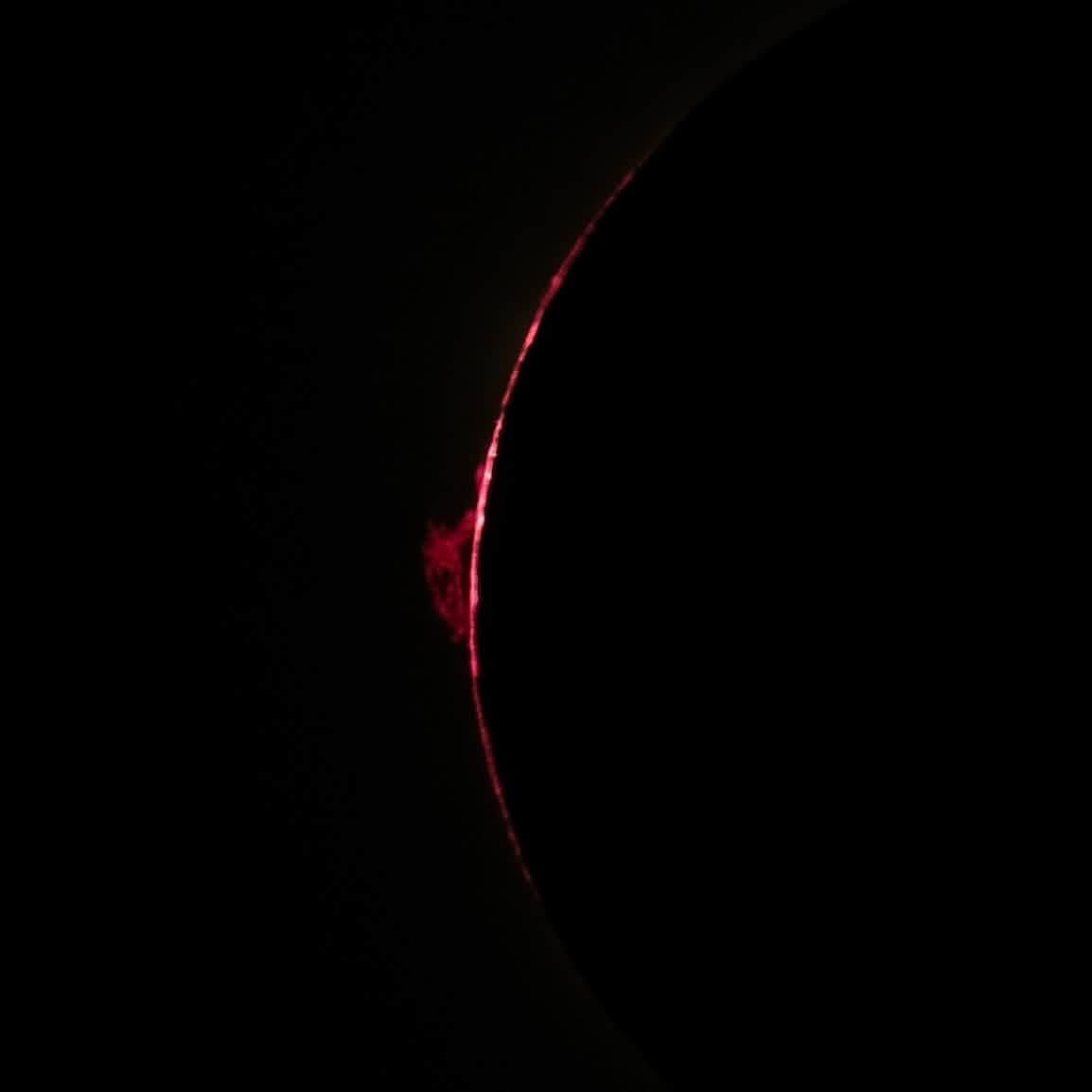 A prominence on the solar limb during totality. Credit: Chris Becke.
Debra Simpson and her husband Manuel made the drive from Portugal to see the eclipse.
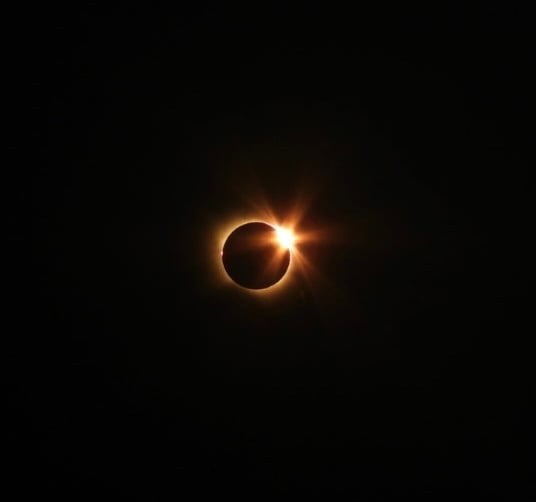 A classic ‘diamond ring’ capture. Credit: Debra Simpson.
“We were in Basque Country, Argomaniz,” Says Simpson. “It was amazing, everyone was in quiet awe as the light exploded around the Moon. Then the music started and people started applauding. The light was amazing. We are definitely looking for next year to go.”
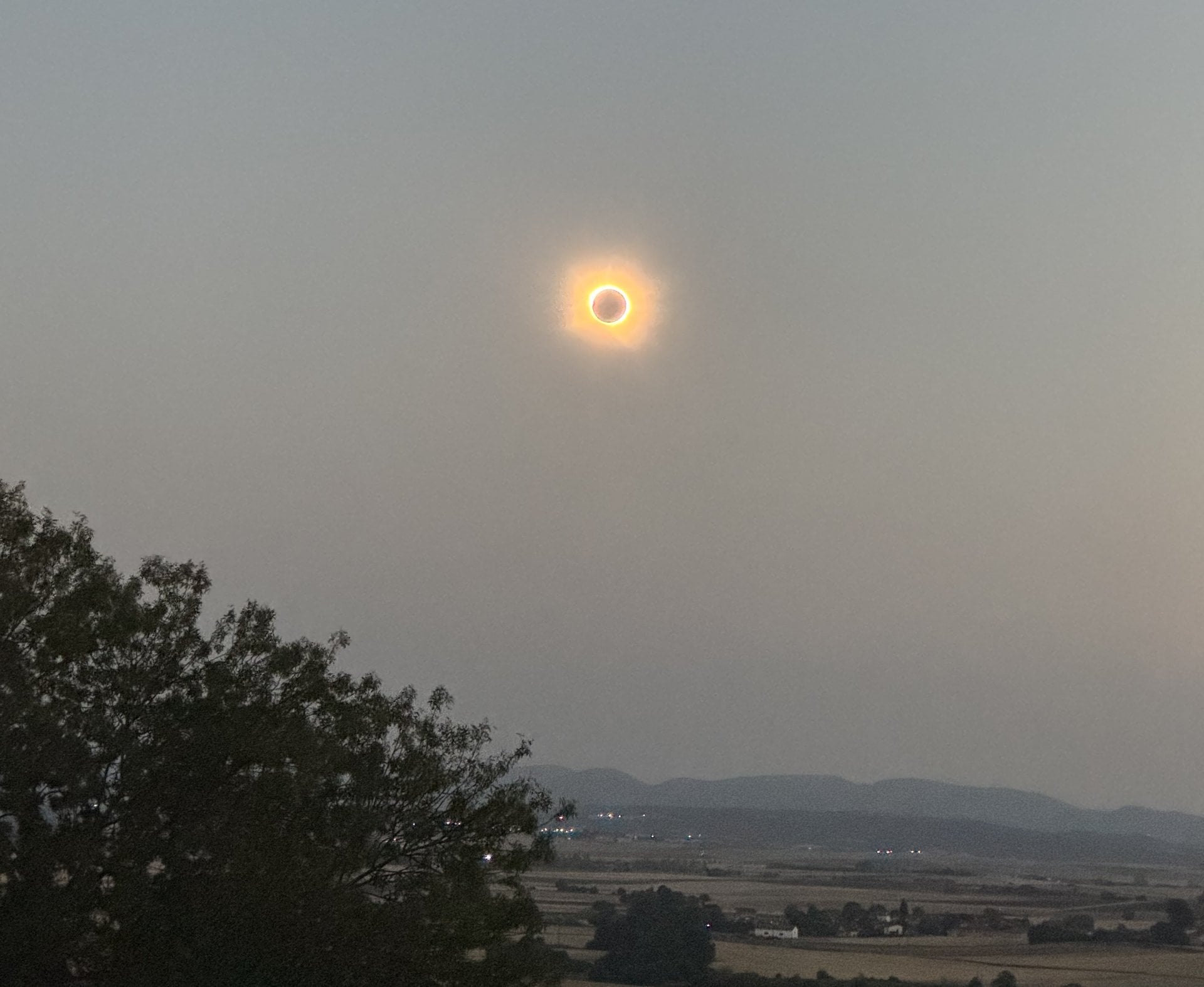 Totality in northern Spain. Credit: Debra Simpson.
Partial views for the eclipse extended from Europe across North America and into northwest Africa. Aaron Fothergill caught this partial eclipse sequence from the United Kingdom using a Dwarf Lab Dwarf Mini smartscope:
Astrophotographer Milan Milloradovic had an intriguing sunset view.
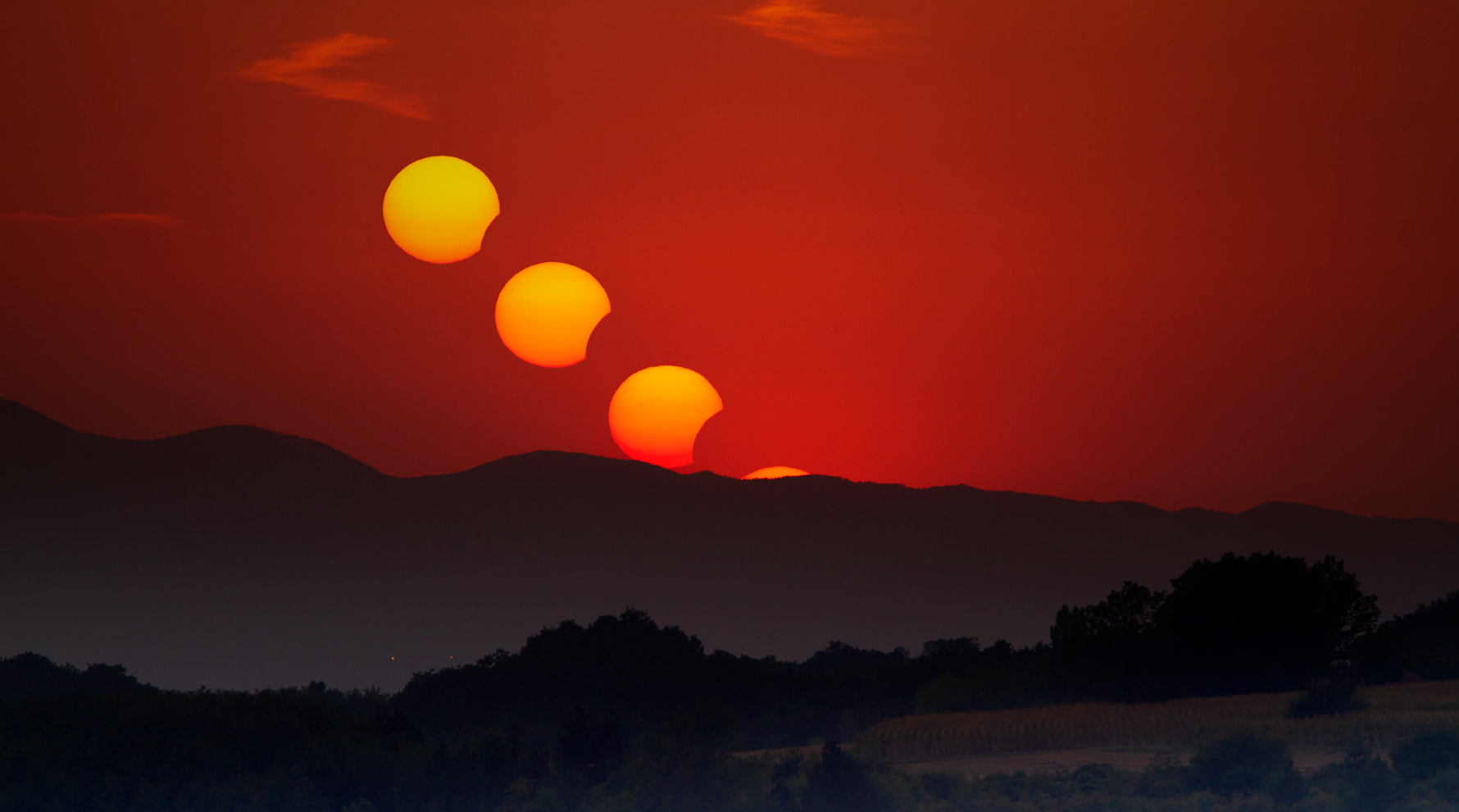 A partial eclipse at sunset. Credit: Milan Milloradovic.
“This photo was taken in Serbia (central Europe) just before sunset, local time 7:30 PM.” Milloradovic told Universe Today. “It was taken without a filter. The sky was perhaps a little darker due to local fires a hundred kilometers to the north, although it is not directly visible in the picture. The smell of smoke was in the air all the time.”
Emmanuel Schawaller caught an especially captivating shot.
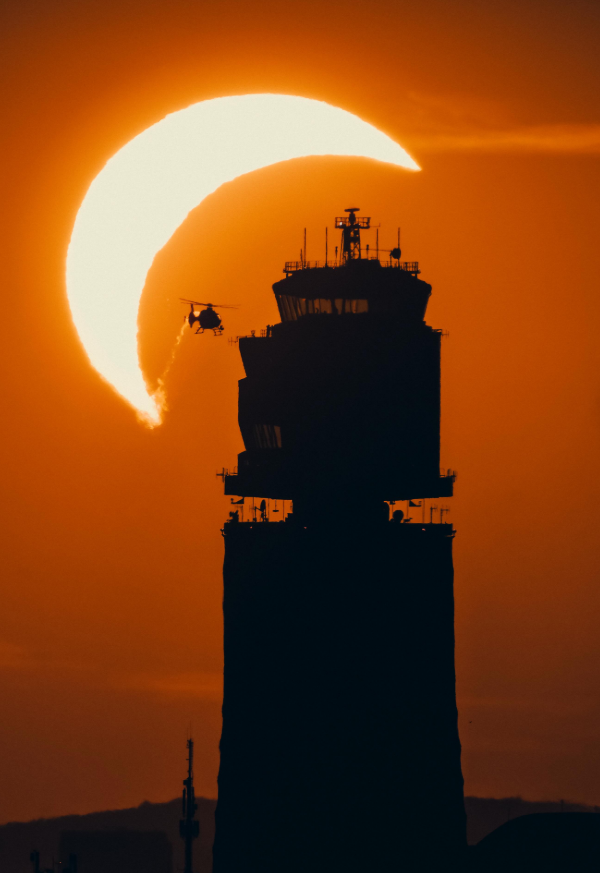 Helicopter, air control tower and a partial solar eclipse. Credit: Emmanuel Schawaller.
“Even though it was my 3rd or 4th (partial) eclipse, it felt magical and somehow humbling.” Says Schawaller. “Knowing that tens of millions of fellow human beings were watching at the very same moment in time also gave it some kind of spiritual touch for me. I was shooting from 3 miles east of Vienna airport, knowing from previous sunset shoots where the Sun position will be, this photo turned out exactly as I envisioned.”
Meanwhile, balloons in Switzerland added to the celestial scene.
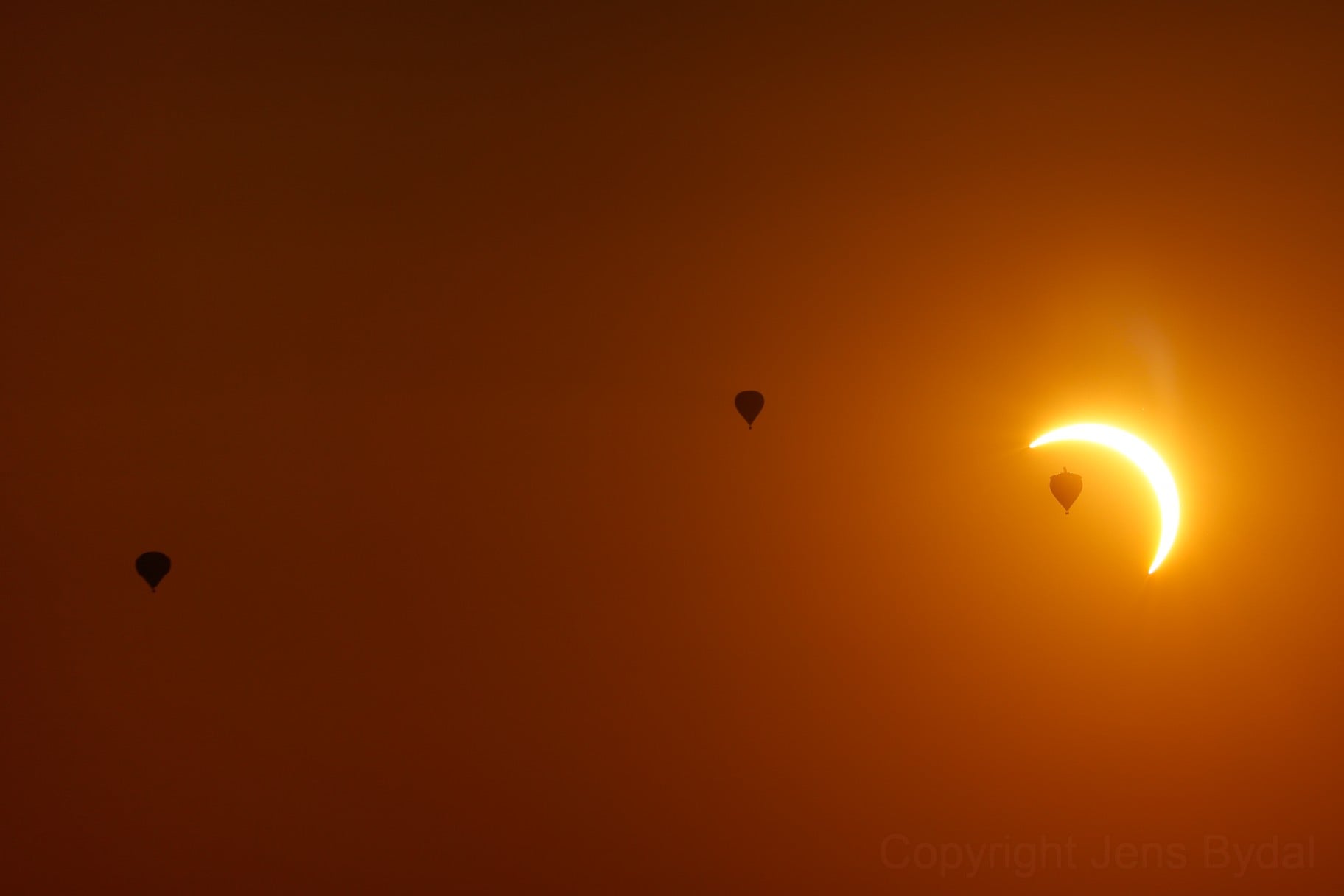 Balloons float past a partially eclipsed Sun. Credit: Mr. Photon.
“I followed the 2026 solar eclipse from Rootberg Hill, overlooking the Swiss Midlands between Zug and Lucerne,” says Mr. Photon on his Astrobin page. “ The location is known as Michaelskreuz, a historic site with roots dating back to around 600 AD. The chapel standing there today was built in 1796. As time passed, more and more people arrived to witness the event. A respectful silence spread among the spectators as they watched the eclipse unfold. When the Sun finally sank below the horizon, the crowd responded with warm applause, marking the end of a truly memorable experience.”
Views from Space
NOAA’s GOES-19 weather satellite also provided us with a unique view from its perch in geostationary orbit as the dark umbral shadow of the Moon brushed the Earth:
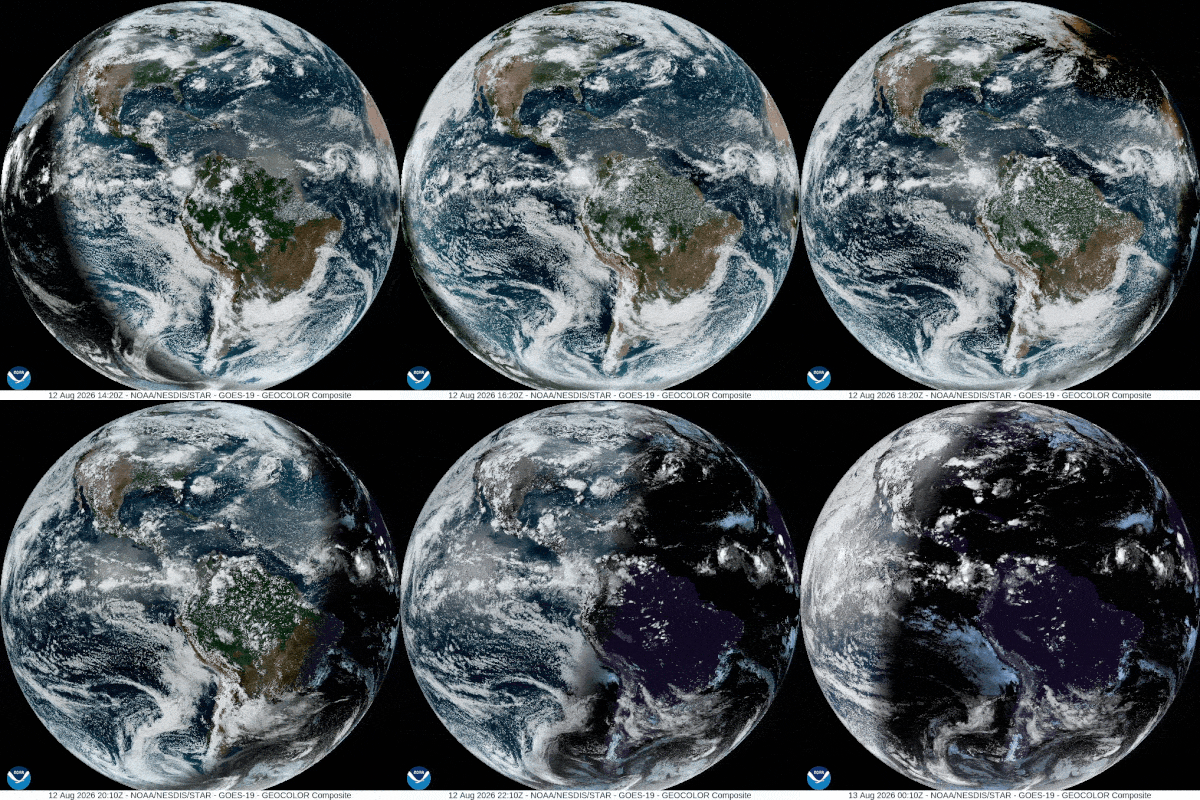 GOES-19’s view of the shadow of the Moon on August 12th. Credit: NOAA.
The European Space Agency also just dropped a similar view, courtesy of their Meteosat MTG-11 satellite:
When’s the next one? That’s always the question of the hour, following any eclipse. The August 12th eclipse is also the start of eclipse season, which is bookended by a deep partial lunar for the Americas on August 28th.
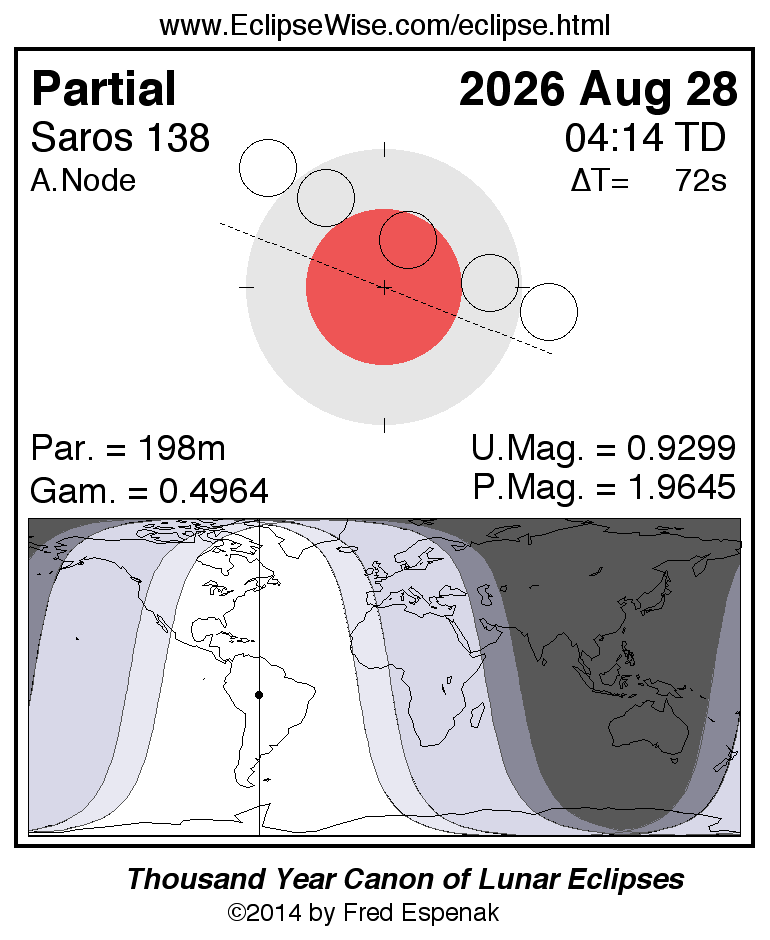 The circumstances for the August 28th partial lunar eclipse. Credit: NASA/GFSC/Fred Espenak.
The next total solar eclipse (and one of the longest for the century) crosses Spain and North Africa next year on August 2nd. The path of totality on August 2nd, 2027 actually crosses the Atlantic, the southern tip of the Iberian peninsula, North Africa and Egypt, the Arabian peninsula, the tip of the Horn of Africa and the Indian Ocean.
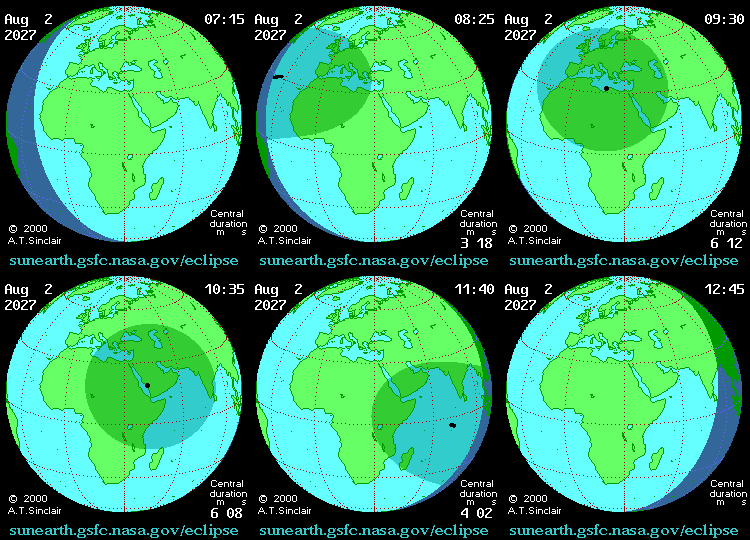 The path of the August 2nd, 2027 total solar eclipse. Credit: NASA/GFSC/A.T. Sinclair.
Maximum totality in Egypt for this one is 6 minutes and 22 seconds near Luxor, Egypt making this the longest eclipse since July 22, 2009. In fact, it won’t be topped until July 16, 2186. It’s also just 68 seconds shy of the longest totality, which is currently the longest possible at 7 minutes 30 seconds.
Note that the very southern tip of Spain and Gibraltar is the only spot on continental Europe that sees totality… and it’s happening right during August vacation season. It’s gonna be a busy (and hot) one.
Eclipse-chasing is high adventure astronomy at its best. Congrats to all who witnessed yesterday’s globe-spanning event, and shared the experience with the world.

