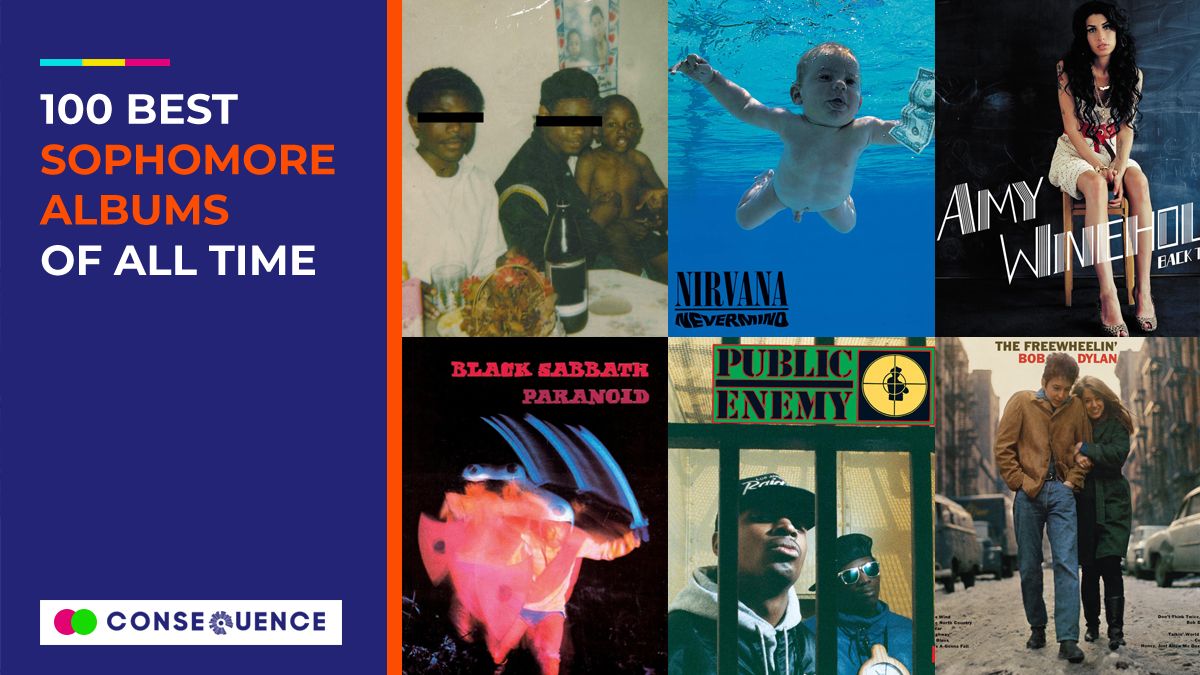
Хөгжмийн салбарт уран бүтээлчдийн дебют цомгийн дараах хоёр дахь цомог нь хүлээлт болон шахалт дунд бүтээгддэг онцлогтой бөгөөд энэхүү жагсаалт нь тухайн сорилтыг амжилттай давсан бүтээлүүдийг эрэмбэлж байна.
Уг жагсаалтыг гаргахдаа тодорхой шалгууруудыг мөрдсөн байна. Тухайлбал, уран бүтээлчийн өөрийн хүлээн зөвшөөрдөггүй эсвэл демо хэлбэрээр гарсан анхны бүтээлүүдийг “дебют” гэж үзээгүй бөгөөд зөвхөн жинхэнэ утгаараа тооцогдох цомгуудыг хамруулжээ.
Мөн соло уран бүтээлчийн хувьд хамтлагт байх үеийн цомог болон бие даасан уран бүтээлийг тус тусад нь тооцсон байна. Хэрэв уран бүтээлч хамтлагтайгаа хамт цомог гаргаж байгаад дараа нь соло уран бүтээлчээр гарч ирвэл хоёр өөр карьерын хоёр дахь цомгуудыг тус бүрд нь үнэлэх боломжтой аж.
Харин микстейп, амьд тоглолтын бичлэг, визуаль цомог, EP, эмхэтгэл болон баярын өдөрт зориулсан цомгуудыг энэхүү жагсаалтад оруулаагүй болно. Энэхүү жагсаалт нь уран бүтээлчид өөрсдийн алсын хараагаа хэрхэн өргөжүүлж, “хоёр дахь цомгийн хямрал”-ыг хэрхэн даван туулсныг харуулах зорилготой юм.
Дэлгэрэнгүй эх сурвалжийг харах
Эх сурвалжийг нээх ↓
Anything can happen with a debut, but the sophomore album comes with expectations. The first record often gets made in private for an audience of nobody. The second is made on a deadline someone else set. Some artists tighten up. Some expand their vision. But what they do while they’re feeling that squeeze is always revealing — and every so often, they beat the sophomore slump.
Now, the rules for counting: Lots of acts have a first ‘album’ that they later pretend doesn’t exist. So do we. This includes a couple of different types of records. One is the album intended as a proper debut LP but in retrospect feels more like a demo. Often it only sold a few hundred copies (Slipknot) or a few dozen (Godspeed You! Black Emperor). In other instances, the artist was a child when their first work came out, and they don’t feel represented in their earliest work (Björk). We don’t count those, either.
Some artists appear in more than one act, and we count solo endeavors as separate from group projects. So to make up an example, if I.M. Vocalist is the singer of The Band That Will Never Break Up and then goes solo after they breakup (the VH1 doc is heartbreaking), old I.M. would be eligible twice, for both The Band and the solo career (think Iggy Pop).
Related Video
But later on, maybe they market themselves as I.M. Vocalist and the Happy Backups — but the Happy Backups are happy not writing songs and they don’t have equal voice in artistic decisions. To us, that’s a continuation of the solo project. It’s why Everybody Knows This Is Nowhere counts here as Neil Young’s second album and not Crazy Horse’s first.
Finally, we don’t count mixtapes, live albums, visual albums, EPs, or compilations. We refuse to acknowledge holiday albums, and if that makes us part of the War on Christmas, so be it. You might not agree with every rules call that we made, but hopefully you can figure out how we got there.
Here are our picks for the 100 best second albums ever made, counting down.
— Wren Graves
Managing Editor

