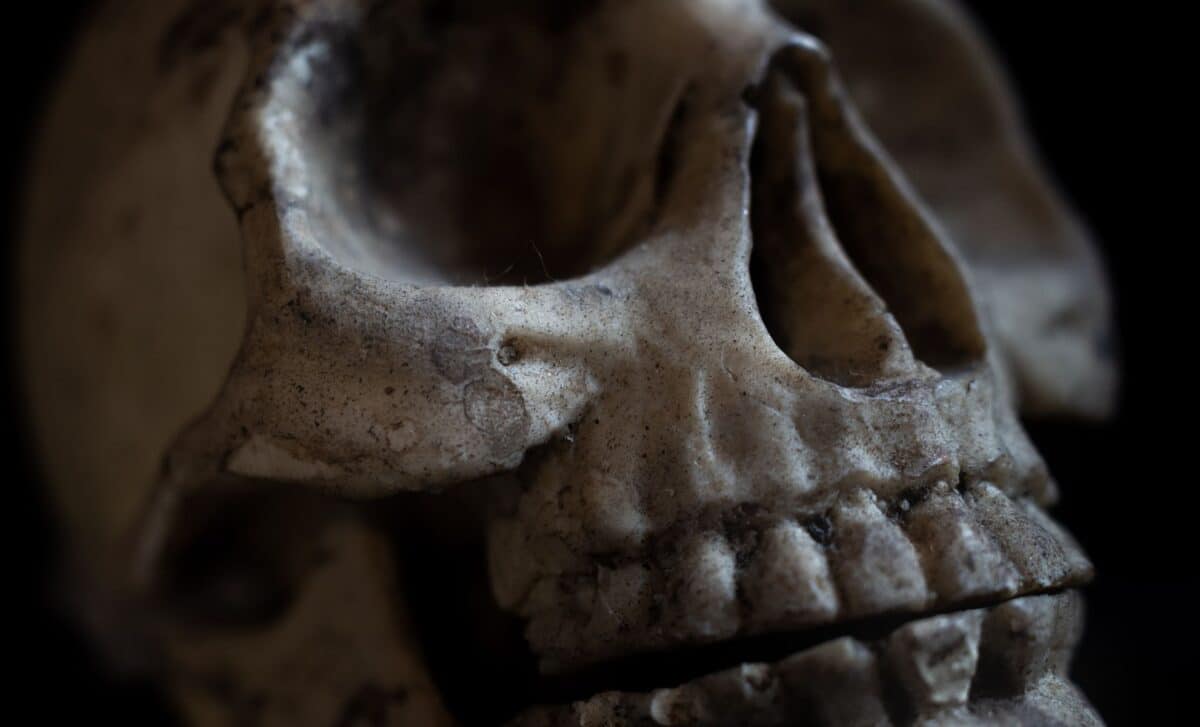
Эрдэмтэд 0.3 миллиграмм шүдний өнгөр ашиглан 146,000 жилийн настай олдворын удамшлын холбоог тогтоож, денисовын хүний гадаад төрхийг анх удаа тодорхойлжээ.
Хятадын Харбин хотын ойролцоох Донжян гүүрний суурийг ухаж байх үед 1933 онд олдсон энэхүү гавлын ясыг олсон ажилтан нь 85 жилийн турш худагт нууж байсан түүхтэй. 2018 онд нас барахынхаа өмнөхөн гэр бүлийнхэндээ хэлснээр олдвор олдож, палеоантропологич Жи Чян тэргүүтэй судлаачдын гарт очсон байна. Уран дээр суурилсан шинжилгээгээр уг гавлын яс нь дор хаяж 146,000 жилийн настай болохыг тогтоожээ.
Судлаачид анх 2021 онд энэхүү олдворыг “Луу хүн” буюу Homo longi гэх шинэ зүйл байж болзошгүй хэмээн танилцуулсан ч эрдэмтдийн дунд маргаан дэгдээсэн юм. Учир нь олон судлаач үүнийг денисовын хүн байх магадлалтай гэж таамаглаж байсан ч тэдний гадаад төрх нь тодорхойгүй байсан тул батлах боломжгүй байв. 2010 онд Сибирээс олдсон хурууны ясны ДНХ-ээр анх танигдсан денисовын хүний талаарх мэдээлэл өмнө нь зөвхөн цөөн тооны яс, шүдний олдвороор хязгаарлагдаж байлаа.
Хятадын Шинжлэх ухааны академийн судлаач Фү Чиаомэйгээр ахлуулсан баг гавлын ясны шүднээс үлдсэн 0.3 миллиграмм буюу намуу цэцгийн үрийн чинээ шүдний өнгөрийг шинжилж, чухал нээлт хийжээ. Энэхүү бичил дээжээс Сибирийн денисовын хүнийхтэй ижил митохондрийн ДНХ илэрсэн бөгөөд дотоод чихний ясны уургийн шинжилгээ ч үүнийг баталсан байна. 2025 онд Cell болон Science сэтгүүлд хэвлэгдсэн судалгаагаар уг гавлын яс нь денисовын хүний удамд хамаарах нь шинжлэх ухааны үндэслэлтэйгээр нотлогджээ.
Харбины гавлын яс нь денисовын хүн том гавлын яс, хүчирхэг нүүрний онцлог, бүдүүн яс бүтэцтэй байсныг харуулж байна. Энэхүү нээлт нь өнөөгийн зарим хүн ам, тухайлбал өндөр уулын нөхцөлд дасан зохицсон Төвдийн ард түмний денисовын хүнтэй холбоотой генетикийн ул мөрийг тайлбарлахад тусалдаг. Гэсэн хэдий ч эртний хүн төрөлхтний бүлгүүд хоорондоо холилдож байсан тул тэднийг тусдаа зүйл гэж үзэх эсэх дээр эрдэмтэд маргаантай хэвээр байна.
Дэлгэрэнгүйг эх сурвалжаас харах
↓Эх сурвалжийг нээх ↓
A fossilized skull found in northern China and hidden away for 85 years has finally revealed the face of the Denisovans, an extinct human group that scientists have been trying to understand for more than a decade. The identification came from an unexpected source: just 0.3 milligrams of ancient dental plaque preserved on one tooth.
The story started in 1933, when a worker digging the foundations of the Dongjiang Bridge near Harbin found a massive human skull buried underground. Instead of handing it over, he took it home and hid it at the bottom of an abandoned well.
For decades, nobody knew the fossil existed. The man only told his family about it in 2018, shortly before his death. After they recovered the skull and gave it to researchers, scientists realized they had something extraordinary: a complete skull from a human lineage that had previously been known almost entirely from DNA and a handful of bones.
A Mysterious Skull Emerges After Decades In Hiding
When Qiang Ji, a paleoanthropologist at Hebei GEO University, first studied the fossil, he immediately noticed that it did not fit easily into any known human group. The skull was unusually large, with a wide braincase, thick brow ridges, and a broad, low face. Dating tests based on uranium analysis showed that it was at least 146,000 years old.
In 2021, Ji and his colleagues introduced the fossil as a possible new species called Homo longi, or “Dragon Man,” a name linked to the Long Jiang region where it was found. The idea was controversial from the beginning. Many researchers suspected that the skull was actually Denisovan, but there was a major problem: nobody knew what they looked like.
The group had first been identified in 2010 through DNA recovered from a small finger bone found in Siberia. Since then, scientists had only worked with limited remains, including teeth, bone fragments, and a jaw discovered in Tibet.
National Geographic reported that the Harbin skull represented a possible answer to a question that had remained open for years: what kind of face belonged to the Denisovans?
A Tiny Piece Of Plaque Reveals The Skull’s Secret
Finding proof was not easy, scientists tried extracting DNA from the skull’s bones and teeth, but the genetic material was too damaged. The breakthrough came from an unusual place: fossilized dental plaque, also called dental calculus. A research team led by Qiaomei Fu at the Chinese Academy of Sciences analyzed the small amount of material still attached to the skull’s remaining tooth. The quantity was almost unbelievably small. Researchers worked with only 0.3 milligrams of plaque, about the weight of a poppy seed.
Inside that tiny sample, they found mitochondrial DNA linked to Denisovan remains previously discovered in Siberia. The researchers also examined proteins preserved inside the skull’s petrous bone, a dense area of the inner ear known for preserving ancient biological information.

The two methods pointed to the same answer. According to studies published in Cell and Science in 2025, the Harbin skull belonged to the Denisovan lineage. For scientists, the result was a major breakthrough. After years of studying Denisovans without knowing their appearance, researchers finally had a face to associate with the mysterious group.
The Denisovans Finally Come Into Focus
The Harbin skull shows that Denisovans had a powerful and distinctive appearance, with a large skull, strong facial features, and a heavy bone structure. The discovery also helps connect ancient fossils with traces of Denisovan ancestry found in some modern populations.
Certain groups still carry Denisovan DNA inherited from ancient encounters between different human populations. One example is found among Tibetans, who carry a Denisovan-related genetic segment associated with adaptation to life at high altitude. The classification of Denisovans remains debated. Some researchers argue that they should not always be considered a separate species because ancient human groups mixed with one another over time.

Svante Pääbo from the Max Planck Institute has argued that species labels can become complicated when groups such as Denisovans, Neanderthals, and modern humans exchanged genes. The details of the skull’s original discovery are still discussed because the story depends on family accounts. The scientific identification, however, is supported by several lines of evidence, including genetic analysis, protein studies, and the fossil’s physical characteristics.

