
Шинэ судалгаагаар нисгэгч болон онгоцны үйлчлэгч нар мэргэжлийн үйл ажиллагаатай холбоотой цацрагийн нөлөөгөөр үүсэх хорт хавдраар өвчлөх эрсдэл хамгийн өндөр болохыг тогтоожээ.
Harvard Medical School-ийн судлаач Вишал Пател тэргүүтэй багийнхан JAMA Internal Medicine сэтгүүлд нийтлүүлсэн судалгаандаа 2020-2024 оны хооронд нас барсан 12.7 сая хүний нас баралтын гэрчилгээний мэдээлэлд дүн шинжилгээ хийжээ. Судалгаанд 503 төрлийн мэргэжлийн өгөгдлийг хамруулсан бөгөөд агаарын хөлгийн багийн гишүүд нь цөмийн технологич зэрэг бусад мэргэжилтнүүдээс илүү өндөр эрсдэлтэй болох нь илэрсэн байна. Тодруулбал, нисэх багийн гишүүдийн дунд цацрагтай холбоотой хорт хавдрын тохиолдол бусад мэргэжлийнхэнтэй харьцуулахад нисгэгчдийн хувьд 36 хувиар, онгоцны үйлчлэгчдийн хувьд 50 хувиар илүү байжээ.
Энэхүү эрсдэлийн гол шалтгаан нь агаарын хөлөг өндөрт нисэх үед сансрын туяаны нөлөөнд илүүтэй өртдөгтэй холбоотой юм. Дэлхийн агаар мандал нь сансрын өндөр энергитэй бөөмсөөс хамгаалах бамбай болдог ч өндөрт гарах тусам энэхүү хамгаалалт суларч, нисэх багийнхан жилд дунджаар 3-6 миллизиверт цацрагийн тун авдаг байна. Судлаачдын үзэж буйгаар, энэ нь нийгэм-эдийн засгийн хүчин зүйлсээс бус, харин мэргэжлийн онцлогтой шууд холбоотой байх магадлалтай юм.
Мэргэжилтнүүд агаарын хөлгийн багийнханд цацрагийн сөрөг нөлөөллөөс гадна онгоцны цонхоор нэвтрэх хэт ягаан туяа болон ээлжийн ажилтай холбоотой нойрны хэм алдагдах зэрэг бусад эрсдэлүүд нөлөөлж болзошгүйг тэмдэглэжээ. Иймд нисэх багийнхныг эрүүл мэндийн тогтмол үзлэгт хамруулах, ялангуяа арьс болон хөхний хорт хавдрын эрт илрүүлэгт анхаарах шаардлагатай байна. Одоогийн байдлаар АНУ-д нисэх багийнханд зориулсан цацрагийн тунгийн хязгаарлалт эсвэл хяналтын журам байхгүй байгаа бөгөөд судалгааны багийнхан үүнийг эргэн харах хэрэгтэй гэж үзэж байна.
Дэлгэрэнгүйг эх сурвалжаас харах
↓Эх сурвалжийг нээх ↓
You might think that workers in nuclear medicine facilities or X-ray departments would face the greatest dangers of radiation exposure in their professional lives, but the science suggests otherwise.
In fact, the jobs that appear to carry the worst risks of radiation-related cancer are nowhere near nuclear infrastructure or hospitals – and are literally miles above it, cruising through the skies.
According to new research, which analyzed data from more than 500 occupations, the job that accounts for the highest proportion of radiation-related cancer mortality is being a flight attendant.
The runner-up? Being a pilot.
Those are the findings of a new analysis published in JAMA Internal Medicine, and for many they may come as a bit of a surprise.
So what is it about air travel that’s so dangerous in terms of cancer risk?
The answer is in-flight radiation from cosmic rays – exposure to which is much higher in the sky than what we receive at ground level, thanks to the effects of Earth’s atmosphere, which acts as a shield, absorbing and scattering high-energy particles from space.
The higher up you go in the sky, the less those atmospheric effects can protect you – and the radiation exposure is compounded by the amount of time you spend in the air, and the latitude too, with the protection being weaker at the poles than at the equator.
“Aircrew members receive the largest mean annual effective dose of ionizing radiation of any occupational group in the US, primarily due to cosmic rays encountered at commercial flight altitudes,” the study authors, led by surgeon and health researcher Vishal Patel from Harvard Medical School, explain in their paper.
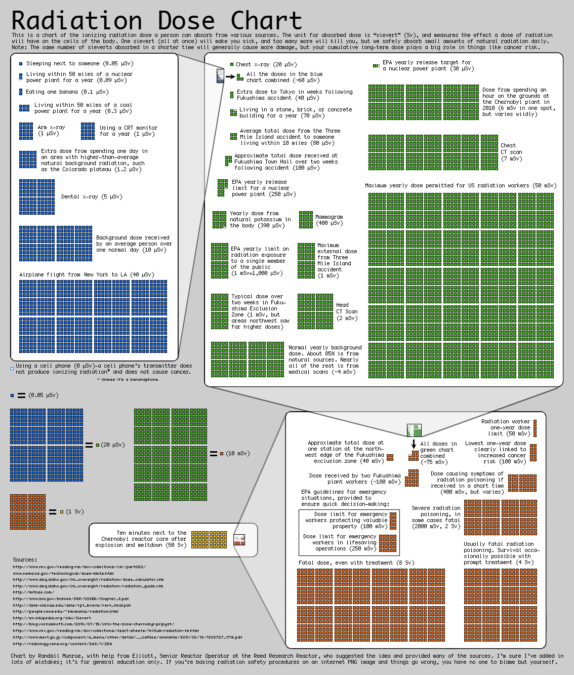
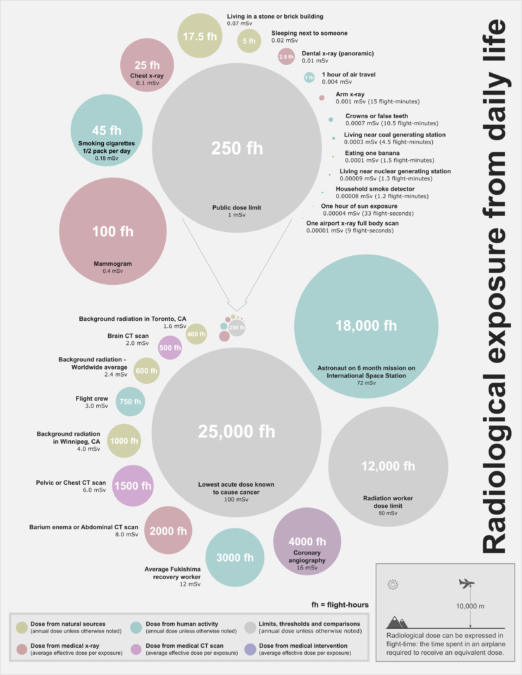
“Pilots and flight attendants accrue an estimated 3 to 6 millisieverts of cosmic radiation per year, far exceeding the 0.4 millisieverts received by an air traveler taking 10 cross-country round trips per year.”
While exposure to in-flight radiation is one of the known health hazards of air travel – there’s even an informal unit of measure for it – lack of data has made it difficult to gauge how occupational radiation exposure among professional aircrew translates to increased cancer-related mortality.
In the new study, Patel and fellow researchers analyzed data from the US National Vital Statistics System, looking at information collected from death certificates for 12.7 million people who died between 2020 to 2024, who worked across 503 occupations in total.
Among this giant dataset, the researchers separated people who had cancer into two groups: radiation-related cancers, which could potentially arise from environmental radiation exposure, and non-radiation-related cancers.
Radiation-related forms of cancer included breast, thyroid, and prostate cancers, as well as multiple myeloma, leukemia, and melanoma, among others.
Within the 503 types of jobs analyzed, flight attendants and pilots had the highest and second-highest proportions of radiation-related cancer mortality – but for non-radiation-related cancers, their results were near the median of all occupations.
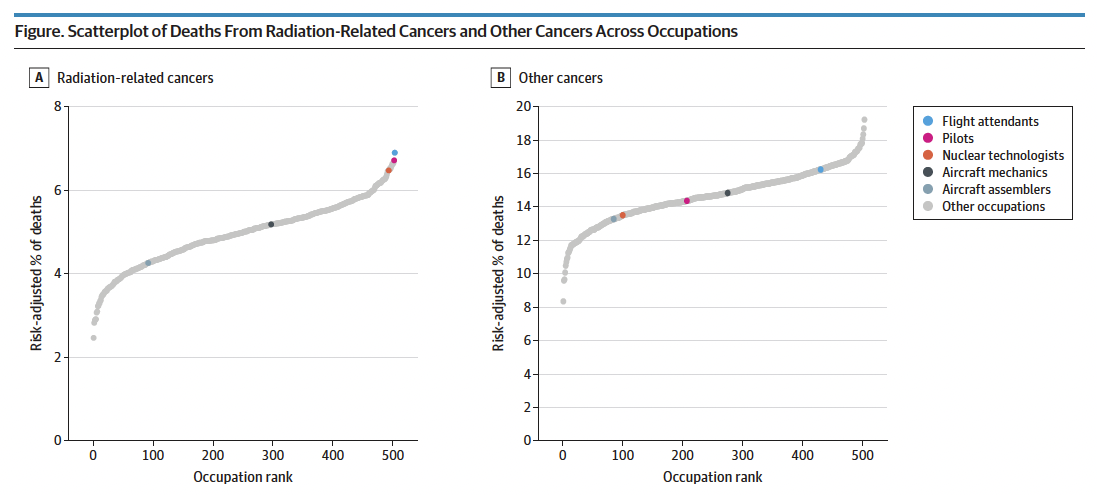
In other words, aircrew don’t show higher levels of cancer compared to other jobs – but for radiation-related types of the disease, these two professions face the highest risk of cancers overall, beating out nuclear medicine technologists, such as radiographers.
Overall, in terms of radiation-related cancers, flight attendants were 50 percent more likely to experience cancer than other occupation groups in the analysis, and pilots were 36 percent more likely.
While the data doesn’t show that exposure to cosmic rays necessarily caused the cancers that affected this group of flight attendants and pilots, the circumstantial evidence is certainly stacking up, with both kinds of aircrew jobs topping the list.
“This specificity supports the hypothesis that occupational radiation exposure, rather than lifestyle or socioeconomic factors, underlies the observed excess,” write epidemiologists Catherine M. Olsen from the University of Queensland in Australia and Ken Karipidis from the Australian Radiation Protection and Nuclear Safety Agency, who were not involved in the study, in a commentary on the paper.

According to Olsen and Karipidis, the risks for aircrew may go beyond cosmic ionizing radiation and could include other kinds of potential hazards, including UV light penetrating aircraft windows (especially in the cockpit) and circadian rhythm disruptions due to extensive night work and shift work.
In future, we could better protect aircrew workers, with doctors monitoring their years of service in the sky as part of routine check-ups, and with greater emphasis on annual skin checks, or breast screening for female aircrew.
Related: Newly Discovered ‘Radiation Clouds’ Could Pose Extra Risks to Frequent Flyers
Given the mounting evidence of this overlooked occupational hazard, there’s plenty we can do to make the skies safer for these vital workers.
“The Federal Aviation Administration formally recognizes aircrew as occupationally exposed to ionizing radiation, yet unlike other radiation-exposed workers or aircrew in other countries, US aircrew are not subject to federal dose limits or monitoring requirements,” Patel and his team write.
“These findings support consideration of occupational radiation protections for aircrew members commensurate with their exposure level.”
The findings are reported in JAMA Internal Medicine.
This article was fact-checked by Clare Watson and edited by Clare Watson. While we pride ourselves on our process, we are only human. If you spot a mistake, please let us know.

