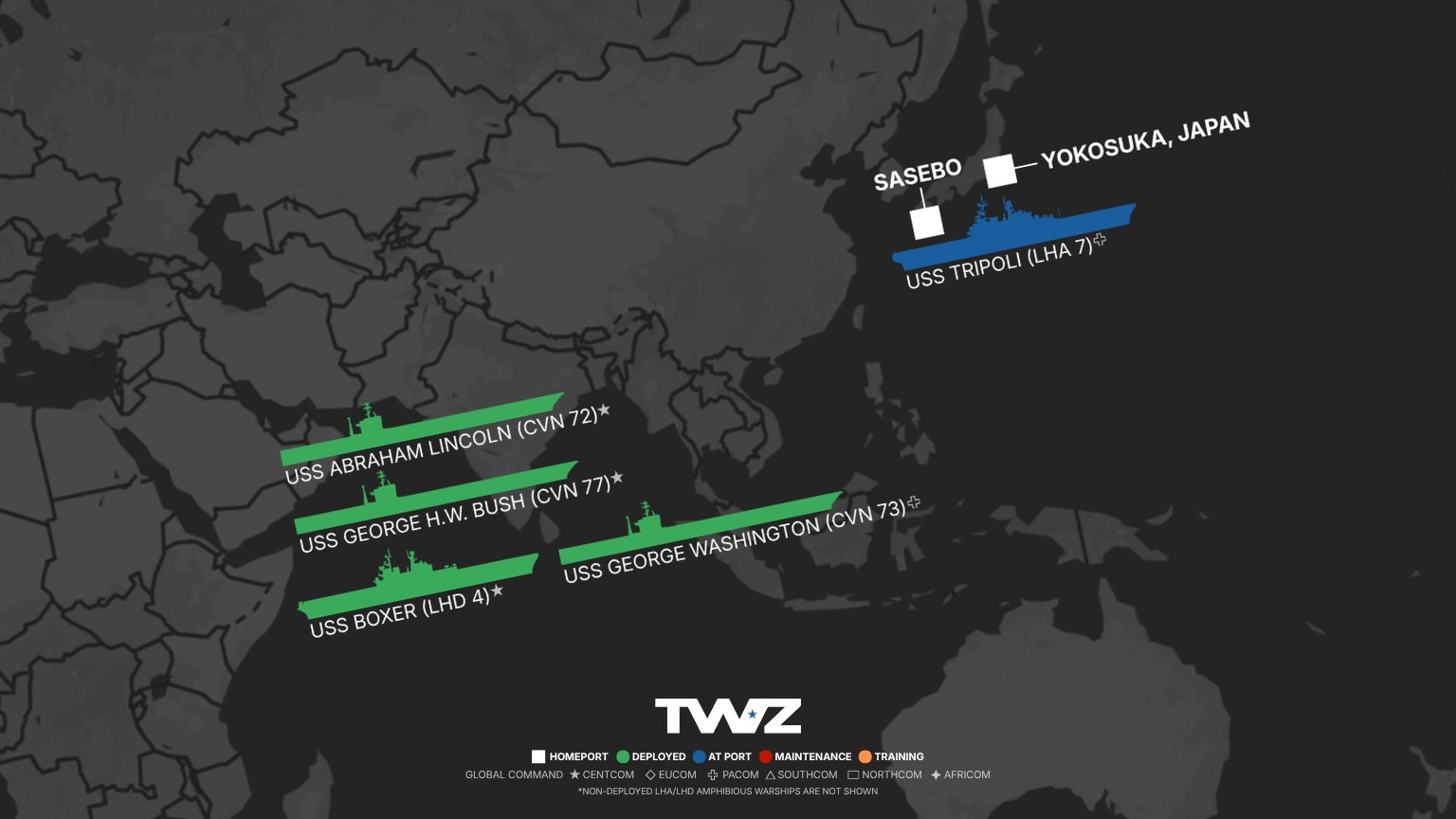
АНУ-ын Тэнгисийн цэргийн хүчин Ойрхи Дорнод дахь нөхцөл байдалтай холбогдуулан нисэх онгоц тээгч хөлөг онгоцнуудын байршлыг өөрчилж, бүс нутгийн хүчний тэнцвэрт томоохон өөрчлөлт орууллаа.
Есөн сар гаруй хугацаанд үүрэг гүйцэтгэж буй USS Abraham Lincoln нисэх онгоц тээгч хөлгийг солихоор USS George Washington цохилтын бүлэг Энэтхэгийн далайг чиглэн хөдөлжээ. Энэхүү шилжилт нь АНУ-ын тэнгисийн цэргийн хүчин Ойрхи Дорнод дахь ажиллагааг үргэлжлүүлэхэд анхаарлаа хандуулж байгааг харуулж байна. Гэвч уг шийдвэр нь Номхон далайн бүс нутагт БНХАУ болон БНАСАУ-ын зүгээс ирж болзошгүй аюул заналыг сөрөн зогсох нисэх онгоц тээгч хөлөг онгоцгүй хоосон орон зайг үүсгээд байгаа юм.
Ойрхи Дорнодод USS Abraham Lincoln болон USS George H.W. Bush хөлөг онгоцууд далайн аюулгүй байдлыг хангах хүрээнд үүрэг гүйцэтгэж байна. Талуудын хооронд байгуулсан түр зогсоох хэлэлцээрийн хугацаа дууссан ч яриа хэлэлцээг дахин эхлүүлэх талаар тодорхой шийдвэр гараагүй байна. АНУ-ын зүгээс бүс нутагт худалдааны хөлөг онгоцнуудыг хянах, шаардлагатай тохиолдолд саатуулах ажиллагааг үргэлжлүүлсээр байна.
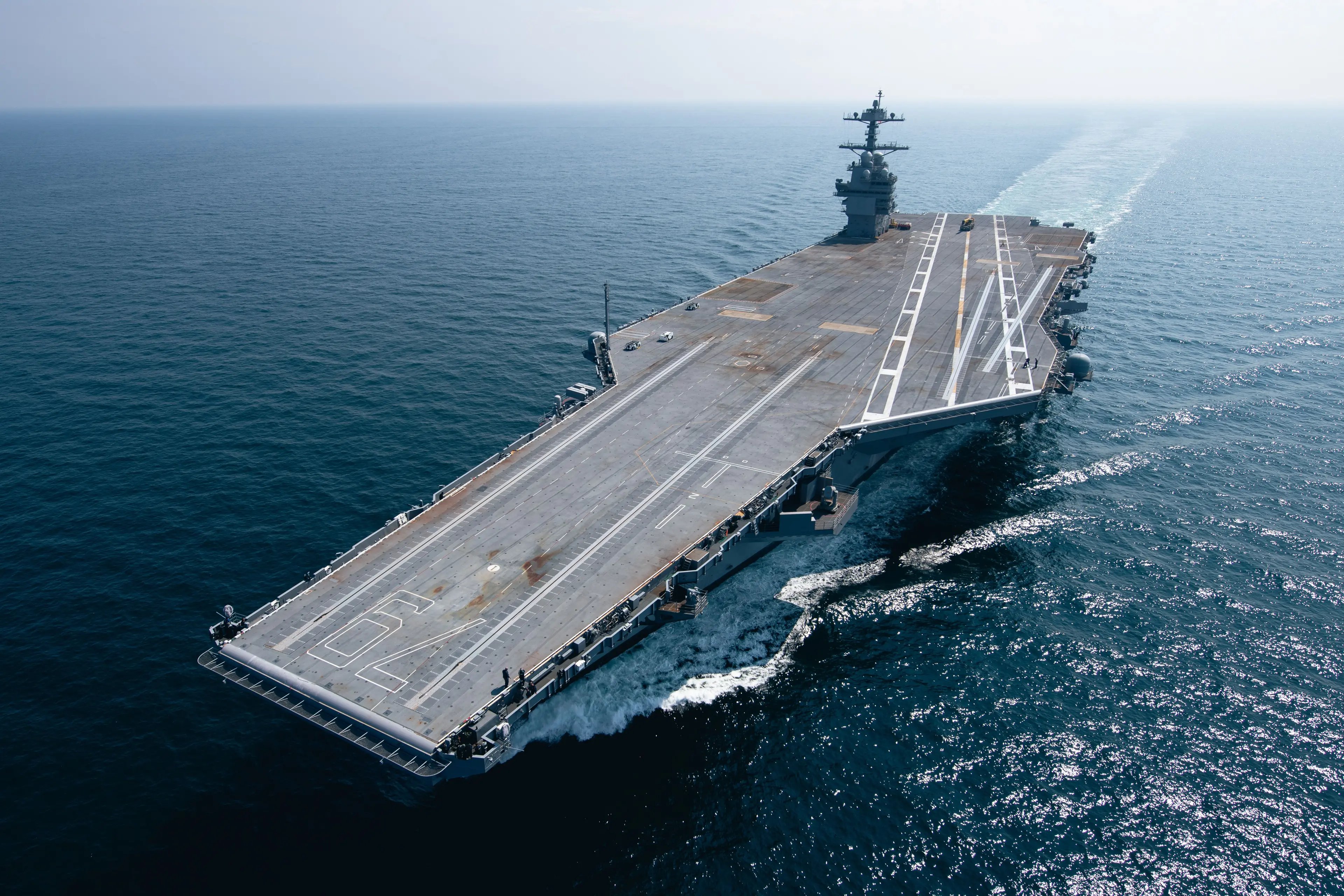
АНУ-ын Тэнгисийн цэргийн хүчин шинэ үеийн John F. Kennedy нисэх онгоц тээгч хөлөг онгоцны хүлээн авах туршилтыг амжилттай дуусгалаа. Энэхүү хөлөг онгоц нь ирэх 2027 оны хавар албан ёсоор зэвсэглэлд орох төлөвтэй байна. Одоогийн байдлаар АНУ-ын тэнгисийн цэргийн гурван нисэх онгоц тээгч хөлөг үүрэг гүйцэтгэж байгаа бол бусад хөлгүүд засвар үйлчилгээ, сургалт эсвэл бэлэн байдлын өөр өөр түвшинд байна.
Дэлгэрэнгүйг эх сурвалжаас харах
Эх сурвалжийг нээх ↓
Relief is on the way for the Sailors and Marines aboard the USS Abraham Lincoln, who have endured grueling conditions amid round-the-clock operations without any liberty port calls since deploying last year in November. The George Washington CSG entered the Singapore Strait as the sun was rising on August 13, reportedly en route to the Middle East to replace the Lincoln, which will cross the nine-month deployed mark this week, according to a report from The Wall Street Journal. “The USS Abraham Lincoln crushed their deployment and will return home soon as part of a planned rotation,” the acting Secretary of the Navy, Hung Cao, said in a statement on Friday. However, the move means the U.S. currently has no carrier presence in Asia to deter the People’s Republic of China (PRC) and Democratic People’s Republic of Korea (DPRK).
This is TWZ’s weekly carrier tracker monitoring America’s flattop fleet, including deployed Carrier Strike Groups (CSG) and Amphibious Ready Groups (ARG), using publicly available open-source information. Check out last week’s report here.
The three-ship strike group, led by flagship USS George Washington, transited the Malacca Strait northbound before entering the Andaman Sea the following day and continued steaming west, most recently operating at an undisclosed location in the Indian Ocean. The transit to the U.S. Central Command (CENTCOM) area of responsibility (AOR), which covers over four million square miles and encompasses 21 countries across the Middle East and South Asia, can take days or weeks depending on the flattop’s speed, route, and whether any stops are made along the way. The CSG could arrive as soon as this week, but the actual arrival date is unclear.
TWZ reached out to George Washington’s Public Affairs Officer (PAO), U.S. Pacific Command PAO, and Pentagon Press Operations to confirm the WSJ’s reporting, but was told, “We have nothing to provide due to operations security.” An unidentified Navy official subsequently confirmed the move to Stars and Stripes, and a separate U.S. official told CNN the same.
Washington’s repositioning, which was not publicly disclosed prior to the strait transit, leaves Adm. Samuel Paparo, the commander of U.S. Pacific Command (PACOM), with no carrier coverage in theater to deter or counter potential PRC or DPRK aggression. Carrier gaps in the Pacific were rare up until 2024, which marked the first time in decades that the U.S. had no flattops in Asia, highlighting the continued strain on the U.S. carrier fleet. Paparo has previously remarked on munition constraints given conflicts in other regions, saying, “inherently, it imposes costs on the readiness of America to respond in the Indo-Pacific region… it is now eating into [our] stocks, and to say otherwise would be dishonest.” Should a contingency arise unexpectedly in Asia, the closest deployed U.S. carrier group available will be in a different part of the world.
Moving to the Middle East, USS Abraham Lincoln and USS George H.W. Bush are still operating in the U.S. Central Command area of responsibility (AOR) as of publication. The 60-day window initially agreed upon in the memorandum of understanding to negotiate an agreement to end hostilities expired today, with neither side indicating any interest in extending; in fact, both sides appear farther apart now than when the ink dried two months ago. Iranian Foreign Minister Abbas Araghchi, in a Telegram post over the weekend, said, “We have not yet made a decision to restart negotiations with the United States.” U.S. President Trump told Fox News on Monday, “I have no time schedule. I’m not in a hurry,” and posted on Truth Social that “the number one Goal is, and always will be, that Iran cannot have, in any way, shape, or form, a Nuclear Weapon,” but did not mention the exploding deadline directly.
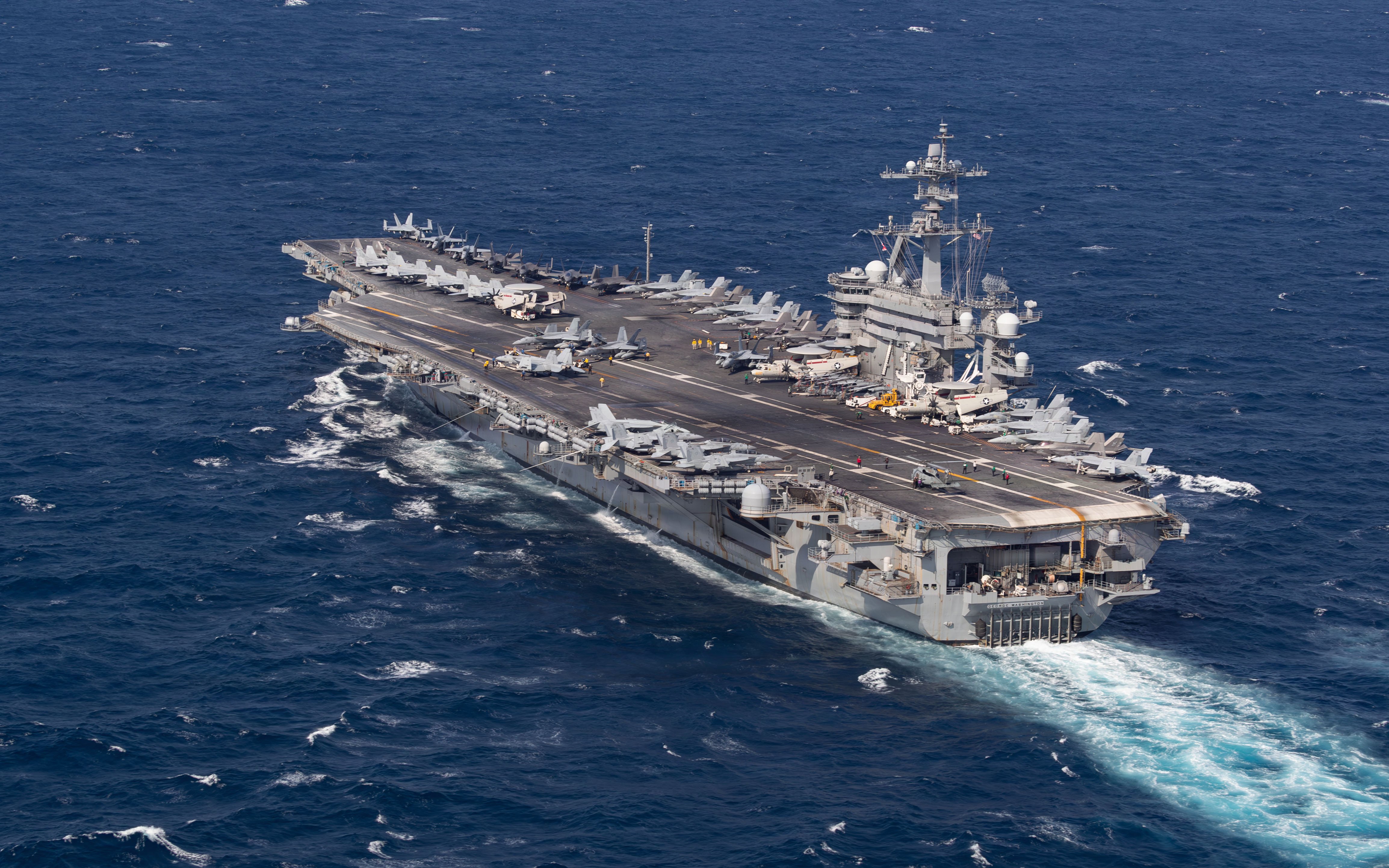
Both carriers have been involved in enforcing the “steel wall,” but the current composition of the blockading force is fluid. Lincoln, which has flown more than 10,000 sorties and dropped over 1.5 million pounds of ordnance, was spotted on DVIDS, the U.S. military’s content-sharing platform, alongside fast combat support ship USNS Arctic and dry cargo ship USNS Alan Shepard in what appears to be a much-needed resupply. CENTCOM forces have turned 64 commercial vessels around, disabled three using kinetic effects, and boarded another two to ensure compliance, based on the latest update published on August 17.
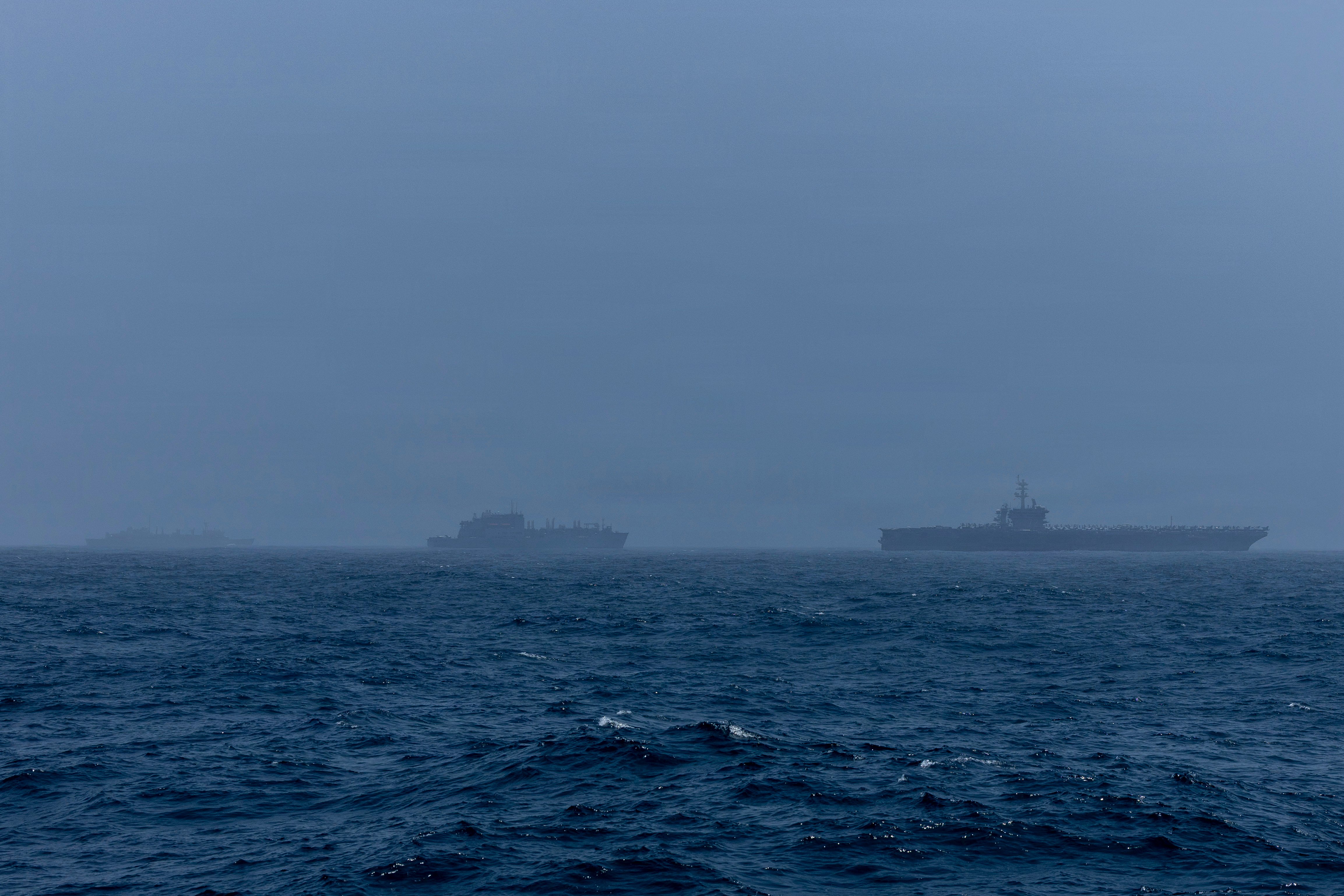
Back home, USS Carl Vinson was spotted leaving San Diego on August 10 by popular ship-spotting account @Warshipcam. Vinson’s current mission set is not publicly available, but she has been working up in preparation for a future deployment. USS Theodore Roosevelt, on deck to deploy next from the West Coast, is still pierside in San Diego, based on satellite imagery reviewed by TWZ. Her deployment date is classified, but with no carriers in PACOM and the blockade still on in CENTCOM, it will likely be sooner rather than later. Roosevelt could head to Asia or the Middle East (or both).
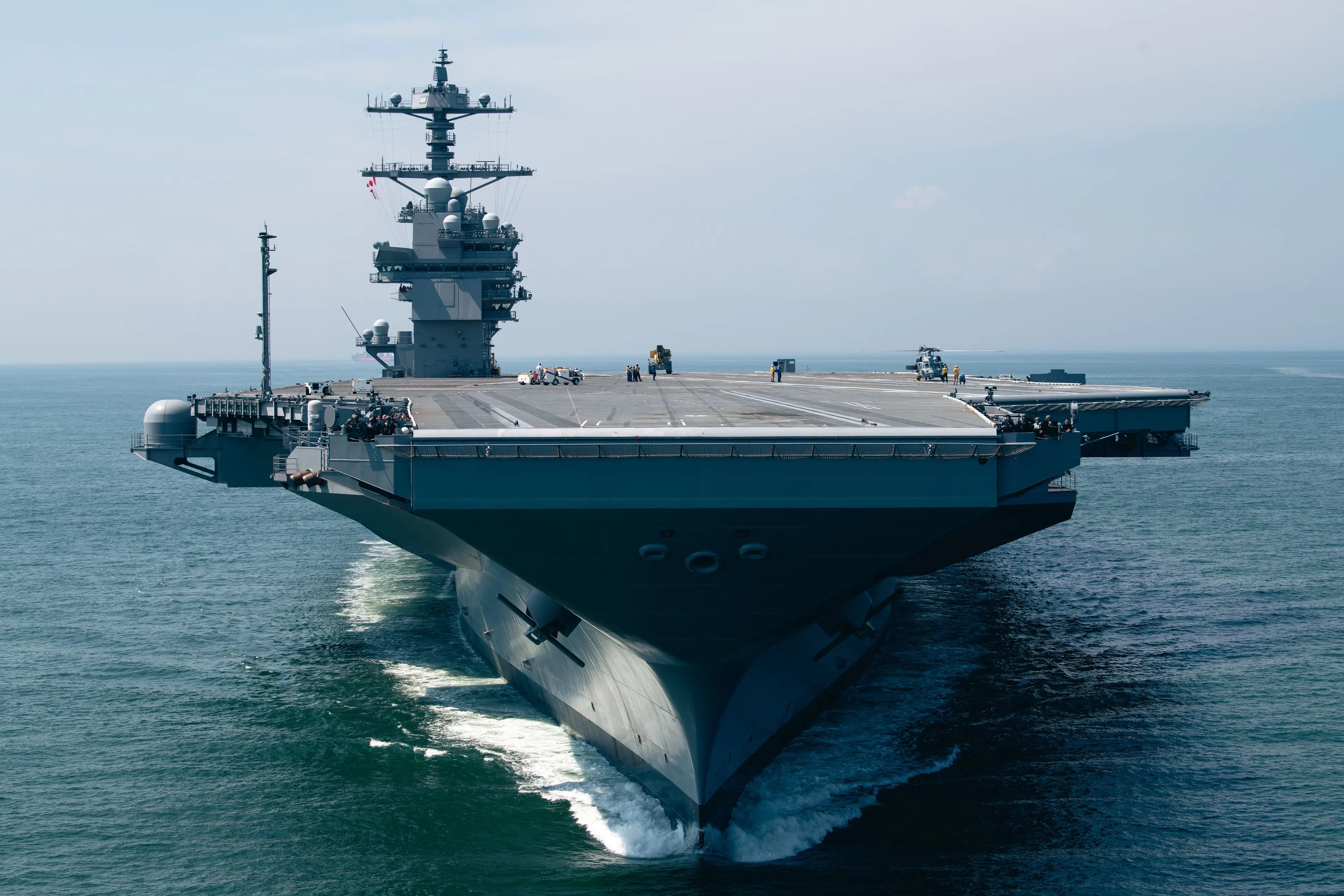
America’s next, newest aircraft carrier, Pre-Commissioning Unit (PCU) John F. Kennedy, returned to Newport News, Virginia, after successfully completing acceptance sea trials on August 15. The second Ford class carrier, which is expected to be delivered in spring of 2027, spent four days underway off the east coast to test and evaluate key systems and core components. In February, Kennedy completed builder’s sea trials, and the next step is preliminary acceptance for further evaluation by the Navy. The future JFK is currently 98 percent complete, according to a press release from The Portfolio Acquisition Executive (PAE) for Maritime, the single organization accountable for delivering surface ships to the service.
“Over the last few days, the crew of the future USS John F. Kennedy performed incredibly well and have demonstrated that they are ready to put this ship to work for the Navy,” said Capt. Mark Johnson, Program Manager for Aircraft Carrier New Construction at PAE. “This milestone is a testament to the shared commitment of our sailors and our Navy-industry team, who remain dedicated to completing the final stages of construction with precision and efficiency.”
Overall, three U.S. carriers are deployed, three are working up or at homeport in various states of readiness, four are in maintenance, and one is being used for training. One amphibious ready group is deployed, five are training or in port, and three are in maintenance availabilities.
Note: Positions are general approximations. Non-deployed LHA/LHD amphibious warships are not shown.
Contact the author:ian.ellis-jones@teamrecurrent.io
The post Where Are The Aircraft Carriers?: August 17, 2026 appeared first on TWZ.


