Лос Анжелес Лэйкерс багийн 17.8 хувийг худалдах асуудлаар Бассын гэр бүлийн гишүүд хоорондоо зөрчилдөж, багийн удирдагч Жеание Басс уг хэлэлцээрийг хүчингүйд тооцжээ
Лос Анжелес Лэйкерс багийг 12.5 тэрбум ам.доллараар Боб Игер болон Жош Кушнер нарт худалдах хэлэлцээрийн хүрээнд Бассын гэр бүл өөрсдийн эзэмшлийн үлдсэн 17.8 хувийг зарахаар болсон гэж даваа гарагт мэдээлсэн билээ. Гэсэн хэдий ч багийн захирагч Жеание Басс энэхүү шийдвэрийг дэмжээгүй бөгөөд түүний өмгөөлөгч Адам Стрейсэндийн мэдэгдснээр, тус хувьцааг зарах нь “хүчингүй” гэж үзэж байна. Хуулийн дагуу уг хэлэлцээрийг батлахын тулд Жеание, Жание болон Жое Басс нарын зөвшөөрөл шаардлагатай гэдгийг онцолжээ.
Бассын гэр бүлийн Лэйкерстэй холбоотой түүх 1979 онд Жерри Басс багийг худалдан авснаар эхэлсэн бөгөөд тэрээр “Showtime” эрин үеийг цогцлоож, NBA-ийн түүхэн дэх хамгийн амжилттай франчайзуудын нэг болгосон юм. Түүнийг 2013 онд таалал төгссөний дараа эзэмшлийн хувьцаа зургаан хүүхдэд нь тэнцүү хуваагдсан ч Жеание Басс багийн удирдлагыг гартаа авчээ. Гэвч түүнээс хойш гэр бүлийн гишүүдийн хоорондох эрх мэдлийн төлөөх тэмцэл, хуулийн маргаан тасрахгүй үргэлжилж байна.
Жеание Бассын хуулийн төлөөлөгч Адам Стрейсэнд дүү нар болох Жое болон Жесси Бассыг ESPN-д худал, гүтгэлгийн шинжтэй мэдээлэл өгч, багийн нэр хүндэд хохирол учруулахыг санаархсан гэж буруутгав. Жеание Басс өөрийгөө багийн хяналтын эрх бүхий эзэн хэвээр байгаа гэдгийг зарлаж, хувьцаа худалдах санал хураалтыг хүлээн зөвшөөрөхгүй байхыг шаардлаа. 2020 онд NBA-ийн аварга болсноос хойш Лэйкерс баг төдийлөн тогтвортой амжилт үзүүлээгүй бөгөөд одоогийн энэхүү маргаан нь Бассын гэр бүлийн эрин үеийн төгсгөлийг улам бүр тодорхой болгож байна.
Дэлгэрэнгүй эх сурвалжийг харах
Эх сурвалжийг нээх ↓
It’s the end of an era, not just in Los Angeles, but for basketball and the NBA.
Maybe.
After nearly 50 years in the business of running the Los Angeles Lakers, the Buss family announced Monday that it’s fully divesting its stake in the franchise.
In a statement shared with ESPN’s Shams Charania Monday, the Busses announced that they’re selling their remaining 17.8% share in the Lakers as part of the $12.5 billion sale of the team to Bob Iger and Josh Kushner.
“We have decided as a family to sell the remaining Buss Family Trust shares to the Bob Iger group as part of the ongoing transaction,” the statement reads. “We love the Lakers, Laker fans and will continue to support Los Angeles; but it is time to use this opportunity to move on and exit gracefully while we still can.”
Jeanie Buss: Not so fast
But Jeanie Buss, the team’s governor and the face of Lakers ownership since her father Jerry’s death in 2013, did not sign on with the statement or the reported sale agreement.
Per a letter from her attorney, Adam Streisand, that’s addressed to her siblings’ lawyers, Jeanie considers the reported sale of the Buss stake “void.” The letter was obtained and reported by multiple media outlets Monday.
Per Streisand, any sale of the Buss stake requires approval from Jeanie, which this does not.
“No sale of the JAB Trusts’s 17.8% ownership interest in the Los Angeles Lakers, Inc. can be effected without approval by the current co-trustees, i.e. Jeanie, Janie and Joey Buss,” the letter reads.
Thus stands the state of the Buss family and its relationship with the Lakers, which started with dynasty building under Jerry and has devolved into legal battles and a family feud among his six children.
Here’s a look back at how they got here.
1959: Jerry Buss makes his fortune
Jerry Buss was not born into wealth. The son of a divorced mother who worked as a waitress, Buss was born in 1933 in Salt Lake City in the midst of the Great Depression and then raised in Los Angeles and Wyoming.
From those beginnings, Buss earned a bachelor’s degree from the University of Wyoming and a masters degree and PhD in physical chemistry from USC at 24 years old. But Buss did not make his fortune in science or education.
After working multiple jobs including as a chemist for McDonnell Douglass and a faculty member at USC, Buss saved and invested $1,000 in 1959 into a 14-unit West Los Angeles apartment building. That investment sparked a successful career in real estate that built a fortune and allowed him to buy the Lakers and build them into one of the world’s great sports franchises.
1979: Jerry Buss buys Lakers, Kings, Forum from Jack Kent Cooke
In 1979, Buss bought the Lakers, the NHL’s Los Angeles Kings and the Forum in Inglewood from Jack Kent Cooke, who was also the owner of the NFL’s Washington Redskins.
Buss spent $67.5 million to buy all three and a 13,000-acre ranch from Cooke. Per the NBA, the Lakers portion of that purchase was valued at $16 million, a bargain in hindsight, indeed.
At the time, the Lakers were already one of the NBA’s premier franchises with claim to six NBA championships. But they’d only won one title since 1954. And the NBA was a struggling league that drew poor TV ratings, so much that some NBA Finals games were broadcast on tape delay on CBS.
Under Buss’ ownership, the Lakers helped propel the NBA into the behemoth that it’s become today via one of the most successful runs in sports history on and off the court.
1979-1991: Showtime comes to Los Angeles
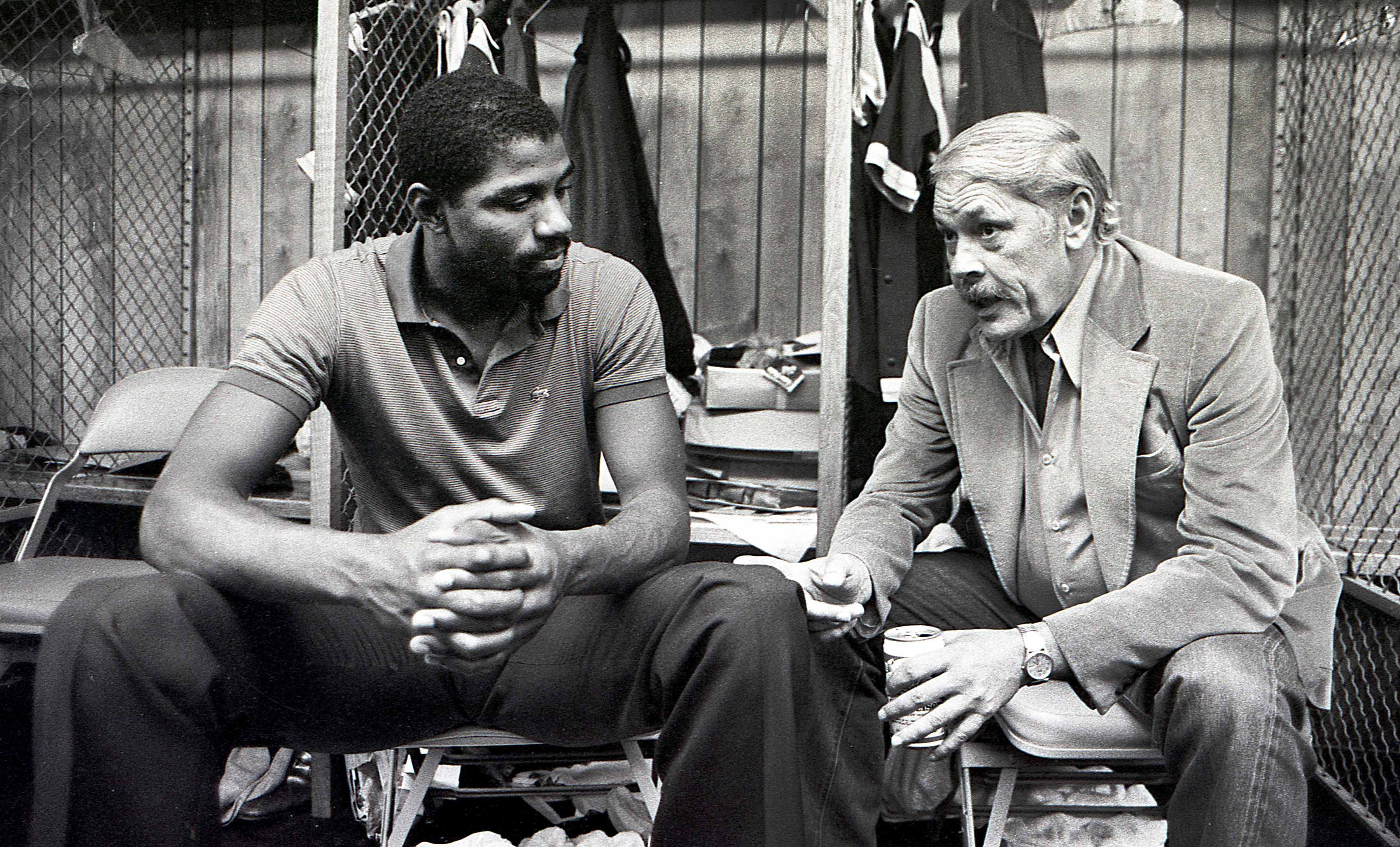
One of the first orders of Lakers business under Buss’ ownership was to select Magic Johnson out of Michigan State with the No. 1 pick in the 1979 NBA Draft.
It was a selection that propelled the Lakers into their “Showtime” era that featured five NBA championships and built one of the strongest brands in sports history. Johnson was the perfect fit for Buss’ vision, a transcendent player on the court who anchored a thrilling brand of basketball.
Johnson’s and the Lakers’ rivalry with Larry Bird and the Boston Celtics eventually made the thought of tape-delayed NBA Finals games laughable and ushered in the Michael Jordan era that turned the league into one of the biggest brands on the planet.
The Showtime Lakers hit the ground running, winning a championship in Johnson’s rookie season with Johnson as Finals MVP. Pat Riley took over as head coach from Paul Westhead during the 1981-82 season. With his savvy style, slicked-back hair and tailored Armani suits — in addition to his Hall of Fame basketball acumen — Riley joined Johnson as the ideal partner and co-star of the Showtime era.
Off the court, Johnson was and remains one of the most beloved figures in sports, an affable, charming and charismatic figure who never gave people a second thought about calling him “Magic.” In addition to being a five-time champion and Hall of Fame talent who dazzled with his playmaking on the court, he was the face of the “Showtime” brand.
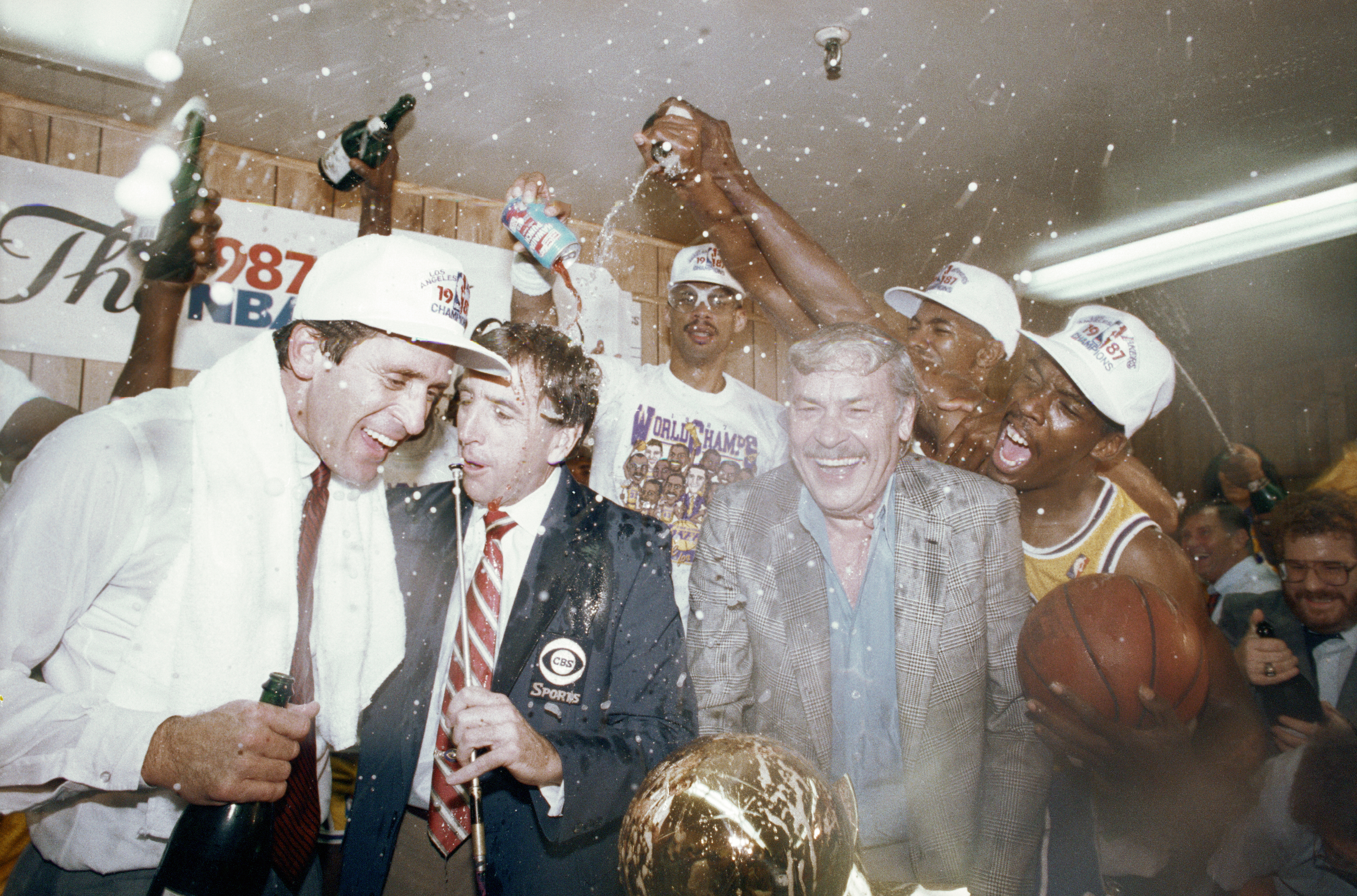
“Showtime” was Buss’ vision to invigorate a floundering league with action, glamour, excitement and sex appeal. In practice, this included the creation of the Laker Girls, the transformation of the infamous Forum Club into a night club in the Lakers’ home arena and getting Los Angeles celebrities in on the action, most notably Jack Nicholson.
By 1991, the Lakers had won four more NBA titles, and the NBA was a dramatically different and more successful league than the one Buss bought into in 1979.
1999-2010: Shaq-Kobe and Kobe-Gasol eras secure 5 more titles
Under Buss’ leadership, the Lakers embarked on not just one, but two dynasty eras that each stand alone among the greatest in league history.
Five years after his 1991 HIV diagnosis prematurely ended Johnson’s career — barring a brief return to the team in 1996 — the Lakers laid the foundation for the second dynasty under Buss.
On draft night in 1996, the Lakers traded with the Charlotte Hornets to acquire the draft rights to No. 13 pick Kobe Bryant. Weeks later, with Lakers great Jerry West running the front office, the Lakers signed Shaquille O’Neal as a free agent from the Orlando Magic.
In 1999, the Lakers hired six-time champion former Chicago Bulls head coach Phil Jackson as head coach, and the second dynasty under Buss was off and running.
With Bryant ascending as a perpetual All-NBA talent and O’Neal in his MVP prime, the Lakers reeled off one of the most dominant three-season runs in NBA history that secured the third championship “three-peat” of Jackson’s coaching career.
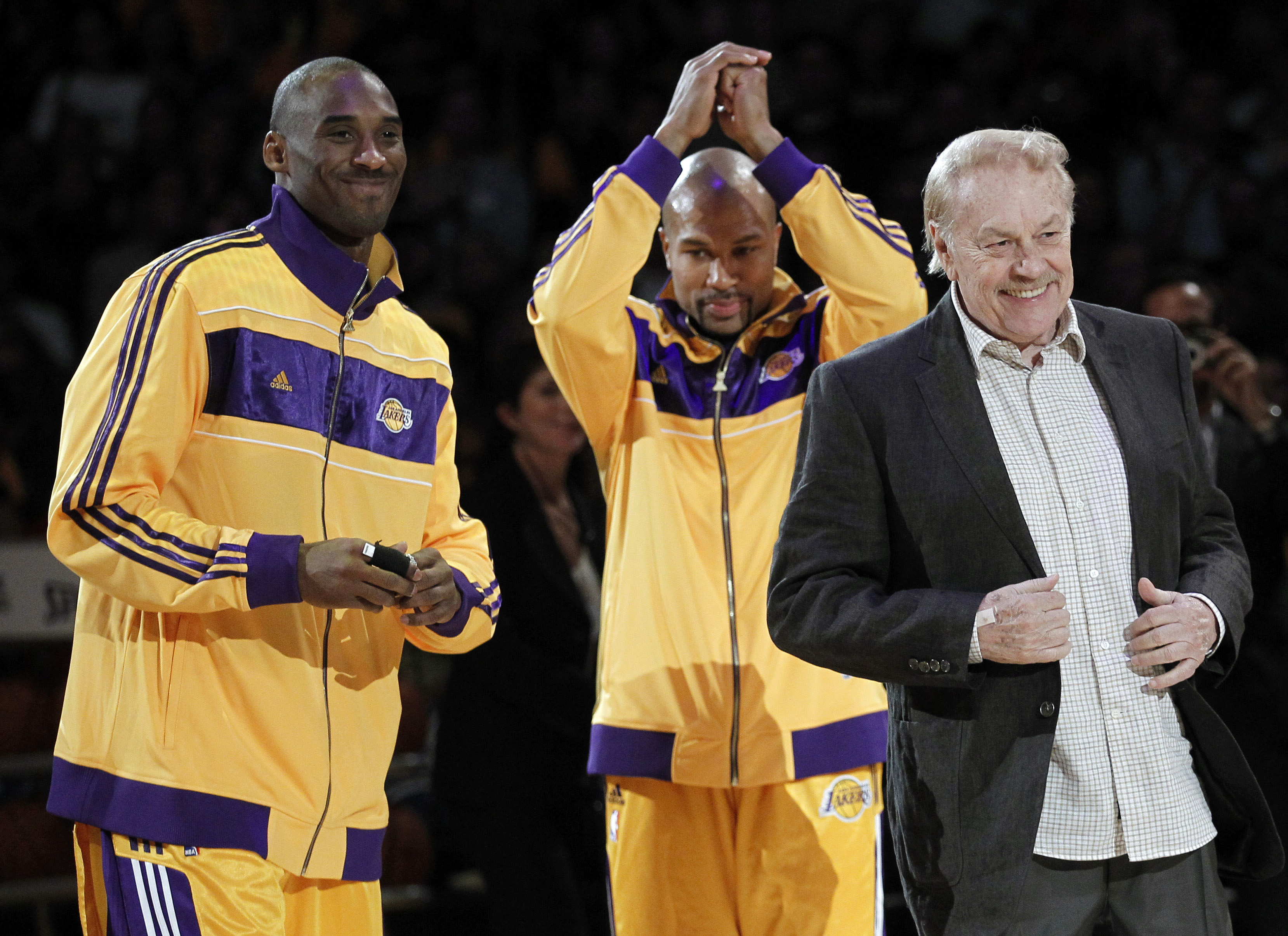
O’Neal and Bryant ultimately couldn’t co-exist, and O’Neal was the odd-man out after a stunning 4-1 loss to the underdog Detroit Pistons in the 2004 NBA Finals.
Bryant remained through some lean years without O’Neal, but ultimately cemented his legacy in Los Angeles as the leader of multiple championship teams with two more titles alongside Pau Gasol in 2009 and 2010.
2013: Jerry Buss’ death
Three seasons removed from the 2010 championship, Buss was notably absent from Lakers’ home games. On February 18, 2013, he died of kidney failure at 80 years old following a battle with cancer.
He left behind a legacy that reshaped the NBA and sports in the second-largest city in the United States. Under Buss’ watch, the Lakers made 16 trips to the NBA Finals and won 10 NBA championships. Four different Lakers (Kareem Abdul-Jabbar, Johnson, O’Neal and Bryant) combined to win six NBA MVPs.
The Lakers accomplished this as Buss ran the franchise as a family business that included roles for all six of his children. NBA basketball was changed forever, and the Lakers had become the league’s crown jewel.
The franchise hasn’t been the same since his death.
Buss siblings inherit shared ownership of Lakers
Upon his death, Buss owned a 66% share of the Lakers. A franchise that he purchased as part of a $67.5 million package in 1979 was now worth billions.
His dream was for the Lakers to remain a family business. His son, Johnny, once told ESPN: “He wanted to make sure the Lakers were in the Buss family, for generation after generation.”
Buss left his share to his six children split into six equal shares. But Jeanie was left in charge. She took over her father’s role as team governor, per Jerry’s wishes.
“There was a reason why my dad chose Jeanie,” Janie previously told ESPN of her sister. “She’s guided the ship the entire time.”
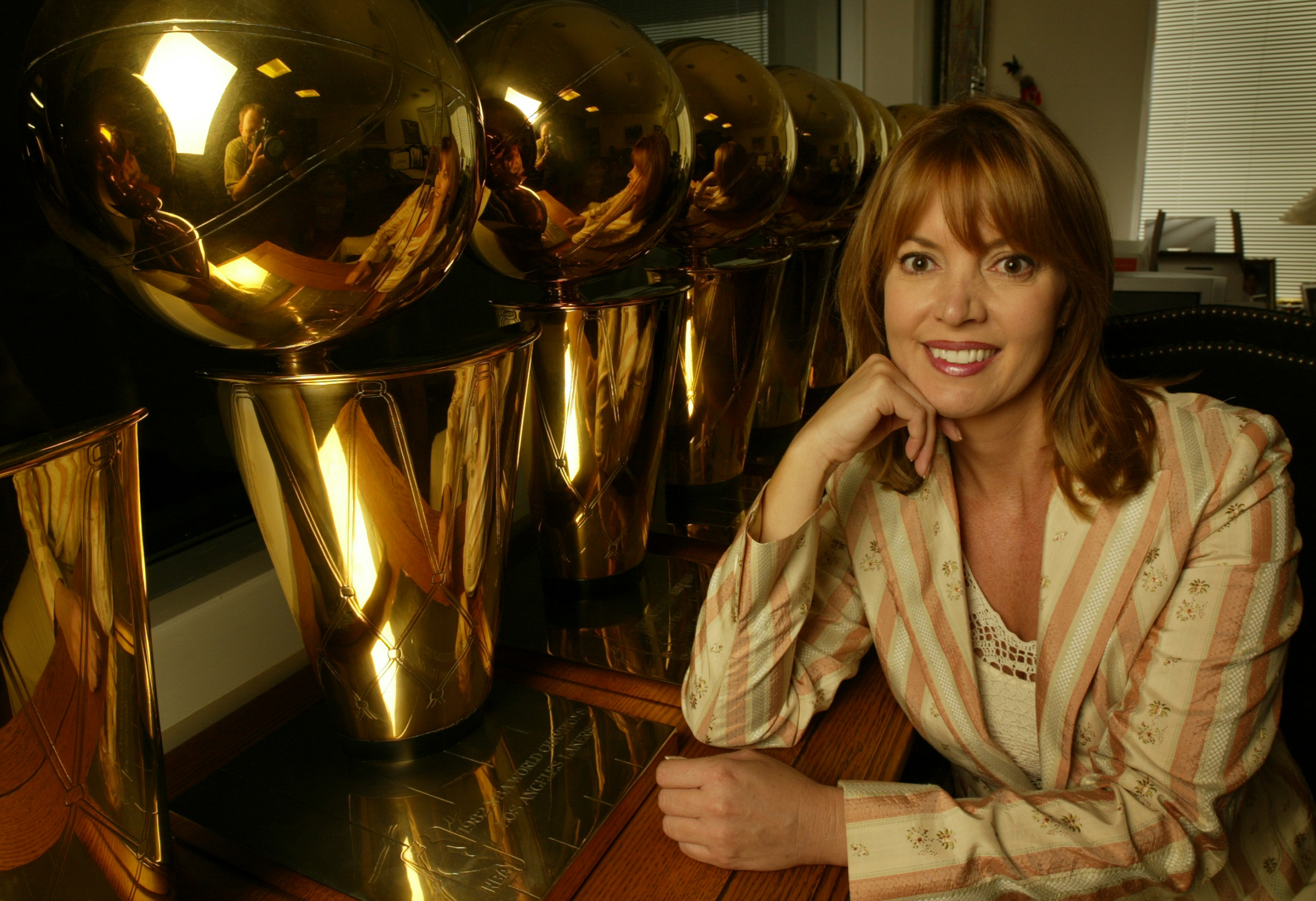
Per ESPN, Jim and Johnny, the oldest of the six siblings, expressed a willingness to sell their share of the Lakers shortly after their father’s death.
But the siblings’ shares were bound together via four trusts established by Jerry. And, per ESPN, a sale would require the agreement of four of the six siblings. They didn’t have the votes, and Jeanie was resistant to the idea of selling.
Lakers turn into losers in the aftermath of Jerry’s death
The Lakers, meanwhile, floundered in the aftermath of Jerry’s death and the conclusion of Bryant’s career that was wrought by injuries in his final three seasons before he retired in 2016.
After 18 trips to the postseason in the previous 19 seasons, the Lakers failed to make the playoffs in six consecutive losing seasons from 2013-14 to 2018-19. They failed to win more than 37 games in any of those seasons and won 27, 21, 17, and 26 games in the four seasons that directly followed Jerry’s death.
In 2017, the behind-the-scenes tumult reached the level of the ineptitude on the court. In February Jeanie oversaw a stunning front-office shakeup in her role as team president and governor.
Front-office shakeup and a failed coup
The Lakers fired Mitch Kupchak, who’d played four seasons with the team and had been its general manager since 2000, a span that included four NBA championships. They also fired Jim Buss, Jeanie’s older brother who was serving as executive vice president of basketball operations.
In as president of basketball operations was none other than Johnson, the floor leader of the “Showtime” Lakers who little front-office experience. The Lakers at the time were 19-39 and in the midst of their fourth straight losing season.
Less than two weeks later, the Los Angeles Times reported that Jim and Johnny made an attempt to remove Jeanie from her role as controlling owner. Per the Times, Jeanie filed a restraining order in response to head off a meeting intended to elect a new board of directors that didn’t include her. She successfully thwarted the attempted coup.
Weeks later, the Times reported that Jeanie, Jim and Johnny had “agreed for Jeanie to serve as controlling owner and on the team’s board of directors as long as the family owns the Lakers.” Jim surrendered his role as a team trustee in the process.
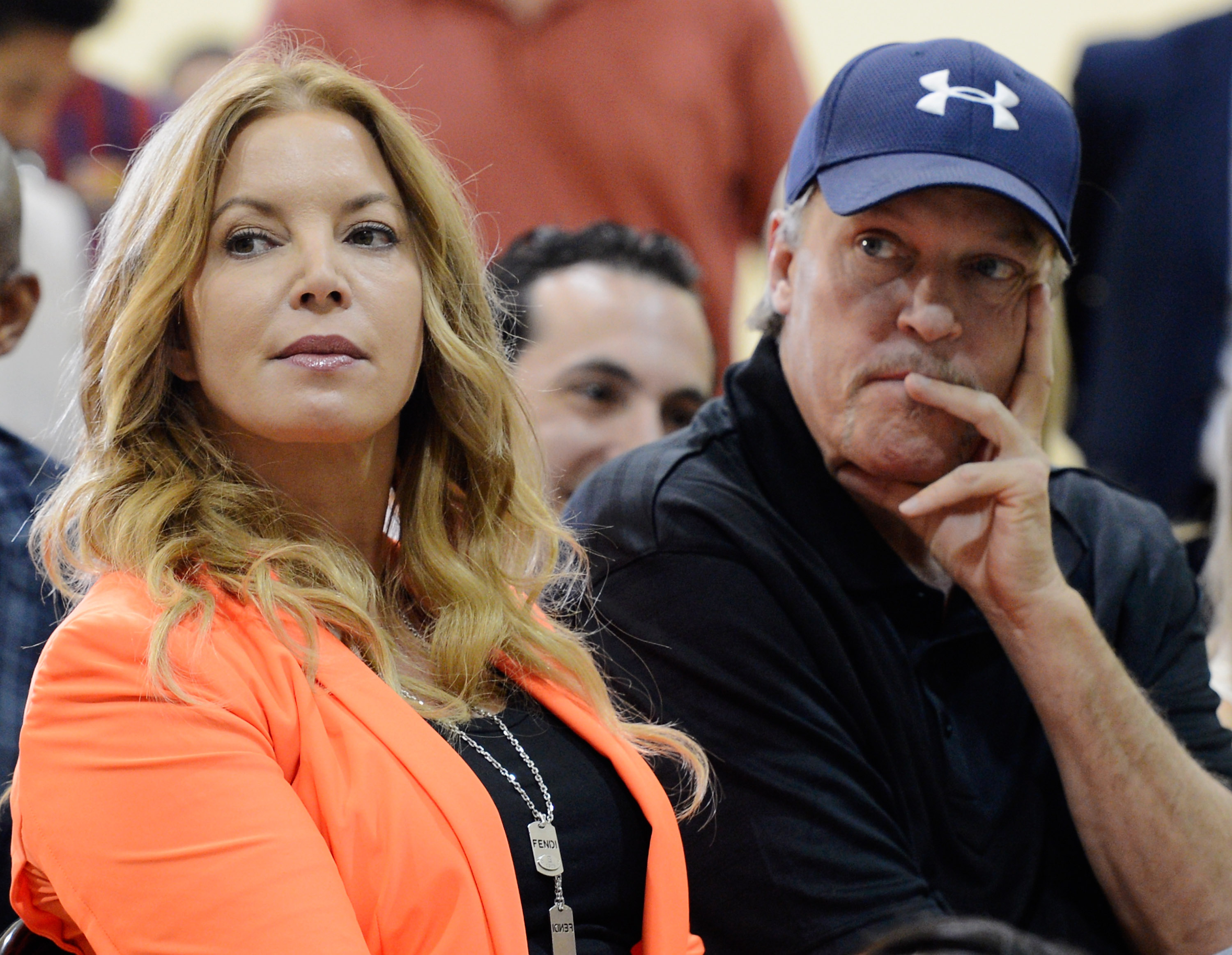
Meanwhile, Rob Pelinka — Kobe Bryant’s former agent — was brought on board as general manager. Jeanie had successfully consolidated her power, and brought on the people she wanted to help run the the team.
Janie, Jesse and Joey agreed to the arrangement that left Jeanie’s power intact, according to ESPN. Johnny told ESPN in January that his relationship with Jeanie had soured since.
“From that point on, I’ve probably talked to Jeanie, I don’t know, four or five times,” Johnny told ESPN. “And that’s sad.”
The LeBron era and only Lakers title since Jerry’s death
Under the new leadership direction, the Lakers signed LeBron James and traded for Anthony Davis, a pairing that produced the franchise’s only NBA championship (2020) since Jerry’s death. Johnson wasn’t involved in the Davis acquisition, having abruptly resigned at the end of the 2019 season in a media scrum without informing Jeanie about his decision.
But the Lakers failed to gain traction with the James-Davis core. They made it out of the first round of the playoffs just once in four subsequent seasons before the shocking trade of Davis in the deal to acquire Luka Dončić.
Younger Buss brothers reportedly had reservations about $10B sale
By summer of 2025, the Busses were ready to sell the majority share of the team, Jeanie included. With 100s of millions of dollars available for each of the Buss siblings, Jeanie agreed to sell the majority of the team at a valuation of $10 billion to Dodgers owner and and TWG Global CEO Mark Walter.
The profits from the sale meant money in the bank accounts of the Busses that they could utilize while they’re still alive rather than having it frozen in Lakers equity. Unlike modern ownership groups anchored by hedge fund managers, venture capitalists and private equity, the Lakers were a true family business. This team was the primary source of the Busses’ wealth.
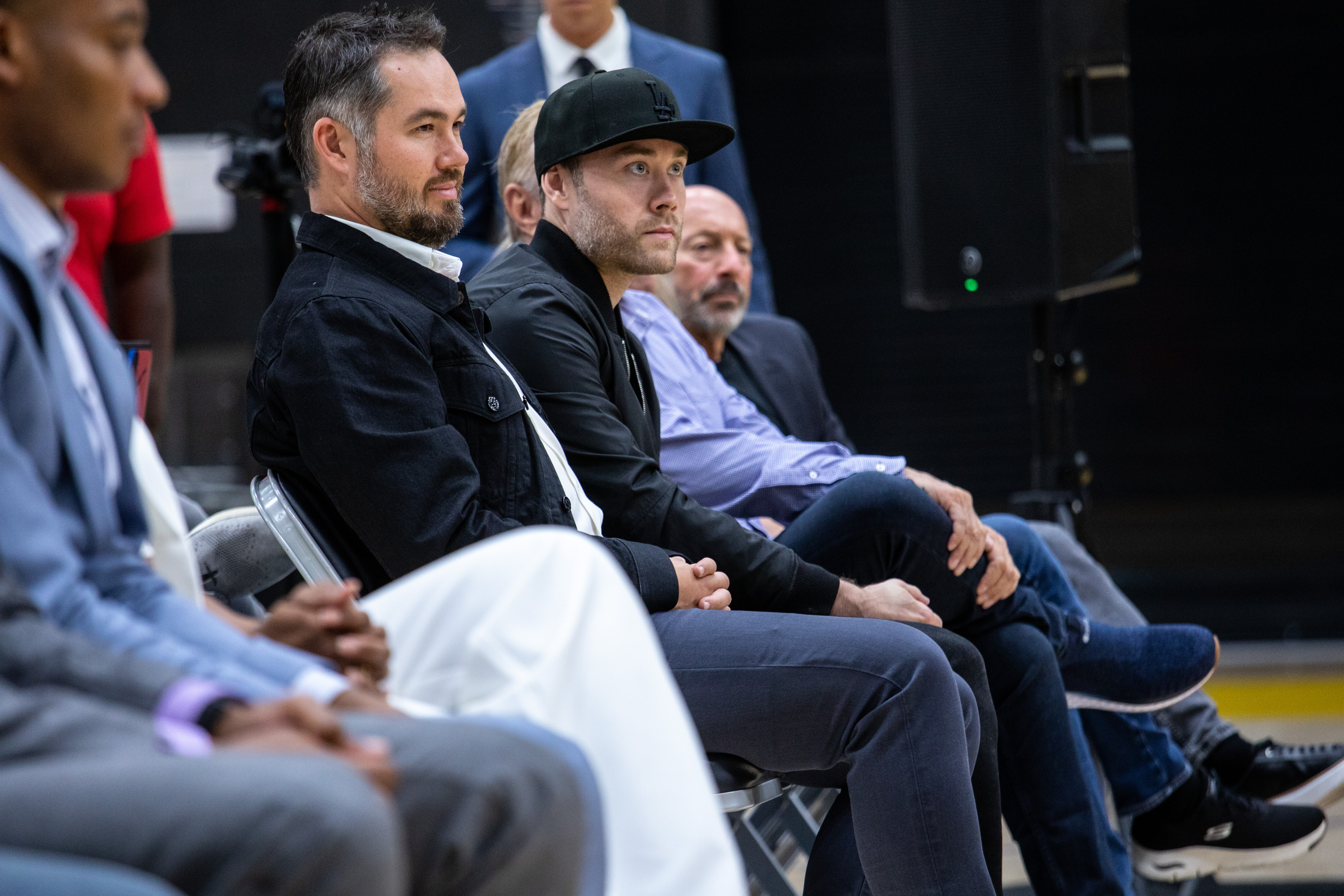
Per ESPN’s Baxter Holmes, Jim, Johnny and Janie were on board with the sale alongside Jeanie. Jesse and Joey, the two youngest who have a different mother than their older siblings, had reservations. According to Holmes, Jesse and Joey only relented to agree to the sale whey they realized they were outvoted 4-2 and couldn’t stop it anyway.
The deal didn’t sever the Busses from the Lakers altogether. They maintained a collective 17.8% stake that was enough to keep Jeanie in her role at team governor in a league that requires a 15% stake to do so.
So, did the Busses sell their remaining stake or not?
Which brings us to the last two weeks. Walter, in a decision that shocked almost everyone, flipped the Lakers last week in a sale to Kushner and Isner at a valuation of $12.5 billion. That’s a tidy 25% profit roughly a year after he took controlling ownership of the team. Despite the obvious profit motive, the deal left plenty of questions regarding the timing of the sale.
The fate of the Busses’ stake and Jeanie’s role as team governor was unclear at the time of the deal. Clarity appeared to arrive Monday when Charania shared the family statement that “We have decided as a family to sell the remaining Buss Family Trust shares to the Bob Iger group.”
But that was not the conclusion of the Buss family Lakers saga. Jeanie didn’t agree to it. She’s not relenting her role as Lakers governor. And the letter from her attorney made it clear that she’s ready to put up a fight with her siblings.
In that letter, Streisand called out Jesse and Joey by name and accused them of a long-standing campaign to leak “false, defamatory and pernicious“information” to ESPN:
“As you know, this afternoon, Shams Charania of ESPN falsely reported that the six Buss siblings voted to sell the 17.8% ownership stake in the Lakers to Josh Kushner and Bob Iger, and that my client, Jeanie Buss, is ‘out’ as controlling owner.
“This is just the latest instance of a years-long pattern whereby Joey and Jesse Buss leak false, defamatory and pernicious“information” to Mr. Charania for the malicious purpose of doing harm to the Los Angeles Lakers so long as Dr. Buss’s chosen successor, Jeanie Buss, carries out her father’s wishes.”
The letter contends that an effort to sell the remaining family stake as reported Monday constitutes a “breach of trust” and demands that Jeanie’s siblings recognize her as the “controlling owner of the Los Angeles Lakers:”
“On behalf of Jeanie Buss, I demand that your clients make clear publicly that Jeanie Buss is the Controlling Owner of the Los Angeles Lakers and that your clients shall take no action on this supposed “vote” to sell the 17.8% stake.”
For a moment Monday, the saga of the Buss Los Angeles Lakers appeared to have reached its conclusion. But until this issue is settled, it carries on.

