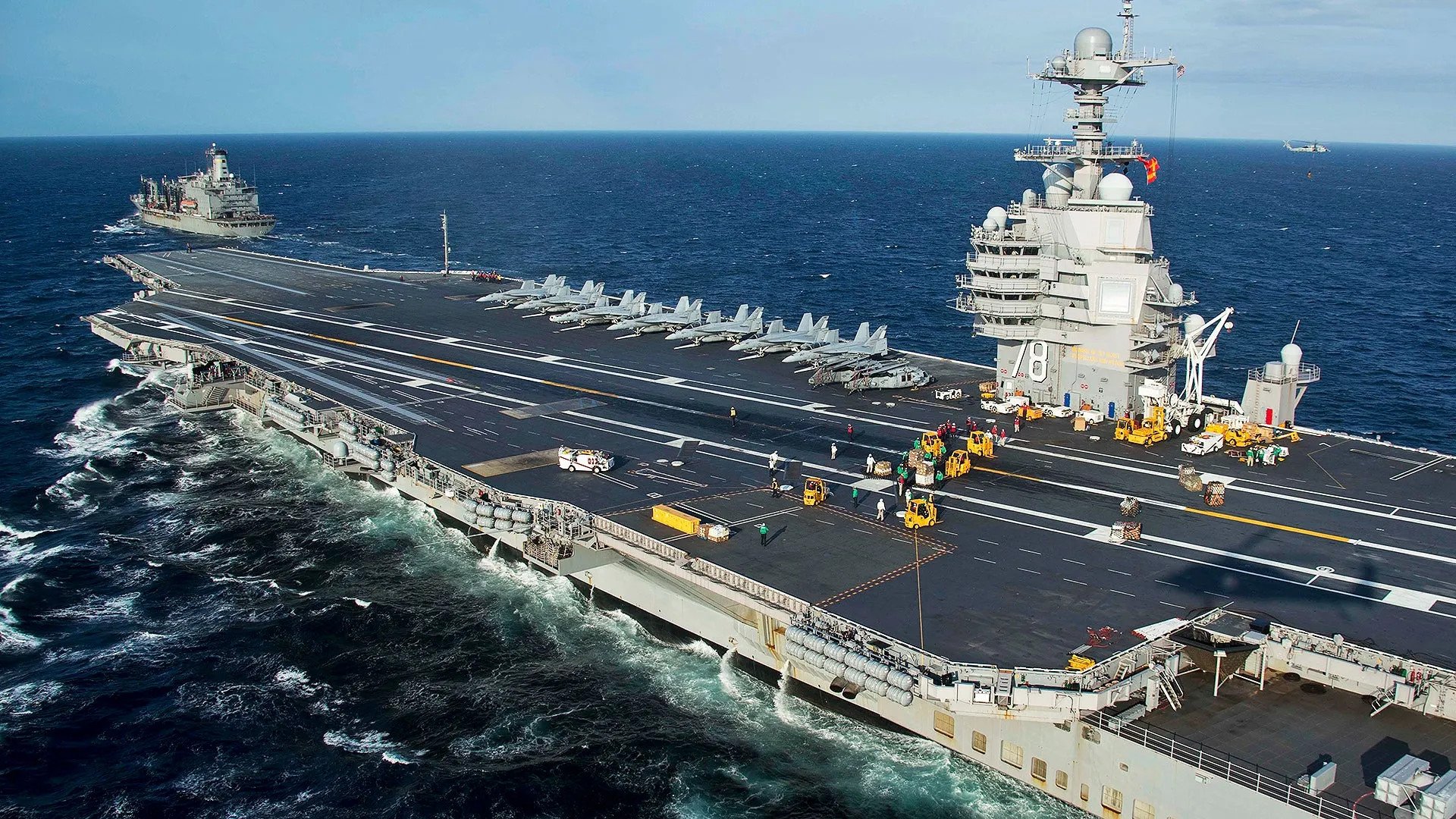
АНУ-ын Ерөнхийлөгч Дональд Трамп Ford ангиллын нисэх онгоц тээгч хөлөг онгоцны цамхаг буюу арлын байршлыг Дэлхийн хоёрдугаар дайны үеийн хөлөг онгоцнуудтай ижил төстэй болгон урагшлуулахыг үүрэг болгожээ.
АНУ-ын Тэнгисийн цэргийн флот Ford ангиллын шинэ нисэх онгоц тээгч хөлөг онгоцны дизайныг өөрчлөх боломжийг судалж байна. Ерөнхийлөгч Дональд Трамп хөлөг онгоцны гадаад үзэмжийг Дэлхийн хоёрдугаар дайны үеийн хөлөг онгоцнуудтай ижил болгох хүсэлтэй байгаа бөгөөд үүний дагуу Пентагон болон Тэнгисийн цэргийн хүчин шинэ төлөвлөгөө боловсруулахаар ажиллаж байна. Мөн тэрээр цаашид үйлдвэрлэх хөлөг онгоцнуудад EMALS цахилгаан соронзон пуужин харвагч болон дэвшилтэт зэвсэг зөөгч цахилгаан шатны системийг ашиглахаас татгалзахыг үүрэг болгосон байна.
Тэнгисийн цэргийн мэргэжилтнүүдийн үзэж байгаагаар, одоогийн байршил нь нисэх онгоцны хөөрөлт, буулт болон хөлөг онгоцны ажиллагааны үр ашгийг нэмэгдүүлэх зорилгоор олон жилийн судалгааны үр дүнд тогтсон шийдвэр юм. Цамхгийг хойшлуулан байршуулснаар нислэгийн тавцангийн талбайг илүү оновчтой ашиглах, онгоцнуудыг түлшээр цэнэглэх, засвар үйлчилгээ хийхэд илүү уян хатан байдлыг олгодог байна. Тус байршил нь нисэх онгоц буух үед үүсэх агаарын урсгалын нөлөөллийг багасгах зэрэг аюулгүй байдлын ач холбогдолтой болохыг албаны хүмүүс онцолжээ.
Энэхүү дизайны өөрчлөлт нь маш их хэмжээний хөрөнгө шаардахаас гадна хөлөг онгоц үйлдвэрлэлийн хугацааг хойшлуулах эрсдэлтэй байна. Одоогийн байдлаар АНУ-ын тэнгисийн цэргийн хүчин хуучин Nimitz ангиллын хөлөг онгоцнуудыг үйлчилгээнээс гаргах хуваарьтай байгаа бөгөөд шинэ хөлөг онгоцнуудын нийлүүлэлт хойшлогдох нь үйл ажиллагааны ачааллыг улам нэмэгдүүлж болзошгүй юм. Тэнгисийн цэргийн хүчин энэ асуудлыг хэдэн долоо хоногийн дотор судалж дуусгахаар төлөвлөж байна.
Дэлгэрэнгүйг эх сурвалжаас харах
Эх сурвалжийг нээх ↓
The U.S. Navy is reportedly evaluating a major change to the Ford class aircraft carrier design that would move the island superstructure further forward on the flight deck. President Donald Trump is said to be pushing the service to reposition the island on aesthetic grounds, to make the ships look more like World War II-era carriers. Just last Thursday, Trump publicly ordered the Navy and the Pentagon to come up with a plan for abandoning the Electromagnetic Aircraft Launch System (EMALS) catapults and Advanced Weapons Elevators (AWE) on the Ford class, starting with the future USS Doris Miller, as you can read more about in our reporting here.
Perhaps even more so than replacing EMALS and the AWEs, shifting the island would be an extremely costly and complex proposition. The Navy also chose the island’s location for very specific reasons to provide a host of operational benefits.
The Washington Post was the first to report Trump’s push to relocate the island on the Ford class on Sunday, citing anonymous current and former U.S. officials. Another story followed from The Hill, which also cited a former senior U.S. official.
“The timing and extent of the Navy’s evaluation is unclear, with current and former officials cautioning that the service was concerned that such a change would require significant time and money,” according to the Post. “Trump’s preference, current and former officials said, is for the new aircraft carriers to look more like those that were in service during World War II.”
“The review, which was kick-started in part because of Trump’s concerns about the aesthetics of the Ford class aircraft carriers, is due in ‘several’ weeks,” per The Hill‘s story. “A Navy official, speaking on condition of anonymity, said Trump ordered the Navy to ‘implement design changes to our future aircraft carriers’ and that the service branch ‘has begun moving out on options to meet the President’s intent.’”
Currently, the USS Gerald R. Ford is the only carrier in this class in operational service. The Navy has three more on order: the future USS John F. Kennedy, USS Enterprise, and USS Doris Miller. The service hopes to take delivery of John F. Kennedy this year. The stated plan is to eventually acquire at least 10 Ford class carriers in total. Two more ships in the class have already been formally assigned names: the future USS William J. Clinton and USS George W. Bush.

John F. Kennedy (CVN 79) Successfully Completes Builder’s Sea Trials
To be clear, this is hardly the first time Trump has pushed for major U.S. naval ship design and force planning changes, especially when it comes to the aesthetics of those vessels. “I’m a very aesthetic person,” the President declared in December 2025 at the public rollout of plans for the Trump class battleship.
For the Navy, the placement of the island on the Ford class, as well as its overall design, was not an aesthetic decision. It was also not a decision that was made quickly. During a presentation at the U.S. Naval Academy Museum back in 2015, retired Navy Capt. Tal Manvel, who served for a time as Program Manager for Future Carriers, said the service examined 75 different conceptual configurations between 1996 and 2000. In addition to a host of different hullforms and flight deck layouts, these designs had islands placed at a wide variety of different points.

You can watch Tal Manvel’s full 2015 presentation below.

Shifley Lecture: USS Ford-class carrier design
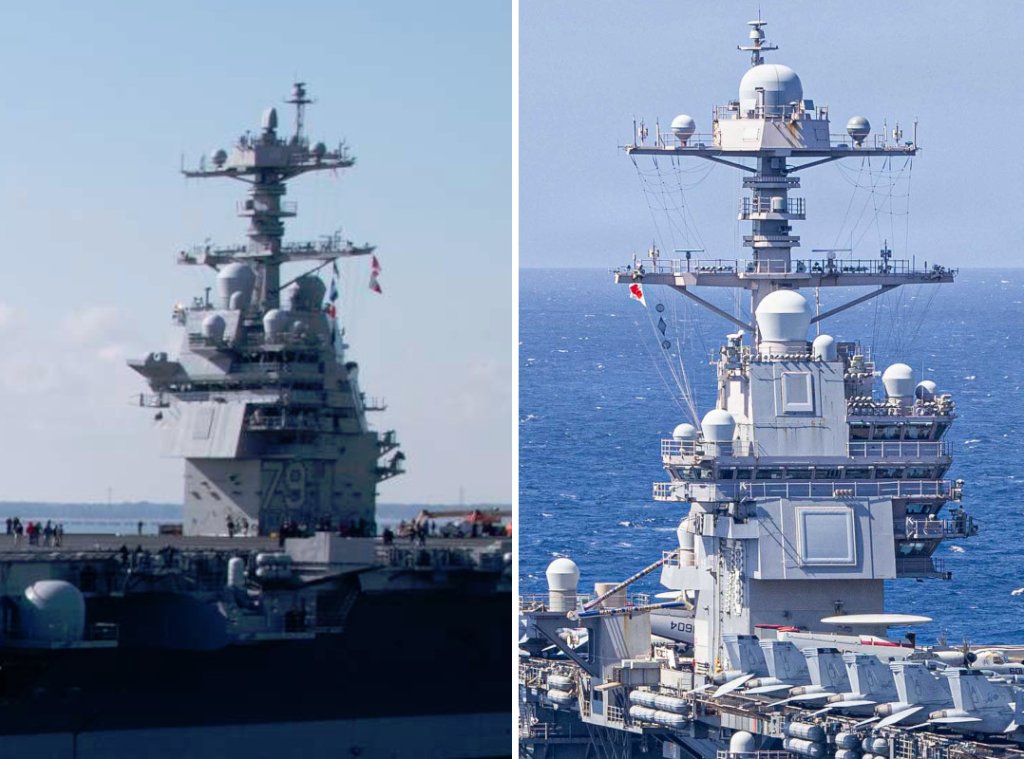
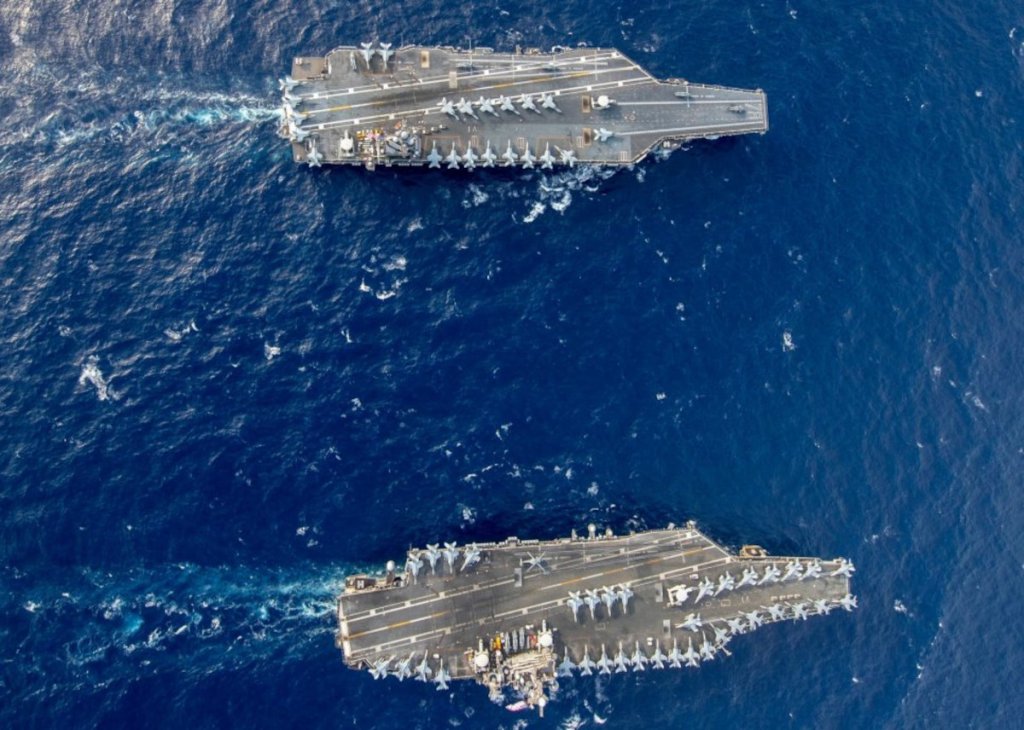
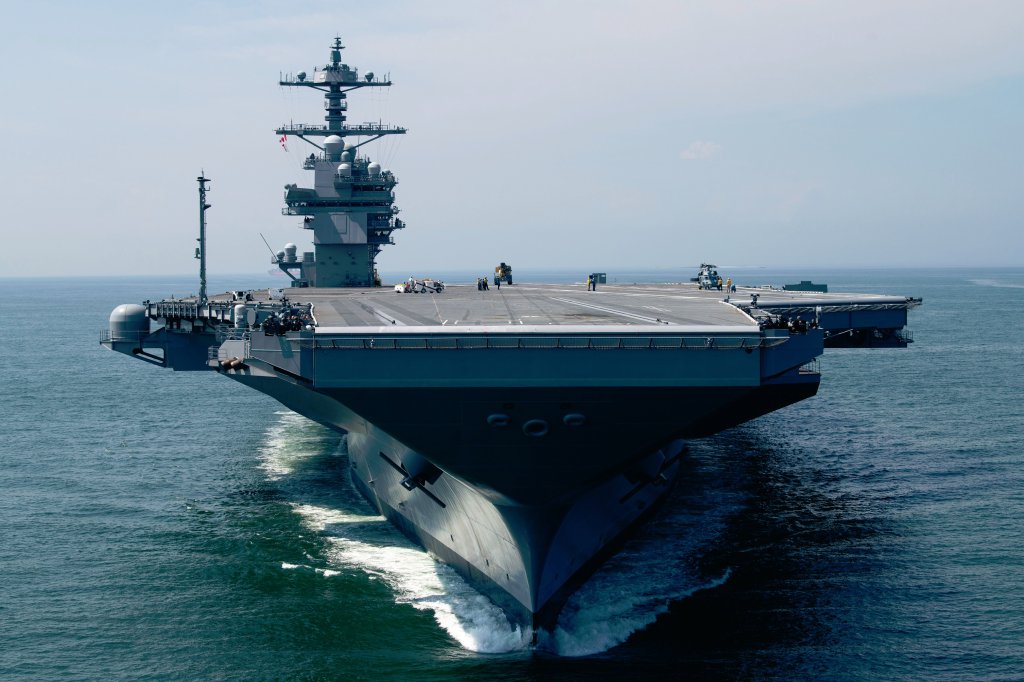
Ultimately, the Navy settled on the design as it exists today. The total length of the Ford class is very similar to that of the Nimitz class it is in the process of replacing: 337 meters (1,106 feet) versus 332.8 meters (1,092 feet). However, the island on the Ford is 140 feet further aft compared to that of the Nimitz.
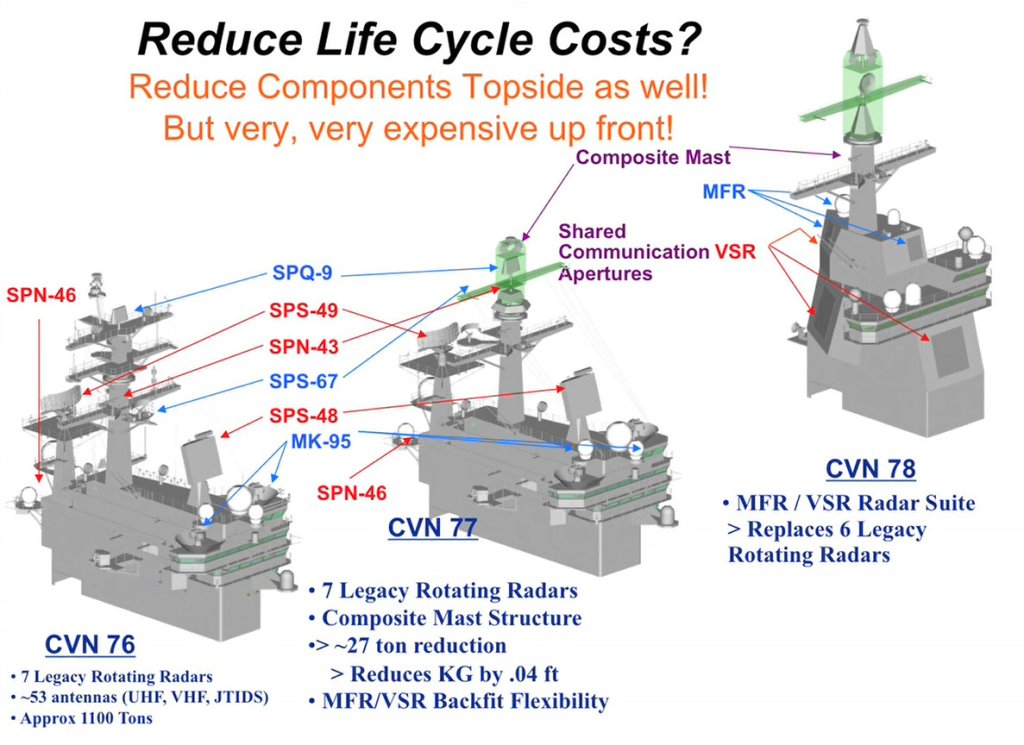
The Ford‘s island is also smaller and more angular overall. This was enabled in part by the decision to use a completely different main radar arrangement on the Ford compared to the Nimitz, paring down the total number of distinct radars required as a result. However, the Dual Band Radar (DBR) proved to be extremely complex and troublesome. As a result, the future USS John F. Kennedy and every future carrier in the class is now set to have the AN/SPY-6(V)3, also known as the fixed-faceversion of Raytheon’s Enterprise Air Surveillance Radar(EASR), in place of the DBR. The broad dimensions of the island remain unchanged. The DBR was also set to be a feature on the Navy’s trio of Zumwalt class stealthy destroyers, but the decision was subsequently made to eliminate the S-band arrays on those ships as a cost-cutting measure. Those three destroyers may eventually see the remaining X-band arrays replaced with a variant of the AN/SPY-6 radar coupled with a version of the Aegis Combat System in the future.
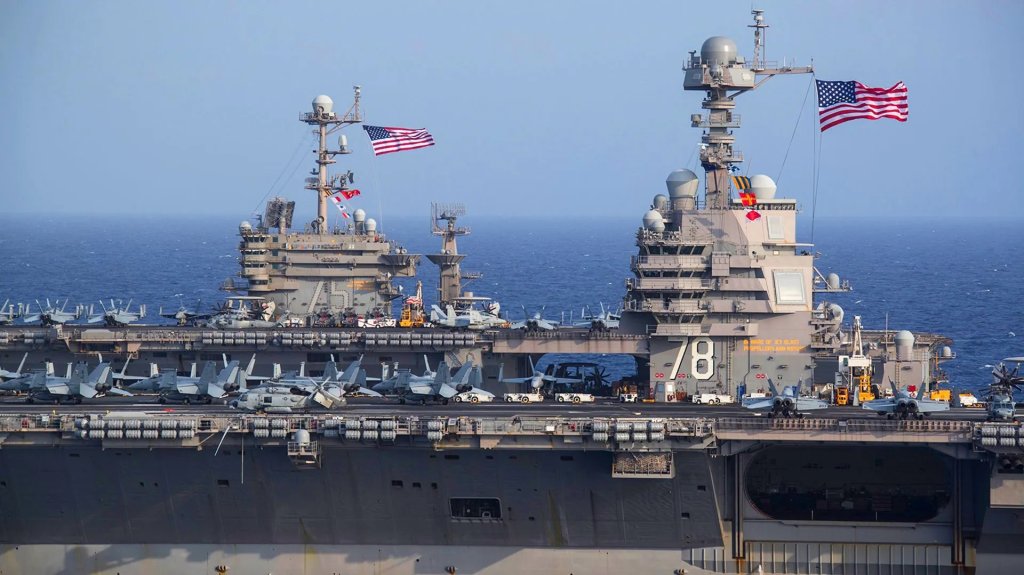
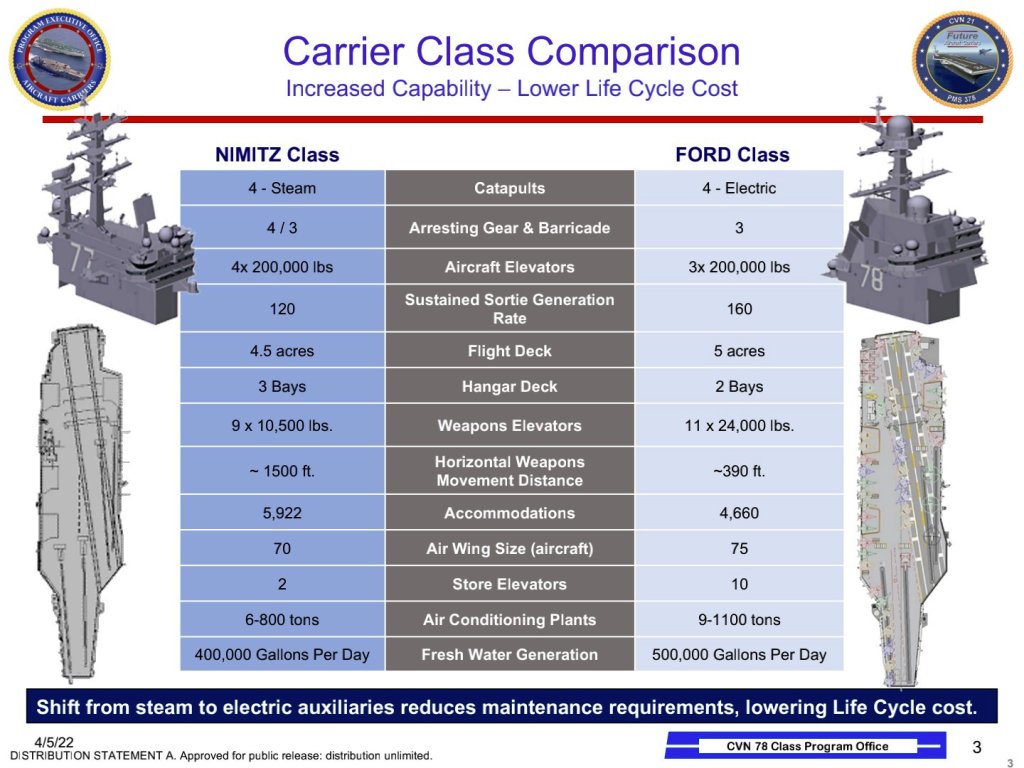
The matter of the radar aside, the island is sized to minimize its total footprint and maximize available open deck space, and has a very visible impact on the flight deck layout. The Ford has three aircraft elevators, two on the starboard side, both forward of the island, and another on the port side. Nimitz class carriers have three aircraft elevators on the starboard side, one of which is aft of the island, as well as one on the port side. These changes and other design choices mean the Ford has more total flight deck space than the Nimitz – five acres (217,800 square feet) compared to 4.5 acres (196,020 square feet), according to the Navy.
In an exclusive interview with TWZ back in 2022, then-Navy Capt. Paul “Paulie” Lanzilotta, captain of the USS Gerald R. Ford’s at the time, talked at length about the benefits of the island’s position.
The Navy uses “cyclic flight operations to continue to generate sorties over many hours a day,” Lanzilotta told us following a panel on the history of aircraft carriers at the annual Sea Air Space symposium that year. “And we do that by launching the cycle and then recovering that cycle.”
“If you’re a little bit late, you need to troubleshoot, maybe it’s just reset a system that’s built into the aircraft, you reset the system and off you go, you can taxi to the catapult,” he explained. “If you’re parked after the island on the older ships, you need a break in the recovery in order to do that because everything we do happens very, very quickly, very efficiently.”

“So on my ship? Less likely that you’re going to need that break and a lot more likely that I can refuel you and rearm you more efficiently,” he continued. “It’s based on the design of where the island is plus the weapons elevators and the way we fuel aircraft.”
What this all means in more layman’s terms is that the configuration of the flight deck, including the placement of the island, creates additional flexibility for launch and recovery operations and helps contribute to a better sortie generation rate. The way the space is configured would offer benefits for other activities, including hot-deck refueling and maintenance, as well. The Washington Post‘s story says the configuration also offers an added margin of safety for aircraft coming in to land by helping reduce the chance of turbulence generated at the stern.
In his interview with us in 2022, Lanzilotta, who has since been promoted to Rear Admiral and is now commander of Carrier Strike Group 12 (CSG-12), acknowledged that Ford had fewer aircraft elevators and less deck space in back of the island. However, he said the elevators were designed to be more efficient and downplayed any negative impacts from the reconfiguration of the flight deck.
“I still have room back there to park aircraft. Fly helicopters back aft of the island when we want to work and park airplanes back there,” Lanzilotta said. Together with the smaller overall size of the island, “if anything, I probably gained overall area on the flight deck.”
“From a ship handling perspective, being further away from the bow kind of increases the shadow zone forward,” he did note, referring to something of a blind spot toward the bow that is only exacerbated by moving the island aft.
However, “we just manage [that challenge] organically,” he explained, “whether it’s a sensor forward, to watchstanders that are forward, and additional assets that we naturally have with us all the time, like our helicopters, and our security boats and stuff like that.”
“I’m amazed by how well we’re able to move in the narrow channel in San Diego Bay,” he added. “It’s a great bay, but a busy one.”
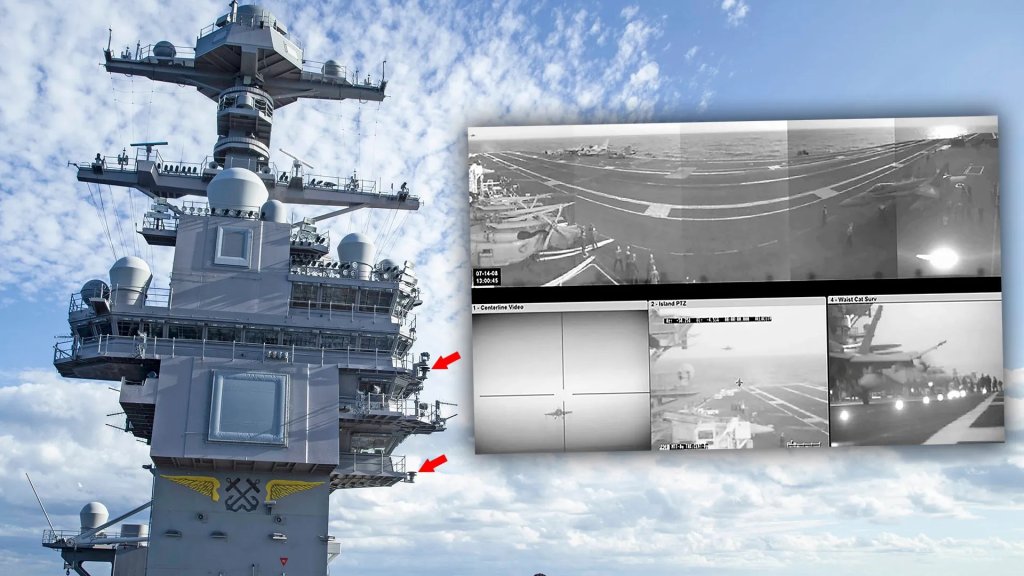
It is worth noting here that the Ford uses a distributed aperture remote video system to help the ship’s crew keep tabs on flight deck operations and to just provide valuable general situational awareness. This system supplants the Island Camera Room found on Nimitz class carriers. This also eliminates the need for individual camera operators at various points around the island, as is the case with the Integrated Launch and Recovery Television Surveillance (ILARTS) system on the older carriers. There are additional camera systems around the ship, as well. You can read more about this here.
The placement of the island on the Ford class reflects a broader trend, too. The design of France’s future “porte-avions de nouvelle génération,” or PA-Ng, (which translates to New Generation Aircraft Carrier), as it has been shown to date, has a very similarly shaped island that is also positioned well toward the stern. In 2023, renderings emerged of notional next-generation Chinese aircraft carriers with this same kind of island and flight deck configuration.
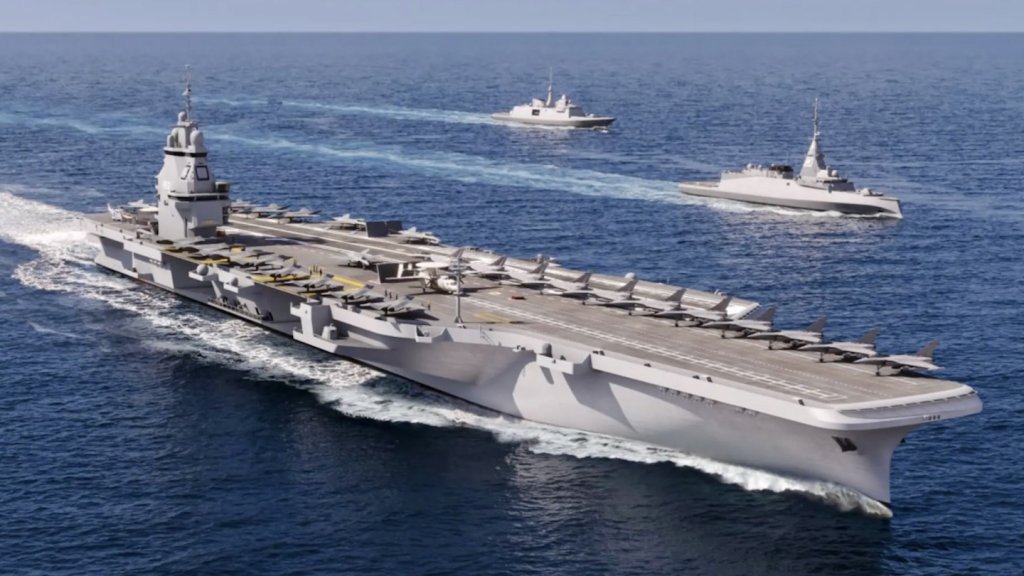
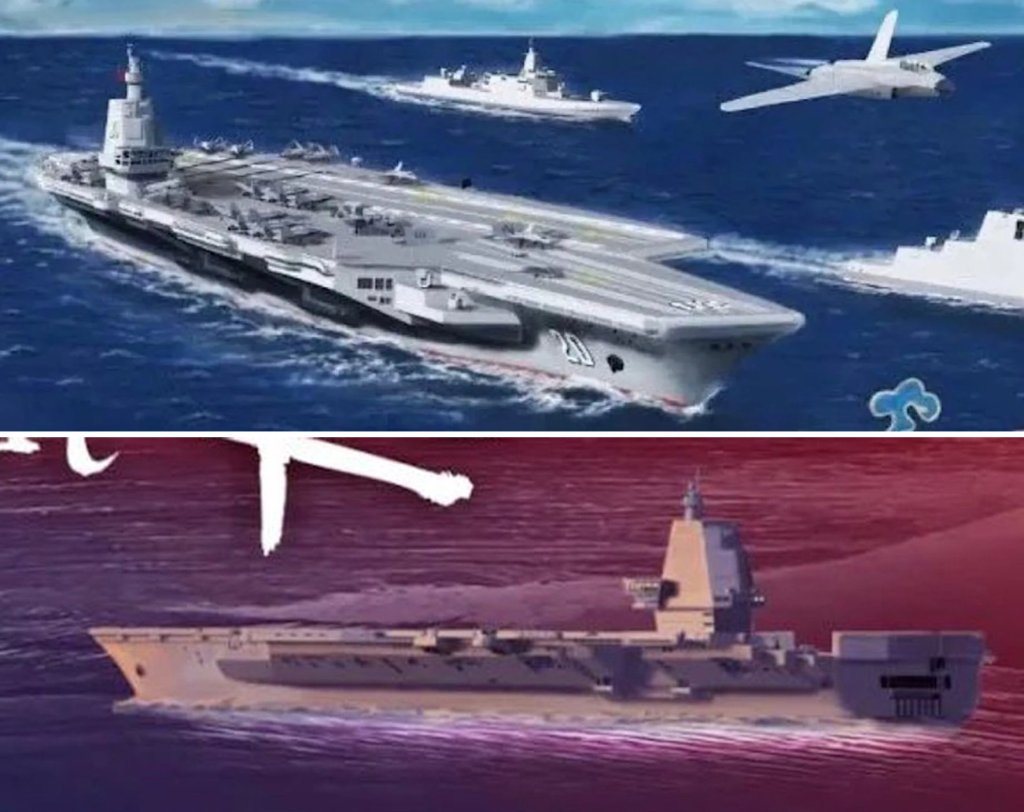
It is possible there are non-aesthetic reasons, as well as aesthetic ones, behind Trump’s report push to relocate the island on the Ford class. However, if that is the case, this has yet to be publicly articulated.
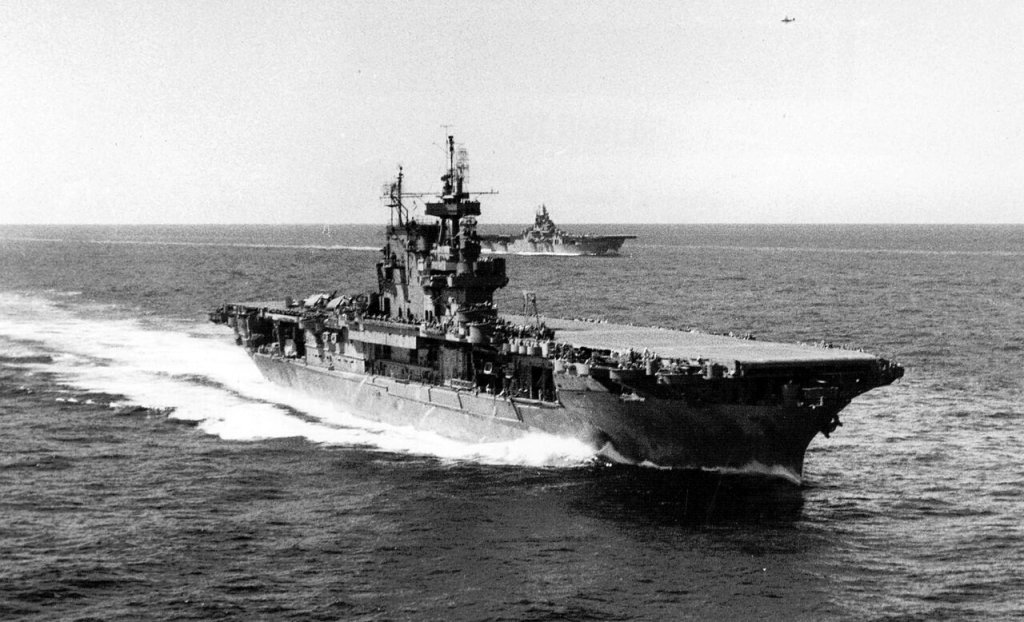
Very broadly speaking, since the end of World War II, the islands on U.S. aircraft carrier designs have been progressively moving further and further aft, in general. It is also worth noting that the island placement on World War II-era carrier designs was not universally further toward the bow, either. Some U.S. and foreign classes of the time, particularly lighter designs, lacked a traditional island on top of the flight deck at all.
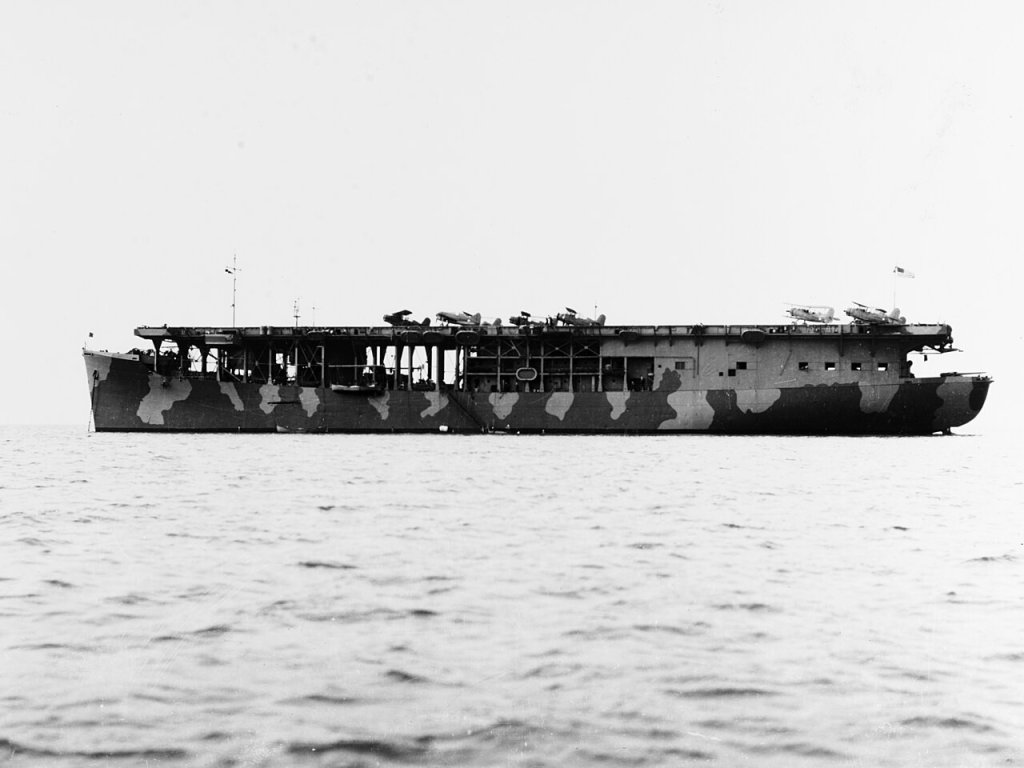
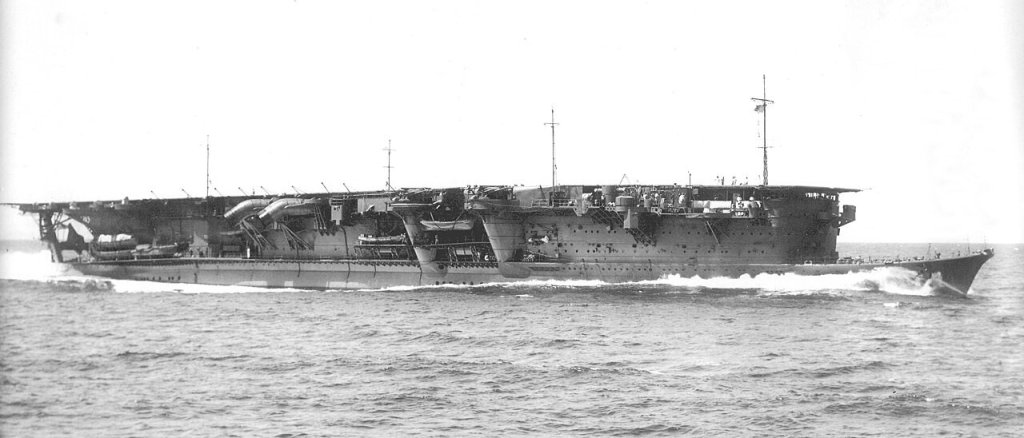
Regardless of any pros and cons about where the island is placed on the Ford class design, moving it now would be exceedingly costly and complex. It has been pointed out that relocating the island would involve far more than just moving the superstructure. It is deeply integrated into the ship’s overall configuration, and shifting it would have much broader impacts that would need to be addressed just in terms of seakeeping, structural stability, and basic balance. A host of other accompanying changes would also be required. Since the island is where the ship’s main radars and many other key systems are positioned, a substantial amount of additional testing would have to be done to ensure everything works as intended in the new location.
“The Navy also examined the issue during his [Trump’s] first term as president,” according to The Washington Post. “A study found that moving the island could cost billions of dollars in redesign costs and significantly delay the program.”
More delays with the Ford class is something the Navy can ill afford. The program is already running years behind schedule due in no small part to issues with the aforementioned EMALS catapults and AWEs, as well as a host of other long-troubled aspects of the ship’s design. The Navy had originally planned to take delivery of the John F. Kennedy in 2022.
The potential pitfalls of a major reworking of the Ford design could have cascading effects that go well beyond this class of ships. As TWZ wrote last week after the announcement regarding plans for the catapults and weapons elevators on the future Doris Miller and other following ships in the class:
Trump’s memo yesterday also focused heavily on further steps to address now long-standing concerns about U.S. naval shipbuilding capacity across the board. America’s specific ability to produce new nuclear-powered surface warships and submarines has now become even more of a focal point in these discussions with the addition of the plans for the Trump class battleships. In May, the Navy confirmed the Trump class warships will have nuclear propulsion using the same type of reactors developed for the Ford class.
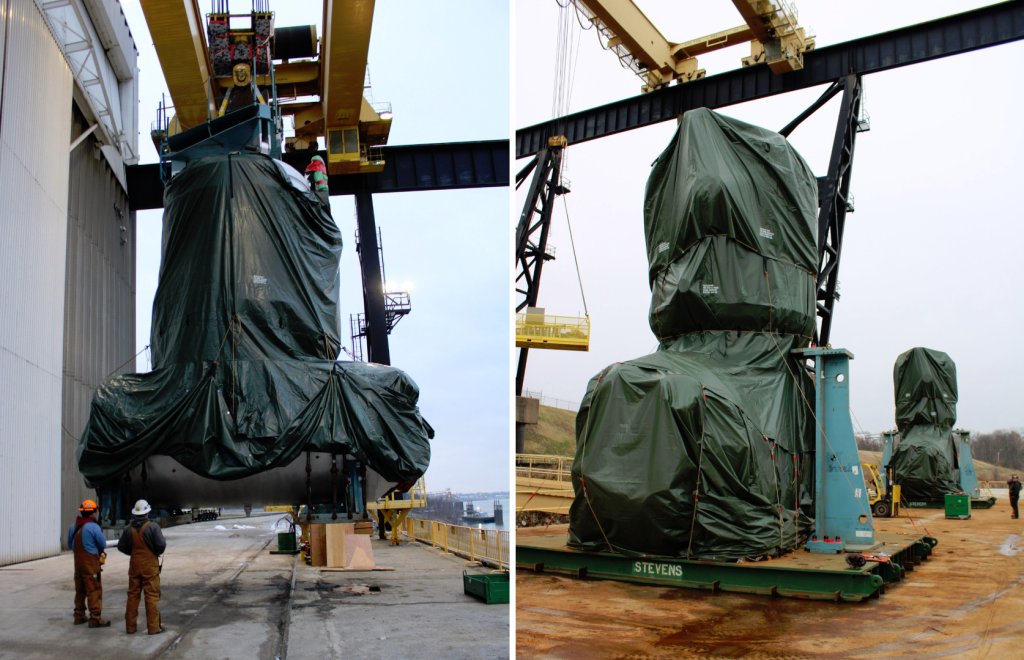
The Navy has not acquired a new nuclear-powered surface combatant in decades. Newport News is currently the only U.S. shipyard producing nuclear-powered surface vessels of any kind, and is already heavily strained by current demands, which also include production of new non-nuclear warships. There is only one other yard in the country that produces nuclear-powered vessels of any kind, and is focused on submarine production.
Pushing the schedule for delivery of Ford class carriers even further to the right, along with adding billion’s the program’s cost, would only add to the strains on the Navy’s existing Nimitz class carriers, which have been building into a low-level crisis. As we also wrote:
In a time of peace, without all the threats and operational demands the United States is currently facing, or if there was any kind of surplus carrier capacity, making fundamental changes to the Ford class carrier program might very well have been a logical decision. However, all of this also comes at a time when the Navy’s operational carriers are experiencing exceptional pressure. The Nimitz class carrier USS Abraham Lincoln, which has been on a marathon deployment in the Middle East, has become something of a poster child for growing readiness concerns amid reports of severely flagging morale and mental health among the crew. The Navy is now moving to relieve Lincoln.
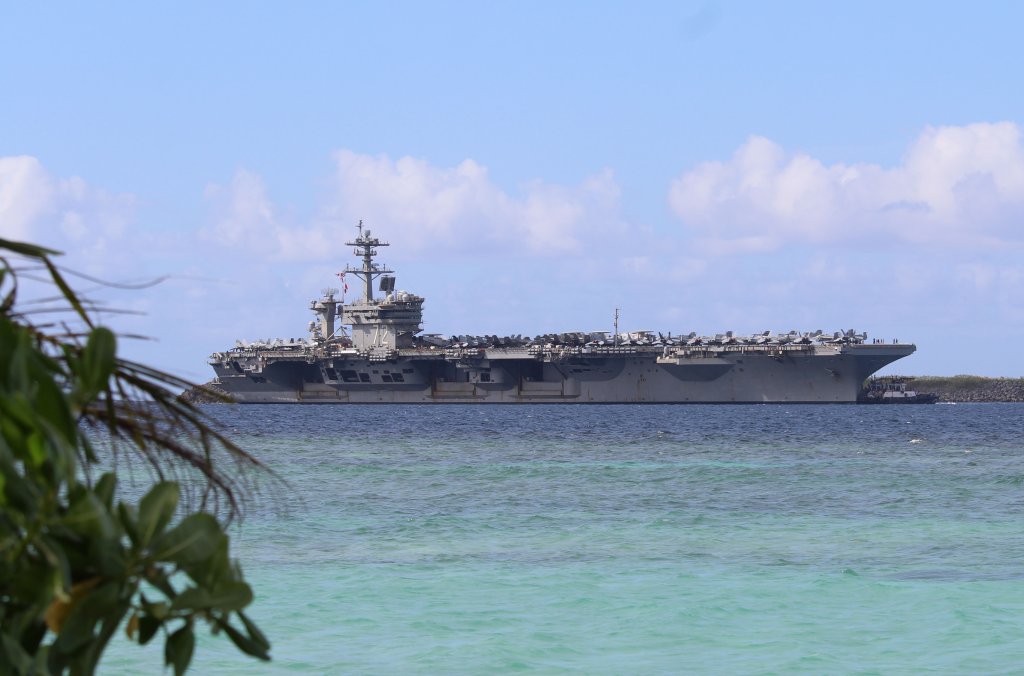
Still, this is a worrisome situation that has already been building for many years, due in large part to a succession of global crises, and has now been further exacerbated by the ongoing conflict with Iran. Even so, the Navy is trying to keep to its existing schedule for inactivating aging Nimitz class carriers, though the date for when the USS Nimitz is set to leave service has now been pushed back until next year. Retiring existing carriers will only create further strains if the arrival of new members of the Ford class continues to be pushed back.
As we also previously mentioned, it very much remains to be seen if any plans for major changes to the Ford‘s core design actually become a reality. Trump’s second term in office ends in January 2029, and any such work could easily bleed over into the next presidential administration, which could then reverse course. Congress could well step in to take action even sooner.
Whatever happens, it would be a huge undertaking in terms of both time and resources to relocate the island on the Ford class carrier, and would upend a decision that was made years ago with clear operational benefits in mind.
Contact the author: joe@twz.com

