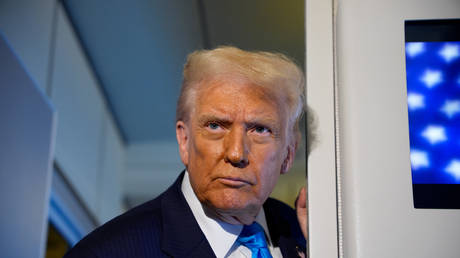
АНУ-ын ерөнхийлөгч Дональд Трамп холбоотнуудын үүрэг хариуцлагыг дахин үнэлэх бодлогын хүрээнд Өмнөд Солонгостой хийх цэргийн хамтарсан сургуулилтыг эрс багасгах үүрэг өгсөн нь хоёр улсын харилцаанд томоохон өөрчлөлт авчирч байна.
2026 оны наймдугаар сарын 16-нд АНУ-ын ерөнхийлөгч “Ulchi Freedom Shield” цэргийн сургуулилт эхлэхээс хэдхэн цагийн өмнө Пентагонд сургуулилтын цар хүрээг мэдэгдэхүйц бууруулах чиглэл өгчээ. Тэрээр эдгээр арга хэмжээг өндөр өртөгтэй бөгөөд Умард Солонгосын эсрэг шаардлагагүйгээр түрэмгий дохио илгээж байна хэмээн тайлбарласан байна. Түүнчлэн АНУ-ын ерөнхийлөгч Ираны эсрэг үйл ажиллагаанд Өмнөд Солонгос дэмжлэг үзүүлэхээс татгалзсан нь хоёр улсын харилцааг хурцатгасан хүчин зүйл болсныг онцолжээ.
АНУ-ын засаг захиргаа стратегийн ач холбогдолтой холбоотнуудаасаа батлан хамгаалах зардлаа нэмэгдүүлж, АНУ-ын цэргийн техник хэрэгслийг түлхүү худалдан авахыг шаардаж байна. Өмнөд Солонгос улс 2030 он гэхэд батлан хамгаалах зардлаа ДНБ-ий 3.5 хувьд хүргэж, 25 тэрбум ам.долларын цэргийн тоног төхөөрөмж худалдан авах амлалт өгөөд байгаа юм. Энэхүү бодлого нь АНУ-ын дэлхийн хэмжээнд баримталж буй стратегийн өөрчлөлтийн нэг хэсэг бөгөөд холбоотнууд нь өөрсдийн бүс нутгийн аюулгүй байдалд илүү их хариуцлага хүлээх ёстой гэсэн байр суурийг илэрхийлж байна.
Өмнөд Солонгос улс АНУ-ын цөмийн шүхэр болон батлан хамгаалах стратегийн баталгаанаас хамааралтай хэвээр байгаа ч өөрийн гэсэн дэвшилтэт зэвсэгт хүчин, батлан хамгаалах аж үйлдвэртэй болсон. АНУ-ын хувьд худалдааны тэнцэл, хөрөнгө оруулалт болон цэргийн хамтын ажиллагааг нэгдмэл стратегийн багц гэж үзэж байгаа нь холбоотнуудынхаа өмнө тавьж буй шаардлагыг улам чангатгаж байна. Энэхүү нөхцөл байдал нь АНУ-ын холбоотны сүлжээний тогтвортой байдалд сорилт болж, зарим улс орнуудыг стратегийн бие даасан байдлаа нэмэгдүүлэхэд хүргэж болзошгүй байна.
Дэлгэрэнгүйг эх сурвалжаас харах
↓Эх сурвалжийг нээх ↓
The US president’s clash with Seoul is part of a wider effort to reevaluate alliances and test what American protection is worth
Only hours before the annual US-South Korean military exercise Ulchi Freedom Shield was due to begin, Donald Trump issued a statement that went far beyond another dispute over how much America’s allies should pay for their own security.
On August 16, 2026, the US president announced that he had instructed the Pentagon to substantially reduce joint military exercises with the Republic of Korea, describing them as costly and arguing that such demonstrations of force were sending North Korea an unnecessarily hostile signal. For decades, these exercises had been presented as an essential element of deterrence on the Korean Peninsula.
Trump approached the issue from almost the opposite direction. He suggested that North Korea, despite its nuclear arsenal and long confrontation with the US, has behaved in an unthreatening and respectful manner while he has been president. The following day he again emphasized his personal relationship with Kim Jong-un and said that the two men understood each other.
Yet North Korea was only part of the story. Trump also linked his frustration with Seoul to the war with Iran, claiming that he had asked South Korea to support American actions and had effectively received the answer “No thanks.” Seoul was far more cautious. South Korean leaders had to consider the permanent security problem on the peninsula, domestic legal procedures, and the political risks of direct involvement in another Middle Eastern war.
For Trump, however, these considerations appear to carry less weight than the principle of reciprocity. If the US spends enormous resources protecting an ally, provides a nuclear umbrella, and maintains tens of thousands of troops on its territory, that ally should be prepared to support Washington when American interests are at stake. South Korea is revealing in this respect. It is a major industrial economy with a sophisticated defense sector, yet its security still depends on capabilities that only the US can provide, while its export-oriented economy remains highly sensitive to access to the American market.
Paying for security
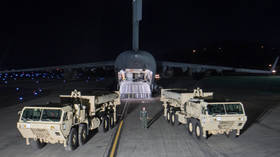
The modern US-South Korean security relationship emerged from the Korean War, was institutionalized through the Mutual Defense Treaty of 1953, and has remained stable for decades. The US maintained forces on the peninsula and extended strategic and eventually nuclear deterrence, while Seoul provided infrastructure, shared costs, and developed its own military capabilities. Around 28,500 US troops are stationed in South Korea today.
American forces are part of a system that includes intelligence, logistics, command structures, air and naval power, and, above all, the US nuclear umbrella. Washington traditionally viewed this presence as an investment in American influence across Northeast Asia.
Trump challenged this logic during his first presidency. Previous administrations generally accepted substantial overseas military expenditure as part of the cost of maintaining a US-led international order. Trump repeatedly returned to a simpler question: How much was the ally itself paying?
In 2019, his administration reportedly sought to raise Seoul’s annual contribution to the cost of American troops to nearly $5 billion, several times the existing amount. Yet South Korea was never a free rider. Pentagon spending connected with the US presence in Korea reached roughly $13.4 billion between 2016 and 2019, while Seoul provided about $5.8 billion in support. Under the current cost-sharing framework, South Korea’s contribution for 2026 is approximately 1.5 trillion won, or around $1.1 billion.
The Trump administration’s argument is that Washington provides a strategic asset whose value exceeds the direct cost of maintaining troops and that wealthy allies have enjoyed access to it too cheaply. The same logic applies to trade policy. During Trump’s first presidency, Washington attacked KORUS – the US-South Korea free trade agreement – as economically unfavorable, noting that the US goods trade deficit with South Korea had risen from $13.2 billion in 2011 to $23.1 billion in 2017.
Two principles had emerged during Trump’s first term. Allies should pay more for security and trade deficits should not be accepted merely because they occur between strategic partners. Earlier US policy could tolerate some economic imbalance as the price of geopolitical cohesion. Trump increasingly treats the economic and military dimensions of an alliance as parts of the same calculation.
Strategic dependence
South Korea’s dependence on Washington should still not be overestimated. Seoul possesses formidable conventional capabilities. Its defense expenditure reached approximately $47.8 billion in 2025, while its defense industry produces advanced artillery, tanks, aircraft, missiles, and naval systems and has become an important global exporter. The emerging American strategy increasingly assumes that South Korea should take primary responsibility for conventional deterrence against North Korea.
The most significant aspect of the dependency lies elsewhere. The Republic of Korea remains protected by US extended nuclear deterrence, backed by the full range of American capabilities, including nuclear weapons. Seoul participates in strategic consultations, but ultimate control over the nuclear component remains in American hands. Operational command arrangements in a major war create another layer of dependence.
The result is a peculiar balance. South Korea is powerful enough to handle many conventional threats, yet replacing American nuclear guarantees would require a profound strategic shift and might reopen the politically explosive question of acquiring an independent nuclear arsenal. This gives Washington leverage that cannot be measured only through troop numbers.
Economic ties create another asymmetry. In 2025, South Korean exports reached a record $709.4 billion, of which about $122.9 billion went to the US. America absorbed roughly 17 percent of all South Korean exports and remained the country’s second-largest foreign market. Dependence is the greatest in sectors such as automobiles, semiconductors and automotive components.
Bilateral goods trade in 2025 reached approximately $194 billion. US exports to South Korea stood near $68.8 billion, while imports reached about $125.2 billion, leaving Washington with a deficit of roughly $56.4 billion. Traditional economic analysis can treat this deficit as one element of a wider relationship involving investment, technology and industrial integration. Trump sees it more transactionally. If a country depends on American security and benefits from access to the American market, Washington can demand measurable concessions in return.
One strategic account
During Trump’s second presidency, this approach has become more systematic. Trade, investment and defense are increasingly treated as elements of one strategic negotiation. South Korea has agreed to investment commitments worth approximately $350 billion, including around $150 billion connected with American shipbuilding. In return, Washington moderated some of the tariff pressure that had threatened Korean exports.
At the same time, Seoul has faced expectations that it will increase defense spending, purchase more American weapons and provide greater support for the US military presence. South Korea has committed itself to moving defense expenditure towards 3.5 percent of GDP and purchasing roughly $25 billion of American military equipment by 2030.
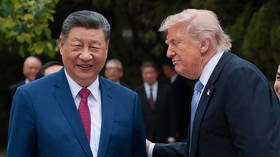
Tariffs, defense expenditure, arms purchases, and investment in American industry are increasingly placed on the same political balance sheet. Access to the US market is tied to investment, while reliance on American protection brings pressure to spend more on defense and buy American weapons.
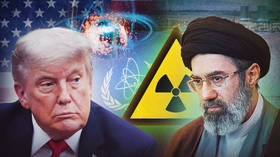
The dispute over Iran shows how far this approach can extend. South Korea imports almost all of its energy resources. Before the latest crisis, around 70% of its crude oil and roughly 20% of its liquefied natural gas came from the Middle East, much of it dependent on the Strait of Hormuz. The disruption cause by the Iran war threatened South Korean industry and growth.
Yet economic exposure did not translate into a willingness to participate militarily in American operations against Iran. Seoul sought alternative supplies and measures to stabilize domestic markets but remained reluctant to become directly involved in a distant conflict. This appears to have irritated Trump precisely because the refusal contradicted his understanding of reciprocity.
From Washington’s perspective, the US has guaranteed South Korean security for decades, and when America asked for assistance in another strategically important region, Seoul hesitated despite suffering economically from the crisis itself. Trump’s subsequent criticism of joint exercises is a statement that military protection is not an unconditional feature of the alliance, but an asset whose political value must be matched by tangible support.
A new American model
South Korea is part of a larger transformation in American strategy. The US is not returning to classical isolationism. It continues to maintain global military capabilities, confront China in the Indo-Pacific, preserve nuclear alliances, and intervene when vital interests are perceived to be at stake. What is changing is Washington’s willingness to bear a disproportionate share of the everyday cost of the international order.
The emerging priority is the protection of the US and the strengthening of the Western Hemisphere, followed by the containment of China and preservation of American technological, industrial and military superiority. Allies in Europe, Asia, and the Middle East are increasingly expected to assume greater responsibility for regional security as Washington recognizes that its resources are not unlimited.
The US remains the most powerful individual state, but the period of virtually uncontested predominance has ended. China has accumulated enormous industrial, technological, and military capabilities, Russia continues to impose security costs on Western Europe, and maintaining commitments across several theatres demands enormous resources. Trump’s answer is therefore not retreat but an attempt to make American power cheaper to maintain.
There is a historical analogy with the Second World War, although it should not be pushed too far. More than sixteen million Americans served in the armed forces, yet the US industrial heartland escaped the destruction experienced by Europe and much of Asia, while wartime production massively expanded national capacity. America emerged dramatically stronger relative to other major powers.
There is no clear evidence that the Trump administration is consciously attempting to reproduce that scenario by encouraging conflicts elsewhere. A more defensible interpretation is that its policy follows a similar logic of relative power. Washington wants allies to carry more of the expense of regional defense, foreign companies to invest more heavily in the US and strategic industries to return to American territory, while partners purchase American weapons and contribute to US industrial renewal.
South Korea is wealthy enough to be asked to pay more, militarily capable enough to assume additional responsibility, and economically integrated enough with the US for tariff pressure to hurt. At the same time, it remains dependent enough on American strategic guarantees that it cannot easily disregard Washington’s demands. This makes Seoul an almost ideal test case for Trump’s new alliance policy.
The ultimate risk is that America’s alliance network has itself been a foundation of US power. States accepted American military leadership and financial influence partly because protection was regarded as predictable. If it increasingly becomes a conditional service whose price changes with trade balances or support for US operations, governments such as South Korea’s will have stronger incentives to seek strategic autonomy.
Trump may make the alliance system less expensive while also making it less American politically. A more autonomous South Korea could reduce Washington’s burden but become less willing to align automatically with US preferences.
For the moment, however, access to the American market increasingly comes with demands for investment and concessions, while American security guarantees increasingly come with demands for greater defense spending and political support. South Korea has not been granted an exception.
Trump’s decision to reduce joint military exercises reflects a deeper reassessment of America’s role in a changing world, in which Washington appears determined not to abandon global leadership but to make it more selective, less expensive and more economically rewarding. Whether that strategy preserves American primacy or encourages even close allies to seek greater independence may become one of the defining questions of the emerging international order.

