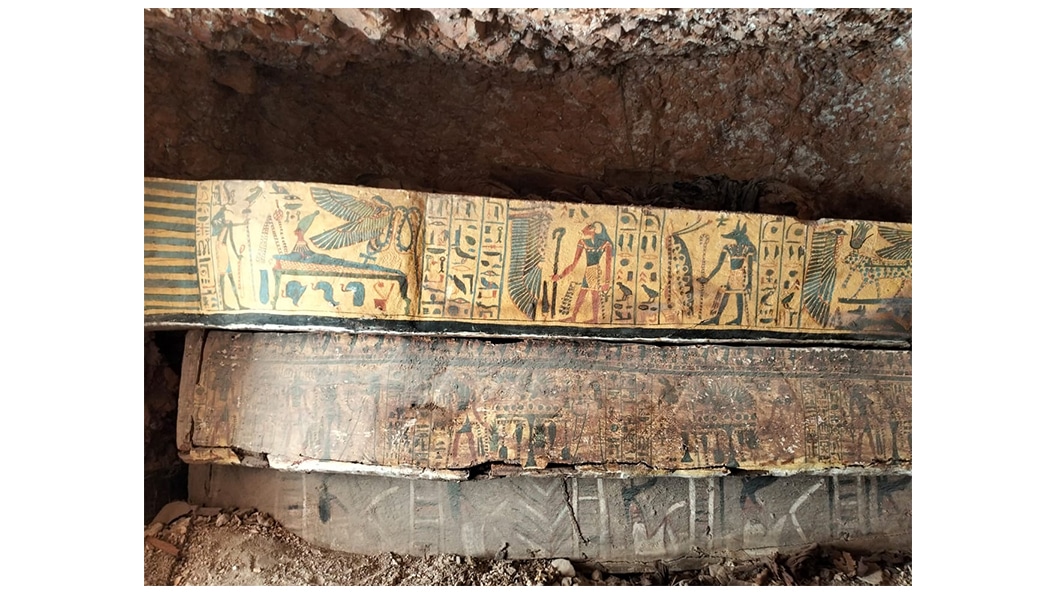
Египетийн археологийн баг Луксор хотын баруун эрэгт эртний иргэншлийн үед хамаарах, олон тооны бунхан бүхий нууц өрөөг илрүүлжээ.
Египетийн Аялал жуулчлал, эртний олдворын яамны мэдээлснээр, Сенебийн бунхны ойролцоох хад ухаж хийсэн хонгилоос 21-25 дугаар гүрний үед хамаарах 22 ширхэг будсан модон авс илрүүлсэн байна. Захи Хавассын удирдсан хамтарсан судалгааны баг уг олдворыг онцгой ач холбогдолтой гэж үзжээ. Авснууд дээр тухайн хүмүүсийн нэр бус, харин “Амуны дуучин” буюу шашны албан тушаалын нэршил түлхүү тэмдэглэгдсэн байв.

Судлаачид уг бунхныг зай талбайг оновчтой ашиглах зорилгоор авснуудыг 10 эгнээ болгон давхарлан өрж, зохион байгуулсныг тогтоожээ. Авс тус бүрийн дотор занданшуулсан цогцос хадгалагдаж байгаа боловч тэдгээрийн нас, хүйс болон биологийн шинж чанарыг одоогоор нарийвчлан тогтоогоогүй байна. Энэхүү олдвор нь анхны байрлалаасаа өөрчлөгдөн зөөвөрлөгдсөн байж болзошгүй тул мэргэжилтнүүд анхны бунхныг олох судалгааг үргэлжлүүлж байна.

Археологичид мөн занданшуулах үйл явцад ашигласан байж болох шавар савнууд болон дотор нь шавар лацтайгаар хадгалагдан үлдсэн найман ширхэг папирус бичвэрийг олжээ. Одоогоор эдгээр бичвэрийг сэргээн засварлах, орчуулах ажил эхлээгүй байгаа тул тэдгээрийн агуулга, зохиогч болон холбогдох сэдвийн талаарх мэдээлэл тодорхойгүй байна.

Олдворуудын модны чанар муудсан байсан тул мэргэжилтнүүд будгийн давхарга болон бүтцийг тогтворжуулах яаралтай арга хэмжээ авчээ. Олдворуудыг бүрэн баримтжуулсны дараа цаашид шинжлэх ухааны судалгааг үргэлжлүүлж, олон нийтэд дэлгэн үзүүлэхээр төлөвлөж байна.
Дэлгэрэнгүйг эх сурвалжаас харах
↓Эх сурвалжийг нээх ↓
A pottery vessel found inside a rock-cut chamber on the Luxor West Bank held something archaeologists could not immediately read: eight papyri, some still carrying clay seals. Around the vessel were painted coffins, mummies and funerary pottery packed into a confined chamber in Qurna.
The discovery emerged from excavations at the Tomb of Seneb, where an Egyptian archaeological mission uncovered 22 painted wooden coffins containing mummies. The cache dates to the Third Intermediate Period, specifically Dynasties 21 through 25, according to Egypt’s Ministry of Tourism and Antiquities.
The joint mission involves Egypt’s Supreme Council of Antiquities and the Zahi Hawass Foundation for Archaeology and Heritage. Former antiquities minister Zahi Hawass, who heads the mission, described the discovery as “exceptional.”
The Names Are Missing, but the Titles Survived
One of the first puzzles lies on the coffins themselves.
Most do not preserve the personal names of the people buried inside. Instead, they carry occupational or religious titles. The designation that appears most often is “Singer of Amun”, also rendered as “Chantress of Amun” for female title holders. Hisham El-Leithy, secretary-general of the Supreme Council of Antiquities, said researchers are trying to establish the identities of the people in the cache.
That repeated title gives the find a narrower focus than a mixed collection of anonymous burials. Several of the coffins belonged to people identified through roles connected with Amun, although the inscriptions released so far do not provide the personal names needed to identify most individuals.
There is another source of evidence inside the wood. Mummies remain in the coffins, leaving researchers with human remains to examine alongside the painted decoration, inscriptions and archaeological context. The official announcement does not report identities, ages or biological findings from those remains.
The Coffins Had Been Packed Tightly Into the Rock
The chamber itself helps explain how so many burials could occupy such a restricted space.
Archaeologists found a rectangular room carved into the rock and used as funerary storage. Rather than placing each coffin intact in a conventional arrangement, whoever organized the cache separated lids from their boxes and stacked the components on several levels.
The coffins were fitted into 10 horizontal rows, allowing more of them to be stored in the chamber. Both the ministry and subsequent Egyptian reports describe the arrangement as a deliberate way of making maximum use of the available space.
The room may also represent a later stop in the history of the burials rather than their first resting place. Afifi Rahim, supervisor of the excavation work, said the mission is continuing to search for the original tombs from which the coffins were transferred. No explanation has yet been announced for when the transfer occurred or why it was carried out.
That unanswered question changes how the cache has to be read. Archaeologists are dealing not only with the people and objects buried there, but also with evidence that the material may have been reorganized after its original burial.
Pottery May Preserve Traces of the Mummification Process
Coffins were not the only objects stored in the chamber.
Among the funerary material were ceramic vessels believed to have held residues or materials associated with mummification. The description remains an archaeological interpretation. The official ministry announcement does not report laboratory testing that confirms what the vessels contained.
Another ceramic container produced the chamber’s most delicate discovery. Inside a large pottery vessel were eight rare papyri of different sizes. Some retain what the excavation announcement calls their original clay seals.
Their contents have not been released because the manuscripts still require restoration and translation. No texts, authors, owners or subjects have been identified publicly. Reports that go further than that would be assigning contents to documents that archaeologists have not yet announced as translated.
Conservators Had to Stabilize the Coffins Before Moving Them
Finding the chamber created an immediate practical problem. The wood had deteriorated badly, while portions of the painted plaster had weakened.
The conservation team began urgent conservation work, treating deteriorated wood fibers and stabilizing fragile painted surfaces. Conservators also used careful mechanical cleaning to remove deposits without damaging the surviving colors.
Before the objects went into storage, each piece was documented photographically and architecturally. That record preserves information about the objects themselves and their positions within the cache, details that become harder to reconstruct once a tightly packed archaeological deposit has been dismantled.
Egyptian Tourism and Antiquities Minister Sherif Fathy said scientific study and conservation would continue as part of the work surrounding the discovery, with the material ultimately intended for appropriate display after preservation.
For now, the most closely watched part of the Luxor archaeological discovery remains unread. The coffins can already be counted, their arrangement mapped and their titles studied. The papyri are different. Until restoration and translation are complete, their clay seals still guard the part of the cache archaeologists have yet to hear from.
Enjoyed this article? Subscribe to our free newsletter for engaging stories, exclusive content, and the latest news.

