Эрдэмтэд Тебесийн 209 дүгээр булшнаас олдсон хүмүүсийн цогцсыг давхарлан байрлуулсан нь тухайн үеийн оршуулгын ёс заншил хэрхэн өөрчлөгдсөнийг гэрчилж байна.
Испанийн Ла Лагуна их сургуулийн судлаачид Египетийн Луксор хотын эсрэг талд орших Тебесийн некрополь дахь 209 дүгээр булшны гуравдугаар танхимд малтлага хийжээ. Энэхүү судалгаагаар 16 бүрэн бүтэн мумми, дөрвөн хүний хэсэгчилсэн үлдэгдэл болон хоёр хүний мумми дээр байрлуулсан муммижуулсан нохойны олдвор илэрсэн байна. Уг булш нь МЭӨ 754-656 оны хооронд буюу 25 дахь гүрний үед байгуулагдсан бөгөөд МЭӨ 305-30 оныг хүртэл үргэлжлүүлэн ашиглагдсаар ирсэн 700 орчим жилийн түүхтэй газар юм.
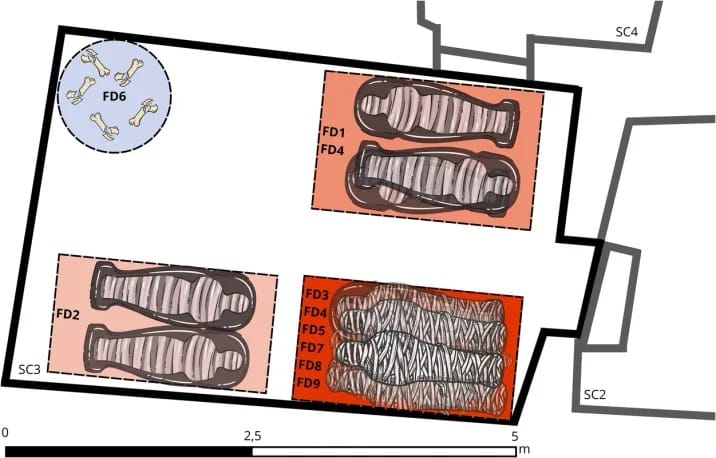
Судлаач Мигель Анхель Молинеро Поло тэргүүтэй багийнхан олдворуудын байрлал, чиг баримжааг нарийвчлан бүртгэснээр оршуулгын есөн үе шатыг тогтоожээ. Эхний үеийн оршуулгад авс ашиглан, хамгаалалтын сахиус болон импортын бараа бүтээгдэхүүнээр дагалдуулан оршуулсан нь тэднийг нийгмийн өндөр зиндааны хүмүүс байсныг илтгэдэг. Гэвч хожим нь МЭӨ 680-404 оны үеэс булшны зай талбай хумигдсанаар цогцсуудыг хажуу талд нь зэрэгцүүлэн тавихын оронд босоо чиглэлд давхарлан оршуулах болжээ.
Хамгийн онцлох олдвор болох Птолемейн үед хамаарах хэсэгт дөрвөн муммиг дээр доор нь давхарлан байрлуулж, хамгийн дээр нь нохойны муммиг тавьсан байв. Судлаач Жаред Карбалло-Перес энэ нь тухайн хүнтэй ойр дотно байсан амьтан эсвэл хойд насны аялалд туслагч “психопомп” үүргийг гүйцэтгэж байсан байх магадлалтай гэж тайлбарлажээ.
Тус булш нь олон зууны турш үер, гал түймэр болон бусад хөндлөнгийн нөлөөлөлд өртсөн тул зарим оршуулгын он цаг болон зан үйлийн нарийн учир шалтгааныг тогтооход хүндрэлтэй байгаа юм. Frontiers in Environmental Archaeology сэтгүүлд нийтлэгдсэн уг судалгаа нь эртний Египетийн оршуулгын ёс заншил шашны албан ёсны бичээсүүдээс ялгаатайгаар бодит амьдрал дээр хэрхэн хувьсан өөрчлөгдөж байсныг харуулсан чухал жишээ болж байна.
Дэлгэрэнгүйг эх сурвалжаас харах
↓Эх сурвалжийг нээх ↓
Within a single chamber of Theban Tomb 209, researchers have identified sixteen mummified individuals, the disarticulated remains of at least four additional people, and a mummified dog positioned atop two human mummies. What initially appears to be a disordered accumulation of remains is, upon closer examination, the result of centuries of deliberate and evolving burial practice, rather than neglect.
The tomb sits in Egypt’s Theban Necropolis, across the Nile from Luxor, in a landscape that holds more than 400 tombs from various eras of ancient Egyptian history. Chamber three of TT 209 is one small piece of that vast burial ground, but its contents span an unusually long stretch of time, making it a useful case study for how funerary customs actually changed on the ground, rather than in official religious texts.
The findings come from a team at the University of La Laguna in Spain, published in the journal Frontiers in Environmental Archaeology. By carefully recording where each body lay, how it was oriented, and how it related physically to the bodies around it, the researchers pieced together a sequence of burial phases running from the Twenty-fifth Dynasty to the Ptolemaic period, nearly 700 years of continuous, if irregular, use.
From Spacious Coffins to a Crowded Chamber
Theban Tomb 209 was originally built during the Twenty-fifth Dynasty, sometime between 754 and 656 BCE, and the chamber remained active until it was abandoned in the Ptolemaic period, between 305 and 30 BCE. Across that span, the excavation team identified nine separate funerary deposits, ranging from single burials to clusters of several people buried together with objects.
As reported by the study team, the oldest burials belonged to people of some means. These individuals were placed in coffins, spaced apart from one another, and equipped with funerary nets, protective amulets, and imported goods, among them contents carried in Phoenician amphorae, several of which turned up beside the bodies. As Dr. Miguel Ángel Molinero Polo, an Egyptology professor at the University of La Laguna, put it, the earliest people buried in the chamber “appear to have been of high social standing,” a status visible in the sheer expense of what accompanied them into the afterlife.
That comfort didn’t last. By the close of the Twenty-fifth Dynasty and through the Persian period, roughly 680 to 404 BCE, space in the chamber became scarce, and new burials were squeezed in wherever room could be found. Even the way bodies were posed changed subtly during this period, with some later individuals showing one arm folded in rather than the fully extended arms seen earlier on.
Bodies Stacked, Not Scattered
The clearest sign of changing custom is vertical stacking. Instead of being laid out side by side, corpses from the Persian period onward were increasingly placed directly on top of one another, a practice found in two-thirds of the chamber’s burials from that point forward.
“The bodies buried in vertical superposition did not have coffins but were carefully mummified. They also can be associated with upright jars that point to a specific ritual not found in the earlier phases of the tomb’s use,” noted Molinero Polo.

According to the paper, this shift wasn’t a sign of the original burial customs breaking down. Rather, the layering reflects a working spatial logic: each new body was positioned with an awareness of what and who was already there.
A Dog Placed Among the Human Dead
The most memorable arrangement sits in the southeastern part of the chamber, dated to the Ptolemaic period: four mummies stacked vertically, with a mummified dog resting on top. The animal was found directly above the remains of a man and a woman, a detail that first author Dr. Jared Carballo-Pérez singled out as especially striking, he added that:
“This could indicate a close relationship between these human individuals and the animal, an idea that I think is quite easy to empathize with,” he explained. “It could also reflect a further change in ritual practice, with an animal taking on the role of a psychopomp, a symbolic helper in the journey to the afterlife.”

The chamber was shaped by centuries of disruption. Multiple floods, fire damage, and repeated interventions affected the preservation of the remains, preventing archaeologists from establishing the exact chronology of some burials or fully understanding the choices behind them
Enjoyed this article? Subscribe to our free newsletter for engaging stories, exclusive content, and the latest news.


