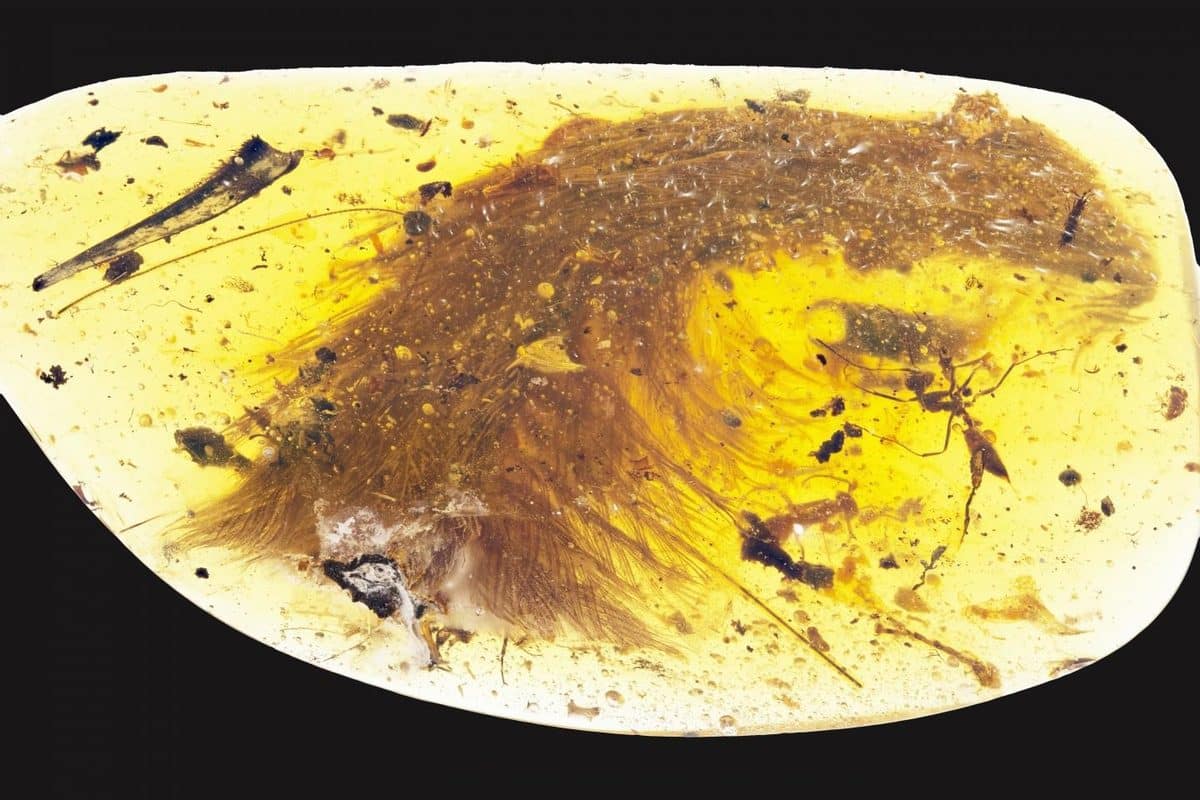
Мьянмараас олдсон энэхүү ховор олдвор нь үлэг гүрвэлийн өд, яс болон зөөлөн эдийн бүтцийг гурван хэмжээст орон зайд нарийвчлан судлах боломжийг эрдэмтдэд олгож байна.
Палеонтологич Лида Шин 2015 онд Мьянмарын зах зээлээс гоёл чимэглэлийн зориулалттай, дотроо ургамлын үлдэгдэлтэй гэж андуурагдаж байсан хувыг олжээ. Нарийвчилсан шинжилгээгээр уг хуван дотор орчин үеийн шувуудтай төрөл төрөгсөд болох целурозавр бүлгийн залуу үлэг гүрвэлийн сүүл хадгалагдаж байгааг тогтоосон байна. Энэ нь хуван дотор хадгалагдан үлдсэн анхны үлэг гүрвэлийн олдвор болсон бөгөөд Мьянмарын Качин мужаас гаралтай болохыг эрдэмтэд баталжээ.
“Current Biology” сэтгүүлд 2016 онд нийтлэгдсэн судалгаагаар, компьютер томограф болон микроскопийн шинжилгээгээр уг сүүл нь найман нугаламтай, уян хатан, хоёр талдаа өдтэй болохыг тогтоожээ. Судлаач Райан Маккеллар энэхүү нугалам нь орчин үеийн шувуудынх шиг нэгдэн нийлээгүй байгаа нь уг амьтныг шувуу биш, харин үлэг гүрвэл гэдгийг нотлох гол баримт болсон гэж тайлбарлав. Өдний бүтэц нь төв голч судалгүй, илүү энгийн байсан нь өдний хувьслын эртний үе шатыг харуулж байна.
Мөн уг олдвороос зөөлөн эдийн ул мөр болон цусны гемоглобины үлдэгдэлтэй холбоотой төмрийн нэгдлүүд илэрсэн нь ердийн чулуужсан яснаас илүү өргөн хүрээтэй мэдээлэл өгчээ. Эрдэмтдийн таамаглаж байгаагаар, үлэг гүрвэл амьд ахуйдаа модны давирхайд шигдэж үхсэн байж болзошгүй. Энэхүү нээлт нь эртний экосистемийн бичил түвшний нарийн бүтэц, биологийн эдийг судлахад хув хэрхэн чухал ач холбогдолтойг харуулж байна.
Дэлгэрэнгүйг эх сурвалжаас харах
↓Эх сурвалжийг нээх ↓
A small piece of amber once believed to contain plant material has revealed the preserved tail of a young feathered dinosaur that lived nearly 99 million years ago. The rare fossil discovery from Myanmar has provided scientists with an unusually detailed view of dinosaur feathers, bones, skin, and soft tissue.
The story began in 2015, when paleontologist Lida Xing encountered a polished piece of amber at a market in Myanmar. The specimen was already prepared for sale as a decorative object, but he noticed that the inclusion inside appeared unusual and suggested that it should be examined rather than sold.
Further research revealed that the amber contained the tail of a juvenile coelurosaur, a group of theropod dinosaurs closely related to modern birds. The discovery offered a rare opportunity to study a dinosaur fossil preserved in three dimensions, with details that are rarely available from traditional fossil remains. The amber was later traced back to Kachin State, Myanmar, by identifying the miner who originally extracted it. Scientists then used advanced imaging techniques and microscopic analysis to investigate the structure of the fossil hidden inside the hardened resin.
This Strange Fossil Was Hiding A Dinosaur Tail All Along
The specimen was examined through CT scanning and microscopic observations, allowing researchers to study the fossil without damaging the amber. The 2016 research published in Current Biology found that the preserved tail contained eight vertebrae belonging to a juvenile dinosaur, surrounded by feathers preserved with exceptional detail. The shape of the bones helped scientists determine that the fossil did not belong to a modern bird.
“We can be sure of the source because the vertebrae are not fused into a rod or pygostyle as in modern birds and their closest relatives. Instead, the tail is long and flexible, with keels of feathers running down each side,” Ryan McKellar, a co-author of the study, said.
He also explained in a statement reported by EurekAlert that the preserved material provided clear evidence of a dinosaur tail rather than bird feathers. The combination of the vertebrae arrangement and feather structure allowed researchers to identify the animal as a non-avian coelurosaur.
The discovery represented the first confirmed case of dinosaur material preserved in amber. It gave paleontologists a rare look at a small feathered dinosaur from the Cretaceous period, preserving features that are usually destroyed during fossilization.
Old Feathers Reveal A New Dinosaur Story
The feathers trapped inside the amber provided new information about the appearance of early feathered dinosaurs. Analysis showed that they were likely chestnut-brown on the upper side and lighter underneath, offering clues about the animal’s external appearance.
The fossil also revealed that the feathers lacked a fully developed central shaft. Researchers suggested that the complex branching structures of feathers, including barbs and barbules, appeared before the evolution of the stronger feather shafts seen in many modern birds. The study team also examined the area around the tail bones and identified traces of soft tissue.

The analysis revealed the presence of ferrous iron, a chemical element associated with remnants of hemoglobin found in blood. Unlike many dinosaur remains that survive only as mineralized bones, this amber specimen retained parts of the animal’s original biological structures, including feathers, skin, and flesh.
A Young Dinosaur Trapped in Resin Millions of Years Ago
Scientists proposed that the dinosaur may have become trapped in tree resin while it was still alive. Unable to escape, the animal may have died as the sticky material surrounded its tail and eventually transformed into amber over millions of years. Professor Mike Benton told BBC News that the fossil allowed researchers to imagine the final moments of the small dinosaur, with its tail caught in resin before becoming permanently preserved.
“Amber pieces preserve tiny snapshots of ancient ecosystems, but they record microscopic details, three-dimensional arrangements, and labile tissues that are difficult to study in other settings,” McKellar explained. “This is a new source of information that is worth researching with intensity and protecting as a fossil resource.”

The discovery also stated how easily important fossils can be misidentified. In 2020, another amber specimen believed to contain a tiny dinosaur skull was later shown to belong to a previously unknown lizard species after additional analysis.
Enjoyed this article? Subscribe to our free newsletter for engaging stories, exclusive content, and the latest news.


