Колумбаас олдсон чулуужсан олдворууд 11-16 сая жилийн өмнө амьдарч байсан Purussaurus neivensis нь тухайн үеийн экосистемийн хамгийн хүчирхэг махчин амьтан байсныг баталж байна.
Journal of Vertebrate Paleontology сэтгүүлд нийтлэгдсэн судалгаагаар, долоон метр урт, 1,800 орчим килограмм жинтэй энэхүү аварга матрын төрөл зүйл нь дунд миоцений үед Өмнөд Америкийн нуурын сав газруудад зонхилж байжээ. Энэхүү амьтан нь жижиг ачааны тэрэгтэй дүйцэхүйц хэмжээтэй байсан нь тухайн үеийн бусад махчин амьтдаас илт давуу талыг олгодог байсан байна.
Колумбын нутгаас олдсон олдворуудад хийсэн шинжилгээгээр, эдгээр матар нь зөвхөн жижиг амьтад бус, хирсний хэмжээтэй Pericotoxodon platignathus болон заан төст Granastrapotherium snorki зэрэг том биет хөхтөн амьтдыг барьж иддэг байсныг нотлох хазуулсан сорвинууд илэрчээ. Эдгээр гэмтлийн хэв шинж нь орчин үеийн матруудын ангуучлах арга барилтай төстэй болохыг эрдэмтэд тогтоосон байна.
Түүнчлэн, 2025 онд хийгдсэн өөр нэгэн судалгаагаар, энэхүү аварга биетэн нь тухайн экосистемд амьдарч байсан нисдэггүй, махчин “террор шувуу”-г хүртэл барьж идэх чадвартай байсныг дурджээ. Ийнхүү Purussaurus neivensis нь эртний намгархаг бүс нутгийн хүнсний сүлжээний оройд байрлаж, хүчирхэг махчин амьтдын дунд ч томоохон аюул заналхийлэл учруулж байсан нь тогтоогдлоо.
Дэлгэрэнгүйг эх сурвалжаас харах
↓Эх сурвалжийг нээх ↓
A giant crocodilian that reached the size of a small truck once ruled the wetlands of South America. Fossils reveal that Purussaurus neivensis, a 7-meter-long predator weighing around 1,800 kilograms, hunted some of the largest animals living on the continent millions of years ago.
During the Middle Miocene, between 11 million and 16 million years ago, much of South America was covered by a vast lake surrounded by wetlands. This lost landscape supported an extraordinary collection of oversized animals, including giant ground sloths, armored glyptodonts, and several groups of extinct hoofed mammals.
Some of these herbivores were massive, with certain species exceeding 1 ton in weight. The ecosystem also included powerful predators such as saber-toothed mammals, huge anacondas, and flightless terror birds. But among all these hunters, one animal stood out above the rest: Purussaurus neivensis, a giant relative of modern caimans.
Research published in the Journal of Vertebrate Paleontology identified the crocodilian as the largest predator known from this Middle Miocene environment. Its size placed it among the most impressive crocodilian relatives ever discovered.
Fossils Capture The Moment Giants Were Hunted
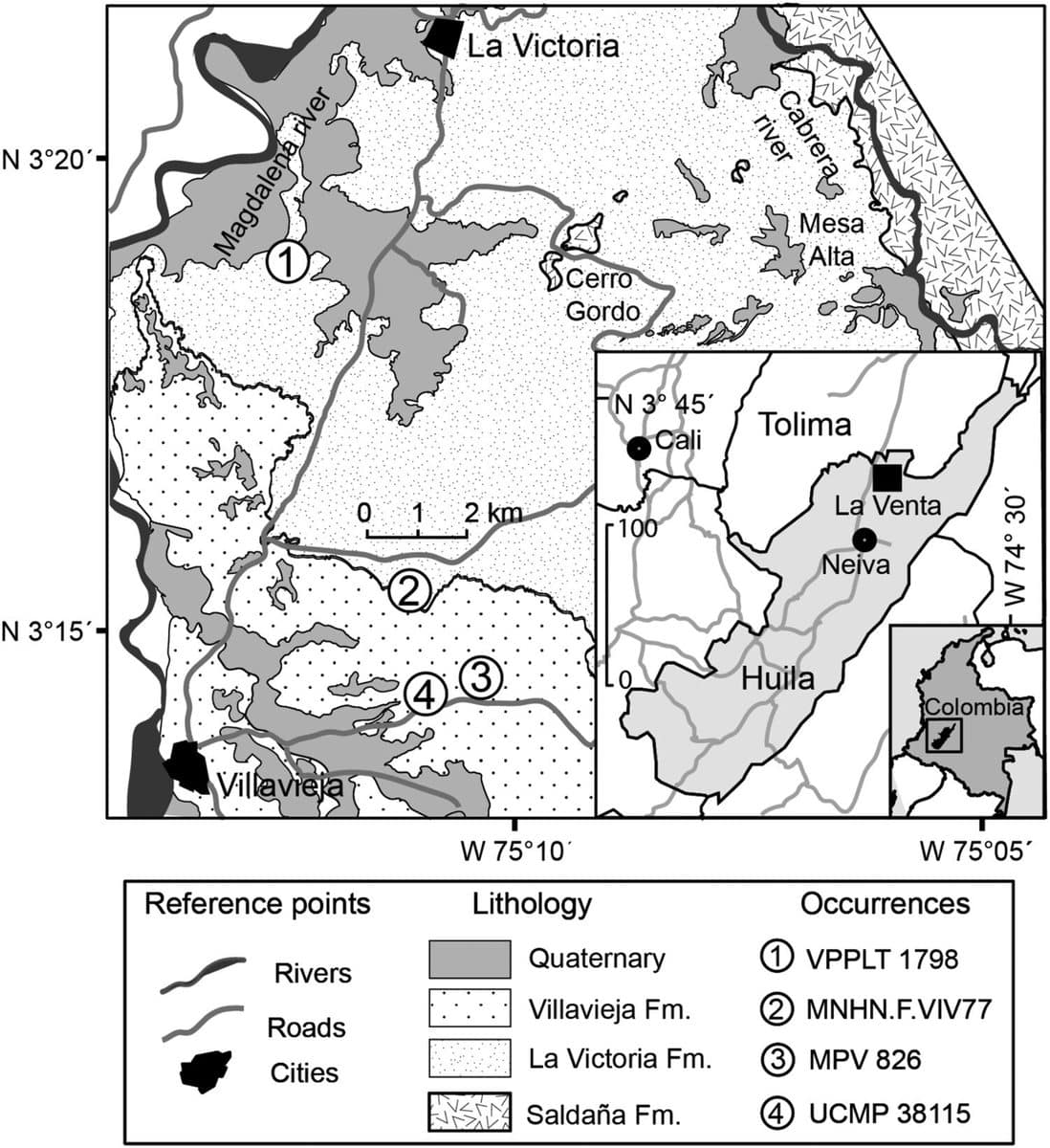
Scientists studied fossils discovered in Colombia, including bones from three large extinct ungulates that lived alongside Purussaurus neivensis. The remains carried puncture marks similar to those produced by modern crocodiles.
The damage patterns show that the giant crocodilian had the ability to attack large mammals rather than relying only on smaller animals. Among its possible prey were Pericotoxodon platignathus, a rhino-sized herbivore, and Granastrapotherium snorki, an elephant-like mammal.
Published in Science, the study highlights the remarkable scale of life during the Middle Miocene. The same wetlands that sustained giant plant-eaters also created an environment where predators could evolve into exceptionally large forms.
A Giant Caiman Relative In A World Of Oversized Animals
The specimen belonged to a group related to modern caimans, but its proportions were far beyond those of any living species. The animal reached about 7 meters in length and weighed approximately 1,800 kilograms, according to the researchers who examined the fossils. Its body size was comparable to a compact pickup truck, giving it a major advantage in an environment filled with large prey. While many predators hunted on land, this crocodilian controlled the waterways where animals had to approach to drink.
The Middle Miocene wetlands created conditions where extreme sizes became possible. Giant mammals, enormous reptiles, and unusual birds shared the same landscape, forming a food web unlike anything seen in South America today.

The fossils from Colombia help scientists understand how these animals lived together. They show a prehistoric continent where competition between predators and prey involved some of the largest creatures known from the fossil record.
The Crocodilian May Have Attacked Other Predators
Purussaurus neivensis was not only a threat to large herbivores. Evidence from earlier research indicates that this predator also interacted with other hunters living in the same ecosystem. A 2025 study reported evidence that these giant crocodilians may have fed on a terror bird, one of the large flightless predators that inhabited prehistoric South America. The discovery adds another example of the crocodilian’s role at the top of the food chain.

These findings paint a picture of a wetland dominated by powerful animals competing for survival. The giant crocodilian’s remains show that South America once hosted freshwater predators capable of challenging even the continent’s largest inhabitants.
Enjoyed this article? Subscribe to our free newsletter for engaging stories, exclusive content, and the latest news.

